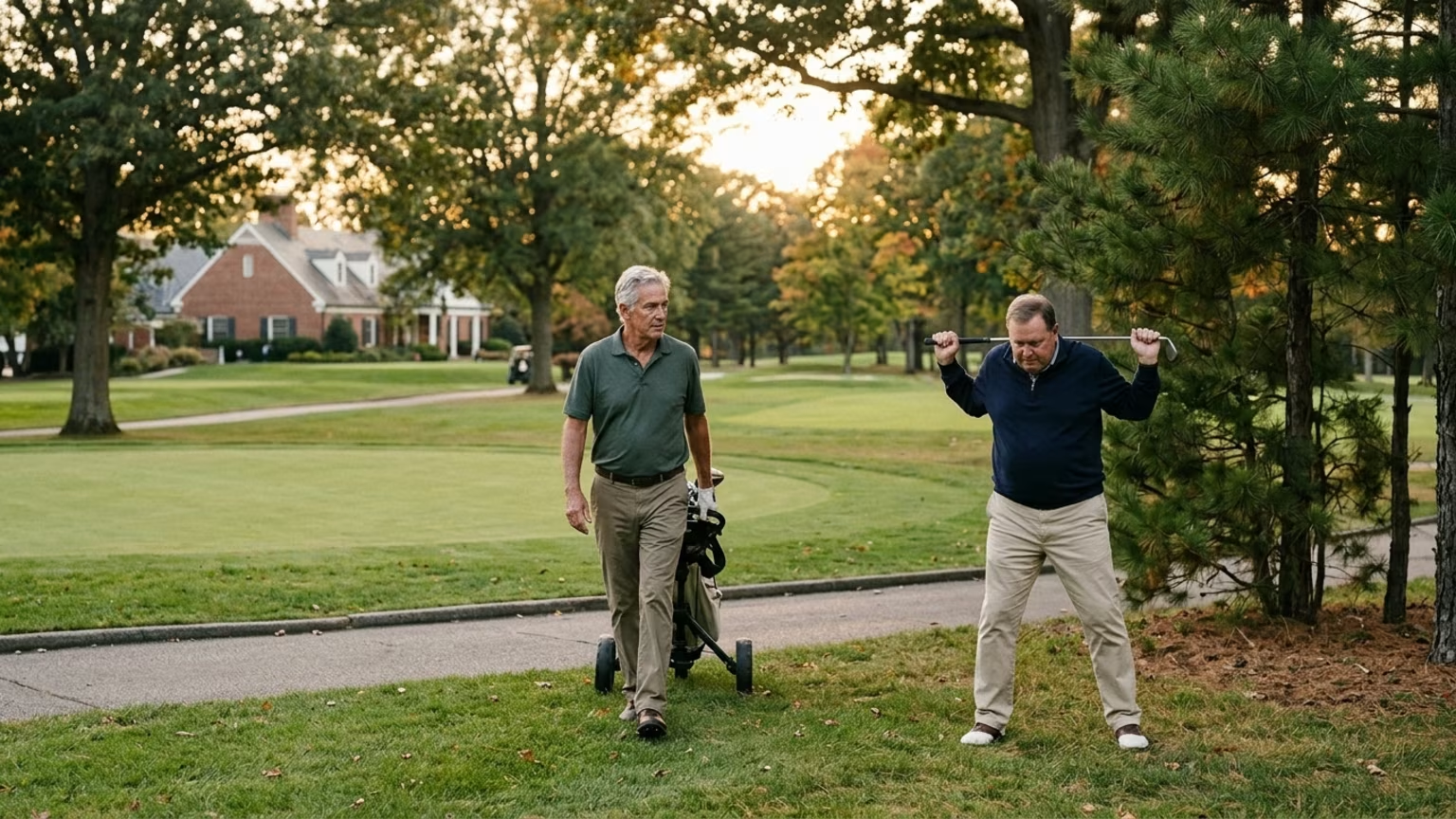

A review of a Cell Reports Medicine study showing how brief, high-intensity exercise impacts blood proteins, and what this means for older golfers' routines.




On August 13, 2026, a study published in Cell Reports Medicine examined how exercise intensity affects the blood proteome and metabolome. The research provided for this article does not document a professional player withdrawing from a weekend tournament. We will focus instead on the verifiable event from the study itself. Researchers evaluated molecular signals that may help explain communication between muscle and other organs. The findings show how intense effort creates a unique molecular response. At Golfergy, we monitor these scientific developments to provide evidence-based advice that helps experienced golfers play better for longer.
Because the research does not support a specific tour player injury, there are no injury biomechanics to explain here. We can instead explain the physical mechanics behind the studied exercise protocol. The researchers compared three minutes of all-out effort with a much longer moderate session. The sprint protocol consisted of six maximal cycling efforts lasting thirty seconds each. The comparison protocol involved ninety minutes of continuous moderate cycling. These distinctly different protocols test how the body reacts to short intervals of maximum strain versus steady endurance work.
When the body performs at maximal intensity, it triggers a massive biological response. The study measured approximately 2,884 plasma proteins before and after the sessions. The sprint session significantly changed 714 proteins immediately after exercise. The longer moderate cycling session produced a vastly smaller molecular change. The study was led by researchers associated with Rockefeller University’s Laboratory of Molecular Metabolism and Professor Paul Cohen. Their paper is titled “Exercise intensity modulates interorgan communication and is associated with cardiometabolic health outcomes in humans.”
"The saddest thing I have seen in golf is watching lifelong playing partners slowly drop out of our weekend group. It usually starts with a nagging shoulder or knee issue they ignore until it requires surgery. That pattern is exactly why I became obsessed with golf longevity. We do not have to stop playing as we age, provided we do the right maintenance work between rounds."
While the research does not focus on a specific swing injury risk, golfers over 40 face a clear vulnerability regarding their cardiovascular conditioning. Many older players rely strictly on walking the course for their weekly exercise. Walking is highly beneficial for general health. It simply does not challenge the body with high intensity intervals. This missing stimulus can lead to a gradual loss of peak power capacity.
The study noted that more than 98 percent of the proteins changed by sprinting increased immediately after the workout. According to mindbodygreen, sprinting altered more than 200 metabolites. These are small molecules involved in the chemical processes of the human body. This broad molecular signal involves proteins connected with metabolism and hormonal signaling. Available reporting describes participants as young and healthy, physically active men in at least part of the study population.
Older adults can still carefully adapt the underlying concept. Golfers who understand the three-day rule for age-related muscle maintenance know the importance of varied workloads. Relying entirely on low intensity movement leaves older players lacking peak power production. Maintaining function requires looking at functional physical capacities for safer play across the board. Translating complex sports science into plain English helps us build sustainable habits.
According to Women's Health UK, more than one-quarter of the relevant proteins were linked in the analysis with slower biological ageing. These are ageing-related associations derived from population data. They are not proof that sprint training slows biological ageing over a lifetime. They simply indicate a strong molecular response following brief intense exertion. Our team believes this provides a mechanistic rationale for studying brief intense exercise as a complement to conventional endurance training.
The practical adjustment here involves modifying your weekly conditioning routine. Treat the study as a reason to consider intensity as a single training variable. You should not abandon your longer moderate aerobic activity. The research does not state that sprinting replaces the benefits of steady walking. We reject quick fixes in favor of sensible conditioning programs.
Moderate aerobic work builds the endurance needed for walking eighteen holes. If medically appropriate, introduce brief vigorous efforts gradually. Cycling is the closest match to the study protocol because the tested intervention used maximal cycling intervals. A golfer who wants a lower-impact experiment might begin with short brisk uphill walking segments. This allows you to safely test the concept without overloading your joints.
The study does not prove that hill walking reproduces the exact protein response observed in the laboratory. Following a minimum-effective strength plan can prepare your tissues for this kind of intense work. Power-focused golf drills should prioritize technique and recovery rather than maximal speed under fatigue. The study does not test golf swings or golf-related injury outcomes. Pushing for maximal speed under fatigue can compromise your mechanics on the course.
A common misconception is that a brief sprint session provides the exact same health outcomes as a long workout. The study compared immediate molecular responses rather than total energy expenditure or long-term heart health. The findings concern acute blood changes rather than demonstrated longevity outcomes. The scale of the immediate molecular response is the distinct contribution of this research.
The intervention used six maximal sprints rather than merely a slightly harder pace. Maximal efforts impose substantially greater cardiovascular and recovery demands than brisk walking. Older golfers should obtain individualized medical guidance before attempting maximal efforts. The available study evidence does not establish safety for those returning from injury. Protecting your health requires a grounded approach to new scientific findings.
You must use your recovery capacity as a primary constraint. Taking time for a twenty-four hour recovery check helps you stay ready for your next round. A massive molecular signal does not mean repeated maximal sessions are appropriate several times per week. The strongest takeaway is that brief maximal exercise produced a larger immediate blood-protein response in this study.
What adjustments will you make to your conditioning routine this season to maintain your physical resilience?
Follow Golfergy for practical insights on performance, mobility, recovery and healthy ageing. Stay connected for new articles, research-led guidance and ideas to help you play better for longer.



Examine the clinical evidence on how resistance training, proper protein intake and structured recovery help older golfers preserve muscle mass and stability.

Learn how the proposed movement span framework helps older golfers understand physical decline, maintain balance, and extend their playing years safely.

Find out how proactive health monitoring, medication reviews, and strength training help older golfers protect their balance and keep walking 18 holes.
Explore practical resources on performance, recovery, mobility and golf longevity.
Read the Blog