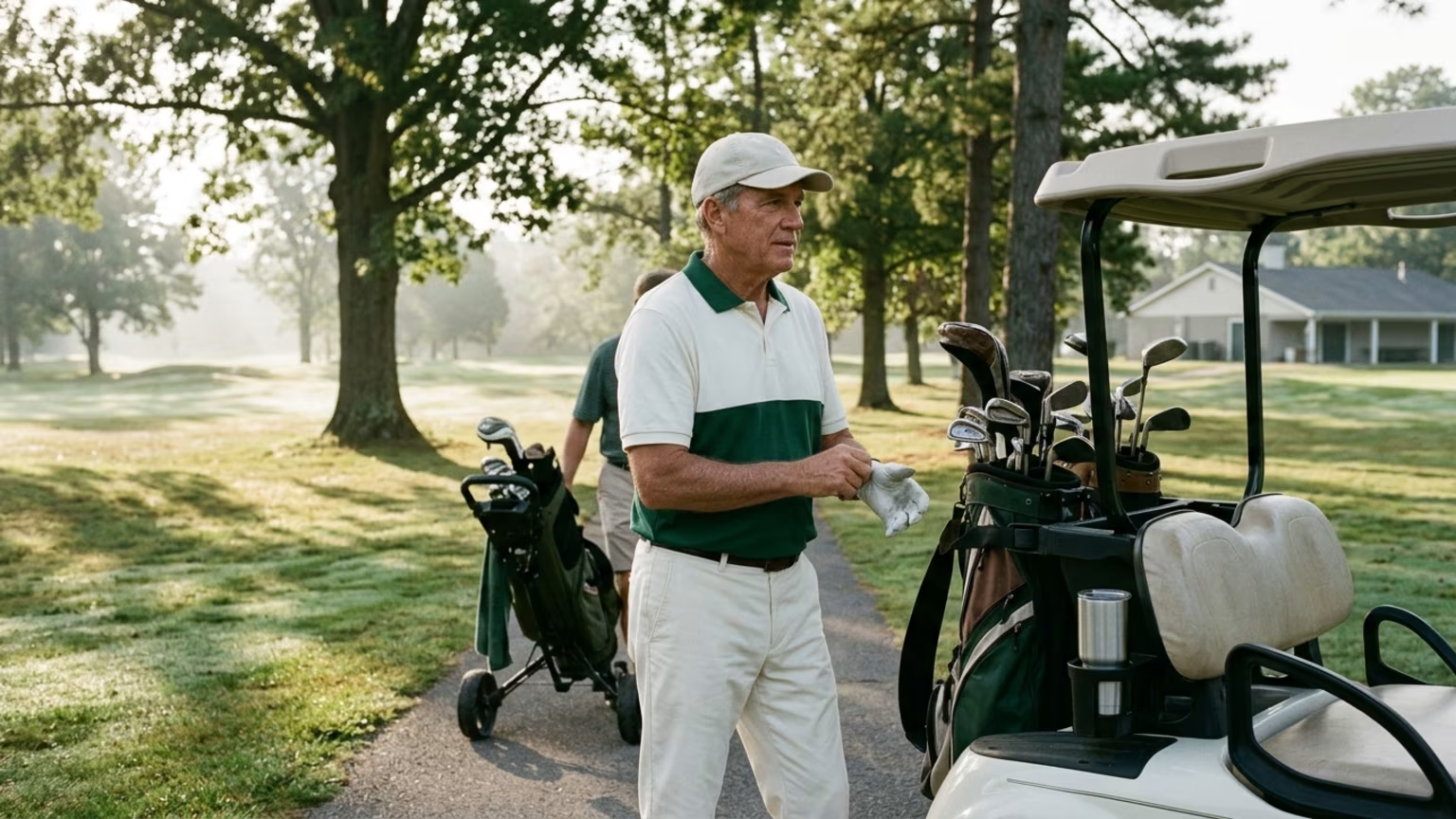

Learn how the three-day training rule helps golfers over 40 maintain muscle strength, improve swing stamina, and combat the physical declines of sitting.




Strength-endurance is simply your body's ability to repeat moderate muscular efforts over time. It is the quiet physical engine that keeps your golf swing stable from the first tee to the final green. This capacity relies on muscle tissue firing efficiently to support your joints during repeated movements. Without regular maintenance, this foundational physical trait begins to fade.
Sports-medicine specialist Jorge Franchella draws a distinct line between maximum strength and strength-endurance. Maximum strength is the greatest force you can exert against resistance at one time. Strength-endurance involves repeating moderate efforts continuously over a long duration. For mature golfers, this endurance matters far more than lifting heavy weights once.
It provides the lasting physical support needed for a full round of golf. Your body requires this endurance to walk miles of fairways and swing a club repeatedly. When you let this capacity decline, every physical action on the course becomes harder. Maintaining this specific type of strength keeps the game enjoyable.
A decline in strength-endurance becomes highly visible on the back nine. Early in the round, your legs and trunk easily stabilize your posture during a swing. You can rotate through the ball with full confidence. By the later holes, fatigued muscles stop supporting your spine properly.
Your hips stop turning fully. You begin to compensate by swaying or overusing your arms to generate speed. This loss of postural control changes your swing path and ruins your ball contact. Your legs feel much heavier when walking up a steep fairway.
Hitting out of thick rough becomes more difficult because your stabilizing muscles are completely exhausted. Sustaining your muscular endurance allows you to repeat your optimal swing mechanics late in the day. It prevents the sloppy mistakes that ruin a good scorecard. A tired body simply cannot execute a technically sound golf swing.
Muscle power begins to decline in your 40s and accelerates in later decades. A September 2, 2026, Washington Post feature reports this natural drop in physical capacity. Aging changes the body quietly, reducing the ability to sustain force and recover quickly. Sedentary habits speed up this physical decline rapidly.
A September 7, 2026, Infobae report notes that adults in Argentina spend about nine hours a day sitting on average. The same report cites World Health Organization data. That data shows that more than 30% of adults worldwide fall below recommended physical activity minimums. The move out of a sedentary lifestyle brings massive health benefits.
The Infobae article states that leaving a sedentary lifestyle reduces morbidity and mortality risk by more than 30%. Prolonged sitting compounds the natural aging process for mature golfers. Muscle mass slowly decreases when it is not consistently challenged. Cardiovascular capacity and recovery metrics also drop noticeably over time.
Golfers often blame their equipment for a loss of distance, missing the underlying physical changes completely. They buy new drivers instead of addressing their sitting habits. The physical foundation of a good swing requires constant upkeep after entering your 40s.
Franchella recommends careful management of training from your 40s onward. Quoted in the Infobae article, he suggests avoiding gaps of more than three days between training sessions. He explains that this consistent schedule helps the body retain the physical effects of exercise. Franchella also notes that moderate muscular effort promotes the production of myokines.
Myokines are signaling molecules associated directly with healthy muscle activity. They play a prominent role in metabolism, inflammation management, and bone health. A 2026 expert consensus supports a similar approach to steady physical maintenance. The consensus recommends two to three weekly resistance sessions and three to five aerobic sessions for older adults.
The experts urge individuals to progress gradually based on their unique health profiles. They advise starting with lower intensity if you lack a regular exercise routine. A 10-week intervention studied strength and conditioning in university golfers, observing physical capacity and shot performance. The underlying principle of regular training applies universally to recreational players.
These expert guidelines highlight the value of strength training for golf endurance at any age. You do not need to train like an elite athlete to see results. You just need to keep your muscles engaged on a regular schedule.
You can use the three-day rule as a helpful prompt to stay consistent. It is an expert recommendation rather than a strict biological law. The primary goal is simply to avoid stacking several completely inactive days together. Here are foundational habits to integrate regular training into your weekly routine.
First, introduce progressive resistance work for your trunk and major muscle groups. A 2026 review analyzed 41 randomized trials involving 3,141 participants. The researchers found that resistance exercise significantly improved muscle-specific strength in older adults. Focus entirely on turning your trail hip or engaging your legs during these moderate exercises.
The review reported a standardized mean difference of 0.61, but the results varied across different studies. This habit is critical for protecting the lower back during forceful swings. Resistance training provides the joint stability needed to play pain-free golf.
Second, maintain an active aerobic base through walking or cycling. Aerobic conditioning builds the foundation for prolonged activity on the golf course. It supports your sustained work capacity and keeps fatigue away. It also improves your recovery times between training sessions and weekend rounds.
Aerobic fitness and muscular strength are entirely different capacities, making both necessary for a complete routine. Third, always progress slowly after any period of inactivity. The expert consensus advises evaluating your exercise history and any medical symptoms before starting. Easing into a routine prevents setbacks and builds lasting physical habits.
This careful approach is the safest way of maintaining your fast twitch power past middle age. Focus on light movements before adding heavier resistance to your program. Talk to a professional if you feel uncertain about new exercises.
Fourth, consider your recovery days as part of the training process. The consensus recommends scheduling resistance training on nonconsecutive days. Your muscles require time to rebuild after a moderate workout, preventing persistent fatigue. A balanced schedule leaves you feeling refreshed when you arrive at the first tee.
Fifth, avoid confusing a walking round of golf with a complete fitness program. Golf provides excellent activity, but it does not replace targeted resistance work. A dedicated routine helps all major muscle groups receive consistent attention during the week. Relying strictly on weekend golf for exercise leaves critical stabilizing muscles untrained.
Consistent, moderate training across the week preserves your physical capacity, keeping you playing better for longer.
Follow Golfergy for practical insights on performance, mobility, recovery and healthy ageing. Stay connected for new articles, research-led guidance and ideas to help you play better for longer.


A flexible training framework for golfers over 40 that makes room for strength, balance, mobility and aerobic activity alongside play.


See how balance fits alongside strength and coordination in golf, with a supported practice example and a clear look at the evidence.

A practical strength framework for golfers over 40, built around everyday goals, sensible progression and a careful look at limited golf research.
Explore practical resources on performance, recovery, mobility and golf longevity.
Read the Blog