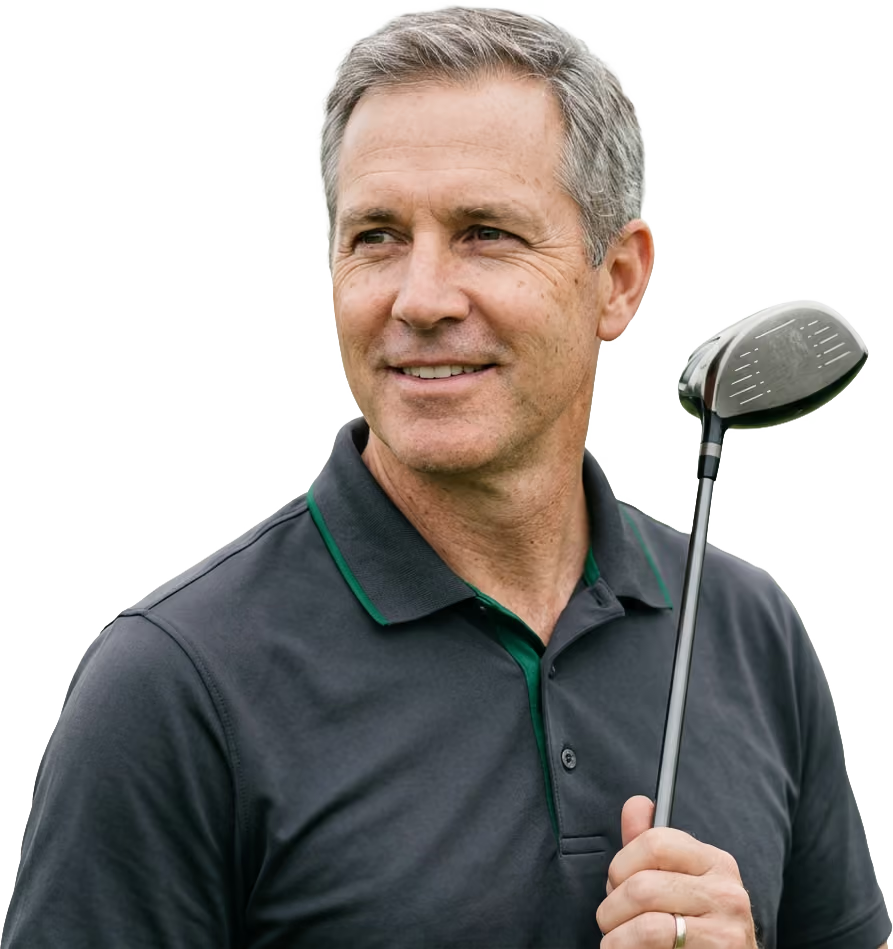
Find out how proactive health monitoring, medication reviews, and strength training help older golfers protect their balance and keep walking 18 holes.




On September 9, 2026, FOX10 aired a Mobile broadcast focused on Healthy Aging Month. The report featured Dr. Heidi Schwarzwald discussing practical health monitoring for older adults. She explained ways to manage chronic conditions, protect cognitive function, and review medication effectiveness.
This proactive approach helps mature adults catch problems early before they cause a major decline. For recreational golfers over 40, these routine check-ins provide a practical strategy to stay active and capable on the course.
Golf demands precise physical coordination and balance. Unmanaged chronic conditions and medication side effects quickly disrupt these fundamental movement patterns. When players experience dizziness from a new prescription, their spatial awareness suffers heavily during the backswing. The body relies on stable joints and responsive muscles to execute a safe rotation.
Fatigue limits the ability of the lower back and hips to rotate fully. When a player feels unsteady, they instinctively restrict their turn to protect themselves. This compensation places heavier stress on the arms and shoulders. A restricted turn forces the upper body to rush the downswing.
You lose power and invite joint pain when the sequencing breaks down. Proper balance allows the body to transfer weight efficiently from the back foot to the front foot. Without good health management, the underlying physical mechanics of the swing begin to fail.
The golf swing generates significant rotational force through the lower back. Stiff tissues cannot absorb this energy safely. The muscles surrounding the spine must stretch and contract in perfect harmony. Medication-induced fatigue slows down these muscle contractions significantly.
A loss of stability also affects how you swing through the ball. Players dealing with medication side effects often decelerate before impact. They subconsciously prioritize staying upright over completing their follow-through. This hesitation robs the swing of its natural rhythm and speed.
Health challenges compound gradually over time. FOX10 reported that nearly 80% of adults aged 65 and older manage at least two chronic conditions. The segment also noted that more than 40% of this group take five or more medications. Schwarzwald serves as the chief medical officer at Signify Health.
In her role, she oversees work involving the clinician network, safety, and product development. Her central message focuses on proactive monitoring over waiting for severe symptoms to appear. She has built her career around improving care models for vulnerable adults. Her approach proves that catching small changes early leads to better overall outcomes.
Cognitive health also requires careful attention from older athletes. A 2026 PubMed-indexed observational study tracked older adults for a median of four years. During that period, 430 participants developed dementia. This group represented 8.5% of the study population.
The findings point to the reality of cognitive decline among aging populations. Regular check-ins offer a chance to catch these shifts before they become debilitating.
Amateur golfers over 40 face a unique risk profile on the course. They regularly walk several miles over varied terrain during an 18-hole round. Younger players might brush off minor fatigue, but mature golfers must monitor their energy levels carefully. Chronic conditions can quietly limit walking distance and heat tolerance.
Small declines in physical function often disguise themselves as normal signs of aging. Taking multiple medications creates additional layers of friction for older players. A prescription might interact poorly with a supplement and cause unexpected mid-round fatigue. Players might incorrectly blame this weakness on poor fitness or a bad night of sleep.
They push through the discomfort and increase their risk of injury. It takes deliberate effort to recognize when a medical issue is hindering your performance. Staying aware of these hidden friction points helps protect your long-term mobility. The physical demands of walking 18 holes are substantial.
Players navigate sidehill lies, thick rough, and steep bunker faces. These environmental factors challenge your balance on every single shot. A minor spell of dizziness can quickly lead to a dangerous fall.
The best preventative adjustment involves scheduling thorough medication reviews. Bring a complete list of your prescriptions and supplements to your clinician. Ask if any of these products cause weakness or confusion during physical activity. Keep your focus sharp when practicing your swing mechanics.
Keep instructions focused on one small movement at a time, such as 'focus entirely on turning your trail hip'. This deliberate approach prevents you from overtaxing your nervous system during practice. Building a balanced healthy ageing routine requires attention to both the body and the mind. Document how you feel after walking 18 holes.
Note if you need more breaks or if your recovery takes significantly longer than usual. Share these observations with your doctor during your regular check-ins. Adding dedicated physical exercises can also improve your overall resilience. You can learn more about maintaining mental focus to keep your mind sharp under pressure.
Track your functional abilities rather than just focusing on your score. Pay attention to how well you can read greens late in the round. Share any noticeable changes with your healthcare provider immediately.
Many players mistakenly treat walking the golf course as their sole form of exercise. Recent research provides a clearer picture of what the game actually delivers. A 2023 randomized crossover trial tested 25 healthy older golfers with a mean age of 68. The trial featured 16 men and nine women.
The study compared an 18-hole walking round with a six-kilometre conventional walk and a six-kilometre Nordic walk. The trial found acute reductions in systolic and diastolic blood pressure across all three activities. The data showed that walking conditions produced larger immediate systolic reductions than the golf condition. The golf condition was associated with an acute blood pressure change of approximately -9/-1 mm Hg.
Conventional walking resulted in an acute change of -18/-5 mm Hg. Nordic walking produced an acute change of -16/-4 mm Hg. These results indicate that conventional walking provides a stronger immediate cardiovascular response. The 25-person trial involved healthy older golfers who were already highly active. The findings may not apply directly to golfers with severe arthritis or balance problems. You must supplement your time on the course with other forms of conditioning.
Assuming that golf alone protects cognitive health is another common error. The 2026 observational study reported lower dementia risk among participants doing strength exercise or Japanese croquet. The study found no statistically significant difference for the walking or golf groups compared with non-exercisers. Strength exercise was associated with an adjusted hazard ratio of 0.26.
Japanese croquet was associated with an adjusted hazard ratio of 0.68. Understanding the aging shift in physical capacity helps you build a more effective workout schedule.
Routine check-ins form the foundation of a lasting golf career. Proactive reviews of your medications keep you safe and stable on the course. A structured approach to strength training builds the joint resilience needed for the golf swing. Relying solely on your weekly round leaves you exposed to physical decline.
You have the power to take control of your physical well-being. Simple conversations with your doctor can resolve hidden issues before they escalate. What adjustments will you make to your mobility routine this season to steer clear of this hazard?
Follow Golfergy for practical insights on performance, mobility, recovery and healthy ageing. Stay connected for new articles, research-led guidance and ideas to help you play better for longer.


A research-led strength framework for golfers over 40, connecting lower-body, upper-body and trunk capacity with the demands of a full round.


A movement-led golf warm-up for golfers over 40, with a flexible example, practical adaptations and clear limits on injury-prevention claims.

A flexible training framework for golfers over 40 that makes room for strength, balance, mobility and aerobic activity alongside play.
Explore practical resources on performance, recovery, mobility and golf longevity.
Read the Blog