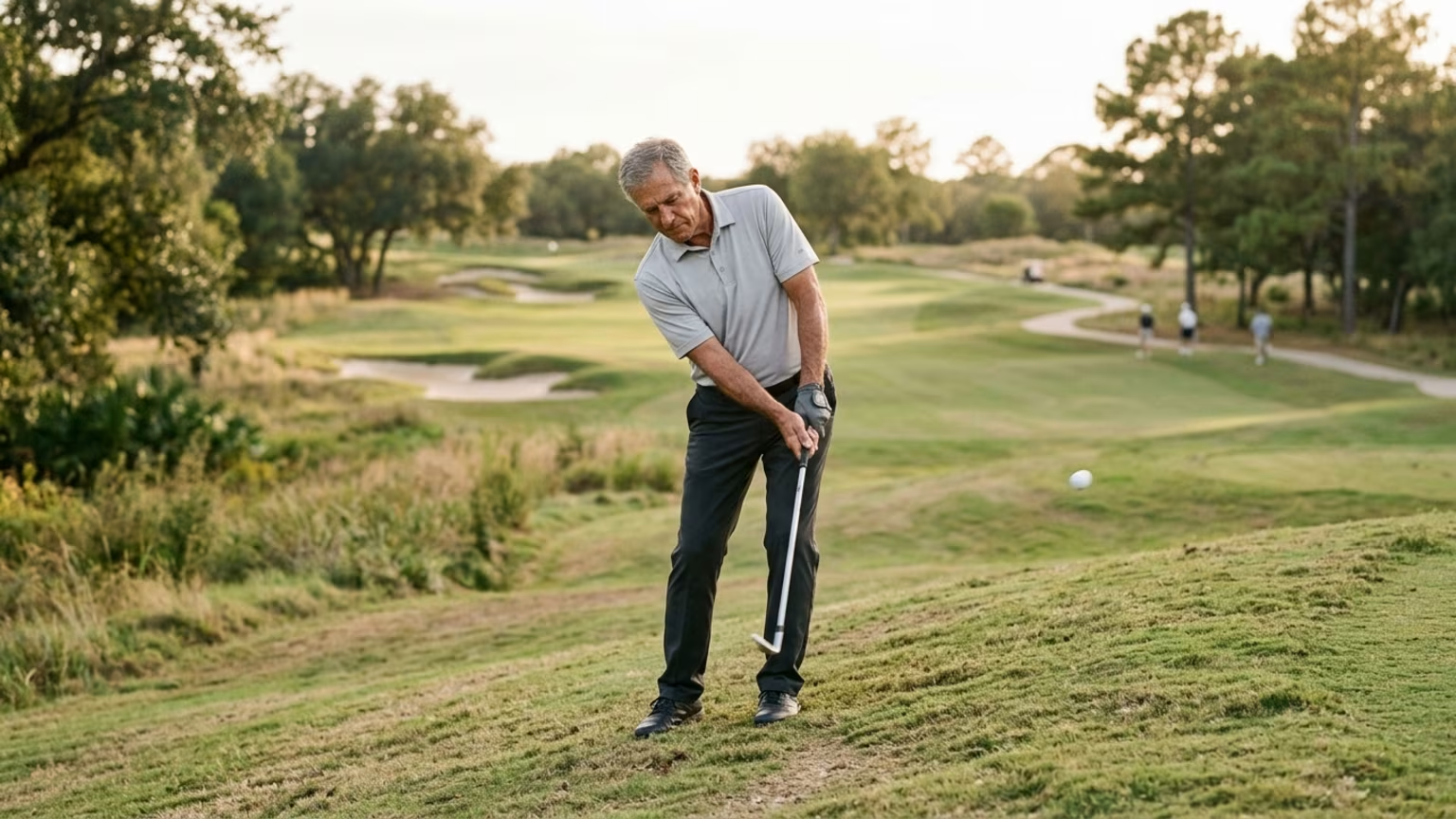

Learn why static stretching fails older golfers and discover the real balance skills required to hit consistent shots on uneven lies.




A golf biomechanics summary reports that a golfer's center of pressure shifts approximately 9% of their stance width toward the lower foot on sloped lies. This subtle shift forces you to alter your setup, widen your stance, and move the ball toward the higher foot. Believing that basic flexibility will solve this complex physical challenge is a massive mistake. In fact, standing completely still on one leg to improve your golf stability is the fastest way to waste your practice time.
Many older golfers spend hours performing static stretches, hoping it will cure their balance issues on the course. They mistakenly equate touching their toes with possessing an athletic, stable base. The reality is that the golf swing requires your body to manage shifting forces in less than two seconds. Passive flexibility does absolutely nothing to prepare your nervous system for the physical demands of a real round of golf. Golf is played on grass, dirt, and uneven slopes, which means your training must reflect that reality.
Mainstream fitness advice often tells older players to hold static yoga poses or balance endlessly on one foot. This static approach ignores how an experienced recreational golfer's body actually reacts to a dynamic swing on uneven terrain. A golf instruction analysis based on a 2018 biomechanics study reveals that ball-above-feet and ball-below-feet lies produced substantially different swing-plane positions. One TrackMan test even found an approximately 10-degree difference between those two conditions. Static balance drills fail to prepare your body for this required movement.
Golf requires dynamic control, not rigid poses held for a minute. When you step onto the course, you never face perfectly flat, laboratory conditions. You face deep divots, steep sidehill lies, and soft turf that demand immediate physical adaptation. Passive stretching routines do nothing to train your nervous system for these rapid shifting variables. This is exactly why so many older players feel loose on the first tee but completely unbalanced by the fourth hole.
The mainstream fitness industry routinely sells flexibility as a universal cure, but older golfers need much more than just a wide range of motion. Having the ability to stretch far does not mean you have the strength to control that range of motion. When your foot encounters a severe downhill slope, your brain needs strength to stabilize the joint, not flexibility to let it collapse. Relying solely on flexibility leaves the 40-plus golfer highly vulnerable to swing compensations and erratic ball striking.
The actual root problem is a lack of reactive balance and an inability to adapt to the given lie. When you step onto a sidehill slope, your body needs to actively adjust its posture, weight distribution, and swing control. According to PracticeCaddie, uphill shots tended to finish left and downhill shots right, with the changes attributed to sidespin. The inability to manage these shifting forces causes players to swing wildly out of balance and lose consistency. You simply cannot fix this specific problem by stretching your hamstrings for ten minutes.
A few years ago, I noticed my swing falling apart around the 14th hole. My lower back would tighten up, and I started compensating with my arms. I spent months thinking it was a swing flaw. It was not until I started a simple evening hip mobility routine that I realized my glutes were just turning off from fatigue. Fixing that one physical limitation brought my back nine scores down drastically. That experience fundamentally changed my perspective on golf fitness.
This taught me that usable stability comes from active muscular engagement rather than passive flexibility. A 2026 systematic review found that sensorimotor interventions improved balance in older adults. The certainty of evidence varied across different balance measures. The review reported high-certainty evidence for improvements on the Berg Balance Scale, a general measure of functional balance. You will notice that players who prioritize active joint control over passive stretching maintain their balance much better on the golf course.
Many golf training gadgets promise perfect balance by having you stand on highly unstable, wobbly platforms while swinging at full speed. This is a highly misguided attempt to create stability by forcing maximum physical instability on the joints. The research shows that a systematic review of perturbation-based balance training in older adults found a 23% reduction in fall rates compared with controls. However, the authors of that specific review rated the certainty of that evidence as low. The review also found a 24% reduction in injurious falls among participants.
It reported that programs involving at least six hours of training reduced falls by 33% in a dosage subgroup analysis. Those supervised clinical interventions are entirely different from swinging a heavy golf club wildly on a plastic balance board in your garage. The review also found that perturbation training improved reactive balance but had limited effects on other risk factors such as gait. You should stop buying expensive balance gadgets and focus on controlling your own body weight instead. True stability is an internal skill, not an external product you can simply purchase.
At golfergy, we believe in a highly practical progression from supported control to golf-specific challenges. Start your weekly training beside a sturdy wall, using light fingertip support to practice shifting your weight smoothly. Slowly move pressure from the heel toward the ball of your foot. Focus entirely on turning your trail hip while maintaining this gentle ground connection. This basic physical awareness helps you feel the ground correctly before ever adding rotational speed.
Next, safely progress to single-leg control and basic deceleration stepping drills. Walk forward for three short steps, stop completely under control, and hold your new stance firmly. This exercise trains your body to absorb movement forcefully without taking an uncontrolled extra step. These controlled responses are exactly what you need when facing uneven terrain on a tricky course. Building this braking capacity helps you maintain stability over raw force during your actual golf swing.
When you take these new skills to the practice facility, consciously match your shoulders and hips to the slope. You should widen your stance when needed and avoid trying to aggressively overpower the lie. PracticeCaddie recommends swinging at approximately 70% to 80% effort on uneven ground rather than trying to recover lost distance by adding speed. On these awkward lies, rely on strategic balance training and proper club selection to handle the changed launch conditions.
Mastering your body's specific relationship with the ground takes patience, but the resulting control is completely worth the daily effort. Once you build this solid foundation, you can practice dynamic movements that challenge your braking ability and rotational control. Try integrating gentle split-stance rotations or slow shadow swings on a mild slope during your next range session. A simple, mindful physical rehearsal will clearly teach you how your weight shifts and how your stance must adapt.
Returning to that 9% center of pressure shift from earlier, you will finally have the physical tools to manage it and strike the ball cleanly. Instead of fighting the severe slope, your body will naturally sink into a secure, athletic posture. If you need more specific guidance, reviewing the core principles of maintaining strength for the long game can keep you playing well for decades. Your most enjoyable, pain-free golf is still ahead of you.
Follow Golfergy for practical insights on performance, mobility, recovery and healthy ageing. Stay connected for new articles, research-led guidance and ideas to help you play better for longer.


A practical strength framework for golfers over 40, built around everyday goals, sensible progression and a careful look at limited golf research.


A research-led look at strength, balance, mobility and trunk control, with a flexible planning framework for golfers over 40.
Understand golf mobility after 40 with a comfortable-turn self-check, hip and shoulder guidance, and a clear look at flexibility and swing speed.
Explore practical resources on performance, recovery, mobility and golf longevity.
Read the Blog


