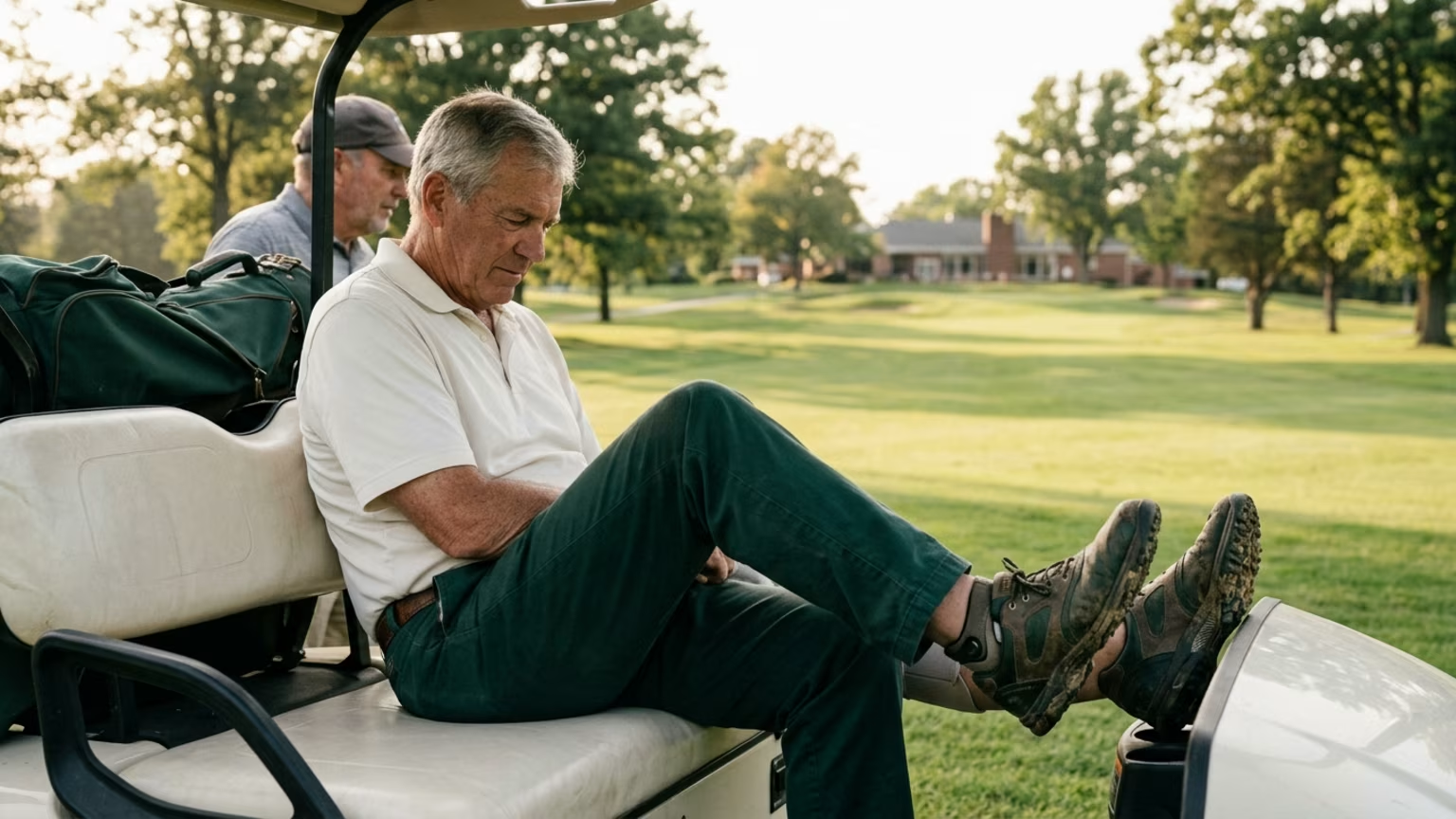

Bob Toski's 100th birthday reminds golfers over 40 that hand control and efficient movement outlast brute force. Learn how to protect your swing today.




On September 18, 2026, the golf community celebrated as Bob Toski turned 100. Born in Haydenville, Massachusetts, in 1926, his playing record is stellar. Toski is a five-time PGA Tour winner and a PGA of America Hall of Fame member. He also earned the title of the PGA Tour's leading money winner in 1954.
While his playing success was significant, his influence comes primarily from nearly 70 years of teaching professional and amateur golfers. His 100th birthday prompted anniversary coverage from the PGA Tour, Golfweek, Golf Digest, and GOLF Magazine. The PGA Tour profile focuses on Toski's long relationship with Ken Duke. Duke is a PGA Tour winner whom Toski coached and befriended over many years.
According to the PGA Tour, Duke planned to attend Toski's birthday celebration in Boca Raton. He scheduled this visit right after competing in the PGA Tour Champions' PURE Insurance Championship at Pebble Beach. The widespread media coverage shows that Toski remains a highly relevant voice in the game today. Golfweek characterized Toski as a teacher who still holds strong opinions on many aspects of golf.
The PGA Tour article describes how Toski's teaching challenged the idea that large muscles dictate an effective golf swing. He focused on the golfer's hands because they are the direct connection to the club. When we look at the physical mechanics of this concept, the logic makes perfect sense for older players. The hands control the clubface angle at the critical moment of impact.
If tension in the chest and back restricts the hands, the clubface cannot square up naturally. Many modern swings rely heavily on creating massive rotational force with the torso. While this can generate speed, it requires precise timing to avoid sending the club off its proper path. Toski argued that the hands are central to controlling the swing and delivering the clubhead through the hitting zone.
When a player focuses on their hands, their arms and body naturally follow to support that movement. This approach minimizes the forceful, strained motions that put intense torque on the lower back and shoulders. It is a philosophy that values sequencing and contact over pure physical exertion. In remarks reported by Reuters, Toski contrasted today's players with those from his own era.
He recalled that golfers in his era averaged roughly 5 feet 10 inches and 160 to 165 pounds. These historical players generated plenty of power without immense physical bulk. The birthday coverage offers a useful contrast between two modern approaches to distance. One path pursues more physical size and power, while the other focuses on improving sequencing and club control.
Golfers over 40 face a significant risk when they prioritize muscle mass over movement quality. As we age, our natural flexibility and swing speed slowly begin to decline. Many mature players attempt to fight this reality by simply swinging harder. They try to use raw upper body strength to force the club through the ball.
This reliance on brute strength over hand control leads directly to physical breakdown. The saddest thing I have seen in golf is watching lifelong playing partners slowly drop out of our weekend group. It usually starts with a nagging shoulder or knee issue they ignore until it requires surgery. That pattern is exactly why I became obsessed with golf longevity.
We do not have to stop playing as we age, provided we do the right maintenance work between rounds. Trying to swing like a tour professional often results in severe joint stress. When a mature golfer loses their connection to the club, the larger muscles have to overcompensate. This compensation forces the spine and shoulders into dangerous positions during the downswing.
When we age, our recovery times naturally lengthen. Swinging with maximum muscular effort on every single shot drains our energy reserves quickly. This fatigue often ruins our score on the back nine and leaves our bodies aching for days. By learning to rely on the hands and proper sequencing, we conserve our physical energy for the entire round.
For older recreational golfers, the primary question should not just be how to get stronger. We must also ask if we can deliver the club efficiently and consistently without forcing the motion. You can certainly read about adding swing speed after 40, but sustainable power must come from good mechanics. Relying on oversized muscles to save a poorly sequenced swing is a recipe for chronic pain.
The most practical adjustment you can make is to audit your movement quality on the practice tee. Do not assume that declining distance automatically requires adding body mass. Use your practice time to examine strike quality, face control, rhythm, and balance. Measure your success by the quality of your contact rather than maximum swing effort.
Start your next range session by focusing entirely on how your hands control the grip. Hit several short pitch shots while keeping your larger body muscles relaxed. Pay attention to how the clubhead feels as it passes through the turf. This small drill helps you restore the critical connection between your hands and the golf club.
This focus on efficiency should also translate to your pre-round routine. I used to stand on the first tee doing long, static hamstring stretches because I thought it was the right way to warm up. I would actually feel weaker on my first drive. Research later showed me that a better pre-round warm-up primes the nervous system much more effectively.
Movements like leg swings and gentle torso twists prepare the body for fluid motion. Changing my five minute warmup completely transformed my opening tee shots. A dynamic routine helps you maintain the rhythm that Toski championed. It allows your body to support the swing naturally rather than fighting against stiff muscles.
It is also worth mentioning that you do not have to abandon strength work completely. A golfer can pursue physical resilience without assuming bigger muscles automatically produce a better swing. Focus on exercises that improve your balance and joint stability. Always seek individualized advice from a medical professional if you experience pain or restricted motion.
Toski's teaching legacy proves that an efficient swing can last a lifetime. The PGA Tour profile makes it clear that his central mechanical message remains highly relevant today. Reuters reported that a young Jack Nicklaus was sent to Toski for lessons, highlighting his massive instructional reach. His methods influenced some of the greatest players in the history of the sport.
He taught golfers to feel the weight of the clubhead in their hands. This sensory connection allows the player to square the clubface with minimal physical strain. When your hands guide the club correctly, your body does not need to manufacture power through violent rotation. Adapting your mechanics for longevity requires this exact type of sensible club control.
If you watch senior golfers who still hit the ball well, they rarely look like bodybuilders. They look fluid, balanced, and entirely in control of their golf clubs. They have learned that timing and precise contact produce far better results than raw exertion. This is the exact philosophy that Toski has spent seven decades sharing with the world.
As the golf world reflects on his remarkable century of life, his lessons offer a clear path forward for older players. We can all benefit from prioritizing efficiency, balance, and club control over pure muscle mass. The game is ultimately about getting the ball in the hole with a repeatable motion. What adjustments will you make to your practice routine this season to steer clear of forced, muscular swings?
Follow Golfergy for practical insights on performance, mobility, recovery and healthy ageing. Stay connected for new articles, research-led guidance and ideas to help you play better for longer.


A new cellular study reveals how aging muscle affects your golf swing. Learn why older golfers need resistance training to protect their tissue capacity.


Golf Digest recently published a five-part single-leg fitness challenge. Learn what this movement reveals about your balance, strength, and golf longevity.
Elite tournament recovery relies on sleep hygiene and structured training. Golfers over 40 can use these exact methods to prevent late-round fatigue.
Explore practical resources on performance, recovery, mobility and golf longevity.
Read the Blog