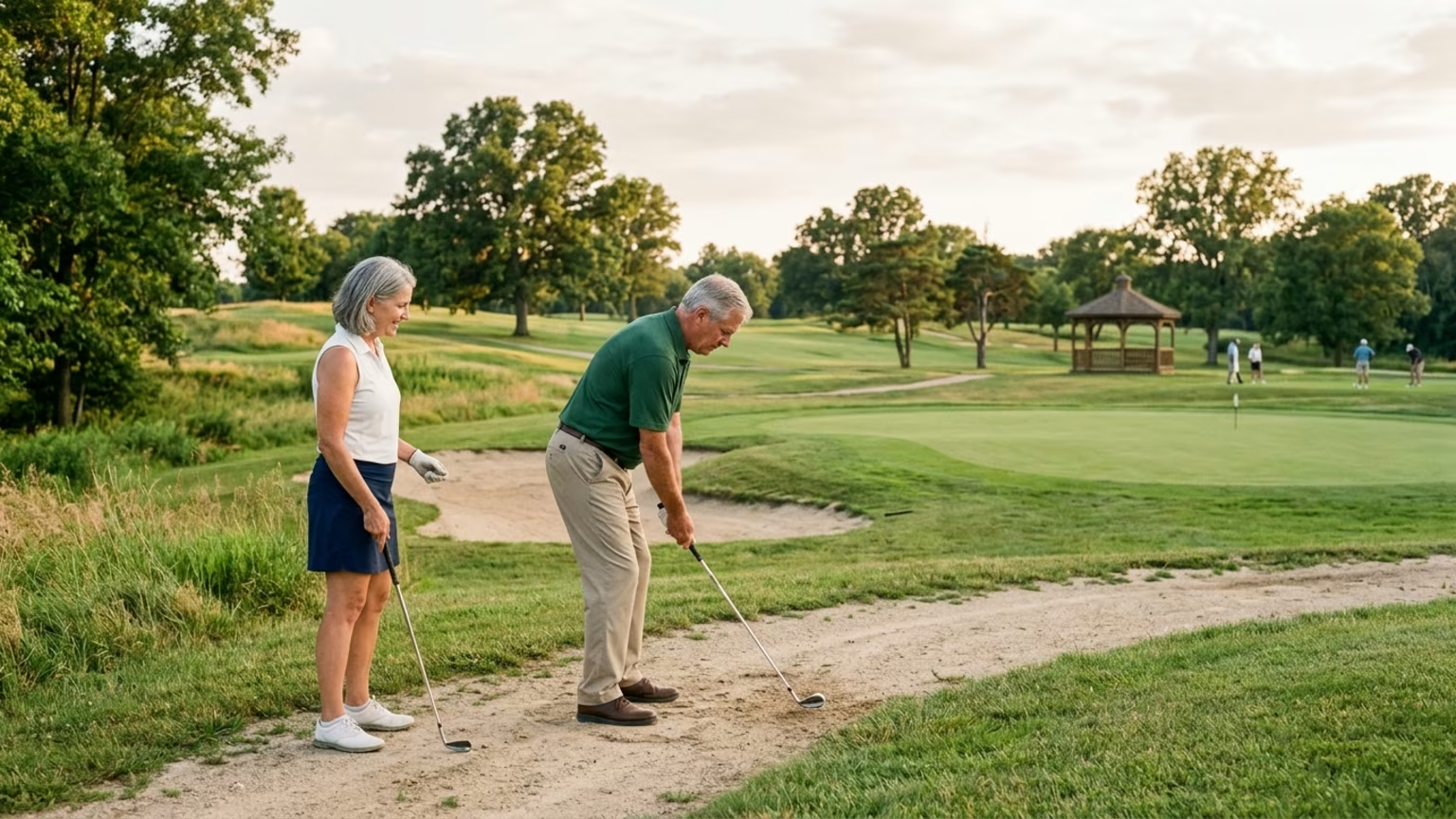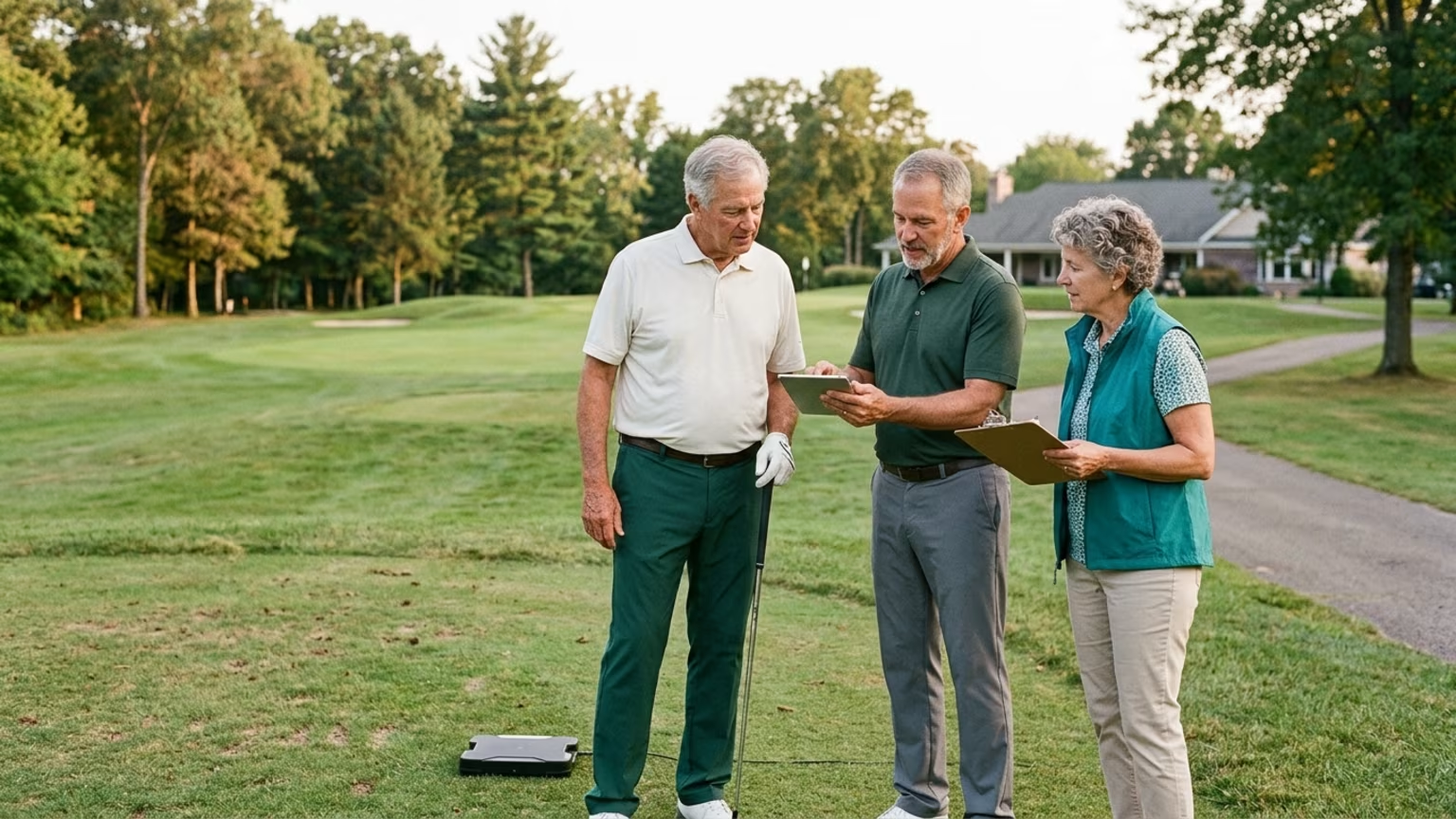

Learn how assessing physical deficits like hip strength and muscle power can help golfers over 40 build a joint-safe swing and prevent injury.




On August 28, 2026, the Junior Golf Support Association held a unique testing event in Tokyo. The Junior Golf Science Project took place at Arrows Lab & Gym inside the Nihombashi Mitsukoshi department store. Instead of a standard lesson on swing technique, the program functioned as a comprehensive sports physical examination. The project evaluated 12 junior golfers ranging from elementary school through high school.
The verifiable goal was to identify physical characteristics that remain hidden during ordinary golf practice. Organizers measured total muscle mass, body fat, jumping ability, and sports vision. They used advanced equipment comparable to systems operating at Japan's Ajinomoto National Training Center. This precise physical testing allowed coaches to connect underlying physiological data directly to golf conditioning.
Following the physical measurements, the participants underwent swing evaluations and mobility checks. The event featured individual lessons lasting roughly 15 minutes each. These sessions utilized a Detect golf simulator and a BodyTrack Golf System to measure weight transfer during shots. Instructors explicitly emphasized using each participant's existing physical traits rather than completely rebuilding their natural golf swing.
The biomechanics of a powerful golf swing require more than just general physical fitness. The Tokyo project highlighted the mechanics of power production by separating absolute strength from explosive ability. Measurements included hip-flexion and hip-extension strength testing. A player might possess adequate baseline strength but completely lack the hip extension needed to clear their body through impact.
The testing battery also included a rigorous repeated-sprint assessment. Participants completed six cycles consisting of five seconds of maximal running followed by five seconds of rest. This specific test assessed both initial speed and the vital capacity to reproduce that speed repeatedly. Sustaining mechanical output is exactly how a golfer maintains swing stability late in a long round.
Once the physical data was collected, it required proper translation to the golf swing. JLPGA tournament professional Chihiro Sato reviewed the test results with the participants. She helped link the physical findings to specific movement advice for the golf course. The core biomechanical lesson is that segmenting muscle groups helps identify very specific training priorities for rotational athletes.
While the Tokyo event focused on youth development, golfers over 40 face a far greater risk of physical decline. The saddest thing our team has witnessed is lifelong playing partners dropping out of our weekend groups. It usually begins with a nagging shoulder or knee issue they ignore until it finally requires surgery. That familiar pattern is exactly why we became entirely obsessed with golf longevity.
We do not have to stop playing as we age, provided we do the right maintenance work between rounds. Aging amateurs are highly vulnerable to a loss of repeat-power capacity. When your endurance and explosive strength fade, your swing technique inevitably breaks down by the back nine. This physical deficit forces older players into compensatory movements that place severe stress on the lower back.
A high score in absolute muscle mass does not automatically demonstrate a safer golf swing. Older adults must produce useful force quickly while strictly controlling joint and spinal loading. As we age, our fast-twitch muscle fibers diminish faster than our general physical strength. This creates a dangerous mechanical mismatch for golfers trying to maintain their previous driving distance.
The primary preventative adjustment for older players is adopting an assessment-led training framework. A 2026 Sports Medicine review concluded that physical training interventions can successfully improve key golf-shot outcomes. The strongest evidence for these improvements comes from controlled between-group studies. A separate review summarized by Evidenced Health analyzed 15 randomized controlled trials involving 583 healthy older adults.
That specific review found moderate-certainty evidence that power-focused training effectively improves muscle power in older populations. You should begin by assessing your lower-body strength, hip mobility, and aerobic capacity before selecting progressive exercises. Once you identify a weakness, you can address it with low-risk movement patterns. Controlled sit-to-stands, supported split squats, hip hinges, and rowing are excellent starting points for older players.
Our team used to stand on the first tee doing long, static hamstring stretches before every round. We mistakenly believed this was the proper way to prime the body for intense physical exertion. Research eventually proved that targeting the nervous system with dynamic movements creates a vastly superior foundation. We completely changed our warm-up routine and saw immediate gains in our opening tee shots.
You can integrate explosive work into your routine safely if you select low-impact versions first. Medicine-ball chest passes and rapid step-and-drive movements build power without heavy spinal loading. Building isometric strength for older players can also improve force production safely. Pair these strength movements with dedicated mobility practices to keep your tissues resilient.
Because golf is rotational and asymmetrical, a balanced program must account for right and left imbalances. Measuring the difference between core stability and core strength will help you protect your spine during play. You must stop any exercise immediately when pain or a loss of balance occurs. Older golfers with previous injuries should never treat fitness testing as a substitute for clinical medical evaluation.
The Tokyo project also combined physical testing with separate mobility and flexibility checks conducted by Human Adjust. Organizers framed stretching advice around continuing golf safely while keeping injury risk low over time. You should emulate this approach by treating mobility screening as a mandatory precursor to weightlifting. Identifying movement restrictions early prevents you from loading weight onto a compromised joint pattern.
Sustaining an active golf life requires treating your body like an interconnected mechanical system. By measuring your physical deficits carefully, you can target the specific weaknesses holding your swing back. Targeted assessments remove the guesswork from your weekly conditioning routine. What adjustments will you make to your mobility and strength habits this season to steer clear of injury hazards?
Follow Golfergy for practical insights on performance, mobility, recovery and healthy ageing. Stay connected for new articles, research-led guidance and ideas to help you play better for longer.


A 2026 report examined links between grip strength and longevity. Learn why hand endurance is a critical health marker for club control in older golfers.


Bob Toski's 100th birthday reminds golfers over 40 that hand control and efficient movement outlast brute force. Learn how to protect your swing today.
A new cellular study reveals how aging muscle affects your golf swing. Learn why older golfers need resistance training to protect their tissue capacity.
Explore practical resources on performance, recovery, mobility and golf longevity.
Read the Blog