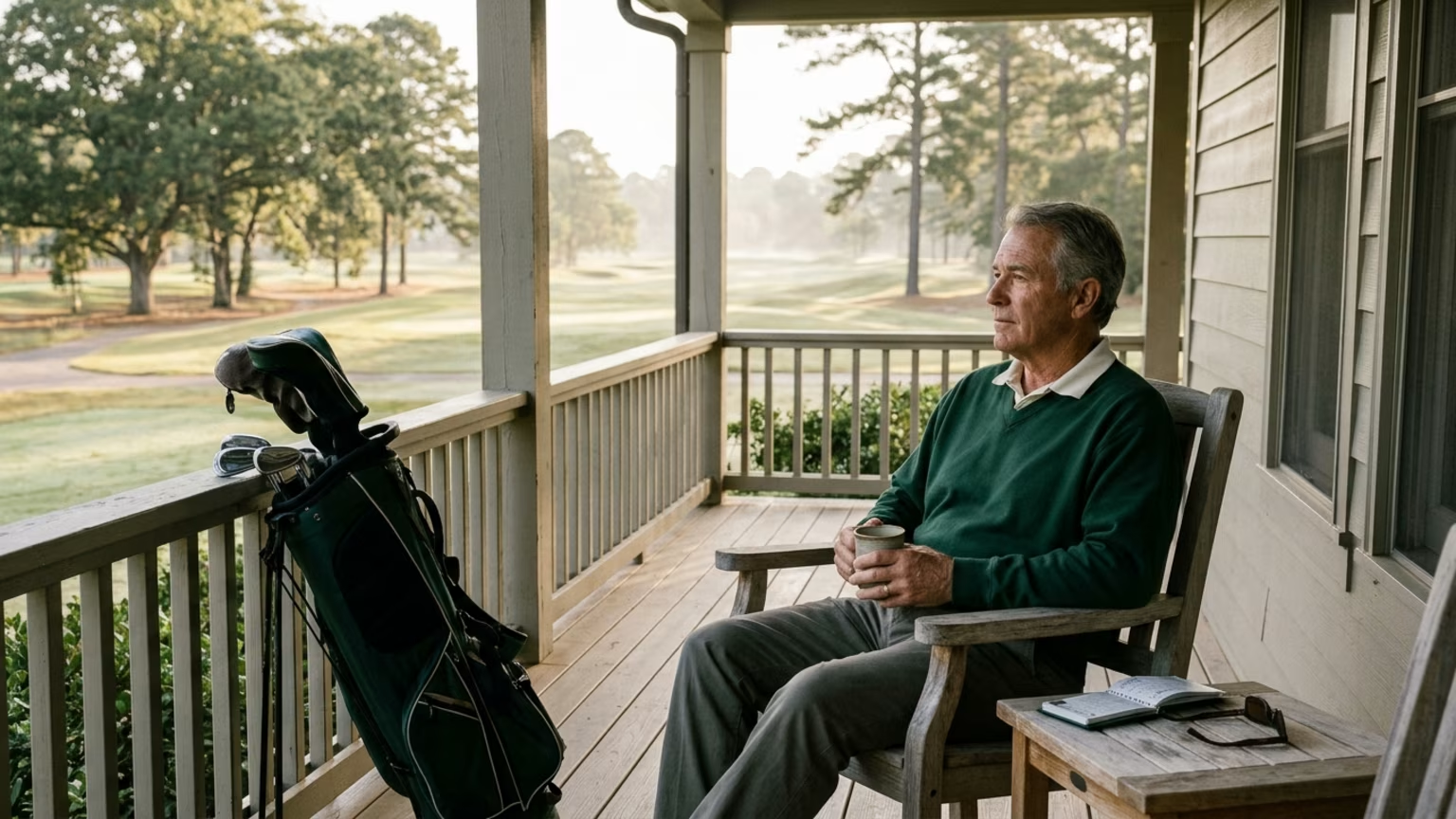

Plan sleep around early tee times, travel and consecutive rounds. Learn when persistent sleep problems merit professional advice.




Why do I feel tired and tight on the back nine after an early tee time? It is frustrating when the round you looked forward to starts feeling like work.
For golfers over 40, sleep belongs in the same planning conversation as the tee time and the journey to the course. Golf-industry recovery guidance treats rest as part of preparing for play and recovering between rounds. The useful goal is a workable routine before and after golf, rather than trying to manufacture a perfect night.
A poor night's sleep is not enough to identify the cause of mid-round tightness. Treat the tightness as something to notice rather than a reason to diagnose your sleep or your back.
Golf-industry guidance connects tiredness with difficulty maintaining concentration and coordination over a round. It also places sleep within a wider recovery picture. That supports paying attention to rest without making every uncomfortable turn a sleep problem.
Separate two observations: how sleepy you feel and how your body feels when you swing. They may both matter to your experience of the round. One does not explain the other by itself.
The available sources do not establish a specific change in swing path, distance or contact from mid-round tightness or poor sleep. The golf material is practical commentary rather than controlled research measuring these effects in older recreational golfers.
Its useful message is narrower. Golf asks you to sustain attention, judgment and repeatable movement. The industry guidance describes tiredness as a challenge to those demands.
For your next practice session, keep a note about attention separate from a note about contact. Losing your place in your shot routine is an observation. Striking the ball poorly is another observation, not proof of the same cause.
Our guide to recognizing fatigue across a round offers another way to think about workload without turning one poor shot into a diagnosis.
This research does not identify a safest stretch for a tired or tight golfer. The supported adjustment is to make room for a break and review optional practice demands.
Start with one decision: is more practice necessary today? Golf-industry recovery guidance includes sensible practice volume and breaks alongside sleep.
A pause is a workload choice, not a treatment for tightness. Avoid treating the next swing as a test of whether you can force your way back to normal. Keep the immediate aim modest: manage the demands still ahead rather than find an instant physical fix.
Sleep guidance for athletes recommends discussing persistent sleep problems with a healthcare professional. It also advises getting help when sleep trouble significantly affects daily life.
The concerns it identifies include:
These are reasons for a professional conversation rather than a self-diagnosis. A clinician can assess your individual situation. Do not treat persistent problems as an unavoidable part of ageing or an early golfing schedule.
The American Academy of Sleep Medicine recommends that adults get at least seven hours of sleep regularly. This is general health guidance, not a golf-performance target or a promise of a lower handicap.
At Golfergy, we favor steady habits over quick fixes. A useful approach is to plan for sleep across the golfing week rather than focus only on the night before an important round.
In its seasonal clock-change advice, the American Academy of Sleep Medicine recommends beginning bedtime adjustments gradually in advance. Applying that principle to early golf is a planning idea, not a tested golf protocol.
Where practical, move bedtime and wake time gradually ahead of an early start. The aim is to plan ahead rather than rely on a dramatic bedtime change the night before.
For the practical side, prepare equipment and travel arrangements ahead of time. Keep the task small: settle the departure plan before adding more jobs to the evening.
Look at the whole morning rather than the tee time alone. Travel and preparation are part of the schedule too. If the start leaves little room for sleep, review the plan before committing to it. The useful decision is about the timetable, not willpower at bedtime.
A repeatable sleep routine is a more useful planning focus than treating one night as a pass-or-fail test.
Golf-industry guidance identifies long journeys and unfamiliar sleeping environments as possible recovery challenges. It also points to changed routines and time zones.
When arranging a golf trip, include time to settle into the accommodation and routine. Treat that time as part of the trip rather than filling every available gap with golf.
The small planning task is to look at the journey and the first round together.
For consecutive rounds, place sleep alongside sensible practice volume and breaks. The golf-industry guidance presents these as parts of a broader recovery approach.
After a demanding round, review the next day's commitments before automatically adding practice. Ask one question: which golf demands are optional? That keeps the decision concrete without assuming a night's sleep will cancel every demand of the day.
Keep the review separate from your scorecard. The question for the evening is whether your plans leave room for rest before the next round. A disappointing finish is not a reason to turn recovery into another practice session. Give tomorrow's schedule the same attention you gave today's tee time.
For a related discussion, see our guide to planning the night after a round.
Use your next practice session to observe your body rather than test a sleep theory. Keep the check simple and take one observation at a time:
Add brief context about the previous night and any travel or early start. This is a personal record, not a diagnostic score or a way to prove why a shot went wrong.
At your next practice session, assess how your body feels and how readily you can stay engaged before deciding what to ask of it.
Follow Golfergy for practical insights on performance, mobility, recovery and healthy ageing. Stay connected for new articles, research-led guidance and ideas to help you play better for longer.


Adjust golf hydration to weather, walking and round length. Use thirst and personal patterns without treating a fixed bottle count as a target.

A practical look at protecting sleep between golf rounds, with guidance on regular bedtimes, early tee times, screens and caffeine timing.

Rest or easy movement after golf? Use comfort, symptoms and personal capacity to guide the next day, with clear signs to seek assessment.
Explore practical resources on performance, recovery, mobility and golf longevity.
Read the Blog


