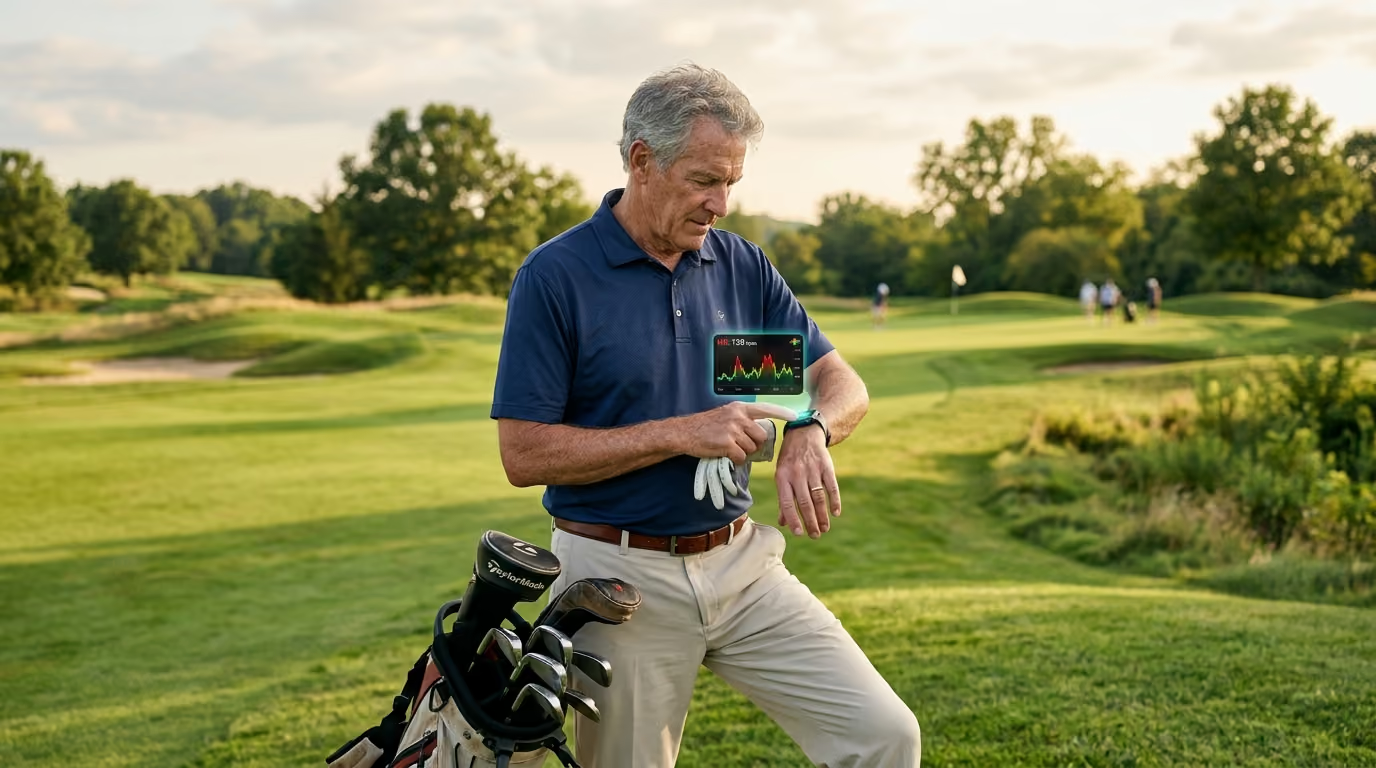
Modern sports medicine provides clear thermal recovery guidelines to help golfers choose between ice and heat for different types of post-round soreness.




Plunging your sore elbow into a bucket of ice water after a long round of golf seems like common sense. For decades, athletes have been told to freeze away their pain. We have been taught that inflammation is the enemy. We are told to stop it immediately using cold packs and anti-inflammatory pills.
Modern sports science shows that this old advice is wrong. Freezing a sore muscle can actually delay your body from healing. It stops the natural signals your body needs to rebuild tissue.
If you are a golfer over the age of 50, your body recovers differently than it did in your twenties. You cannot rely on outdated recovery models. You need a modern, evidence-based plan to keep your joints moving and your swing fluid.
This guide provides a clear protocol for managing post-round soreness. It compares thermal therapies to help you make better recovery decisions. You will learn when to use cold, when to use heat, and how to keep your body ready for the next tee time.
Imagine finishing a long 36-hole weekend. You walk off the eighteenth green and make your way to the parking lot. As you lift your heavy golf bag into the trunk of your car, your body begins to protest.
Your lower back feels like a stiff piece of wood. Your lead elbow has a dull, burning sensation near the bone. Your trail knee feels warm and makes a clicking sound when you step.
At this moment, most golfers make a critical mistake. They treat all of these different aches with the exact same remedy. They grab a bag of ice and press it against their lower back, their elbow, and their knee.
This blanket approach can cause more harm than good. Your body is experiencing different types of physical stress in each of these areas. Your stiff back is a muscle spasm issue. Your burning elbow is a tendon issue. Your clicking knee may be an acute joint flare-up.
To recover quickly, you must treat each of these issues based on their unique physical causes. Treating a stiff muscle the same way you treat a swollen joint will delay your recovery. It can keep you off the course for weeks instead of days.
Understanding how your body reacts to golf movements is the first step toward better recovery. Amateur golfers over the age of 50 have a much higher injury rate than younger players. Research from the Titleist Performance Institute shows that 65 percent of senior amateurs suffer from golf-related injuries. This is notably higher than the 58 percent injury rate seen in players under 50.
Your tissues lose water and elasticity as you age. Your muscles take longer to repair after repetitive rotational movements. If you want to play pain-free golf for another twenty years, you must learn to listen to these post-round warning signs.
For many years, the standard treatment for any sports injury was the RICE protocol. This stood for Rest, Ice, Compression, and Elevation. It was a simple formula that doctors and coaches recommended for every bump and bruise.
Today, sports medicine has moved away from this passive model. A landmark publication in the British Journal of Sports Medicine introduced a new framework called PEACE and LOVE. This updated approach focuses on active recovery and long-term tissue health. It is especially useful for mature golfers who want to maintain their mobility.
The first phase of recovery is the acute phase. This phase lasts for the first one to three days after you feel an injury or severe soreness. The PEACE acronym helps you manage this initial period safely.
First, you must protect the sore area. This means you restrict movements that cause sharp pain. Do not try to stretch or work through a sharp, pinching sensation.
Next, elevate the affected limb if you can. Keep the sore joint or muscle above the level of your heart. This simple gravity trick helps excess fluid drain away from the joint. It prevents severe swelling without stopping your body from healing.
The third step is the most controversial for many golfers. You must avoid taking anti-inflammatory drugs like ibuprofen or using ice on muscle strains.
Your body uses inflammation to heal damaged tissues. White blood cells travel to the sore area to repair muscle fibers. When you take pills or apply ice, you block these vital healing signals. A meta-analysis in the Journal of Athletic Training found that icing acute muscle strains did not improve functional recovery. It actually delayed the overall healing process.
After avoiding ice, you should compress the area. Use an elastic bandage or a compression sleeve. This provides support and keeps swelling under control. It keeps the tissue stable without freezing the blood vessels.
The final part of the acute phase is education. You must realize that passive treatments like lying on the couch do not speed up recovery. Your body needs a plan for active movement. You must focus on what your body needs to heal rather than looking for a quick chemical fix.
Once the first few days have passed, you transition to the LOVE phase of recovery. This phase is about returning to movement and building strength.
The first step in this phase is to load the tissues. You should return to light, pain-free movements as soon as possible. Gently moving your joints helps stimulate tissue repair. It tells your body to lay down new, strong muscle fibers along the correct lines of movement.
The second step is optimism. Your brain plays a massive role in how quickly you recover from a hard weekend of golf.
Research published in the National Center for Biotechnology Information shows that dispositional optimism is a major predictor of physical recovery. Golfers with a positive outlook experience faster healing rates. They also deal with less stress during their recovery period.
The third step in active recovery is vascularization. This means increasing your heart rate to pump fresh, nutrient-rich blood through your body.
Light cardiovascular exercise is the best way to achieve this. You can ride a stationary bicycle or take a brisk walk. This low-impact movement drives oxygen to your muscles without overloading your golf-specific joints.
The final step is structured exercise. This involves performing specific movements to restore your strength, balance, and flexibility.
Do not avoid using your sore joints forever. Gentle, targeted exercises will rebuild your mobility. This ensures your body can handle the physical forces of your golf swing during your next round. Using modern injury prevention techniques will help you stay active.
If you feel sudden joint pain on the course, you need a plan you can use right away. Do not wait until you get home to start managing the issue.
First, stop playing if you feel sharp, shooting pain. Continuing to swing through a joint injury will cause more damage. Walk back to the clubhouse or call for a cart to transport you safely.
Once you are off the course, sit down and elevate the injured limb. If you twisted your ankle, prop it up on a chair so it sits higher than your heart.
Apply a compression wrap immediately. Wrap an elastic bandage firmly around the joint. Start from the point farthest from your body and wrap upward. Ensure the wrap is snug but not tight enough to cut off your blood circulation.
Do not take over-the-counter anti-inflammatory pills. These drugs will block the natural healing signals your body needs to start repairing the joint.
If you have severe, throbbing pain, you can use local cold therapy for brief pain relief. Apply an ice pack wrapped in a thin towel for no more than ten minutes. This will numb the nerve endings and ease your discomfort.
Do not leave the ice on any longer. Your goal is to manage extreme pain, not to freeze the tissue completely. Once the sharp pain subsides, focus on resting the joint and keeping it elevated.
By avoiding the temptation to freeze the injury, you protect your body's natural repair systems. This simple shift in your immediate response can shave days off your total recovery time.
To maintain your physical health over age 50, you need a structured recovery routine. This routine should combine active movement with strategic temperature therapies.
When dealing with post-round aches, timing is everything. You must understand the forty-eight hour thermal window.
During the first twenty-four to forty-eight hours after a hard round, your body is managing acute tissue stress. If you have a true joint flare-up with visible swelling, cold therapy can be used for short periods. It acts as a safe, drug-free pain killer.
After forty-eight hours, your recovery priority changes. Your focus must shift to increasing blood circulation and reducing joint stiffness. This is when heat becomes your primary tool. Heat opens up blood vessels and delivers the nutrients needed for tissue repair.
If you suffer from chronic lower back stiffness, dry heating pads are not your best option. They can dehydrate your skin and fail to penetrate deep into your muscles.
Instead, use moist heat. You can use a moist heating wrap or take a warm, humid bath. Apply the moist heat to your lower back for fifteen to twenty minutes.
Always place two layers of towels between the heat source and your skin. This protects your skin from thermal injury while allowing the deep heat to relax your tight muscles.
Focus entirely on relaxing your lower back during this time. Let the heat soften the tissues before you attempt any physical movement. This prepares your body for the next step of your routine.
If you have played multiple rounds over a three-day weekend, your whole body will feel fatigued. Local heat wraps will not be enough to refresh your system.
In this scenario, cold-water immersion is highly effective. Fill a tub with cold water between fifty and fifty-nine degrees Fahrenheit.
Submerge your body up to your chest for ten to twelve minutes. This cold exposure reduces systemic inflammation and lowers your perceived level of fatigue.
It helps flush metabolic waste from your legs and torso. When you exit the tub, your body will naturally pump fresh blood back to your skin and muscles. This process of warming back up stimulates your circulation and speeds up your systemic recovery.
After using your temperature therapies, you must get your blood moving. Do not sit on the couch for the rest of the day.
Spend fifteen minutes on a stationary bicycle at a very low resistance level. Keep your pedaling smooth and easy.
If you do not have a bicycle, take a gentle walk around your neighborhood. Focus entirely on turning your trail hip through a full, easy range of motion with every step.
This light movement acts as a natural pump. It pushes fresh blood through your body and keeps your joints from locking up. It is the most effective way to maintain your long-term joint mobility after a long day on the course.
Many golfers make simple mistakes when trying to manage their post-round recovery. These errors can prolong your pain and increase your risk of long-term injury.
The most common mistake is applying ice to "Golfer’s Elbow" or medial epicondylitis. This condition causes pain on the inside of your elbow near the bone.
Many players assume this is an inflammatory issue that needs ice. In reality, Golfer's Elbow is a degenerative tendon issue. It is caused by a breakdown of tendon tissue from repetitive swing forces.
Tandons have a very poor blood supply compared to muscles. Applying ice to a degenerative tendon constricts the blood vessels even further. This starves the tendon of the blood and nutrients it needs to rebuild.
Instead of using ice, you should use progressive loading protocols. You must perform slow, controlled resistance exercises to strengthen the tendon. Avoid freezing the area, as this only delays the tissue from repairing itself.
Another major pitfall is total immobilization. When a muscle or joint feels sore, many mature golfers choose to rest completely for several days. They sit in a comfortable chair and avoid all physical movement.
This prolonged rest is incredibly damaging to golfers over fifty. When you stop moving, your muscles begin to atrophy very quickly. Your joints lose their natural lubrication and become stiff.
This stiffness changes your swing mechanics when you return to the course. You will end up compensating for your stiff joints by putting extra stress on your lower back or shoulders.
To break this cycle, you must replace total rest with active recovery. Move your body within a pain-free range of motion every single day. This keeps your tissues supple and prepares your body for the physical demands of the game.
Many golfers keep a bottle of anti-inflammatory pills in their golf bags. They pop these pills before, during, and after their rounds to keep pain at bay.
This habit mask your body's natural warning signs. When you numb your pain with drugs, you cannot feel when your swing is damaging your tissues. You will continue to overload your joints, leading to more severe injuries down the road.
Additionally, these drugs can damage your stomach lining and kidneys when used long-term. They also block the natural immune response that your body uses to rebuild muscle fibers.
If you cannot play a round of golf without taking pain-reducing pills, your body is telling you to make a change. You need to address the root cause of your pain through proper recovery strategies and strength training.
Your physical recovery is directly impacted by the equipment you use on the golf course. The wrong gear can place unnecessary stress on your joints with every single swing.
If you are still playing stiff steel shafts in your irons, your joints are paying the price. Steel shafts transmit a high amount of vibration directly into your hands, wrists, and elbows.
This shock absorption issue is a major cause of chronic elbow and shoulder pain in older golfers. Switch to high-quality graphite shafts.
Modern graphite shafts are incredibly stable and consistent. They absorb a massive amount of the ground impact force when you hit down on the ball.
This simple equipment change can dramatically reduce the post-round soreness in your upper body. It allows you to practice more often without aggravating your joints.
Take a close look at the grips on your golf clubs. If your grips are worn, thin, or too small, you will naturally squeeze the club too tightly.
Excessive grip pressure tension travels straight up your forearms to your elbows. This constant muscle tension leads to chronic tendon irritation over eighteen holes.
Consider switching to midsize or oversized wraps. These larger grips allow you to hold the club securely with less hand pressure.
Your hands and forearms can remain relaxed throughout your swing. This reduces the mechanical strain on your elbows and shoulders, making it much easier to recover after your round.
The shoes you wear on the course have a major impact on your knees and lower back. Many traditional golf shoes have heavy, rigid soles with long spikes.
These shoes lock your feet firmly into the turf during your swing. While this provides great traction, it also prevents your feet from rotating naturally.
This rotational force has to go somewhere, so it travels up into your knees and lumbar spine. If you suffer from joint pain, try switching to flexible, spikeless golf shoes.
These shoes allow your feet to move and adapt to the ground more naturally. They absorb shock better than rigid spiked shoes, protecting your joints from repetitive rotational stress. Investing in the right footwear is a key part of healthy ageing for active golfers.
To play your best golf and protect your joints as you age, you must prioritize active, blood-flow-driven recovery over passive freezing and complete rest.
Follow Golfergy for practical insights on performance, mobility, recovery and healthy ageing. Stay connected for new articles, research-led guidance and ideas to help you play better for longer.


Explore practical resources on performance, recovery, mobility and golf longevity.
Read the Blog