Plan fluid access for hot golf rounds, understand hydration research, and build sensible recovery habits without fixed targets or mandatory sports drinks.




How should I plan my drinks for a long round in the heat? It is frustrating to reach the back nine feeling tight or flat and wonder whether your water bottle holds the answer. You want a sensible plan without turning every round into a nutrition calculation.
The useful starting point is access rather than a fixed drinking target. Think about where drinks will come from during play and what happens after the final putt. Weather, walking and your own circumstances belong in that plan.
Tightness alone does not establish the cause, and the hydration evidence does not explain an individual golfer's stiff back or restricted turn. Keep the symptom question separate from the practical task of having fluids available.
The American College of Sports Medicine, or ACSM, says hydration supports temperature regulation and muscle function. It also supports mental sharpness and performance. Those are good reasons to plan ahead without assuming that every uncomfortable swing means dehydration.
ACSM identifies several hydration challenges that can develop with age. These include weaker thirst and less total body water. Slower or lower sweat responses, greater urine losses and longer rehydration time can also play a part. That does not mean every golfer over 40 experiences the same changes.
Walking deserves attention too. Golf News reports that a study of 16 low-handicap male golfers compared walking with a caddie against riding in a cart at 19°C. Core temperature was higher during the walking round.
The same reporting notes that much of the golf hydration research comes from the UK and Ireland. Those findings may not transfer neatly to hotter or more humid courses. Use them as context for planning rather than a universal rule for every golfer and climate.
Golf research reported by Golf News links a dehydrated study condition with shorter shots and greater distance-judgment error. It does not establish a specific change in swing path or strike location.
In that study, mean 9-iron distance was 128.6 metres when hydrated and 114.6 metres when dehydrated. Reported distance-judgment error increased from 4.1 to 7.9 metres.
These are study findings, not a prediction for your next round. They do not show that drinking a certain amount will restore a particular distance or improve your score.
The practical lesson is to give hydration a place in preparation rather than treating it as a swing correction. If your usual club starts coming up short, the result alone cannot tell you what caused it. Adding a technical swing change and a new drinking strategy at the same time also makes your own observations harder to interpret.
For Golfergy, the useful distinction is between preparation and diagnosis. Plan fluid access before play. Keep personal decisions about recurring tightness or pain with a qualified clinician rather than assigning every poor shot to dehydration.
The hydration research does not identify a safest stretch. The practical adjustment supported here is to check your access to fluids, not to treat stretching or drinking as a remedy for tightness.
At a convenient pause, keep the planning task simple:
These are editorial planning steps, not a tested drinking protocol. They create opportunities to drink without prescribing how much an individual should consume.
Do not turn the plan into a contest to finish the most water. A review in The Open Sports Sciences Journal recommends individualized hydration strategies based on conditions and anticipated fluid losses. It also warns that drinking beyond losses can cause exercise-associated hyponatraemia.
If a health condition or clinician-directed fluid restriction affects your intake, get personal guidance rather than replacing that plan with general exercise advice.
Build a brief planning check into your usual week, then revisit it before each round. The aim is a repeatable habit that fits the day rather than a rigid volume that follows you everywhere.
Start with the forecast and your playing format. Then decide how drinks will be carried or obtained. Include the later part of the round rather than planning only for the opening holes.
A walking round also belongs within a broader view of course demands. Golfergy's guide to planning for the full walking load offers related reading on walking, carrying and consecutive rounds.
Use convenient pauses such as the tee or turn as reminders to check in. ACSM's caution about weaker thirst with age supports creating opportunities to drink instead of relying exclusively on a strong thirst signal. A reminder is not a command to drink a fixed amount.
No. ACSM describes water as a hydrating option that adds no calories and says all fluids count. It also notes that carbohydrate-containing sports drinks may benefit people with higher training volumes.
That makes sports drinks an option for some circumstances rather than a requirement for golf. The useful question is whether a drink fits your circumstances, not whether its packaging looks more athletic than water.
For a wider view of this topic, see Golfergy's resource on thinking beyond a single drink choice.
Keep the post-round plan proportional. Normal food and drink can be part of recovery, and ACSM notes that older athletes may take longer to rehydrate after hard activity. There is no golf-specific post-round quantity established here.
Before teeing off, decide where a drink will be available after play. Include the walk back to the car in that practical plan rather than treating the final green as the end of every physical demand.
If another round is coming soon, place hydration within your wider recovery routine. Golfergy's article on managing fatigue across consecutive playing days provides related reading without making a special drink the centre of recovery.
Use your next practice session to observe your body rather than test a hydration promise. Notice how comfortable your usual swing feels at the start. Check again later without forcing a larger turn.
Keep the observations separate: body comfort, shot outcome and access to drinks. A short note about the weather and whether fluids were easy to obtain can help you review the plan afterward. It is a planning record, not a dehydration test.
At your next practice session, assess one thing at a time. Start with how your body feels through your normal swing, then review whether your fluid-access plan was practical enough to repeat.
Follow Golfergy for practical insights on performance, mobility, recovery and healthy ageing. Stay connected for new articles, research-led guidance and ideas to help you play better for longer.



Plan sleep around early tee times, travel and consecutive rounds. Learn when persistent sleep problems merit professional advice.

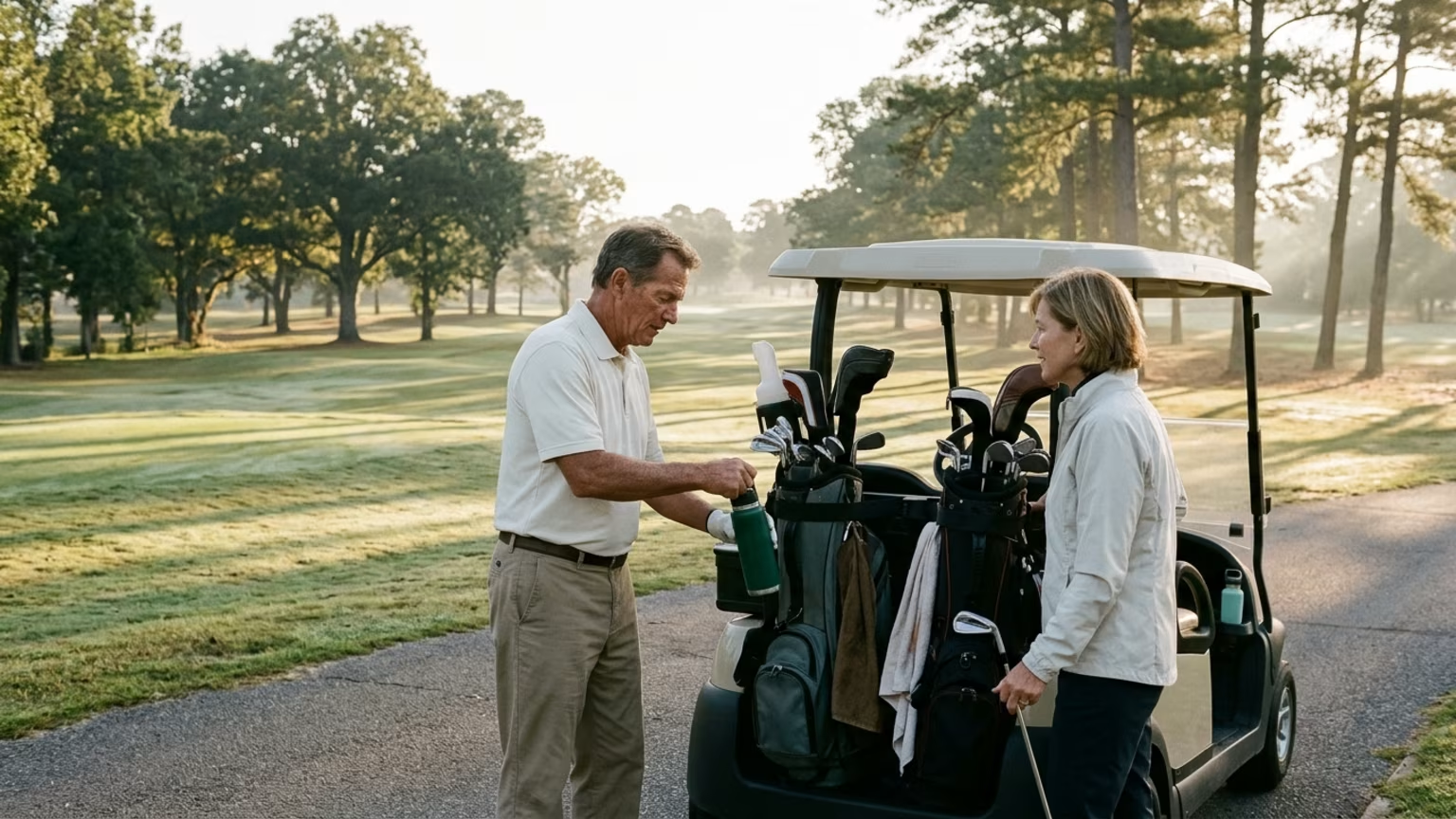
Adjust golf hydration to weather, walking and round length. Use thirst and personal patterns without treating a fixed bottle count as a target.
A practical look at protecting sleep between golf rounds, with guidance on regular bedtimes, early tee times, screens and caffeine timing.
Explore practical resources on performance, recovery, mobility and golf longevity.
Read the Blog