A tight lower back on the back nine often points to systemic inflammation that you can actively reduce with better nutrition.




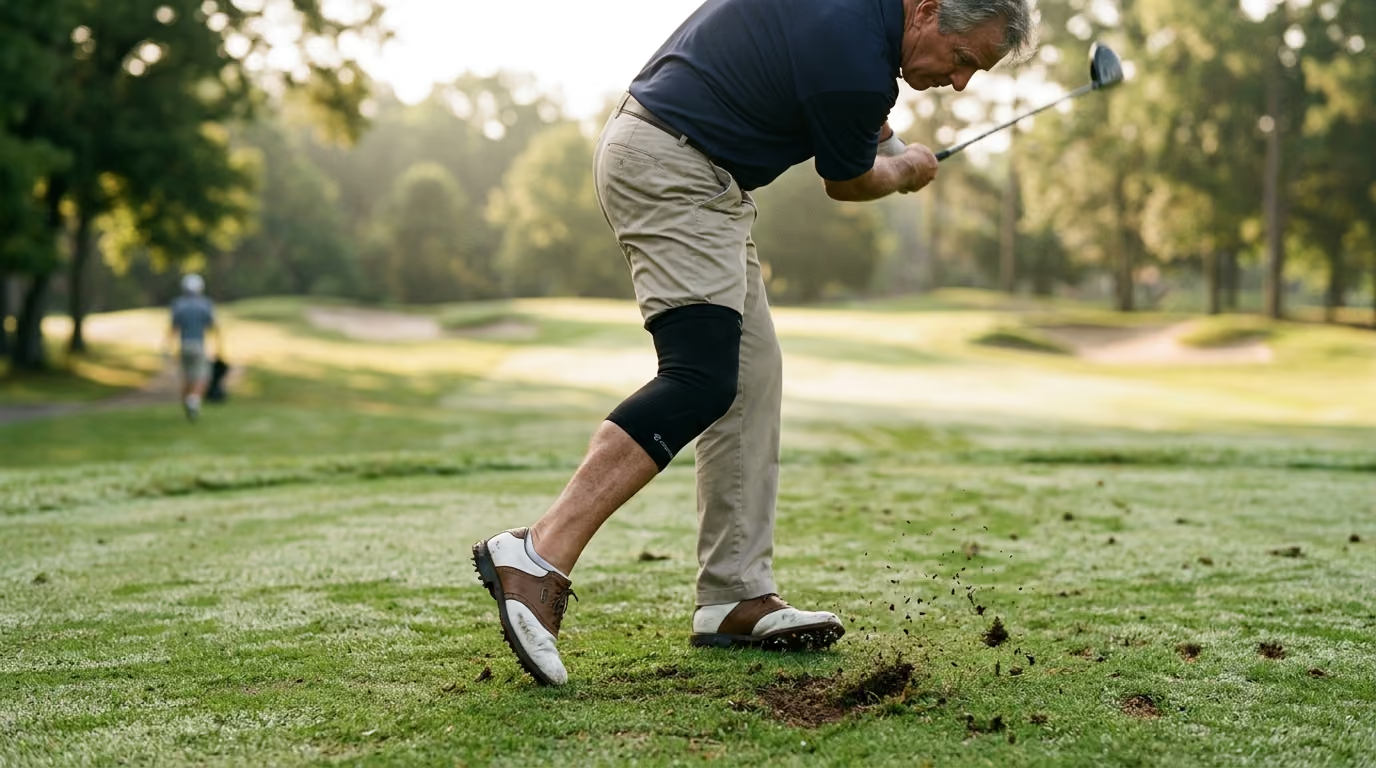
You are standing on the tee box of the fourteenth hole. The afternoon sun casts long, gold shadows across the fairway. Your lower back feels stiff and heavy. Your shoulders feel tight.
You try to swing the club. You focus entirely on turning your trail hip. The movement feels restricted, like a rusty hinge. Your clubhead speed drops.
The ball flies short. It slices into the deep right rough. You wonder why your body feels so old today.
This physical decline is common on the back nine. It is not just a swing flaw. It is a sign of systemic joint inflammation.
The saddest thing I have seen in golf is watching lifelong playing partners slowly drop out of our weekend group. It usually starts with a nagging shoulder or knee issue they ignore until it requires surgery. That pattern is exactly why I became obsessed with golf longevity. We do not have to stop playing as we age, provided we do the right maintenance work between rounds.
We can protect our bodies by changing what we eat and drink. This guide provides a clear blueprint to fight joint pain. It helps you maintain your swing speed for years to come.
You can read more golf performance articles to stay active on the course.
Acute swelling is a helpful reaction. If you twist your ankle, your body sends fluid to heal it. This process is normal and temporary.
Systemic swelling is different. It is a quiet, continuous fire in your tissues. It slowly wears down your joint surfaces.
This chronic issue often stems from poor daily habits. It causes your knees and spine to feel stiff every morning. It makes recovery after eighteen holes slow and painful.
Many players think golf is a low-risk sport. Research shows a different picture. The lifetime injury rate for amateur golfers is 56.6 percent.
Most of these injuries happen because of repetitive swing stress. When your body is inflamed, muscles cannot absorb the force. The joints take the hit instead.
Amateurs suffer most from elbow injuries. This injury accounts for 20.5 percent of amateur cases. It often comes from hitting behind the ball, which sends strong vibrations up the club.
Professional golfers play under intense physical demands. Their lifetime injury rate is 73.5 percent. This is much higher than the amateur rate.
Professionals experience injuries in specific areas. They suffer hand and wrist injuries 51.5 percent of the time. They also suffer lower back injuries 40.9 percent of the time.
These numbers show that golf is tough on the body. Even the best swings cannot protect you if your body cannot repair itself. Using smart golf injury prevention strategies is the best way to stay on the course.
Repetitive twisting forces your joints to work hard. Each swing puts pressure on your spinal discs. It also stresses your lead hip.
If your tissues stay inflamed, the cartilage begins to thin. This leads to bone-on-bone friction.
You can stop this process by changing your nutrition. Feeding your body the right nutrients allows tissues to rebuild. It keeps your joints sliding smoothly.
Your digestive system contains trillions of microscopic organisms. This is your gut microbiome. This community controls much of your immune system.
If your gut is unhealthy, it sends warning signals. These signals travel through the blood. They can trigger pain in distant areas like your shoulders.
This path is known as the gut-joint axis. It connects your digestion directly to your joint comfort.
Eating processed foods damages your intestinal lining. Highly refined sugars and artificial additives cause irritation. They create microscopic gaps in your gut wall.
This condition lets small food particles leak into your blood. Your immune system views these particles as invaders. It attacks them with swelling.
This swelling spreads throughout your body. It settles in your active joints. Your golf swing becomes painful and restricted.
Research from Harvard Medical School shows how diet protects joints. Eating anti-inflammatory foods quietens the immune response. It helps lower systemic pain.
The studies show that a clean diet slows joint wear. It helps prevent cartilage from breaking down.
This scientific proof shows that food is medicine. What you eat directly affects how you swing the club. It is a core pillar of healthy ageing.
You can build a physical defense against aging. Eating whole foods acts like a shield. It keeps your tissues supple and resilient.
This buffer helps you recover from a long day of walking. It reduces the stress of back-to-back playing days.
A healthy gut means less knee pain on the eighteen-hole walk. It means more energy for the final holes. It keeps you swinging without pain.
Walking four hours in the sun drains your body. You lose water through sweat and breathing. Many golfers do not realize how much they lose.
A loss of just 1 percent to 2 percent of body mass is dangerous. It harms your brain and muscle coordination.
Your nervous system slows down. Your muscles cannot contract with the same speed. Your swing sequence falls out of time.
Dehydration directly ruins your tee shots. A research study measured golfers who lost mild amounts of water.
Their average shot distance dropped from 128.6 meters to 114.6 meters. That is a loss of fourteen meters.
This loss happens because dehydrated muscles lose their elastic power. You cannot generate speed from your lower body. Your drives become shorter and weaker.
Distance is not the only thing that suffers. The same study showed a 50 percent drop in accuracy.
Your ball flies wider of the target. Your iron shots miss the green more often.
This happens because your brain struggles to coordinate fine movements. Your hands cannot release the club at the correct split-second. Your consistency disappears.
Your brain is highly sensitive to water loss. When you are dehydrated, your mental math fails.
Errors in judging target distance more than doubled in the study. You might think the pin is 150 yards away when it is 165 yards away.
This mental fatigue leads to poor club selection. It can ruin a good scorecard on the back nine. Staying hydrated is vital for golf longevity.
Your recovery plan starts before you arrive at the course. Drink sixteen ounces of water two hours before your tee time.
This gives your kidneys time to process the liquid. It makes sure you start the game fully hydrated.
Do not chug water right before the first swing. This only bloats your stomach and slows you down.
Set a simple schedule for drinking water. Take two large sips on every odd-numbered tee box.
This regular pattern keeps your hydration steady. It prevents the sudden crash that happens on the back nine.
Add a small pinch of sea salt or an electrolyte packet to your bottle. This helps your cells absorb the water faster. It keeps your muscles functioning well.
Avoid the hot dogs and candy bars at the turn. These foods spike your blood sugar. They cause a sharp energy drop three holes later.
Pack a handful of raw walnuts and fresh blueberries. Walnuts provide healthy omega-three fatty acids. Blueberries contain antioxidants that protect your tissues.
These snacks keep your energy level flat and stable. They help quiet joint pain while you walk.
When you eat and drink on the course, keep it simple. Focus entirely on chewing slowly.
Do not rush your snacks while walking fast. Sit down for a moment on the cart or bench.
This keeps your nervous system calm. It helps your body digest the nutrients properly.
Your round does not end when you hole out on eighteen. Your body needs immediate attention to start post-round recovery. You must replace the water weight you lost.
Drink twenty ounces of water within the first hour. Sip it slowly rather than gulping it down.
This helps rebuild your blood volume. It keeps your joints lubricated after a long day of impact.
The golf swing is an explosive movement. It causes micro-tears in your shoulder and back muscles. These tears need raw material to heal.
Eat twenty to thirty grams of high-quality protein quickly. Clean whey protein or lean chicken works best.
This protein kickstarts the muscle rebuilding process. It prevents the deep muscle soreness that can last for days.
Your muscles store sugar for energy. This sugar is called glycogen. Walking and swinging for four hours drains these stores.
Eat a clean source of carbohydrates after your round. Sweet potatoes or brown rice are excellent options.
This restores your energy levels. It prevents the heavy fatigue that makes you want to sleep all evening.
You must act quickly after you finish playing. The ideal recovery window is thirty to sixty minutes.
During this time, your muscles are highly sensitive to nutrients. They absorb protein and sugar much faster.
If you wait too long, recovery slows down. You will feel stiffer the next day.
You cannot rely only on on-course snacks. Your daily meals build the foundation for joint health.
The Mediterranean diet is the most studied anti-inflammatory pattern. It focuses on whole, unrefined foods.
This eating style uses olive oil as the main fat source. It includes plenty of vegetables, fish, and nuts.
Eat wild-caught salmon or sardines twice a week. These fish are loaded with omega-three fatty acids. These fats cool down joint inflammation.
Add dark leafy greens to your meals. Spinach and kale provide magnesium and key vitamins.
Eat a cup of mixed berries every day. Berries contain natural compounds that block inflammatory pathways.
Gout is a painful form of arthritis. It often attacks the big toe or the knee. It can ruin a golf season instantly.
Research shows that an anti-inflammatory diet reduces gout risk by up to 60 percent.
This diet lowers uric acid levels in your blood. It keeps painful crystals from forming in your joints.
Osteoarthritis is the most common joint issue for older golfers. It is the slow wear and tear of cartilage.
Eating anti-inflammatory foods helps protect this cartilage. It lowers the enzymes that break down joint tissue.
This daily defense helps keep your spine flexible. It allows you to maintain your rotational mobility as you age.
Curcumin is the active compound in turmeric. It is one of the strongest natural anti-inflammatories.
It helps reduce joint stiffness and muscle soreness. The effective daily dose is 200 mg to 1,000 mg.
But raw curcumin is hard for your body to absorb. Make sure to choose a supplement paired with piperine. Piperine is black pepper extract that boosts absorption.
Take curcumin daily for 8 to 12 weeks. Research shows it can be as effective as ibuprofen for joint pain.
Tart cherry juice contains high levels of polyphenols. These compounds reduce oxidative stress in your muscles.
Drink 8 to 12 ounces of tart cherry juice twice daily. You can also use one ounce of concentrate mixed with water.
Use a loading phase when you have a big tournament coming up. Drink it for 4 to 5 days before the event. Continue for 2 to 3 days after.
This protocol speeds up your strength recovery. It keeps your hands and wrists feeling fresh.
Magnesium is vital for muscle function. It helps your muscles relax after contracting.
Take 350 mg of magnesium glycinate two hours before your round. This form of magnesium is gentle on the stomach.
It helps lower your perceived physical effort during the game. It protects your muscle tissues from excessive damage.
This simple addition supports your overall strength training recovery.
Do not take all your supplements at once. Space them out during the day.
Take your magnesium in the evening. It helps calm your nervous system and improves sleep.
Take your curcumin with a meal that contains healthy fats. This further improves its absorption rate.
Many golfers believe magnesium stops muscle cramps. This is a common misunderstanding.
Large reviews from the Cochrane Library show a different truth. Magnesium does not reduce cramps in older adults.
It does not lower the frequency or the pain of cramps. Use hydration and proper salt intake to manage cramps instead.
Many players love to drink a cold beer after eighteen holes. This habit ruins your recovery.
Alcohol disrupts your sleep cycle. It stops your body from entering deep sleep.
Deep sleep is when your muscles repair themselves. Alcohol also increases swelling in your joints.
Relying on ibuprofen or other NSAIDs is dangerous. These drugs offer quick pain relief but carry a high price.
They damage your stomach lining over time. This damage ruins your gut-joint axis.
A damaged gut leads to more systemic inflammation. This makes your joint pain worse in the long run.
Do not take high doses of antioxidants during heavy training weeks. This includes tart cherry juice and vitamin C.
Your muscles need some inflammation to grow stronger. Swelling is the signal that tells muscles to adapt.
If you block this signal, you stop your progress. Save these supplements for multi-day tournaments or heavy travel weeks.
Your golf gear affects your physical health. Light, flexible graphite shafts absorb vibration. Heavy steel shafts do not.
Every strike sends shockwaves up the shaft. These waves travel into your wrists and elbows.
Switching to graphite shafts reduces this daily impact. It protects your joints from micro-trauma.
Thin grips force you to squeeze the club too tight. This extra tension travels up your forearm. It is a major cause of golfer's elbow.
Install midsize or jumbo grips on your clubs. These thicker grips let you hold the club with less hand pressure.
Focus entirely on keeping your hands relaxed during the swing. This simple change saves your elbows from pain.
Stiff golf shoes with heavy spike plates lock your feet to the ground. This stops your natural foot rotation during the swing.
When your feet cannot turn, other joints must twist instead. This extra twist goes straight to your knees and lower back.
Choose flexible, spikeless golf shoes. They allow your feet to move naturally. This protects your lower joints from painful torque.
True golf longevity starts in the kitchen, because a body free of systemic inflammation is a body that can swing freely for a lifetime.
Revisit this guide when your recovery times between rounds begin to drag, or when you notice unexplained stiffness on the back nine.
Follow Golfergy for practical insights on performance, mobility, recovery and healthy ageing. Stay connected for new articles, research-led guidance and ideas to help you play better for longer.


Explore practical resources on performance, recovery, mobility and golf longevity.
Read the Blog