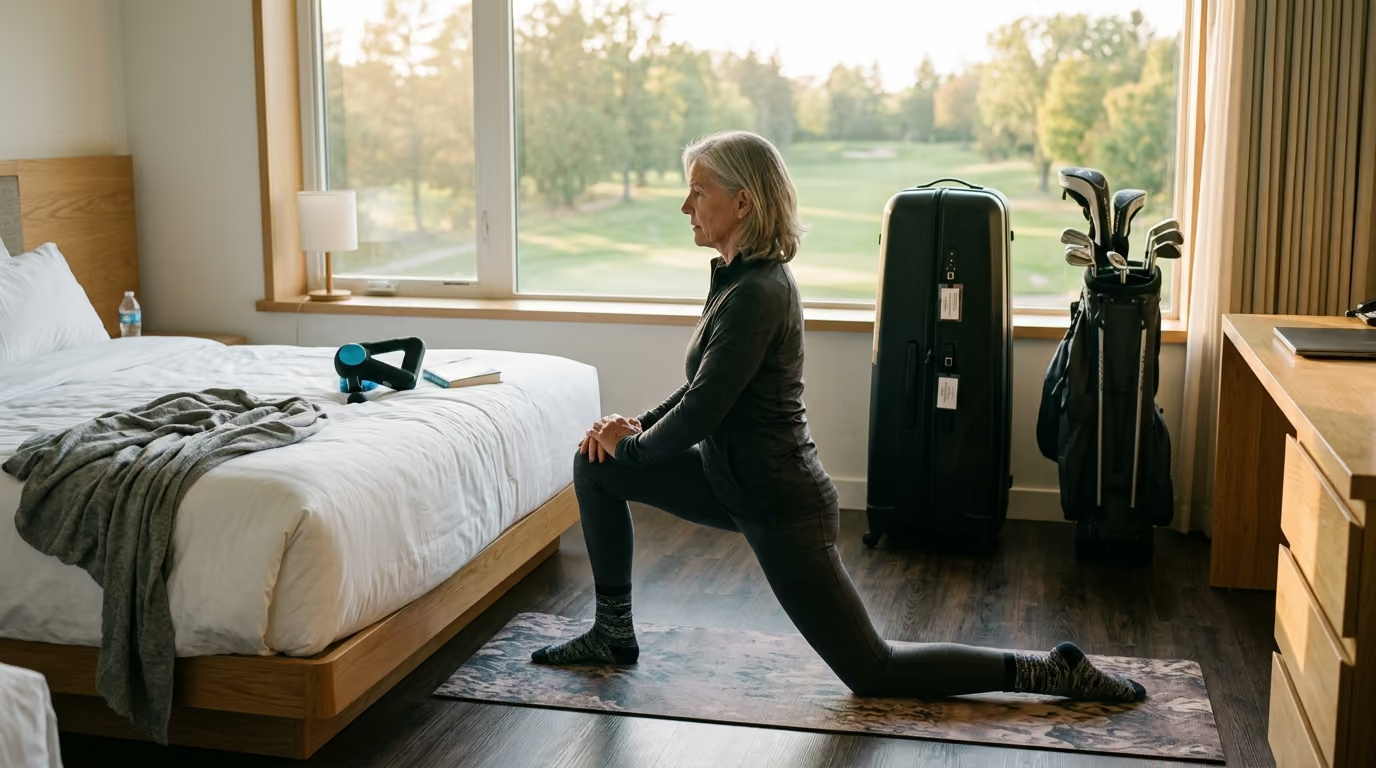
Discover how to leverage breathwork techniques to enhance focus, reduce physical tension, and improve your golf performance on the course.




Many golfers over forty search for ways to stop chronic back pain and avoid back-nine fatigue. They buy adjustable drivers or spend hours practicing complex swing keys. Yet the most critical tool for your swing is not in your bag. It is the way you breathe.
Your respiratory system controls your physical stability and your mental focus. Poor breathing habits can cause muscle tension, limit your rotation, and lead to early fatigue. This guide will show you how to use breathwork to protect your body and lower your scores.
For more resources on physical health, check out our guide to protecting your body from injury. It provides practical ways to stay active as you age. Proper preparation makes a massive difference on the course.
You have played nine solid holes of golf. Your score is decent, but your lower back is starting to feel tight. You arrive at the tenth tee. It is a long par four with a narrow fairway. A large pond sits on the left side, ready to catch any pulled shots.
The group ahead is playing slowly. You stand on the tee box for several minutes. While waiting, you begin to worry about your drive. Your breathing becomes shallow. Your chest rises and falls, but your belly remains still.
You take three fast, hard practice swings to keep your muscles loose. This physical exertion raises your heart rate further. You step up to the ball with tight shoulders and a firm grip. Your mind is racing with swing thoughts.
During the backswing, your limited lung expansion restricts your rib cage movement. You cannot turn your shoulders fully. To make up for this, you slide your hips. You swing hard, but you feel a sharp pinch in your lower back.
The ball slices into the right rough. Your back feels stiff, and your confidence is shaken. This scenario is common for experienced players. It is not a failure of your swing mechanics. It is a failure to regulate your physical state.
When your breathing is shallow, your muscles tighten. Your body goes into a high-alert state. This reaction limits your movement and increases the risk of strain. Learn more about maintaining your physical longevity on our page about staying active as you age.
To understand how breathing affects your swing, you must look at the nervous system. The autonomic nervous system regulates your involuntary body functions. It operates like a physical seesaw. One side is the sympathetic nervous system. The other side is the parasympathetic nervous system.
The sympathetic nervous system triggers the fight or flight response. This reaction occurs when you face a stressful situation. In golf, a tight fairway or a bad bounce can trigger this state. Your brain perceives the stress as a physical threat.
It signals your body to release stress hormones like adrenaline. Your heart rate climbs. Your blood pressure increases. Your muscles become tense and rigid. This response is useful if you need to run away from danger. It is highly damaging when you need to make a smooth, coordinated golf swing.
The parasympathetic nervous system governs the rest and digest state. This system slows your heart rate. It relaxes your muscles and promotes physical healing. You need this state to maintain fine motor control on the course.
You can control this physical seesaw using your breath. Slow, deep breathing activates the vagus nerve. The vagus nerve is the longest cranial nerve in the body. It runs from your brain down through your chest and abdomen.
When you expand your diaphragm during an inhale, you physically stimulate this nerve. The vagus nerve then sends a signal to your brain. This signal tells your brain that you are safe. Your brain releases chemicals that slow your heart rate.
This stimulation relaxes the muscles in your neck, shoulders, and arms. It allows you to make a smooth swing. Research from The Open Psychology Journal shows that athletes who regulate this system perform better under pressure. They maintain their physical coordination even when the stakes are high.
This coordination is the key to consistency. Without it, your swing will change from hole to hole. Keeping your nervous system calm allows you to repeat your swing path. It also prevents the early physical exhaustion that ruins many rounds.
The diaphragm is a large, dome-shaped muscle located at the bottom of your rib cage. Many people think the diaphragm is only useful for pulling air into the lungs. It is also a critical physical stabilizer for your spine.
When you take a deep breath, the diaphragm contracts. It moves downward into your abdominal cavity. This downward movement pushes against your internal organs. It creates a state known as intra-abdominal pressure.
This pressure works like an internal airbag for your lower back. As the diaphragm pushes down, your pelvic floor muscles and abdominal wall resist the movement. This resistance creates a stable, pressurized cylinder around your spine.
This internal cylinder supports your lumbar vertebrae from the inside. It prevents your spine from moving in harmful ways during the swing. The golf swing involves high-speed rotation and powerful forces.
These forces can place immense strain on your lower back. If you do not have proper intra-abdominal pressure, your spine must absorb these forces directly. This can lead to disc compression and muscle strains.
Many recreational golfers try to protect their back by pulling their stomach inward. They tuck their belly button toward their spine. This action actually reduces your internal pressure. It makes your spine more vulnerable to injury.
To protect your back, you must breathe into your entire torso. You want your belly, sides, and lower back to expand together. This 360-degree expansion braces your core naturally. It keeps your spine safe during the highest-speed parts of your swing.
Building this internal support is vital for long-term health. For more details on core training, read our section on building core strength. A strong core is the foundation of a powerful swing. It allows you to transfer energy from the ground to the club. This physical support protects your back from injury and pain.
Golf requires a high level of mental focus. Your ability to read greens and control your hands depends on your brain function. Your brain requires a constant supply of oxygen to work properly.
Your heart rate directly influences your brain activity. When your heart beats too fast, your brain focus suffers. You may make poor tactical decisions. You might rush your pre-shot routine.
Heart rate variability, or HRV, is a measure of the variation in time between your heartbeats. A high HRV indicates a healthy, adaptable nervous system. It means your body can switch between active and relaxed states easily.
Studies show that elite golfers have a higher HRV than amateur players. They also experience a distinct physiological change right before they hit a shot. Their heart rate decelerates immediately before the swing or putt.
This physical deceleration is closely linked to a concept called the Quiet Eye. The Quiet Eye is the final, steady gaze a golfer holds on the ball before starting their movement. It usually lasts for two to three seconds.
During this quiet period, the brain is planning the movement. A longer Quiet Eye duration is linked to more accurate putts and better shots. Slow, steady breathing helps you achieve this state.
By slowing your breathing rate, you encourage your heart rate to drop. This drop calms your visual system. Your eyes stop scanning around. You can focus entirely on the target.
This physical state reduces micro-tremors in your hands. It allows your nervous system to execute the swing smoothly. Research in the Journal of Sports Sciences confirms that visual focus and heart rate control work together to improve athletic performance.
By practicing slow breathing, you can train your eyes to remain steady. This visual stability is especially critical on the greens. It helps you read the break and maintain a consistent putting stroke.
Many golfers do not know when to breathe during their swing. They often hold their breath during the entire movement. This habit causes physical tension and raises blood pressure.
To swing freely, you must coordinate your breathing with your swing. This coordination starts before you address the ball. Your breathing should be relaxed and rhythmic as you stand behind the ball.
As you step up to address the ball, take a soft inhale through your nose. This inhale should fill your lower torso and create intra-abdominal pressure. It braces your spine before any movement begins.
During your backswing, continue to hold a light pressure in your core. Do not inhale sharply as you take the club back. A sudden inhale can lift your chest and alter your spine angle.
Instead, maintain a quiet, braced core during the backswing. As you transition into the downswing, begin a controlled exhale. This exhale should continue through impact and into the follow-through.
Exhaling during the downswing helps release tension in your shoulders and arms. It allows your muscles to move at maximum speed. It also prevents your blood pressure from spiking during the high-effort phase of the swing.
This breathing pattern is easy to practice at home. Take a club and make slow-motion swings. Focus entirely on exhaling as you swing down. This simple practice will soon become natural on the course.
By coordinating your breath, you will reduce physical fatigue. Your muscles will remain relaxed and efficient throughout your round. This breathing pattern is a great way to improve your swing tempo.
Thoracic mobility is the key to a full shoulder turn. If your mid-back is stiff, your swing will suffer. You will compensate by using your lower back or your neck. This compensation often leads to chronic joint pain.
Your ribs are connected to your thoracic spine. If the muscles between your ribs are tight, your chest cannot expand or rotate. Breathing exercises can help release this tension.
Deep diaphragmatic breathing stretches the chest wall from the inside. When you inhale deeply, your ribs must move outward. This movement acts as a gentle, internal stretch for your thoracic joints.
You can improve your thoracic spine mobility by practicing breathing drills daily. These drills help loosen the rib cage and shoulders. A mobile chest allows for a wider, more powerful swing.
Many players try to force rotation by twisting their hips too early. This movement ruins swing path alignment and loses power. A mobile chest allows you to keep your lower body stable.
This physical stability is critical for hitting consistent, solid shots. It also reduces the stress placed on your lumbar spine. This protection is necessary for extending your playing years.
Your muscles need oxygen to produce energy and recover from effort. Walking eighteen holes is a physical challenge for your body. If you do not breathe efficiently, your muscles will starve for oxygen.
This lack of oxygen causes lactic acid to build up quickly. Lactic acid leads to muscle burning, fatigue, and stiffness. You can avoid this by maintaining nasal breathing on the course.
Nasal breathing filters and warms the air before it reaches your lungs. It also allows your lungs to extract more oxygen from each breath. This efficient oxygen extraction keeps your muscles supplied with clean energy.
After your round, your body needs to recover. Fast recovery prevents the soreness that often lasts for days. Breathing exercises can speed up this process.
Deep breathing shifts your body into a state of physical repair. It increases blood flow to your tired muscles. This blood flow carries necessary nutrients to repair micro-tears in your muscle fibers.
By practicing recovery breathing, you can reduce post-round stiffness. You will feel fresh and ready for your next round. This recovery is vital for golfers who play multiple times a week.
For more advice on rebuilding your body after a tough round, explore our section on post-round muscle recovery. It features practical tips for older players.
Walking eighteen holes is a physical test of endurance. Many golfers experience muscle tightness in their legs and lower back by the fourteenth hole. This tightness is often caused by poor blood circulation.
You can improve your circulation on the course by breathing only through your nose. Nasal breathing is critical because it produces a gas called nitric oxide. This gas is produced in your nasal sinuses.
When you breathe through your nose, you carry nitric oxide into your lungs. Nitric oxide is a powerful physical vasodilator. It relaxes the inner muscles of your blood vessels, causing them to widen.
This widening increases blood flow throughout your body. It allows more oxygen-rich blood to reach your legs, back, and shoulders. This constant supply of oxygen keeps your muscle fibers working efficiently.
It prevents the premature cramping and stiffness that ruins your swing late in the round. Nasal breathing also slows your respiration rate. This slower rate helps your body conserve energy.
Mouth breathing does not produce nitric oxide. It leads to rapid, shallow breathing that drains your energy. It also drys out your mouth and throat, causing physical discomfort.
To maintain your stamina, commit to nasal breathing while walking between shots. It will keep your muscles warm and flexible. This simple change is a great way to protect your body.
As we age, our lung capacity naturally declines. The lungs become less elastic, and the rib cage can stiffen. This decline starts around the age of thirty and continues throughout life.
For golfers over forty, this loss of capacity can impact performance. A stiff rib cage restricts your shoulder turn. It makes it harder to take a deep breath that stabilizes your core.
You can fight this natural decline with regular respiratory training. Training your breathing muscles keeps your lungs flexible. It also helps maintain the strength of your diaphragm.
By keeping your respiratory system strong, you protect your body from the physical limitations of ageing. You will be able to rotate fully and swing with power. This training is necessary for keeping your swing youthful.
Respiratory training also supports your cardiovascular health. It helps lower your resting blood pressure and improves your endurance. These benefits extend far beyond the golf course.
A healthy respiratory system allows you to stay active in your daily life. It gives you the physical freedom to travel and play more golf. This longevity is the ultimate goal of any fitness routine.
You do not need to wait until you are off the course to use breathwork. You can use simple breathing tactics during your round to stay calm. These tools are helpful when you feel nervous or physically tired.
One effective tool is Box Breathing. This technique is used by elite athletes and military personnel to manage high-stress situations. It physically resets your nervous system in less than a minute.
To perform Box Breathing, follow these four simple steps:
Repeat this cycle four times. While you do this, keep your shoulders relaxed. Focus entirely on one small movement, like the gentle expansion of your side ribs.
Another valuable tactic is the Reset Breath. Use this breath right before you address the golf ball. Take a deep, quiet breath in through your nose. Then, let the air out slowly through slightly pursed lips.
This slow exhale acts as a mental divider. It separates your planning phase from your execution phase. Once you exhale, leave your swing thoughts behind. Step up to the ball and swing with confidence.
Using these tools between shots keeps your heart rate stable. It prevents physical tension from building up in your neck and shoulders. This simple practice can save you several strokes per round.
It is easy to forget to breathe when a match is close. Try to tie your Reset Breath to a physical trigger. For example, take your breath whenever you pull a club from your bag.
To achieve long-term physical benefits, you must establish a daily breathing routine. These exercises will improve your thoracic mobility and speed up muscle recovery. They do not require special equipment.
The Crocodile Breath is an exceptional exercise for post-round muscle recovery. It helps transition your body from a competitive, high-stress state back into a relaxed state. This transition is critical for physical healing.
To perform the Crocodile Breath, follow these instructions:
You should feel your lower back and the sides of your waist expand upward and outward. Exhale slowly through your nose. Perform this exercise for five minutes after your round. It reduces tension in your lower back.
Another critical exercise is Lateral Rib Breathing. Many golfers suffer from poor rotation because their rib cage is stiff. Tight intercostal muscles can limit your shoulder turn.
To perform Lateral Rib Breathing, follow these steps:
This exercise stretches the small muscles between your ribs. Over time, it improves your thoracic spine mobility. This increased mobility allows you to make a full backswing without straining your lower back.
In addition to these exercises, practice nasal-only walking. When you walk between holes, keep your mouth closed. Breathe exclusively through your nose.
Nasal breathing increases the production of nitric oxide in your nasal passages. Nitric oxide is a natural gas that dilates your blood vessels. This dilation improves blood circulation throughout your body.
It delivers more oxygen to your legs and back muscles. This extra oxygen prevents your muscles from tightening up during the walk. It also helps your brain stay sharp, reducing mental errors on the back nine.
You can also try Respiratory Muscle Training. This training involves breathing against resistance. You can use a hand-held training device to strengthen your diaphragm.
A study on golfers using respiratory training devices showed great improvements. After three months of training, the golfers increased their 7-iron club speed by 7 percent. Their ball speed rose by 11 percent. Their carry distance grew by 9 percent.
Stronger breathing muscles give you better core control. This control helps you maintain a stable spine during your swing. It allows you to transfer power more efficiently from your legs to the club.
For more advice on physical recovery and performance, check out our scientific golf training resources.
Many recreational golfers make critical errors in their breathing habits. These mistakes can cause physical fatigue and poor shots. Understanding these flaws will help you avoid them.
The first common mistake is chronic mouth breathing. Walking the course with your mouth open leads to over-breathing. This action expels too much carbon dioxide from your lungs.
Your body needs carbon dioxide to release oxygen from your blood into your muscles. This biological mechanism is known as the Bohr effect. When carbon dioxide levels drop, oxygen stays bound to your hemoglobin.
This means your muscles and brain do not get the oxygen they need. This oxygen deficiency leads to muscle cramps and physical fatigue. It also causes mental fog, which can lead to poor decision-making on the back nine.
The second mistake is the practice swing trap. Many golfers take multiple high-effort practice swings before every shot. They believe this helps them find their rhythm.
However, these aggressive swings spike your heart rate. If you address the ball while your heart is racing, your physical coordination drops. Your hands become overactive, leading to inaccurate shots.
The third mistake is segmented breathing. This occurs when a golfer splits their breathing into separate chest and belly movements. They might lift their shoulders to inhale, then expand their stomach.
This pattern creates tension in the neck and upper back. It also fails to create proper intra-abdominal pressure. Your breathing should be a single, smooth expansion of your entire torso.
The fourth mistake is holding your breath during the swing. Many players hold their breath as they take the club back. This action increases physical tension.
It makes your muscles rigid and slow. It also raises your blood pressure rapidly. To swing freely, your breathing should be fluid. Try to inhale on the backswing and exhale during the downswing.
Your physical equipment can also impact your breathing. Certain gear choices can restrict your lung expansion. Making small changes to your equipment can improve your physical performance.
First, check the tightness of your belt. Many golfers pull their belts tight to keep their pants in place. A tight belt restricts your lower abdomen.
It prevents your diaphragm from moving downward during inhalation. This restriction forces you to breathe using your chest and neck muscles. It leads to shoulder tension and reduces your physical stability.
Keep your belt snug but not tight. You should be able to breathe deeply into your belly without feeling restricted.
Second, pay attention to your clothing. High-compression shirts and tight waistbands can also limit your breathing. Choose golf apparel that offers stretching capability and fits comfortably.
Third, examine your club grips. If your grips are too small, you will naturally squeeze them too tightly. This excess grip pressure travels up your arms into your shoulders and chest.
This tension restricts your ability to take a deep, relaxing breath. If you struggle with tension, try using slightly larger grips. They can help you maintain a relaxed grip and smooth breathing.
Fourth, check your footwear. Your golf shoes dictate your physical posture. If your shoes do not support your feet, your pelvis may tilt forward.
This tilt disrupts the alignment between your diaphragm and your pelvic floor. When these two muscles are not aligned, you cannot create proper intra-abdominal pressure. Choose supportive shoes that help you maintain a neutral pelvis.
To make these breathing practices a habit, start with small steps. You do not need to change everything at once. Focus on one simple change each week.
Here is a practical checklist you can use to integrate breathwork into your golf routine this week:
To protect your lower back and maintain sharp focus on the course, you must train your diaphragm to stabilize your spine and regulate your nervous system. By making these exercises a regular part of your routine, you can enjoy the game pain-free for many years.
Follow Golfergy for practical insights on performance, mobility, recovery and healthy ageing. Stay connected for new articles, research-led guidance and ideas to help you play better for longer.


Explore practical resources on performance, recovery, mobility and golf longevity.
Read the Blog