

Why your golf turn may feel different after 40, what mobility research suggests, and when a change deserves professional attention.




Golf rotational mobility is the turning movement you can use through your hips and torso during a swing. It is about the movement available to play your shot, not simply how far the club travels behind your head.
When that turn feels different after 40, age is an easy explanation to reach for. A golf-media review of ageing and performance points to a wider picture that includes flexibility, strength, balance and movement patterns.
The practical goal is to understand what has changed and what matters for your game. Chasing a larger backswing is a different goal from making your usual swing feel comfortable.
Across a standard round, “less turn” can describe several experiences. Your backswing might feel shorter than your familiar motion. Or you might reach your usual position but feel that getting there takes more effort.
Those descriptions are useful starting points. They tell you what the swing feels like without deciding why it feels that way.
The anatomy question concerns how your torso and lower body move during the swing. One term used in golf research is hip-shoulder separation: the difference between how far the hips and shoulders have turned. It describes a relationship between body segments rather than a target every golfer must increase.
That distinction matters from the opening tee to the final approach. The club's finishing position alone does not describe how the turn felt or whether it changed during play. Our guide to usable movement versus flexibility offers another way to frame that difference.
Golf-specific reporting identifies flexibility and strength alongside physical condition and swing strategy as relevant factors. That makes a changing turn a broader question than whether you need to stretch more.
A golf-focused account of a motion-capture study described differences in how older male golfers moved their trunks and lower bodies compared with younger-golfer data. Those differences included smaller hip-shoulder separation.
For a recreational golfer, the useful lesson is to look at the whole movement picture. A change in flexibility is one possibility to discuss. Strength, balance and the way you organise the swing also belong in that conversation.
Age provides context for those questions. Your own experience provides the detail: when the change appeared, whether it affects everyday movement and whether symptoms accompany it. The aim is rotation that fits your own swing, rather than matching someone else's shape.
Not automatically. The golf-media review summarises a 2024 meta-analysis of 20 studies. It reports that flexibility measures were not significantly associated with driver clubhead speed in the pooled analysis.
That is a useful reason to separate two goals: improving movement and adding speed. They need not be treated as the same project.
The review also offers encouraging examples of older golfers responding to structured exercise. In its account of a 2004 study, male golfers aged 55 to 79 took part in an eight-week strength-and-flexibility programme. The 19 golfers in the training group increased average clubhead speed from 85.0 to 87.1 mph.
The same review describes another older-golfer programme that combined flexibility, core stability, balance and resistance training. That group also improved its reported maximum clubhead speed. Together, these accounts support a broader view of golf fitness rather than a stretching-only approach.
The evidence has clear limits. The training reports involved small groups of men and combined different exercise elements. They cannot isolate the effect of mobility work or forecast an individual's result. The pooled flexibility finding concerns speed rather than whether added flexibility would help a particular golfer move comfortably.
The age-group comparisons also do not prove that age caused an individual's restriction or establish an inevitable decline after 40 or 50. These reports provide neither a validated self-test nor a universal rotation threshold for deciding whether a turn is normal. Use them to set realistic expectations rather than to grade your backswing against an age chart.
The decision deserves more context than “I am getting older.” Whether the change was gradual or sudden is useful information. So is whether it affects golf alone or also changes normal daily activity.
A golf-injury guidance source recommends professional assessment for pain that persists or worsens. It also flags pain following a significant injury and symptoms that affect normal activity. Those are reasons to seek qualified assessment rather than simply treating the change as routine stiffness.
Golf-focused back-pain guidance also flags pain travelling down a leg, numbness or tingling, and weakness for assessment. Separate guidance on urgent symptoms identifies new bladder or bowel-control problems or numbness around the groin or buttocks as an emergency. Seek emergency care for those symptoms.
These signs guide the need for care. They do not identify the cause of a golfer's reduced turn.
The most accessible starting points are observation and a clear movement goal. Neither requires forcing a larger backswing or choosing an exercise before understanding the problem.
Start with one question: what feels different about your usual turn?
Keep the description plain. “My backswing feels shorter” is useful. So is “turning now hurts” or “the same difficulty affects everyday movement.” Note whether the change appeared gradually or suddenly.
These observations can help frame a conversation with a qualified health professional. The purpose is to describe your experience clearly, not to diagnose yourself from the appearance of your swing.
Choose a goal that describes the golf you want to play. That might be making your familiar swing feel more comfortable rather than reaching a longer backswing position.
If exercise planning is needed, discuss that goal with a qualified professional. The reported older-golfer programmes give a reason to include strength and balance in that conversation alongside flexibility and core stability. Our guide to building a broader strength foundation provides related reading.
Golfergy's focus is practical movement and sustainable golf fitness. A useful starting point is a clear account of your current turn and a realistic goal for what you want to change.
Playing Better for Longer means understanding your own turn and building useful movement rather than chasing rotation for its own sake.
Follow Golfergy for practical insights on performance, mobility, recovery and healthy ageing. Stay connected for new articles, research-led guidance and ideas to help you play better for longer.



Understand how your hips and mid-back contribute to a golf turn, with practical habits that put comfort ahead of extra backswing length.


A progressive golf warm-up for players over 40, moving from easy activity to fuller practice swings without treating preparation as a flexibility test.
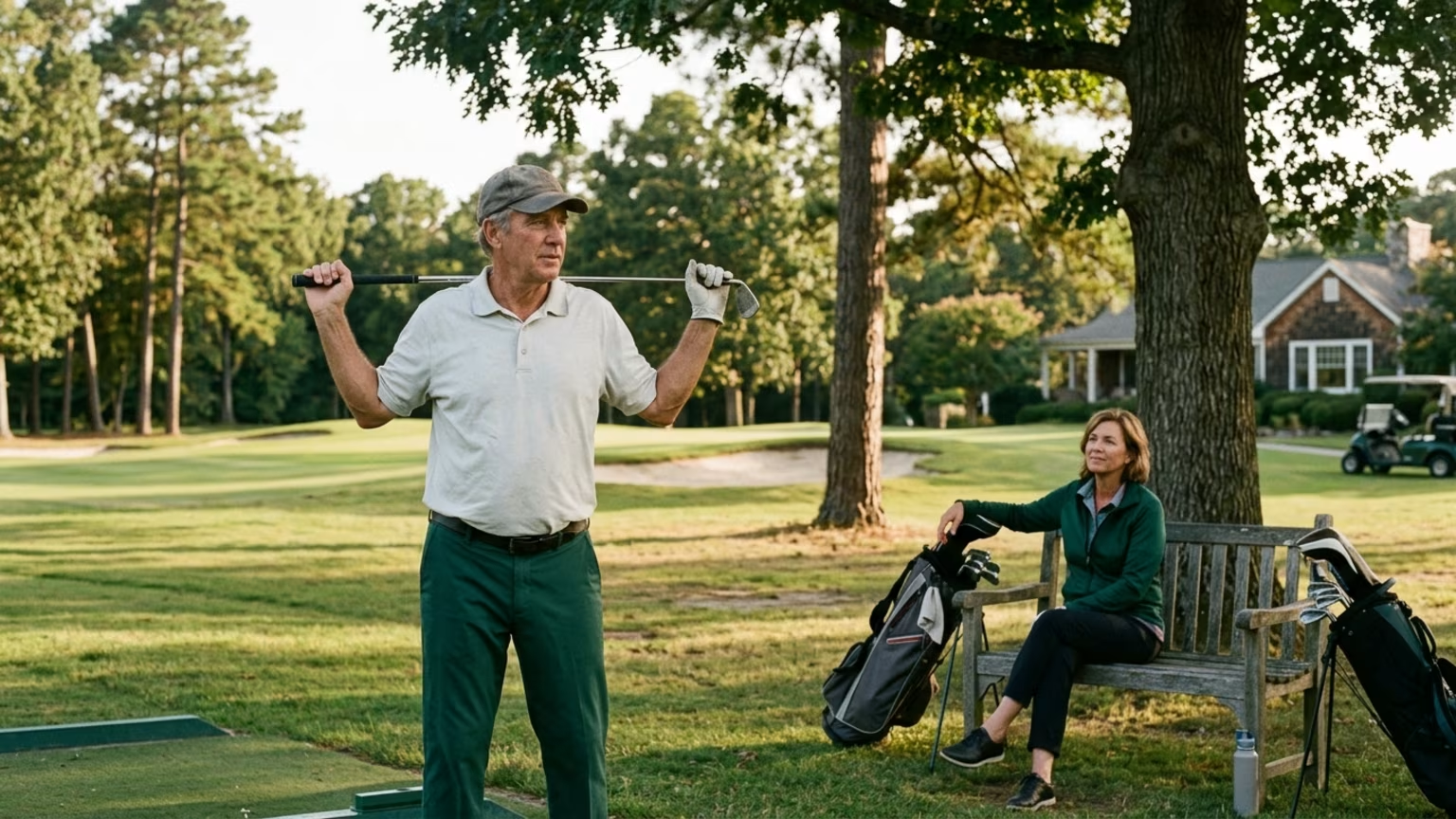
Observe comfortable movement and control to frame better questions about your golf swing, with guidance on when pain needs professional assessment.
Explore practical resources on performance, recovery, mobility and golf longevity.
Read the Blog


