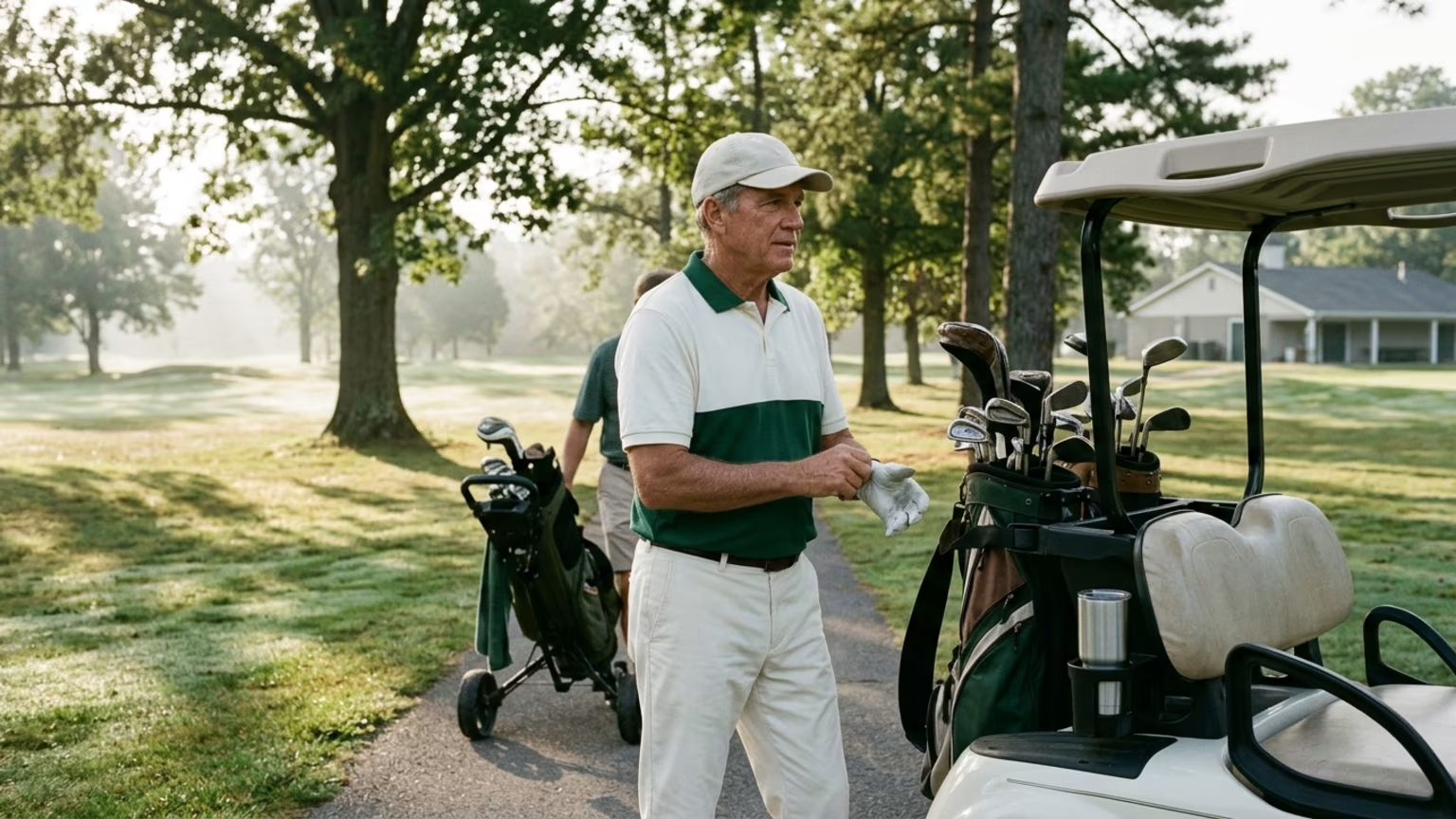

How the legs, hips and trunk contribute to the golf swing, plus a research-led look at strength training and foundational movement patterns after 40.




Whole-body strength means building strength across the body rather than treating one muscle as the source of your golf swing. For golf, the useful idea is connection. Your legs, hips and trunk contribute to movement that reaches the arms and club.
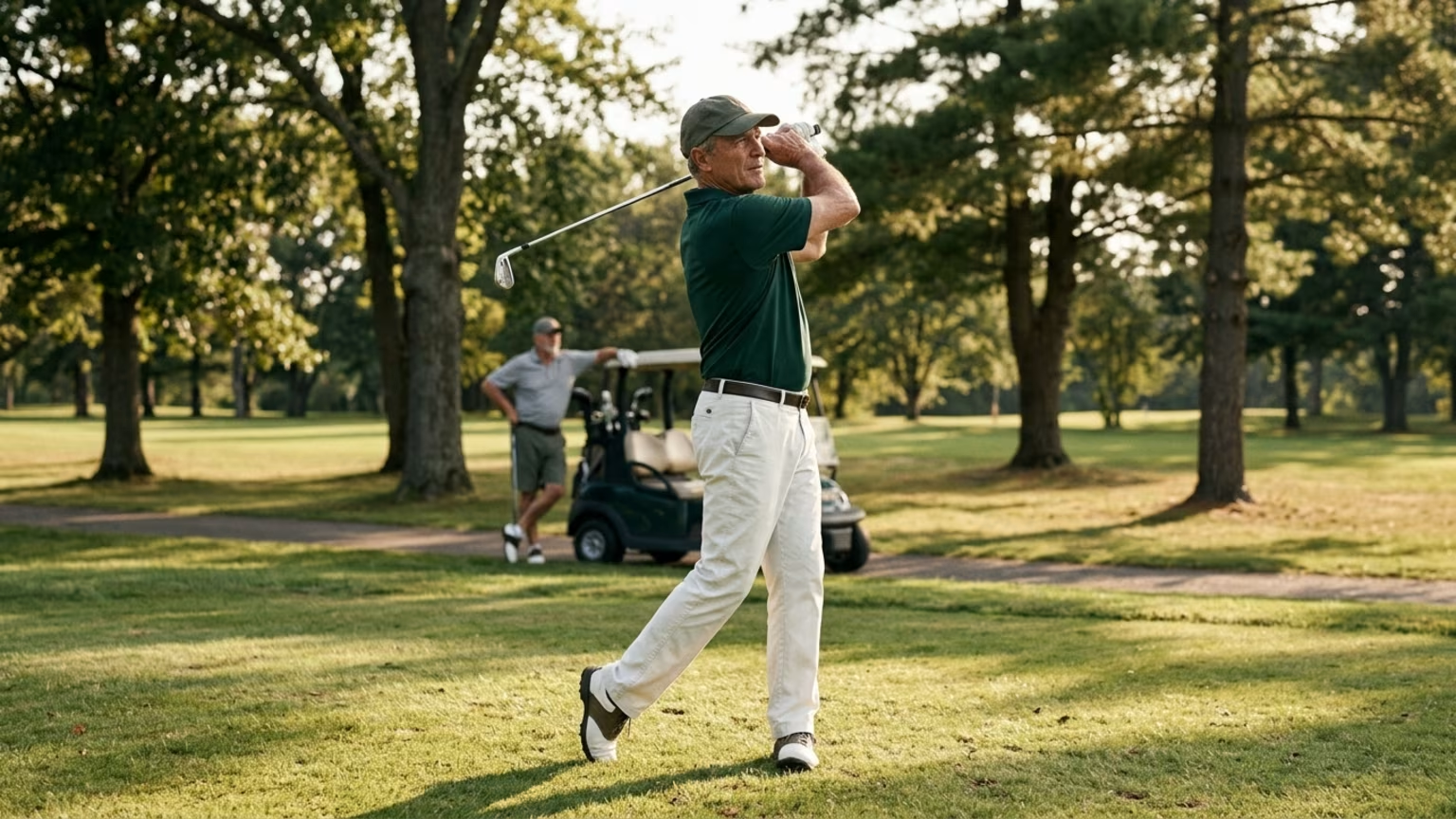
A golf-biomechanics explainer describes this through a model called proximal-to-distal sequencing. In plain English, movement travels from the body toward the club. The golfer interacts with the ground, moves through the lower body and trunk, then transfers motion toward the arms and clubhead.
That gives strength training a broader purpose than finding a few special “golf muscles.” The question becomes how physical preparation can support the body working together. It is a useful shift for experienced golfers who want their training to relate to the game rather than become another collection of disconnected exercises.
During a standard 18 holes, this connection belongs in the background of every full swing. Consider a tee shot or an approach from the fairway. The club is the visible end of the movement, but the biomechanics model directs attention to the body contributing behind it.
The legs and hips are part of the lower-body contribution. The trunk links the lower and upper body. The arms and club sit farther along that connected movement.
In practical terms, think of the swing as a whole-body action rather than an arm action with the rest of the body attached. That is a way to understand the movement, not a command to consciously fire each body part in turn.
What should that connection feel like? The useful aim is participation rather than isolation: the lower body and trunk belong in the action alongside the arms. There is no need to monitor every segment while standing over the ball.
If a swing feels increasingly arm-led later in the round, that sensation alone does not identify a weak muscle or explain the cause. Use it as a question for a coach rather than a diagnosis. “Am I using the body as a connected system?” is more productive than deciding that one muscle must be failing.
This perspective also keeps preparation connected to the demands of a full round, rather than judging every exercise by whether it resembles a golf swing.
For golfers passing 40 and 50, age belongs in the training conversation. It should not replace a clear view of present ability. Golfergy’s approach is to treat age as context for practical preparation rather than an exact exercise formula.
There is encouraging evidence that older golfers can respond to physical training. Sports Medicine Weekly reports a randomized trial involving golfers aged 55 to 79. An eight-week strength-and-flexibility program improved strength, range of motion and clubhead speed.
The practical message is that physical preparation remains relevant later in a golfer’s playing life. The reported improvements covered more than one capacity. That fits the broader idea of preparing a person to move rather than selecting one body part as the answer.
The boundaries belong together here. These findings do not map strength changes through the 40s and 50s or explain the biological causes of age-related change. The biomechanics explainer also notes variation in findings and measurement methods, so its sequence is a model rather than a swing rule everyone must copy.
The training findings discussed here come through secondary summaries. They do not establish guaranteed speed gains, injury prevention or extra playing years. Nor do they validate squatting, hinging, pushing and pulling as a complete golf program.
The useful next step is to separate the birthday from the training decision. A golfer’s current movement and goals deserve attention in their own right. Our article on using age as training context develops that distinction.
A secondary summary of a 2021 systematic review reports larger average clubhead-speed improvements when resistance programs combined general strength work with golf-specific movements at speed than when training was nonspecific alone.
That supports a useful distinction: building strength and practising faster golf-related movement are related parts of preparation. They are not interchangeable. An exercise does not have to look like a downswing to have a place in a broader training discussion.
Squatting, hinging, pushing and pulling are examples of broad movement patterns that can make that discussion easier. They provide a simple vocabulary for talking about training beyond isolated muscles. The first two offer accessible starting points for understanding the idea.
Squatting is a lowering-and-rising movement. As a training concept, it provides a straightforward way to discuss lower-body strength without trying to copy the golf swing.
Keep the movement idea small: lowering and rising. There is no need to add a club or combine it with a turn to make the concept relevant to golf. The point is to distinguish general physical preparation from swing practice.
A useful habit is to discuss this single pattern with a qualified exercise professional rather than asking for an exercise to fix an entire swing. The choice of variation and resistance is a personal decision, not something the reported golf findings settle.
Hinging describes bending at the hips. It offers another simple movement pattern to discuss alongside squatting, without treating either one as the whole answer.
Keep the focus on that one action: movement at the hips. Do not turn the explanation into a checklist of simultaneous swing positions. Understanding a basic pattern comes before asking it to resemble a golf shot.
Pushing and pulling can belong in the wider conversation about upper-body preparation. Their role here is illustrative, not a requirement to complete a four-exercise routine.
For personal exercise choices, a qualified exercise professional can help connect the movement pattern to current ability and goals. Pain or a health condition calls for guidance from a qualified clinician. Neither a swing cue nor a general article can make those individual decisions.
The broader habit is to keep strength work connected to movement without forcing every exercise to imitate golf. That is also the focus of our guide to building movement you can control.
Training the body as a connected system keeps the anatomical lesson tied to the goal: Playing Better for Longer.
Follow Golfergy for practical insights on performance, mobility, recovery and healthy ageing. Stay connected for new articles, research-led guidance and ideas to help you play better for longer.


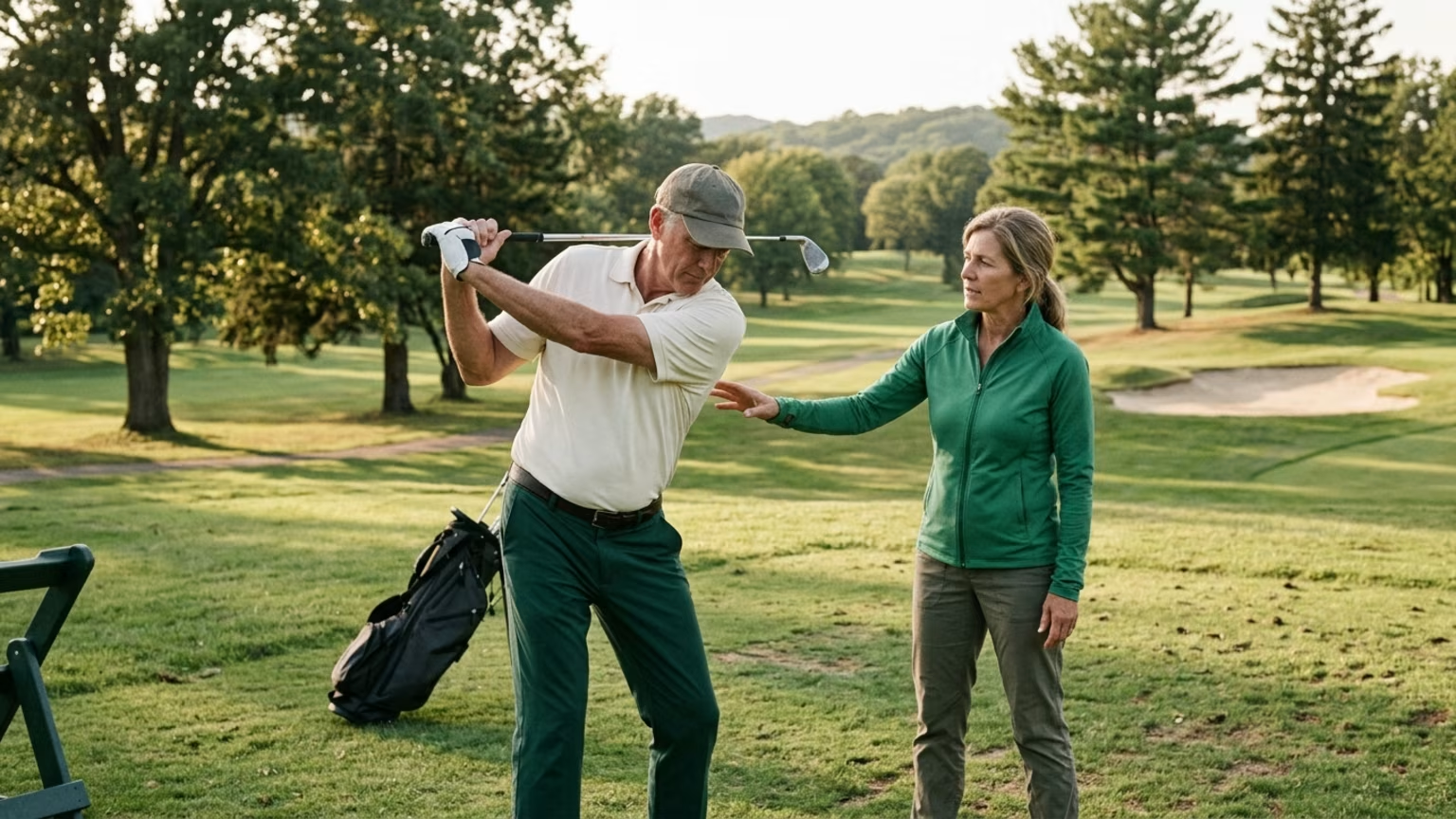
Understand trunk strength, control and mobility for golf, with practical starting points that focus on a comfortable turn rather than more rotation.


A practical look at golf strength after 40, with research on older golfers and simple habits for connecting training goals to a coordinated swing.

How legs, trunk and upper body share the work of a golf swing, with simple planning habits and a measured look at evidence for older golfers.
Explore practical resources on performance, recovery, mobility and golf longevity.
Read the Blog