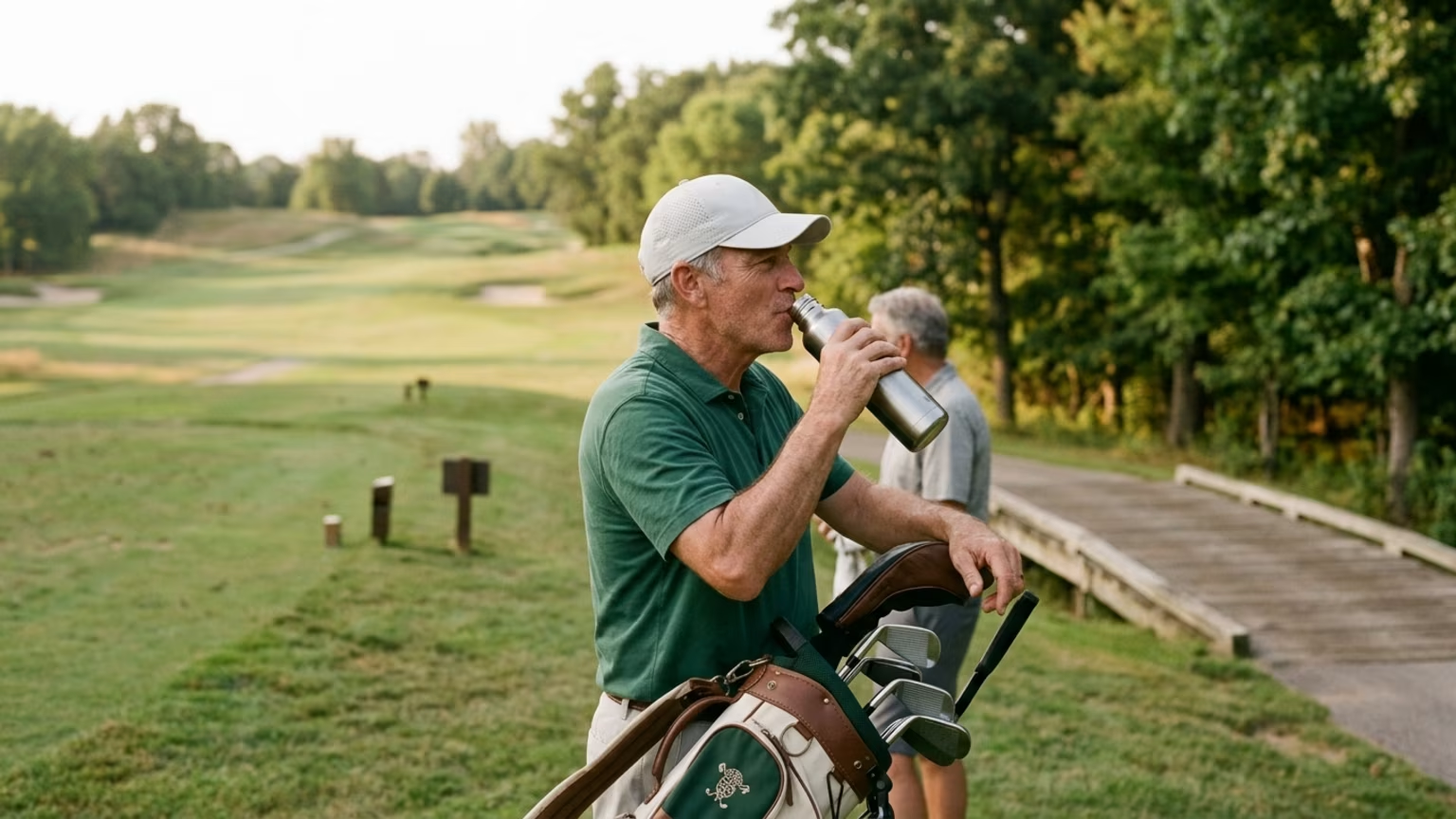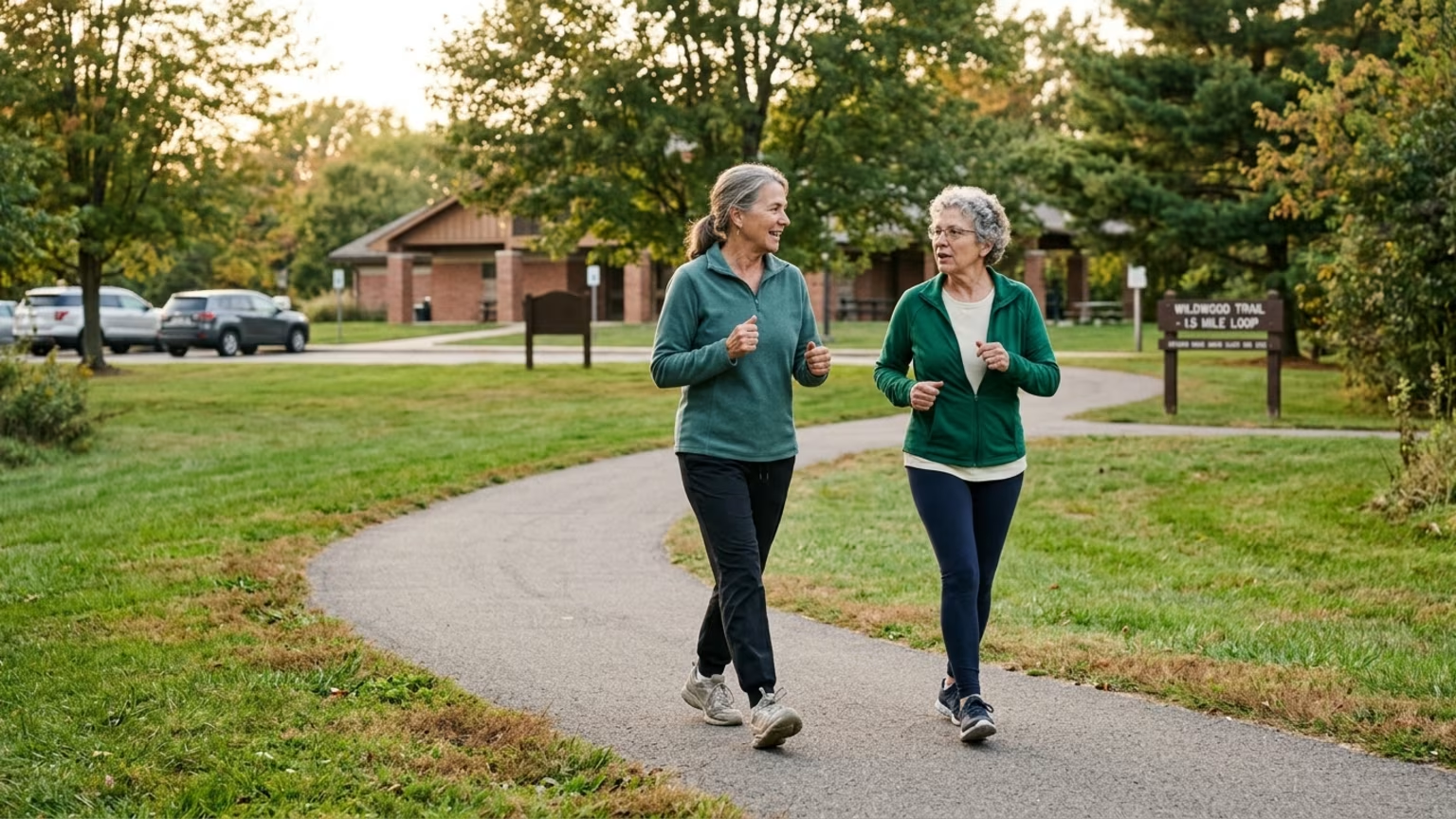

A PLOS ONE trial shows high-intensity walking improved frailty in older adults. Learn how golfers can safely adjust their pace to protect stamina.




On September 30, 2026, a PLOS ONE cluster-randomized trial reported that faster walking paces produced greater improvements in frailty measures than leisurely walking. The study observed older adults from independent-living retirement communities in the Chicago area. The researchers wanted to investigate if pushing the walking pace could reverse physical decline better than a casual stroll. Of the 215 people screened, 165 enrolled in the supervised exercise program.
The trial compared two active walking programs to track this physical decline. Both groups walked for 45 minutes three times weekly over 16 weeks under one-on-one supervision. The participants had to be able to walk more than 10 feet with moderate assistance or less. This clinical structure provided a clear look at how walking speed changes the body over time.
As golfers age, the physical mechanics of walking the course begin to change. Frailty often shows up as a loss of power, slower gait speeds, and reduced endurance. Pushing your heart rate forces the cardiovascular system to adapt to the new physical stress. This physical adaptation helps maintain the structural resilience needed for a full round of golf.
The cardiovascular system works much like a muscle that needs regular resistance to stay strong. A relaxed pace simply does not ask enough of the heart to trigger meaningful physical adaptations. The high-intensity group aimed to walk fast enough to reach more than 70 percent of their estimated maximum heart rate. They could also target a perceived-exertion rating above 15.
Lead author Margaret Danilovich told TIME that the study sought to reach a vigorous activity level. Research assistants used verbal encouragement when participants slowed down during the intense sessions. The casual-speed group walked at a relaxed and self-selected pace. Both walking programs required the body to move, but the intensity created different physical demands.
A brisk pace challenges the leg muscles and heart to work together more efficiently. This mechanical stress is what triggers the body to build more stamina. Golfers walking 18 holes already know that flat courses feel much different than hilly terrain. Pushing the pace on a flat surface recreates the cardiovascular demand of climbing a steep fairway.
The results provided specific data on how walking intensity impacts physical function. Of the 165 enrolled individuals, 105 completed the intervention and were included in the analytic cohort. The primary frailty outcome was available for 102 participants. This primary outcome measured improvement by at least one category on the SHARE-FI frailty measure.
Among analyzed participants, 32 of 46 people in the high-intensity group improved on this measure. This equals 69.6 percent of that group. In the casual-speed group, 26 of 56 participants improved. This translates to 46.4 percent of the casual walkers showing measured improvement.
The reported odds ratio for the primary outcome was 2.91. The high-intensity group also showed a greater improvement in usual gait speed with a difference of 0.08 meters per second. They added 48.99 meters to their six-minute walking distance. Furthermore, they increased their average daily steps by 985 steps per day compared to the casual group.
The study article reports 3,354 sessions across the entire trial. The researchers noted that 0.3 percent of these sessions were associated with an adverse event. One non-injurious fall in the high-intensity group was judged definitely related to the intervention. The researchers also reported serious and other adverse events that were judged unrelated or only possibly related.
Recreational golfers over 40 face a steady loss of walking stamina if they only stroll at a casual pace. Many older players assume that a slow walk down the fairway provides enough exercise. A separate small crossover experiment, summarized by SuperAge, looked at older golfers. This experiment involved 25 healthy golfers aged 65 or older.
These participants completed an 18-hole walking round, a 6-kilometer Nordic walk, and a 6-kilometer conventional walk on different days. Systolic blood pressure fell after all three activities during this short test. However, relying strictly on a leisurely golf pace might not protect against a gradual loss of functional speed. Golfers swinging with less speed still need robust leg stamina to finish out the back nine.
When recreational players lose their walking speed, they often notice a sharp drop in their swing speed late in the round. Leg fatigue directly impacts your ability to rotate through the ball with power. The PLOS ONE trial participants had a mean age of 79.2 at baseline. The researchers noted that 65 percent of these participants used an assistive device when walking.
Older golfers who ignore their walking intensity might find themselves struggling to maintain their balance late in a round. If you want to understand how walking eighteen holes impacts your long-term health, you must look at both distance and pace. Adding structured conditioning away from the course can help maintain the physical capacity required for the game. Maintaining a varied walking pace off the course directly supports your posture on the course.
You can apply these insights by adding appropriately challenging walking intervals to your weekly routine. Start by selecting a flat and smooth walking surface in your neighborhood. Begin with a normal walking pace for ten minutes to warm up your muscles. Managing your off-course walking pace is better than simply rethinking step counts and walking cadence during your golf round.
Focus entirely on keeping a brisk pace for a single minute. Walk fast enough that holding a conversation becomes mildly difficult. After that minute, return to your normal walking speed for three minutes to recover fully. Repeat this simple cycle three or four times during your walking session.
Managing your walking load with short bursts can help build endurance over time. You should evaluate your current cardiovascular fitness before attempting these faster intervals. Consult a doctor before making any major changes to your exercise regimen. Over time, you can slightly extend the brisk intervals while paying close attention to your body.
It is a mistake to view high-intensity walking as a perfect prescription for every older adult. The trial selected a specific group and excluded people with uncontrolled cardiovascular, metabolic, renal, or respiratory diseases. Danilovich noted that the results challenge the assumption that frail people should avoid activity. However, this perspective is not a universal clinical instruction for every single older golfer.
Kenneth Rockwood, a Dalhousie University professor of medicine not involved in the study, cautioned about the dropout rates. More participants dropped out of the high-intensity group during the trial. Rockwood noted that this differential dropout makes it harder to generalize the results to typical older people. The authors themselves noted substantial attrition alongside a predominantly White and female sample.
The study article reports that assuming all participants lost to follow-up had not improved produced an odds ratio of 1.51. This specific sensitivity analysis did not retain statistical significance. A separate multiple-imputation analysis also did not reach statistical significance. These conservative missing-data analyses mean you must interpret the primary outcome with caution.
Sara Espinoza, a Cedars-Sinai geriatrician not involved in the research, told TIME that the findings were interesting. She suggested vigorous exercise might be safe but noted the study recorded one fall. She also cautioned that translating the supervised intervention into real-world care may be difficult. You should consider your walking intensity in light of your individual capability rather than blindly chasing a heart rate target.
Maintaining your mobility requires consistent habits that match your physical capabilities. Both walking groups in the PLOS ONE trial saw improvements in their physical condition. This proves that getting off the couch and walking remains a vital component of healthy aging. What adjustments will you make to your mobility routine this season to steer clear of this hazard?
Follow Golfergy for practical insights on performance, mobility, recovery and healthy ageing. Stay connected for new articles, research-led guidance and ideas to help you play better for longer.


Recent Mass General Brigham research explains the biological link between moderate exercise and joint health to help older golfers stay on the course.

A local news feature on two senior golfers highlights the value of physical consistency. Learn how aging players can protect joints and maintain swing mobility.
A recent VA study suggests that older men with prediabetes preserved more lean mass and physical function during weight loss by increasing their protein intake.
Explore practical resources on performance, recovery, mobility and golf longevity.
Read the Blog