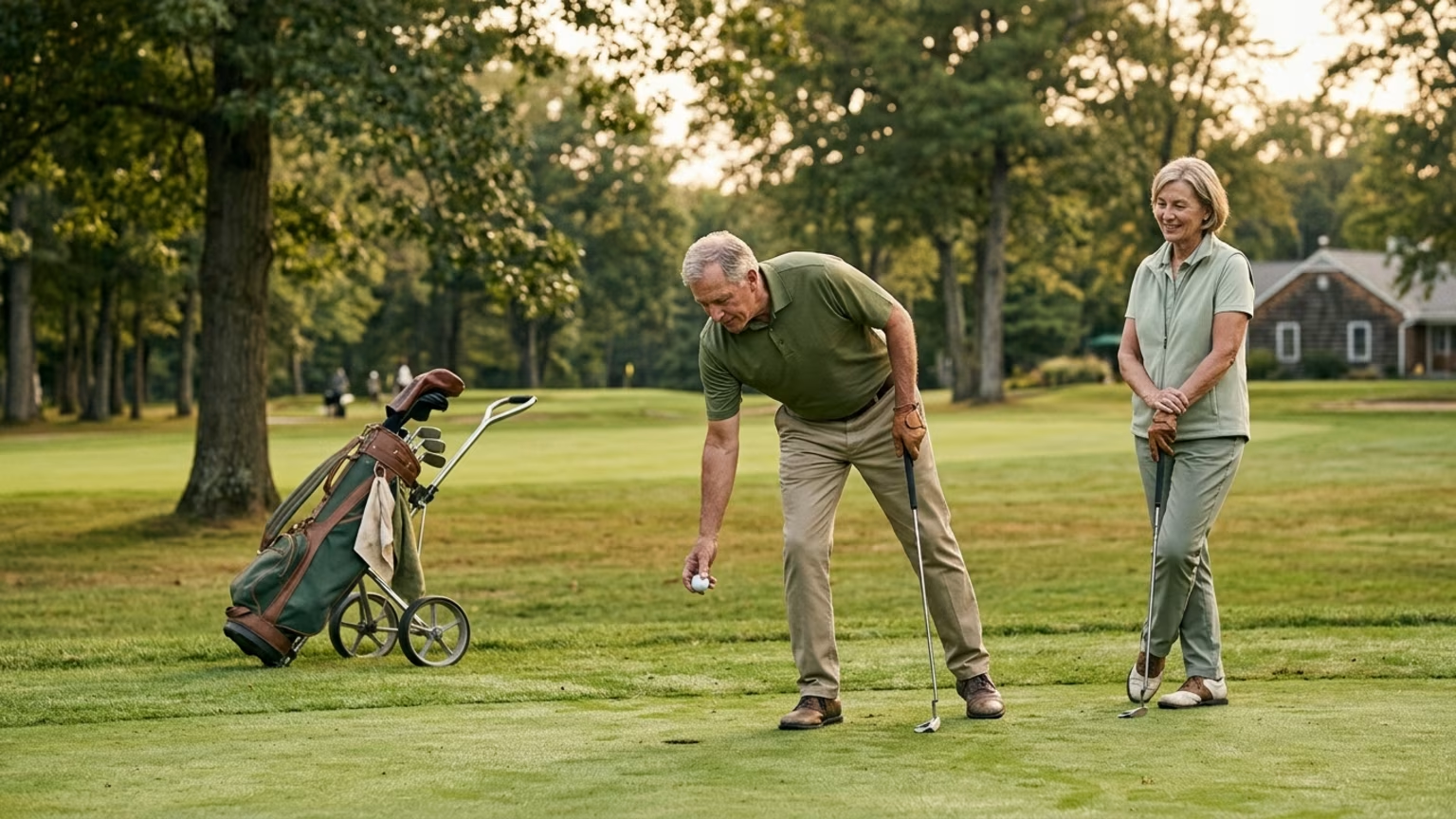

Learn how experienced golfers can maintain performance and prevent tightness during hot rounds with practical hydration habits and steady fluid management.




"Why do my legs feel heavy and my lower back lock up completely around the 14th hole?" It is the most common question we hear from golfers over 40. Playing 18 holes under a hot sun places a heavy physical demand on your body. The miles you walk and the heat you endure both slowly drain your energy reserves.
This daily strain affects your physical readiness and can easily ruin a good scorecard late in the day. Understanding how to manage your fluids helps you play the game you love for as long as possible. Golfergy provides practical and research-led insights on golf performance without getting bogged down in medical jargon. A steady fluid plan makes a tremendous difference for experienced recreational golfers.
Many recreational players forget that walking a golf course is an endurance activity. The combination of direct sunlight and physical exertion slowly pulls moisture from your system. This steady loss forces your heart and muscles to work significantly harder. Staying ahead of this curve keeps you feeling fresh and capable on the final few holes.
Your muscles rely on water and proper blood flow to contract and relax smoothly over four hours. Hydration needs differ based on heat, round duration, and your individual sweat loss. A guide from the World Amateur Golf Tour specifically advises adjusting your intake when walking or when conditions are hotter. You should avoid treating every golf round exactly alike because your body reacts differently to varying weather.
Many older golfers make the mistake of drinking the exact same amount of water during a cool morning round and a blistering afternoon round. This rigid habit often leads to physical tightness and premature fatigue. The World Amateur Golf Tour recommends drinking moderately before your tee time and replacing losses afterward. The available search results do not establish these suggested quantities as a validated prescription for recreational golfers.
The physical demand of carrying or pushing a bag across hilly terrain further complicates your fluid needs. A slight drop in hydration can reduce muscle elasticity and make your lower back feel stiff. Your core muscles work incredibly hard to stabilize your spine during every swing. Giving those muscles the right amount of fluid helps them recover faster between holes.
Sweat is your body's primary mechanism for cooling itself during physical exertion. This natural process causes you to lose both water and vital minerals over time. Your muscles lose their ability to contract forcefully when these levels drop too low. Recognizing this biological reality is the first step toward improving your physical resilience on the course.
When your body loses too much fluid, your muscles tighten and your joints lose their natural lubrication. This physical tightness directly changes how well you can turn through the ball on the back nine. A stiff back limits your rotational flexibility and forces your arms to compensate during the downswing. Poor fluid management makes it much harder to follow a healthy ageing routine that protects your swing.
Compensating for a tight lower back usually results in a steeper downswing and a loss of distance. You might start coming over the top of the ball to avoid turning your painful torso. This faulty swing path leads to weak slices and frustrating chunks around the green. Maintaining your hydration helps preserve your natural swing mechanics and keeps your clubhead speed consistent.
Fatigue also degrades your mental focus and your ability to read greens accurately late in the round. A dehydrated golfer often rushes their pre-shot routine and makes poor course management decisions. Keeping your body properly fueled is a simple way to protect your scorecard from unforced errors. You can learn more about preserving your body with our longevity mobility plan.
This physical decline happens gradually over the course of several hours. You might not notice your hydration slipping until you hit a strangely fat wedge shot. Small changes in your muscle elasticity ruin your timing and throw off your rhythm. A well-hydrated body is far more forgiving of minor mechanical errors during your swing.
The safest action you can take right now is to stop drinking massive volumes of water at once. A guide from SuperAge recommends starting your round normally hydrated and using thirst as a practical guide. Golf guidance highlights taking regular sips of water during hot rounds to maintain a steady baseline. The World Amateur Golf Tour suggests drinking electrolyte-containing beverages when heat or sweating is substantial.
More drinking is not automatically better for your physical performance or your overall health. The SuperAge hydration guide warns against drinking beyond your actual fluid losses during prolonged activity. Excessive fluid intake can dilute your blood sodium and cause serious problems on the course. Focus entirely on taking small and frequent sips rather than forcing yourself to empty a large bottle.
Electrolyte drinks are a useful tool but they are not a universal requirement for every player. The sources support considering them in hot conditions or when you experience very heavy sweating. They do not show that sports drinks are strictly necessary for every round or superior for every golfer. Keep your instructions focused on one small action at a time and simply sip water when thirsty.
Keeping a large water bottle in your golf bag is a simple visual reminder to drink. You can train yourself to take one small drink after marking your scorecard on every single green. This creates a steady rhythm of hydration that matches the steady pace of your round. Small and consistent habits are always more effective than drastic mid-round corrections.
Some players have health conditions that strictly dictate how much fluid they should consume daily. For people managing heart failure or kidney disease, Horizon Care Services advises asking a healthcare provider about appropriate fluid intake. General golf advice should never override your individual medical requirements or prescribed fluid limits. Always prioritize your personal health directives over any generic sports performance recommendations.
Public health guidance from Santé Québec advises taking fluids in small amounts and following a health professional’s advice where relevant. A UCLA Health article also advises discussing any medication-related heat concerns with a primary care clinician. You should not use generic hydration advice as a reason to change your daily medication independently. Protect your health by consulting your doctor before making drastic changes to your routine in hot weather.
Your primary care clinician understands your complete health history and daily medication schedule. They can help you determine exactly how much water is safe for your specific situation. This professional guidance ensures your golf habits support your overall health goals. Never let generalized sports advice pressure you into ignoring your own medical realities.
Building a reliable routine requires knowing roughly how much fluid you actually lose during a typical round. One practical way to estimate sweat loss is to compare your body weight before and after a round. You must also account for fluids consumed and urine produced to get an accurate number. The SuperAge guide notes you can divide this estimate by exercise time to approximate your hourly sweat rate.
This simple tracking method provides a field estimate rather than a requirement to constantly weigh yourself. You do not need to replace every estimated milliliter while actively playing your round. Use the resulting number as an estimate to inform your future rounds and adjust your beverage choices accordingly. Knowing your baseline helps you pack the right amount of fluids in your golf bag.
Your post-round habits are just as important for maintaining your body and preventing next-day stiffness. After play, the World Amateur Golf Tour article recommends replacing 20 to 24 ounces of sodium-containing fluid per pound of weight lost. This is a single-source practitioner recommendation and provides a helpful starting point for your recovery approach. Drink steadily and eat your post-round meal normally to restore your energy reserves for tomorrow.
Recording your estimated sweat loss gives you a solid baseline for future rounds. You can write these numbers down in a small notebook after a few warm summer rounds. Reviewing this data helps you understand how different temperatures affect your specific body. This practical approach replaces guesswork with a personalized strategy for physical readiness.
The next time you head to the driving range on a warm afternoon, pay close attention to your body. Assess your muscles for early signs of tightness in your lower back or a heavy feeling in your legs. Practice drinking small amounts of water every fifteen minutes and notice if your energy stays more level. Focus entirely on maintaining a smooth takeaway while keeping your hydration steady throughout the entire practice session.
Your practice sessions are the perfect environment to test your physical habits. You can gauge your thirst and energy without the added pressure of keeping score. Listen closely to what your body tells you about its fluid needs. Making these small adjustments now will help you play better golf for years to come.
Follow Golfergy for practical insights on performance, mobility, recovery and healthy ageing. Stay connected for new articles, research-led guidance and ideas to help you play better for longer.



Four Seasons Resort Peninsula Papagayo announced new golf longevity experiences. We examine how VO2 max testing and deep-pressure recovery affect older golfers.


Read how tour professionals manage physical recovery and learn practical, evidence-based habits older recreational golfers can use to protect their joints.

Learn why a bad night of sleep does not automatically ruin your next golf round. Discover a flexible, research-backed recovery routine for golfers over 40.
Explore practical resources on performance, recovery, mobility and golf longevity.
Read the Blog