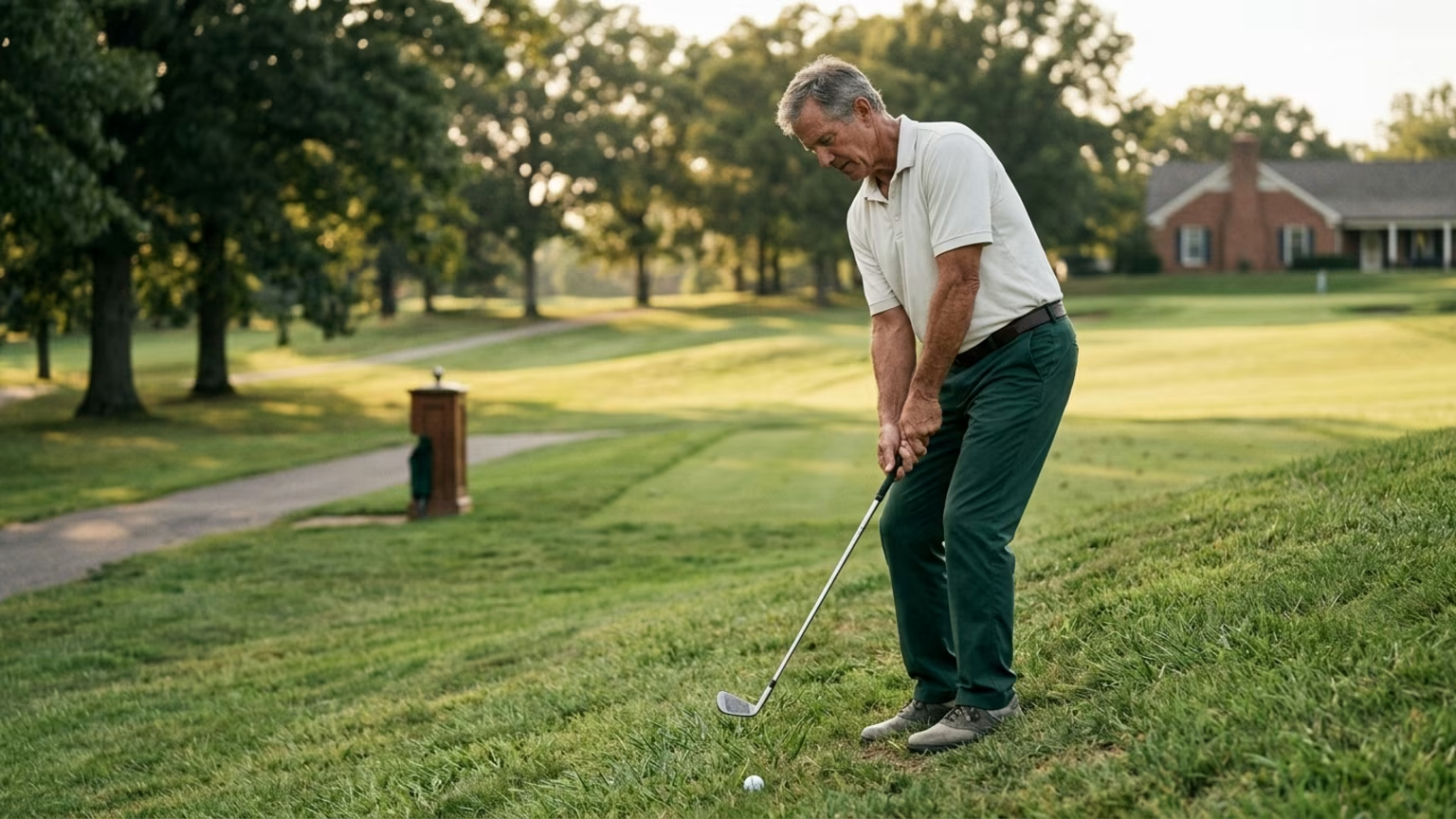

Doing endless twists is the wrong way to build a golf core. Learn how anti-rotation exercises like Pallof presses and carries help you control your swing.




Doing endless twisting sit-ups to build a golf core is a fast way to frustrate your lower back. Many players believe that because the golf swing is a rotational movement, they need to rotate heavily in the gym. This logic leads to hundreds of rapid repetitions on abdominal machines.
In reality, chasing more forced rotation off the course is rarely the safest approach for a mature golfer. Your body needs a different kind of challenge to thrive on the fairway. A reliable swing relies on control just as much as it relies on raw movement.
The common fitness advice treats the core as an engine built solely to produce twisting force. This outdated idea ignores the physical reality of an older recreational golfer. As you age, your joints and tissues often need more stability rather than more rapid twisting under heavy loads.
If you only practice turning, you completely miss the vital ability to control that movement. You need a stable foundation that balances rotation with firm support. Before worrying about how stable rotation drops scores for older golfers, you have to understand what your trunk actually does. A good core program trains your muscles to decelerate your swing safely.
Many fitness routines prioritize exercises that look impressive or cause a deep muscle burn. However, a burning sensation in your abdominal muscles does not automatically equate to better golf performance. The golf swing requires an intricate sequence of muscle firing, not just raw isolated strength. Training your core to brace at the right moment is much more valuable than doing a hundred crunches.
The true function of your midsection during a golf swing is to manage force. Your core must slow the club down, maintain your spine angle, and keep your segments connected. This means the ability to resist unwanted movement is just as vital as the ability to turn. The National Academy of Sports Medicine, or NASM, describes anti-rotation exercises as training the ability to resist unwanted rotational forces and maintain trunk stability.
In a functional routine, you teach your body to stay solid while outside forces try to pull you out of alignment. If your trunk cannot resist movement, your lower back often takes the strain of the swing. Building this resistance helps you maintain better control over your posture from the first tee to the final green. It allows you to swing with confidence and balance.
Think of your core as the brakes on a high-performance vehicle. You need excellent brakes to handle tight corners and sudden stops safely. If your midsection cannot stop the momentum of your backswing or follow-through, your joints absorb that stress. Good trunk control acts as a shock absorber for your entire body.
Many golfers waste precious energy on high-speed medicine ball throws or heavily weighted trunk twists. They attempt to mimic the exact motion of a golf swing with added resistance. However, trying to replicate swing speeds with heavy weights can easily compromise your form. Without a stable foundation, these fast exercises just reinforce poor movement patterns.
These aggressive movements often force the lower back to twist beyond its comfortable limits. Instead of building strength, you end up placing unnecessary stress on your spine. A smarter approach focuses on slowing things down and prioritizing stability over speed.
It is easy to get caught up in the excitement of dynamic power training. Social media is full of athletes throwing medicine balls against walls with incredible force. While these exercises have a place for elite competitors, they are often entirely inappropriate for the weekend golfer. You must earn the right to rotate quickly by first proving you can hold a steady position.
A sensible training plan mixes both control and deliberate movement. Golf-fitness guidance includes both trunk-control exercises and controlled rotational exercises. The goal is to build physical capacity that scales safely for an older body. You do not need heavy weights to challenge your ability to stay balanced.
Begin your routine in a supported position to remove excess stress from your spine. Keiser University College of Golf suggests examples including dead bugs for eight to ten repetitions per side and side planks held for twenty to forty seconds per side. These floor movements teach your trunk to stay braced while your limbs move freely. You can also incorporate bird dogs, which Keiser University College of Golf recommends doing for ten repetitions per side.
When you lie on your back to perform a dead bug, the floor provides immediate physical feedback. If your lower back arches off the mat, you know you have lost your brace. This instant feedback loop helps you correct your form on your own. It is a reliable way to verify you are engaging the correct muscles.
A separate guide from Mutual of Omaha, aimed specifically at seniors, also includes bird dogs alongside glute bridges. These accessible floor exercises let you focus entirely on your breathing and posture. You can master trunk control without fighting gravity or losing your balance. Once you feel comfortable on the floor, you can safely progress to standing work.
This slow and controlled approach is a fantastic way to train the rotation you actually need. Moving slowly allows you to feel which muscles are working. You build a strong mind-muscle connection that translates directly to your golf posture.
When you are ready to stand, you can introduce a simple resistance band. In a Pallof press, a band or cable pulls from the side while the golfer presses forward and resists turning. This brilliant setup forces your trunk muscles to fire to keep your torso perfectly still. You learn how to brace effectively while an outside force tries to disrupt your alignment.
This simple setup is highly favored by movement specialists because it requires zero twisting. You get all the benefits of a strong core without putting wear and tear on your spinal discs. It is an incredibly efficient way to spend your time in the gym.
NASM lists Pallof presses, single-arm carries, half-kneeling cable holds and bird dogs among its examples of anti-rotation work. To get the most out of a Pallof press, you must use excellent form instead of heavy resistance. Pay close attention to keeping your chest and hips facing straight ahead. If you feel yourself twisting, step closer to the anchor point to reduce the tension.
Another highly effective way to build stability is by simply walking with an uneven load. NASM proposes combining anti-extension, anti-rotation, lateral-stability and rotational exercises in a comprehensive core program. Carrying a weight in just one hand trains that crucial lateral stability. The senior exercise guide from Mutual of Omaha recommends light dumbbell carries for older golfers.
As you walk with the weight, your body has to fight the urge to lean toward the heavy side. You must practice staying tall, keeping your shoulders level, and maintaining a steady breathing pattern. These carries build stamina in the deep muscles of your trunk. That stamina is exactly what helps you hold your posture during a long afternoon on the golf course.
Anti-rotation training does not mean you should stop turning altogether. You still need to produce force and rotate fluidly through the golf ball. The key is to blend this stability work with focused, controlled rotational exercises. Keiser University College of Golf notes that a program can include controlled rotational work for three sets of twelve to fifteen repetitions per direction.
When you practice turning in the gym, do it smoothly and deliberately. Focus on rotating from your upper back while your newly strengthened core keeps your lower spine stable. This balanced approach protects your body while keeping your swing feeling athletic. A hybrid routine gives you the best of both worlds.
After you finish these stability exercises, rehearse some slow turns with a golf club. Pay close attention to how your midsection feels as you simulate your swing. You should start to notice a firmer foundation and a much more balanced finish.
To expand on these mobility and stability concepts, read our guide on the functional physical capacities for safer play. Maintaining trunk control is just one component of a healthy, long-lasting game. A smart routine will help you enjoy the fairways for years to come.
Follow Golfergy for practical insights on performance, mobility, recovery and healthy ageing. Stay connected for new articles, research-led guidance and ideas to help you play better for longer.


Treating balance drills as a substitute for leg strength ruins your golf swing. Learn why older golfers must combine stability and strength to protect joints.


Flexibility alone will not increase your clubhead speed. Building strength at the extreme edges of your mobility helps mature golfers maintain swing control.

Recreational golfers over 40 can build power and prevent injuries with a proven strength framework. Learn the specific movements that add distance safely.
Explore practical resources on performance, recovery, mobility and golf longevity.
Read the Blog