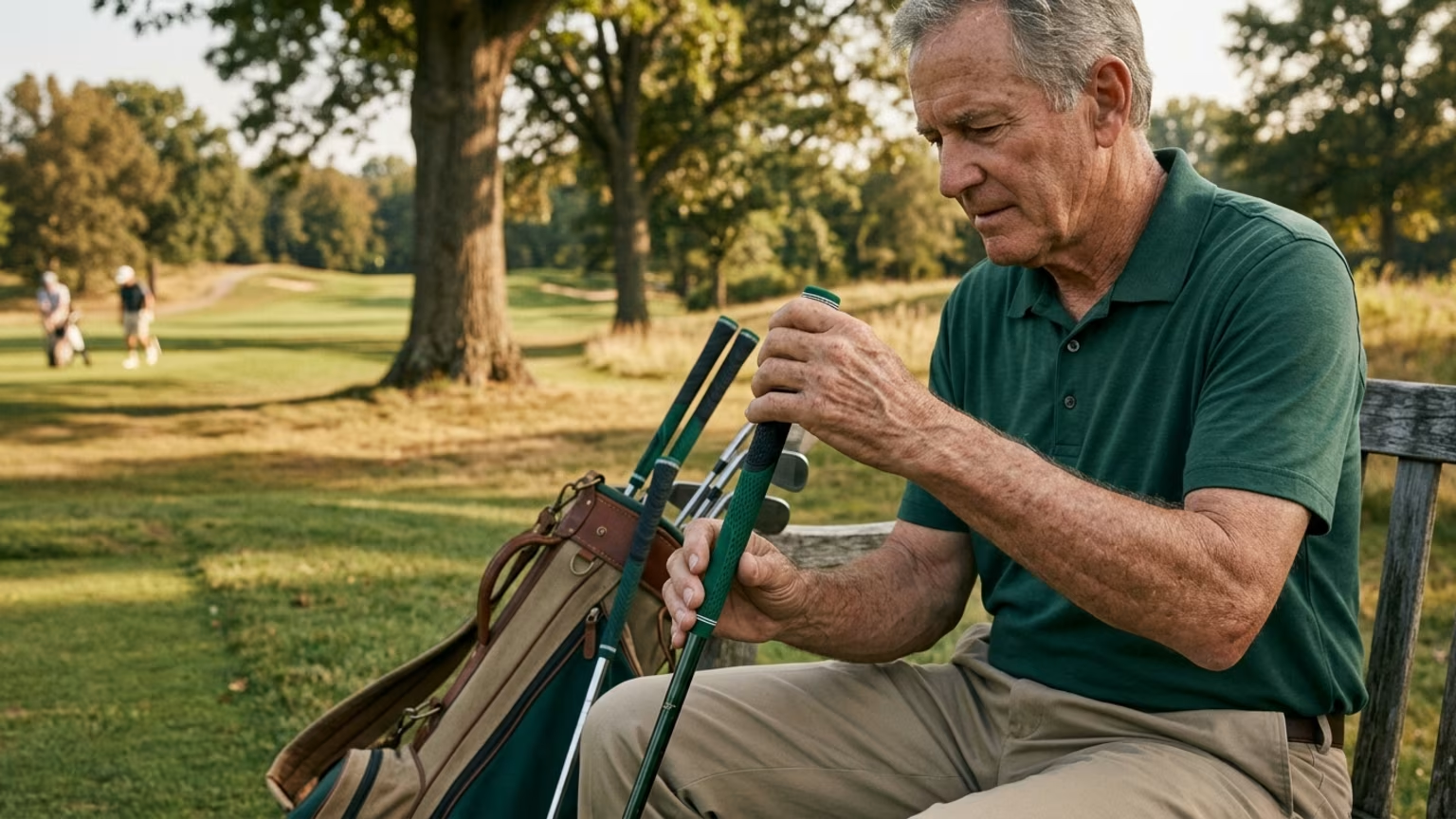
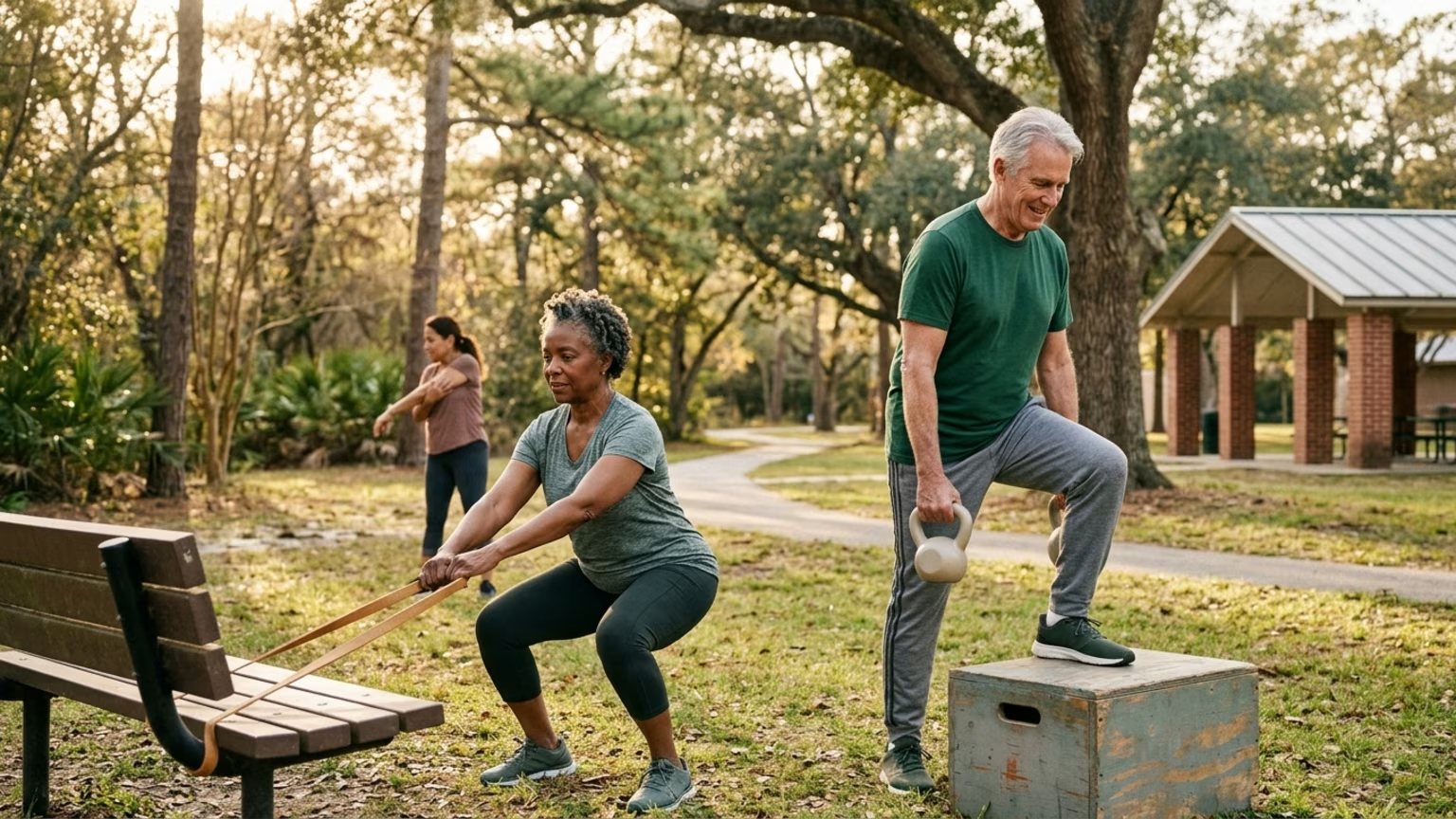
Learn why chasing tour professional workouts causes injuries, and find a science-backed, staged power training guide for golfers over 40.




I watched a playing partner step up to the first tee box, take a violent practice swing, and immediately grab his lower back in pain. He thought swinging out of his shoes was the only way to find his lost distance. You have heard a million times that reclaiming your driving distance requires training like a tour professional. The truth according to sports science is completely different.
It is completely understandable why older players fall into this specific trap. We turn on the television and see elite athletes performing heavy Olympic lifts. The broadcasts constantly talk about massive clubhead speed and explosive rotational force. We naturally want to replicate those exact movements to keep up with our younger friends.
That frustration is incredibly valid when you notice your drives landing shorter each season. Losing yardage off the tee makes the game significantly harder and less enjoyable. You want a physical solution that works quickly. Copying the fastest players in the world feels like the logical answer to an aging swing.
At golfergy, we see many players believe that power is something you can just force into existence. They assume that lifting heavier weights or swinging heavier clubs will automatically translate to a better game. This mindset ignores the reality of how older bodies recover and adapt to stress. We need a smarter approach to building golf fitness that respects our joint health.
The problem with copying tour professionals is that power and strength are entirely different physical qualities. Strength is your ability to produce force. Power is your ability to produce force quickly. For older recreational players, chasing explosive power without a solid physical base often leads to joint pain.
I used to stand on the first tee doing long, static hamstring stretches because I thought it was the right way to warm up. I would actually feel weaker on my first drive. Research later showed me that dynamic movements, like leg swings and torso twists, prime the nervous system much better. Changing my five minute warmup completely transformed my opening tee shots.
The American College of Sports Medicine released new guidance that fundamentally changes how we view power. The 2026 ACSM position stand synthesized 137 systematic reviews involving more than 30,000 participants. The broad conclusion is that consistent participation in resistance training matters more for most adults than finding a supposedly perfect program. They treat power as a completely separate outcome from maximal strength and muscle growth.
For power development, the ACSM identified moderate loads combined with a fast concentric phase and low-to-moderate volume as effective approaches. The target load is approximately 30% to 70% of your one-repetition maximum. This means you do not need to lift the heaviest weights in the gym. Moving a moderate weight quickly is much more effective for power than grinding through an exhausting lift.
Consistent strength work is the required foundation before you ever attempt to build speed. A systematic review found that progressive resistance training two or three times weekly can improve strength and several measures of physical function in older adults. These improvements include chair-rise performance, gait speed, and timed walking tasks. Developing this foundational capacity allows you to maintain your golf-specific strength and balance over the long term.
When older golfers jump straight into advanced power training, they often create compensations that ruin their mechanics. Trying to throw heavy medicine balls or swing weighted clubs without basic strength places immense stress on the spine. Your lower back ends up doing the physical work that your hips and legs should be handling. This is exactly how chronic injuries develop over a long season.
The Titleist Performance Institute reports that its database contains more than 700 golfers. They found that standing shot-put, seated chest-pass, and vertical-jump tests were associated with club speed at correlation values above 0.7. However, they explicitly note that these are correlations rather than proof that improving a test will cause a specific increase in club speed.
Treating these physical tests as guaranteed speed fixes is a dangerous mistake for recreational players. Rushing into heavy loaded lateral-flexion exercises can easily overload healing tissue. The International Golf Federation guidance recommends adding multiplanar rotational exercises only after single-plane work can be performed without pain. You must protect your back by developing functional torque gradually and safely.
A study of older military veterans found that a comprehensive golf training program improved several measures of lower-body function and agility. These findings support a broad physical conditioning approach. They do not establish that one particular power exercise will prevent injury or increase driving distance for all older golfers. A balanced approach is always safer than an extreme speed program.
The best approach for recreational players is a staged progression that builds functional tolerance before speed. The ACSM guidance recommends individualizing the program for older adults according to starting condition, tolerance, goals and safety. They suggest a conservative starting point for people who are deconditioned or functionally limited.
First, focus entirely on restoring movement control and your baseline muscle strength. Earlier ACSM guidance recommends strength-focused activity at least twice per week and prioritizes progressive resistance training involving the major muscle groups. You can start with simple bodyweight squats, supported split squats, and gentle hip mobility drills. Your initial goal is simply to establish pain-free balance and repeatable body mechanics.
You should never rush this critical foundational stage of your training plan. Building a resilient body takes patience and consistent effort over many weeks. Strength training for the senior golfer is about creating armor against injury before you try to swing faster.
Once basic movements feel comfortable, you can introduce intent to your weekly routine. Intent simply means trying to move a manageable resistance quickly during the lifting or pushing phase. You might perform a fast but highly controlled sit-to-stand movement from a bench. The return phase should always remain slow, deliberate, and entirely controlled.
You can also use cable machines for this stage if you have gym access. Cable presses performed with a quick push and controlled return are excellent for older players. The objective is high-quality force production rather than muscular exhaustion. Stop the exercise immediately if your technique or speed begins to decline.
Medicine-ball work offers a relatively simple way to practice rapid force production without requiring the technical skill of Olympic lifting. You can begin with a seated chest pass to completely protect your lower back. Focus entirely on pushing the ball away from your chest with crisp speed. If your balance is reliable, you can eventually progress to a tall-kneeling chest pass.
Standing rotational throws should only be added when your core control is absolutely solid. When you perform a standing rotational throw into a wall, focus entirely on turning your trail hip. Start with a light ball and keep your repetition count very low. Quality always matters more than quantity when you are trying to develop athletic power.
Only after you can tolerate the earlier stages should your program focus on faster golf movements. Reintroduce golf with partial swings, fewer balls, and gradual increases in physical effort. You might start with half swings at sixty percent effort using your shorter irons. Slowly work your way up to full driver swings over several practice sessions.
Next time your playing partner offers this advice, trust your body's true mechanics instead. You do not need to train like an elite tour professional to play great golf in your later years. Building a solid foundation of strength and adding fast intent to light loads will serve you much better.
Your action step for today is to practice a simple seated chest pass using a light medicine ball to safely feel force production.
Follow Golfergy for practical insights on performance, mobility, recovery and healthy ageing. Stay connected for new articles, research-led guidance and ideas to help you play better for longer.


A new cellular study reveals how aging muscle affects your golf swing. Learn why older golfers need resistance training to protect their tissue capacity.


Golf Digest recently published a five-part single-leg fitness challenge. Learn what this movement reveals about your balance, strength, and golf longevity.
Elite tournament recovery relies on sleep hygiene and structured training. Golfers over 40 can use these exact methods to prevent late-round fatigue.
Explore practical resources on performance, recovery, mobility and golf longevity.
Read the Blog