
A new Alita and Fujitsu AI motion tracking system debuted at ISS 2026. Learn how camera-based analysis helps older golfers identify restricted swing mechanics.




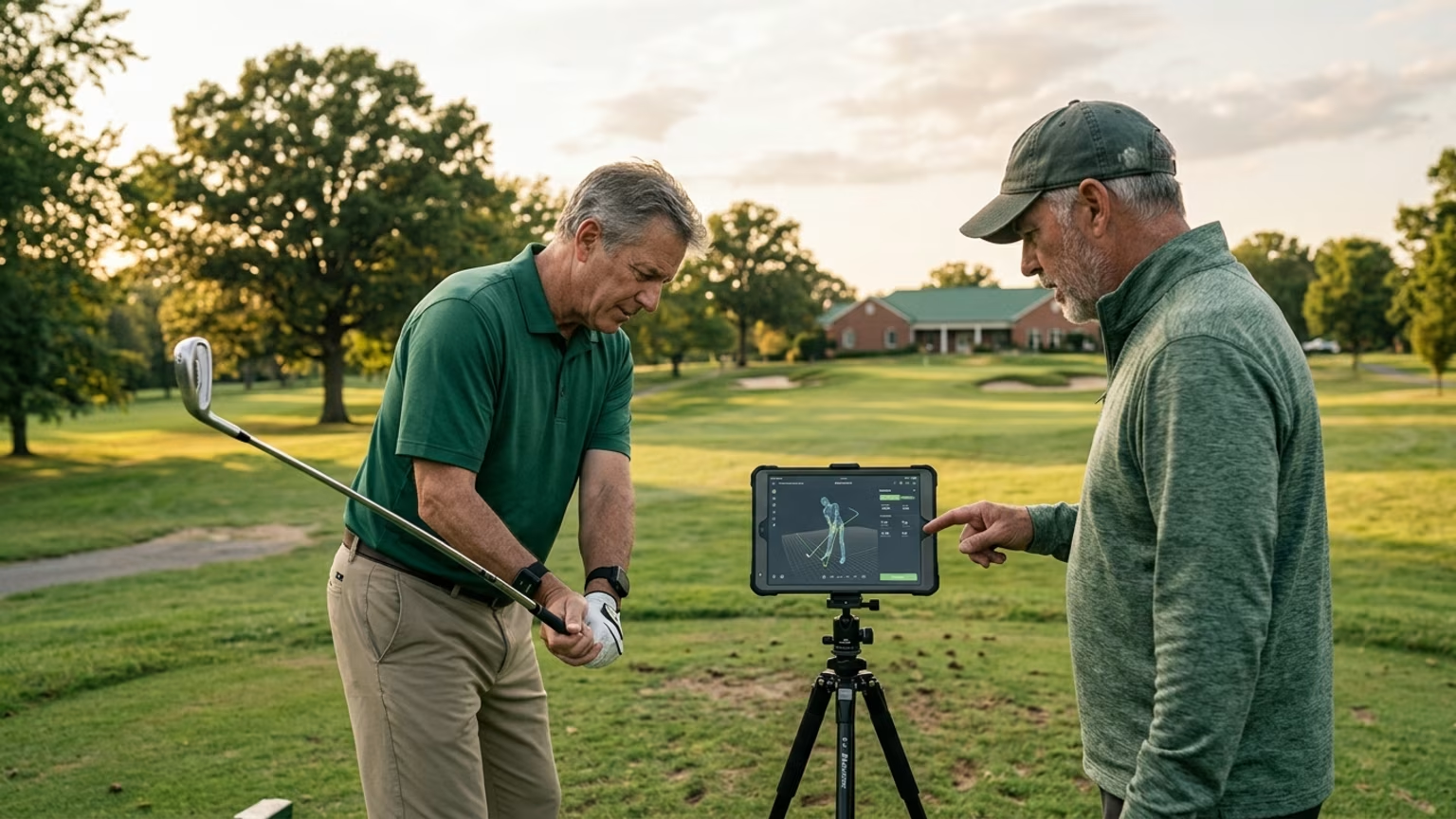
On September 11, 2026, Indonesia’s Ministry of Youth and Sports reported that Alita and Fujitsu introduced an AI-based Human Motion Analytics technology at the Indonesia Sports Summit (ISS) 2026 in Jakarta. The collaboration was marked by a memorandum of understanding between Alita and Fujitsu to bring AI-focused human-motion analytics to Indonesia. This event reflects a wider industry shift toward converting human movement into structured data for coaching and performance assessment. The system uses ordinary cameras to capture a person’s body movement as a skeletal-motion representation.
Fujitsu’s AI platform then analyzes those movement patterns for potential weaknesses and areas requiring improvement. The ministry presented the project as part of a broader concept meant to support sports science, athletic performance, and public fitness. Alita President Director Joseph Lumban Gaol stated that the technology applies to both health and sport. He specifically noted that both amateur golfers and performance athletes could use it.
Gaol explained that a single golf swing can be analyzed for standing posture, weaknesses, and areas needing correction. The primary intention is to help athletes and coaches evaluate technique in a more measurable way. By identifying weak parts of a movement, training programs can be designed more precisely. Gaol cautioned that the technology must be contextualized for Indonesian needs.
The partners plan to develop additional use cases suited to local requirements rather than simply importing the technology. The stated workflow remains highly accessible for daily applications. Ordinary cameras capture the movement, and the AI platform processes the skeletal data immediately. This setup provides an easy entry point for players seeking better feedback on their physical limitations.
When an AI motion tracking system flags a weakness in a golf swing, it usually points to a restricted joint or an asymmetrical movement pattern. The golf swing requires the body to rotate around a stable center while generating functional speed. If one part of the body cannot move freely, another part must take over the workload. This creates a chain reaction of compensations throughout the entire swing sequence.
Consider a golfer with limited mobility in their thoracic spine or mid-back. When they take the club back, the spine cannot turn far enough to reach a full coil. The body will often force the lower back or shoulders to rotate beyond their safe limits. Over time, these unnatural movements place heavy stress on tissues that were never meant to twist that far.
A similar issue occurs when the hips lose their rotational freedom. The trail hip must accept the body's weight and rotate internally during the backswing. If that hip joint is stiff, the golfer might sway backward or stand up out of their posture. The camera systems track these skeletal shifts to show exactly where the movement breaks down.
These compensations directly impact ball flight and swing consistency. A player with restricted hips might cast the club early to square the face at impact. By the time the ball leaves the club, the damage to the swing path has already occurred. Understanding these mechanical chain reactions helps players address the root cause of their swing faults.
Tour professionals swing with extreme speed, but recreational golfers over 40 face an equal risk of movement breakdowns. Aging naturally changes how our connective tissues behave and recover between rounds of golf. Muscles and tendons lose some of their elasticity over time. This makes the body less forgiving of forced rotational movements during a heavy weekend of play.
A younger player might get away with a stiff back by using sheer muscle power to complete the swing. For older players, that same stiffness directly limits their turn and stresses their joints. A golfer over 40 usually spends years sitting at desks or driving cars. These daily habits shorten the hip flexors and mirror the issues we see when undoing sedentary movement habits.
When that player steps onto the first tee, their body is already fighting against its own restricted posture. Even a slow, deliberate swing can cause pain if the joints cannot move through the required range. An AI assessment tool simply makes these hidden limitations visible on a screen. Older players must recognize these signs before they turn into lasting discomfort.
Without proper joint freedom, the body will find the easiest path of resistance to complete the swing. That path usually runs right through the delicate structures of the lower back and knees. This reality makes early identification of physical limits crucial for playing longevity. Identifying these faults is the first step toward building a sustainable golf game.
A movement assessment should change how you prepare for a round of golf. I used to stand on the first tee doing long, static hamstring stretches because I thought it was the right way to warm up. I would actually feel weaker on my first drive. Research later showed me that dynamic movements, like leg swings and torso twists, prime the nervous system much better.
Changing my five minute warmup completely transformed my opening tee shots. You can apply this same logic to your own game. Instead of holding long stretches, focus entirely on turning your trail hip or opening your chest. You want to ask for a movement assessment that identifies a specific restriction rather than accepting generic instruction.
Finding these limits early is the best way to conduct a golfer's daily movement audit. Once you know your weak points, you can prioritize comfort over forcing a tour-style range of motion. The Alita and Fujitsu system is intended to show posture and weaknesses so that improvement can be targeted. Older players can use these results to guide questions for a coach or clinician.
You can ask if the limitation is coming from the shoulder, hip, balance, or coordination. Treat your first motion scan as a baseline rather than a permanent verdict. Repeating the assessment under comparable conditions might show how your pattern changes after targeted training. The current reporting does not include an independent biomechanist’s assessment, peer-reviewed validation, or accuracy rate for the system.
Still, using motion data as a conversation starter helps you select a swing modification you can perform comfortably.
A common mistake is assuming that a flagged asymmetry requires aggressive stretching. Identifying a movement difference does not automatically mean that difference causes pain or poor performance. The appropriate response might involve strength work, motor control exercises, a technique adjustment, or load management. A golfer should never treat an AI-generated movement flag as a medical diagnosis.
Persistent pain, weakness, or loss of function always warrants a full assessment by a qualified health professional. Many players mistakenly try to pull their stiff joints into extreme angles to match an ideal model. This approach often damages the tissues without improving the underlying swing mechanics. It is much safer to work within your active range of motion and slowly build strength there.
Readers should look for future evidence on repeatability, accuracy, and measurable outcomes before treating these systems as proven longevity interventions. A single swing may provide useful information about a single moment in time. It might not represent how a golfer moves across different clubs, fatigue states, or pain levels. Building a golf specific strength foundation often solves restricted swings better than forcing flexibility.
We know that physical implementations must be adapted to individual needs and characteristics. A system deployed in one setting does not automatically transfer perfectly to every other golfing population. Proper interpretation by a trained professional remains the most vital part of any motion analysis. The technology simply provides the map, but the professional guides the journey.
Technology will continue to provide more data about how our bodies move through a golf swing. These tools are most valuable when paired with a professional who connects the findings to a safe and progressive program. Understanding your specific movement barriers takes the guesswork out of your practice sessions. The most effective strategies rely on clear communication between the player and their coaching team.
Using motion tracking technology allows that conversation to center on objective data rather than subjective feelings. When you know exactly which joints limit your turn, you can avoid wasting time on ineffective drills. Consistent tracking creates a reliable feedback loop for your physical development. You no longer have to guess whether a new mobility drill actually improves your rotation.
The camera identifies the change in your posture week over week. This objective data keeps older players focused on the exercises that actually work. Building a swing that lasts requires patience and a willingness to adjust your physical routines as you age. The goal is never to swing exactly like a young tour professional.
The true objective is to build a reliable, pain-free motion that keeps you playing for decades to come. What adjustments will you make to your mobility routine this season to steer clear of this hazard?
Follow Golfergy for practical insights on performance, mobility, recovery and healthy ageing. Stay connected for new articles, research-led guidance and ideas to help you play better for longer.


Learn how to apply GolfWRX's five pillars of fitness to protect your senior golf swing, improve mobility, and stay on the course longer without injury.

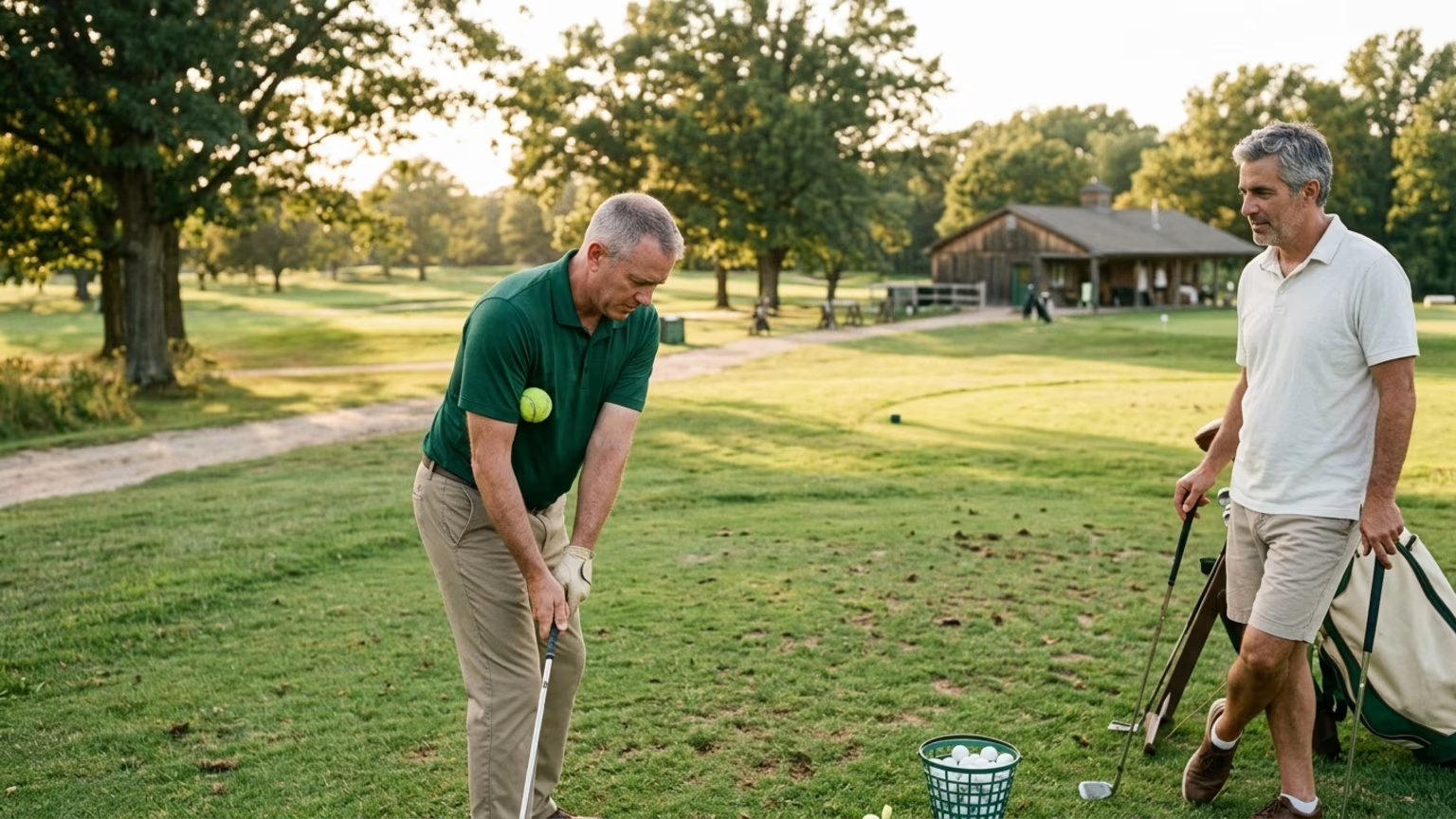
A review of the tennis ball transition drill from My Avid Golfer Magazine. Learn how this simple coaching constraint can improve lead-side balance and stability.
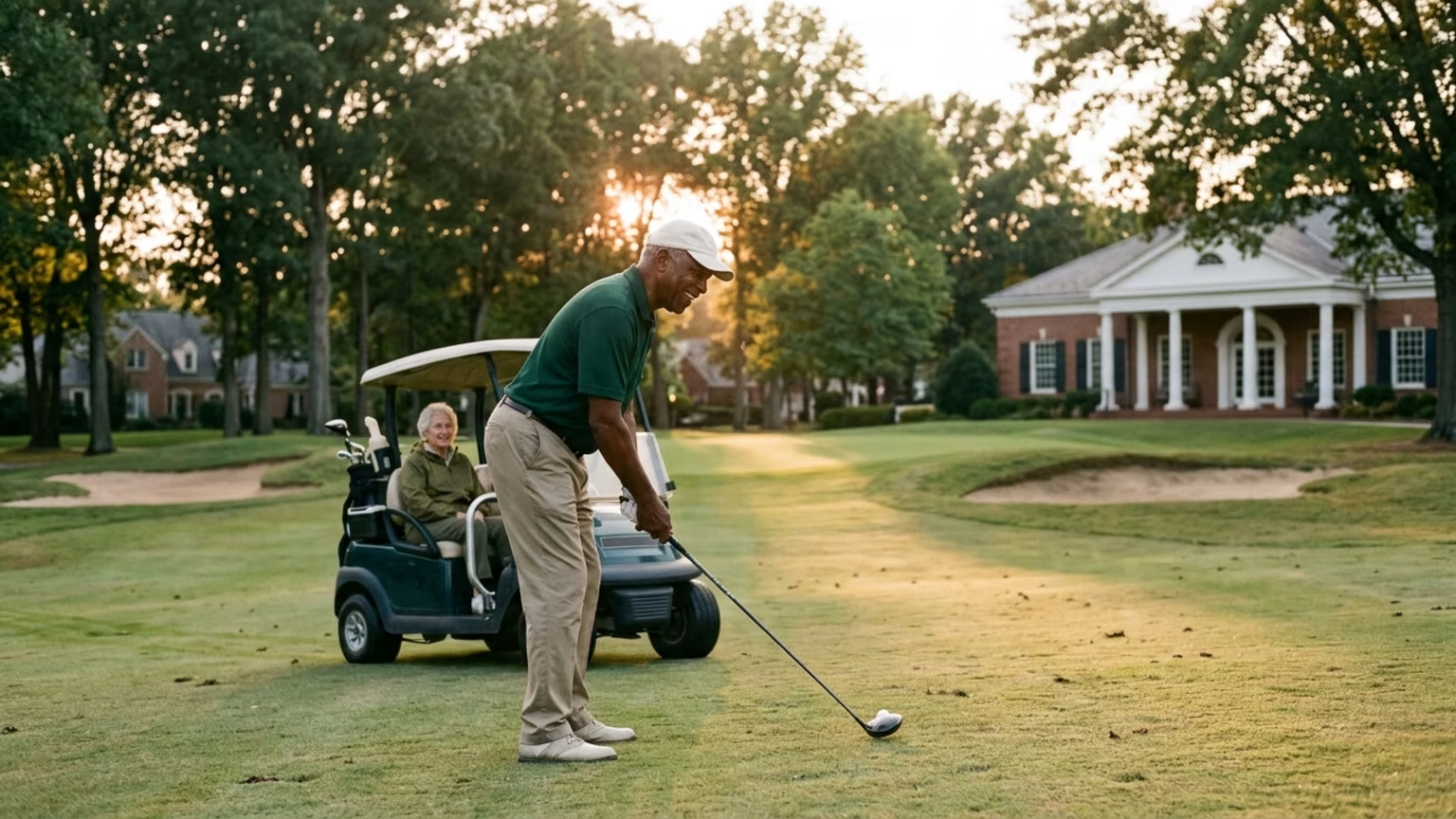
Meadowbrook Golf Club recently announced the addition of a standing-support adaptive golf wheelchair. Learn how equipment like this is helping limited-mobility players return to the course safely.
Explore practical resources on performance, recovery, mobility and golf longevity.
Read the Blog