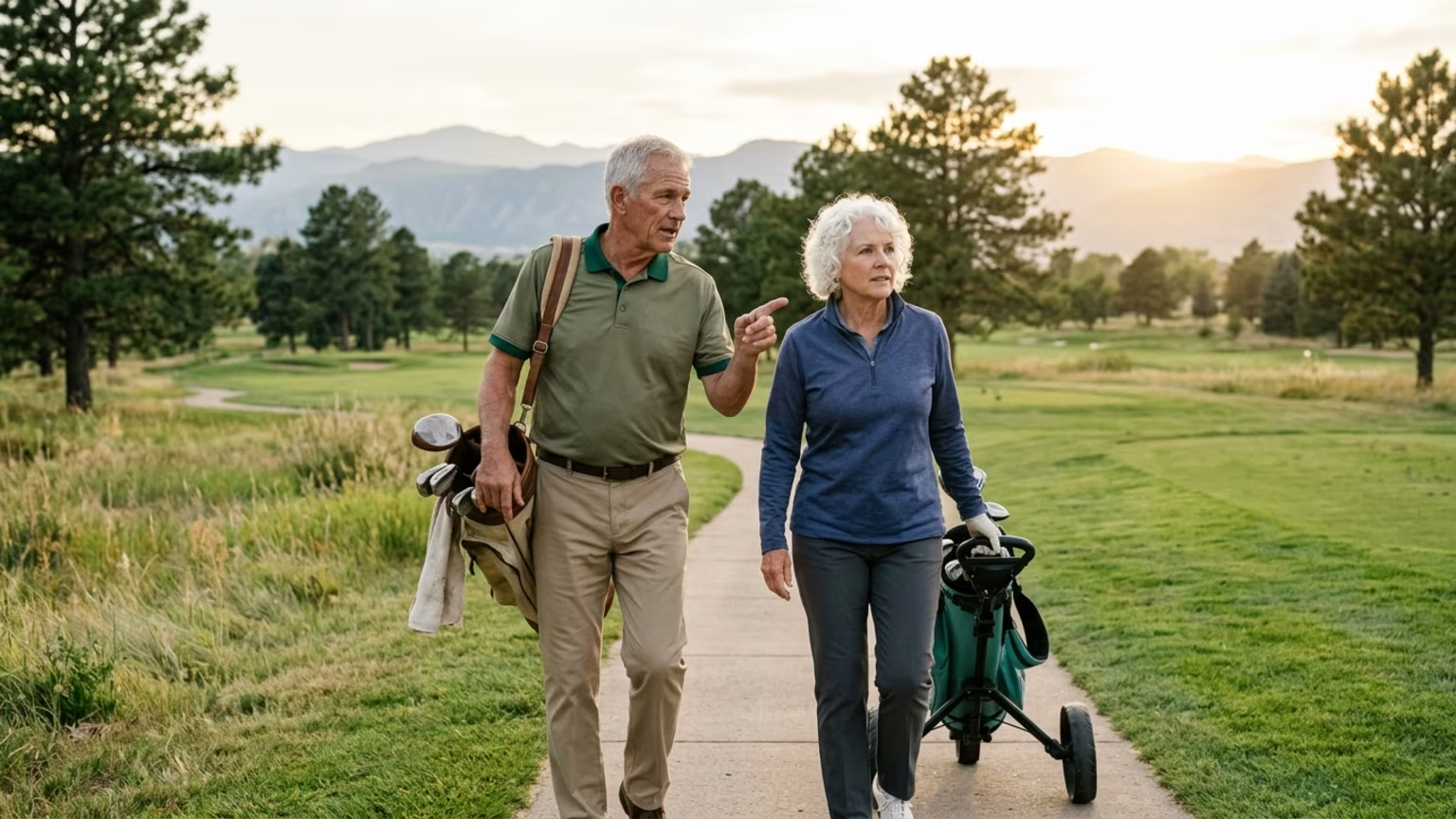

When 65-year-old Willie Wood led the Colorado Senior Open, he proved older golfers can still contend. Learn how to manage joint fatigue and protect your game.




In 2026, 65-year-old Willie Wood led the Inspirato Colorado Senior Open at Green Valley Ranch Golf Club in Denver. Wood held a three-stroke lead at 9 under par after shooting rounds of 66 and 69. His opening round even included a hole-in-one. However, the event also revealed the physical cost of tournament golf for older competitors.
Shane Bertsch tied for second place at 6 under par alongside Steve Holmes. The 56-year-old Bertsch said he was tired, injured, and playing on fumes. He explicitly noted that his fingers and knees hurt during the event. This contrast highlights the physical demands placed on experienced players during multi-round events.
The tournament used a 36-hole cut at 3 over par. This setup created a strict endurance test for the competitors. Players had to walk and execute high-level golf for two full days just to reach the final round. Wood was largely retired from tournament golf at the time.
The Colorado Golf Association reported this was only his third multi-day tournament of 2026. Wood drove approximately 650 miles from his home in Edmond, Oklahoma, to compete. His situation proves that logistics and travel play a large role in tournament readiness. His competitive background included winning the Colorado Open in 1984, one PGA Tour title, and two PGA Tour Champions titles.
Other players like Guy Boros and John Balfanz also navigated this physical challenge well. Boros sat tied for second at 6 under par, and he previously won the 2022 Colorado Senior Open. Balfanz reached 5 under par. The competitive depth extended to the amateurs, with Mark Henderson leading the low-amateur standings at 2 under par.
The physical mechanics of knee and finger pain in golf are straightforward. The golf swing places a massive load on the lead knee during the downswing. This joint must rapidly straighten and absorb rotational forces to transfer energy properly. At the same time, the hands must maintain a secure grip while absorbing shock at impact.
Walking 36 holes compounds this stress significantly. A golfer takes thousands of steps over uneven terrain during a two-day event. This constant walking creates repetitive friction in the knee joints. The connective tissues must stabilize the body through every swing and every step.
The fingers face a similar repetitive strain. Every swing sends vibrations from the clubface straight into the hands and tendons. Over the course of a tournament week, these small joints never get a chance to fully rest. Without adequate recovery time, the tendons become inflamed and painful.
Bertsch noted he had recently completed a PGA Tour Champions event before arriving in Colorado. This lack of rest directly affects how the body manages inflammation. The knees and fingers simply cannot clear the inflammatory response while still performing daily repetitive impacts. The resulting pain makes basic wedge control and scoring incredibly difficult.
Recreational golfers over 40 face a serious risk of joint fatigue and inflammation. The World Health Organization notes that physical inactivity increases after age 60 in both men and women. When less active golfers suddenly attempt a weekend trip with multiple rounds, their bodies rebel. They lack the tissue tolerance required to handle sudden spikes in walking and swinging.
Older adults naturally lose some muscle mass without deliberate training. This loss means the joints have less muscular support during the aggressive rotational movements of a golf swing. Without strong leg muscles to absorb force, the knee ligaments take on the brunt of the load. This is a common way that older players develop chronic knee pain.
Amateurs also tend to grip the club tighter when they get tired. This extra tension places unnecessary stress on the fingers and wrists. As fatigue sets in over 18 holes, swing mechanics often break down. Poor mechanics lead to heavy divots and worse shock absorption through the hands.
You might not play a professional schedule, but your body processes stress the same way. The demand of a 36-hole club championship will test your joints completely. To protect joints and maintain swing mobility, older golfers must prepare their bodies for this specific workload. A lack of preparation will quickly expose any weak links in your knees or hands.
The World Health Organization says regular physical activity is associated with lower risks of hypertension, some cancers, and type 2 diabetes. It also correlates with better mental health, cognitive health, sleep, and body-fat measures. More importantly for older golfers, physical activity lowers the risk of falls. Maintaining this basic physical fitness is a requirement for serious play in later decades.
The WHO emphasizes that any amount of physical activity is better than none. They report that physical activity is associated with lower risks of all-cause mortality and cardiovascular disease mortality. For older adults, establishing a baseline of daily movement is critical. Consistent activity keeps the body resilient enough to handle the sudden physical demands of a weekend golf trip.
We saw the effects of inconsistent performance on the Colorado leaderboard. Rafael Gomez shared the first-round lead after shooting 66, but he missed the cut after an 83 in the second round. Gary Hallberg, a three-time PGA Tour winner, made the cut exactly on the qualifying number at 3 over par. Multi-round golf is relentless, and fatigue can ruin your scorecard very quickly.
The tournament tested players of all backgrounds. Jon Lindstrom sat at 1 under par, while Keith Humerickhouse and Ed Kerr were even par. Tom and Bob Kalinowski also made the cut. These results prove that maintaining physical capacity allows older golfers to compete effectively.
The best way to prevent this pain is to treat golf as an endurance event. The World Health Organization states that muscle-strengthening activity benefits everyone. You must build a strong base to avoid pain before you arrive at the first tee. Hitting balls on the practice range is not enough to protect your joints from injury.
Start by adding basic lower-body strength work into your weekly routine. Focus entirely on simple movements like bodyweight squats or lunges. These exercises strengthen the muscles around the knees to better absorb swing forces. Stronger legs will also help you walk the course with much less fatigue.
Next, practice deliberate energy management during your rounds. Willie Wood noted that his second round was calmer and more consistent than his aggressive first round. Proper pacing is critical for surviving multiple days of golf. Take time to relax between shots, and avoid rushing your pre-shot routine.
You should also test your body under realistic tournament conditions during practice. Play several holes after a normal workday to simulate late-round fatigue. Walk rather than ride when appropriate to build your physical endurance over time. This approach will make the physical demands of competition feel far less unfamiliar.
Finally, prioritize rest and pay early attention to persistent pain. Bertsch played while injured, but recreational golfers should not view fatigue as a test of toughness. Planned rest days and adequate sleep are vital for joint recovery. If your knees or fingers start to hurt, give them the time they need to heal.
Bertsch wanted to add the Colorado Senior Open title to his Colorado Open victory. Only Bill Loeffler, Jonathan Kaye, and Mike Zaremba had previously won both events. While Bertsch fought through pain to chase this goal, recreational golfers have different priorities. Protect your long-term health by resting when your body demands it.
Willie Wood proved that age does not automatically push a player out of serious contention. Surviving multi-round events simply requires a realistic approach to both conditioning and recovery. Proper pacing and basic strength work will keep you on the course rather than sitting on the sidelines with aching knees. What adjustments will you make to your mobility routine this season to steer clear of this hazard?
Follow Golfergy for practical insights on performance, mobility, recovery and healthy ageing. Stay connected for new articles, research-led guidance and ideas to help you play better for longer.


A practical strength framework for golfers over 40, built around everyday goals, sensible progression and a careful look at limited golf research.


A research-led look at strength, balance, mobility and trunk control, with a flexible planning framework for golfers over 40.
Understand golf mobility after 40 with a comfortable-turn self-check, hip and shoulder guidance, and a clear look at flexibility and swing speed.
Explore practical resources on performance, recovery, mobility and golf longevity.
Read the Blog


