

Static stretching or dynamic mobility before golf? Compare their roles in warm-up and longer-term practice, with evidence for older golfers.




Static stretching and dynamic mobility offer different approaches to preparing for golf. Which belongs before the round, and where does each fit in the longer-term work of developing usable range?
Static stretching means holding a stretch position. Dynamic mobility means moving actively through a comfortable range rather than staying in one position. Here, active movement serves as preparation for swinging rather than a test of how far you can reach.
If you arrive feeling stiff, both approaches may look like answers to the same problem. Yet getting ready for today's round and developing range over time are different tasks. That difference should guide the choice more than a blanket rule that stretching is good or bad.
Golfergy's focus is helping experienced golfers play better for longer. That means separating preparation from ongoing practice rather than asking a pre-round stretch to do every job. Our guide to placing mobility work around your golf offers a way to think about that split.
The injury question needs a separate boundary. The golf warm-up review account discussed below describes mixed findings on warm-up habits and injury. A 2026 scoping review of warm-up research also notes limited direct injury outcomes and real-world implementation evidence.
These performance findings do not prove that either option prevents injury or reduces long-term joint wear. They also do not establish one precise routine or duration for every recreational golfer. Use the comparison to choose a purpose rather than treating a warm-up as protection against every physical problem.
A secondary account of a 2019 systematic review covering 23 golf warm-up studies reports that static stretching performed less well than other approaches immediately before performance.
For the golfer deciding what should lead the warm-up, that makes static stretching the weaker choice. A position that feels like a good stretch is not automatically the best preparation for the next swing.
Saving focused flexibility work for another setting is not a penalty for static stretching. It keeps the pre-round choice focused on evidence that addresses immediate performance.
Static stretching is better discussed as a possible part of regular flexibility practice. The review's immediate performance comparison is not a verdict against all stretching at all times. It is not a reason to claim that held stretches alone will extend your playing years either.
Keep the aim clear: flexibility practice works on range, while a warm-up prepares you to play. They can have different roles without one becoming the universal winner.
For an older golfer, the practical concern is forcing a position because more range seems desirable. Pain, major stiffness or a history of injury calls for advice from a qualified clinician. A pre-round comparison cannot settle those individual decisions.
The useful question is not whether you can tolerate a stronger stretch. It is whether that approach belongs in your preparation or needs a more personal discussion away from the first tee.
The same review account reports that dynamic and resistance-containing warm-ups tended to support performance measures. That supports making comfortable active movement the focus before golf rather than relying on held stretches alone.
Think of the task as preparing to swing rather than trying to gain lasting flexibility before your tee time. The practical aim is gradual preparation, not a larger turn on demand.
Our guide to giving movement time before the first full swing keeps that focus on preparation. The useful question is whether the warm-up serves the round ahead rather than whether it resembles a demanding mobility session.
Active movement has the stronger immediate case, but a warm-up is not a complete longevity plan. Readiness for one round and physical development through regular practice belong in different parts of your thinking.
There is no need to turn this into a choice between never stretching and moving all the time. The comparison concerns what leads your preparation rather than a ban on an entire type of exercise.
Comfort matters here too. Dynamic does not mean forceful, and movement should not become another way to push through symptoms. The practical choice is comfortable preparation rather than a test of how far an older joint will go.
That applies the same standard to both options: the label matters less than keeping the movement suited to its purpose.
The better longevity choice is a division of roles: active preparation before play, with regular mobility and broader physical training treated as separate work. That is a more grounded reading of the research than searching for one winning stretch.
A small trial recorded in PEDro helps explain why. It studied 18 male golfers with a mean age of 70.7 years. The eight-week program combined flexibility, core stability, balance and resistance exercises.
The exercise group of 11 increased maximal driver clubhead speed from 127.3 to 133.6 km/h. The control group of seven changed from 134.5 to 133.3 km/h. The study record reported a statistically significant difference between groups and improvement in most measured components of the Fullerton Senior Fitness Test.
This was a small study of older men, and its combined program cannot isolate stretching's contribution. The findings are not a promise for every golfer over 40, women or people with particular health conditions.
The useful lesson is the shape of the work. Flexibility sat beside strength, balance and core work rather than replacing them. For playing better for longer, the stronger practical approach is regular work on physical function instead of relying on a stretch just before golf.
Clubhead speed matters to performance, but Golfergy's aim reaches beyond a faster measured swing. Keeping preparation and ongoing practice in their own roles avoids asking every warm-up to solve a longer-standing mobility concern.
For the immediate job of getting ready to play, active movement wins this comparison. For ongoing range and function, leave room for flexibility within broader training rather than treating either warm-up method as the whole answer.
The distinction is about timing and purpose. Before golf, the priority is preparation for the round ahead. Away from that immediate task, mobility can receive its own attention without the pressure of an approaching tee time.
Choose dynamic mobility before golf; treat static stretching as an optional part of longer-term flexibility work.
Follow Golfergy for practical insights on performance, mobility, recovery and healthy ageing. Stay connected for new articles, research-led guidance and ideas to help you play better for longer.


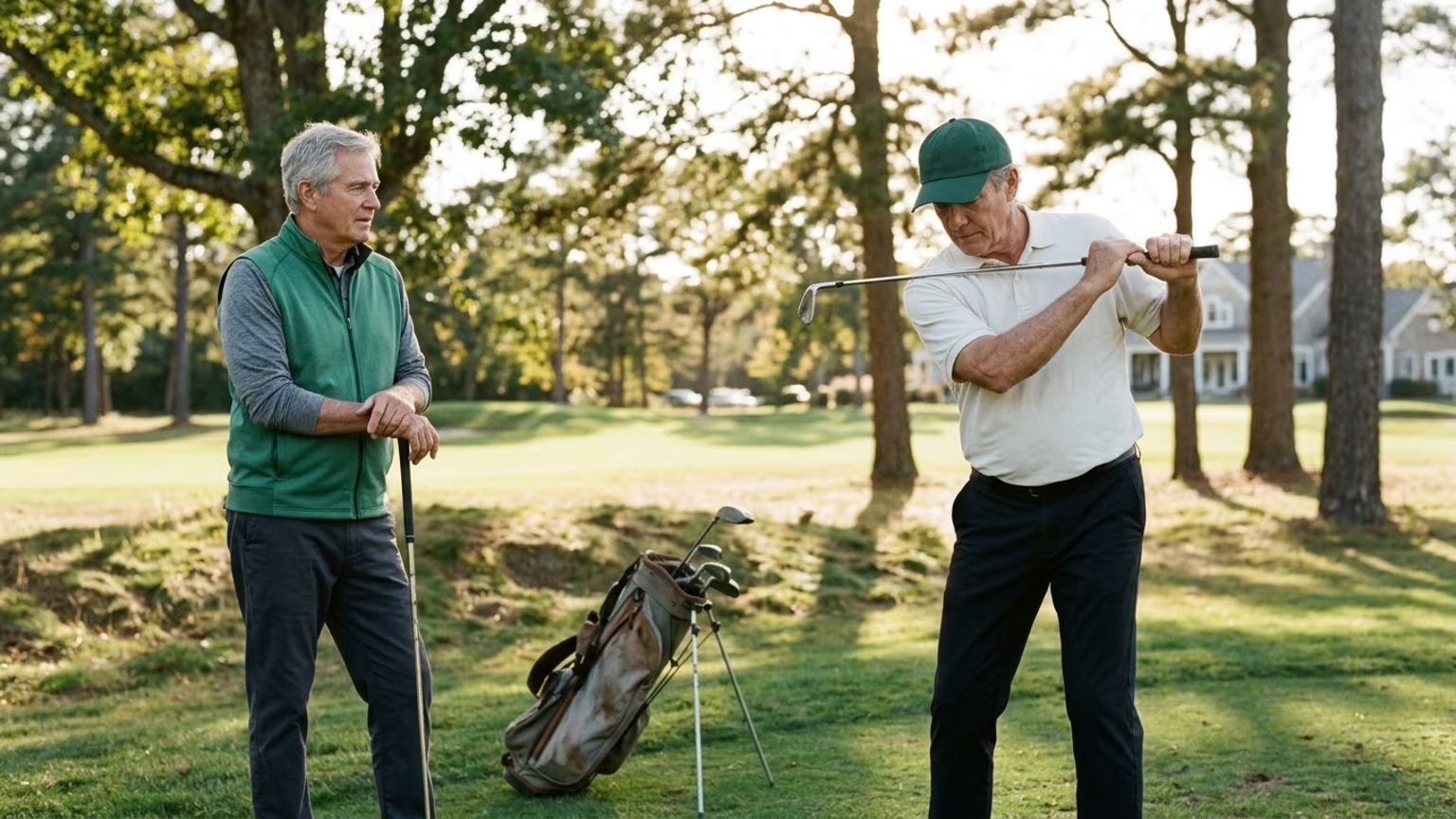
Learn how hip mobility fits your golf turn, why back pain needs a wider view, and two practical habits for a balanced approach after 40.


Ben Griffin returned with a 64 and his first 18-hole walk since August. A grounded look at the lessons and limits for golfers over 40.
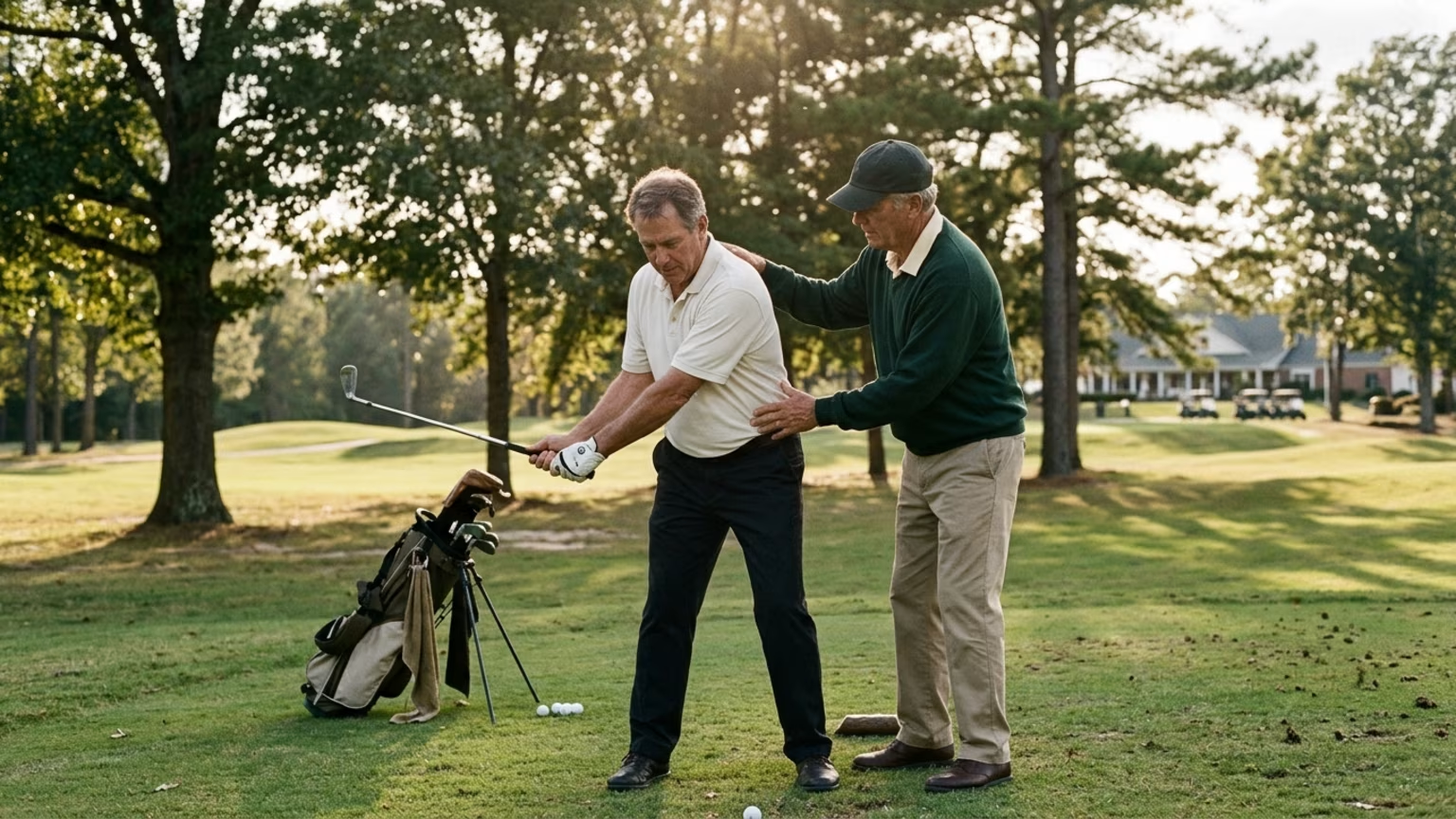
Learn how hips, trunk and shoulders share a golf turn, with practical habits focused on comfortable rotation rather than a bigger backswing.
Explore practical resources on performance, recovery, mobility and golf longevity.
Read the Blog


