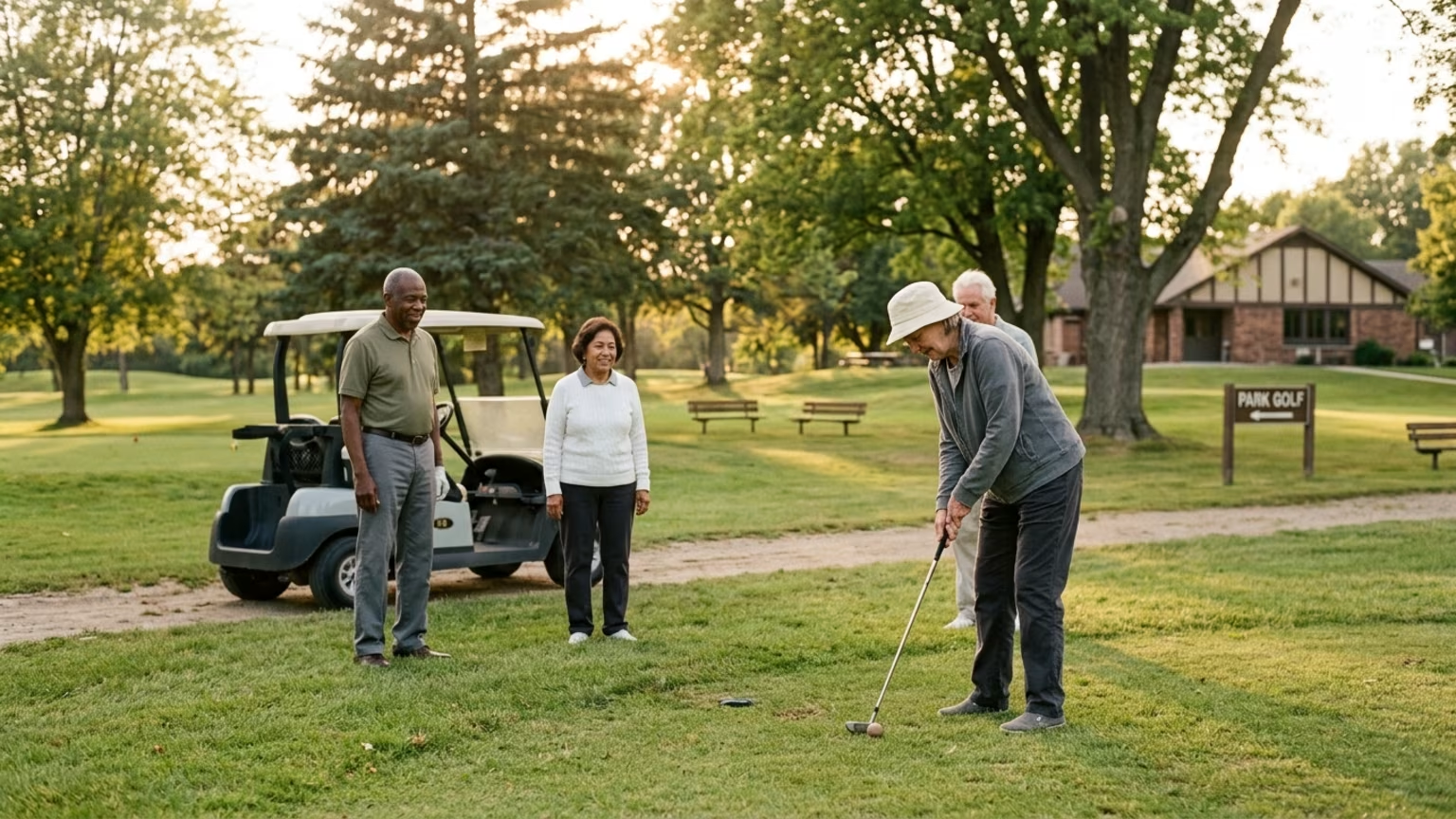

A recent study found that muscle-challenging strength training and park golf are associated with lower dementia risks for older adults compared to standard golf.




You just finished a grueling 18 holes in the summer heat, and as you order a drink at the clubhouse, you assume your active lifestyle fully protects your brain. A recent prospective study followed 5,074 older adults over four years and found that 8.5 percent developed dementia. This striking statistic matters because it challenges what many players believe about physical activity and aging. Showing up to the course might not be enough to preserve your mind for the years ahead.
For older players, maintaining health often focuses on back pain and losing distance off the tee. We rarely think about our cognitive longevity while hitting balls on the driving range or putting on the practice green. The researchers associated with Nippon Sport Science University and the University of Tsukuba decided to investigate this exact overlooked area. Their findings give every mature player a strong reason to critically examine their weekly fitness habits.
The study tracked participants using a 2013 pre-baseline survey and an August 2017 baseline survey. The researchers then monitored these individuals until July 2021 to see who developed cognitive issues. Out of the surveyed group, 430 participants ended up developing dementia during the follow-up period. This detailed tracking provides a very clear picture of how different activities associate with brain health over time.
Many mature players find themselves choosing between dedicated strength training and relying solely on standard golf to stay fit. The August 2026 study in Geriatrics & Gerontology International analyzed five specific exercise types to measure dementia risk associations. The researchers evaluated 17 exercise types initially but focused their analysis on the activities with at least 150 participants. These were calisthenics, walking, Japanese croquet, standard golf and strength exercise.
We can group these activities into two main contenders for your weekly routine. Option A involves muscle-challenging work like strength exercise and Japanese croquet games like park golf. Option B relies on standard golf and walking as the primary sources of fitness. Players often choose between these paths based on time constraints, joint pain and sheer enjoyment.
Option A demands deliberate physical effort and cognitive focus. The study associated strength exercise with a 74 percent lower adjusted risk of dementia compared to non-exercising participants. Japanese croquet activities, which include gateball and park golf, were associated with a 32 percent lower adjusted risk. These forms of exercise combine raw physical exertion with mental engagement to support long-term brain health.
A separate report suggested this kind of research could support blood-based biomarker development involving irisin. The clear benefit here is the potential protection against cognitive decline through active muscle engagement. To truly maintain power, older players need this targeted resistance. It helps build a resilient body that can handle the rotational forces of a proper swing.
However, intense strength training can present drawbacks for older joints if programmed incorrectly. Heavy lifting without proper recovery can lead to acute flare-ups and muscle stiffness. Older golfers must scale their routines to their specific medical status to avoid unnecessary joint strain. Keep instructions focused on one small movement at a time, such as focusing entirely on turning your trail hip during an exercise.
Option B represents the traditional approach of walking and playing standard golf regularly. The news report covering the study noted that standard golf did not show a statistically significant difference in dementia risk compared to non-exercisers. The researchers found the same non-significant result for walking and basic calisthenics. The study used adjusted Cox proportional-hazards models to carefully compare each group against inactive individuals.
This specific finding might shock players who view walking 18 holes as the ultimate health activity. It is common to assume that any time spent outdoors automatically shields the brain from decline. This lack of statistical significance does not mean standard golf lacks any physiological value. Standard golf still requires baseline mobility and provides an excellent source of steady cardiovascular work for older adults.
It also offers vital social engagement and keeps players moving outdoors for hours at a time. This steady movement creates lower immediate wear-and-tear on your major joints than heavy weightlifting sessions. However, relying only on Option B can leave older players vulnerable to fatigue on the back nine. Standard golf simply does not provide the heavy muscle stimulus required to preserve lean tissue as we age.
A separate study of 4,575 adults over age 65 did report that current golfers had 39 percent lower odds of cognitive decline than never-players. This contextual evidence suggests golf helps maintain mental sharpness through strategy and focus. It provides a different kind of brain stimulus, even if it does not replace the benefits of resistance work. Therefore, golf remains a fantastic activity, provided you understand its specific physical limitations.
To play better for longer, mature golfers need a balanced strategy that protects both the body and the brain. Relying exclusively on standard golf leaves valuable cognitive and muscular adaptations completely on the table. The study indicates that activities demanding more from your muscles are strongly associated with better cognitive outcomes. Integrating deliberate strength exercises into your routine creates a much stronger foundation for aging well.
You do not have to abandon your weekend walking rounds to reap these long-term benefits. Golfergy recommends adding a structured resistance plan that builds lower-body stability and trunk control safely. Start with manageable loads and focus on controlled movements that perfectly match your current fitness level. This blended method gives you the joint-friendly repetition of golf alongside the robust protection of muscle-challenging work.
Overcomplicating your gym routine can lead to frustration and poor form. A proper longevity strategy also means understanding your recovery needs between heavy sessions and long rounds. Muscle tissue needs a distinct stimulus to grow, but it also needs sufficient rest to repair itself properly. Proper balance routines can safely bridge the gap between heavy lifting days and active days on the course.
By intelligently mixing these elements, you build a sustainable routine that avoids burnout. This comprehensive approach is the true secret to keeping you on the fairway for decades to come.
We know that a single observational study cannot guarantee perfect health for every individual. The primary study does not establish causation or prescribe an exact training protocol to follow. However, the data strongly supports adding a resistance component to your existing weekly routine. The science points toward a combined approach for the best physical and mental results.
The next time you finish a grueling 18 holes and order that clubhouse drink, remember that true longevity takes varied effort. Your brain and your body need both steady activity and targeted muscular challenges. Choose standard golf for steady physical activity, and deliberate strength training for long-term cognitive health.
Follow Golfergy for practical insights on performance, mobility, recovery and healthy ageing. Stay connected for new articles, research-led guidance and ideas to help you play better for longer.


A practical look at golf strength after 40, with research on older golfers and simple habits for connecting training goals to a coordinated swing.


How legs, trunk and upper body share the work of a golf swing, with simple planning habits and a measured look at evidence for older golfers.

Understand mobility versus stability in golf, what older-golfer research reports, and two modest habits for comfortable movement control.
Explore practical resources on performance, recovery, mobility and golf longevity.
Read the Blog


