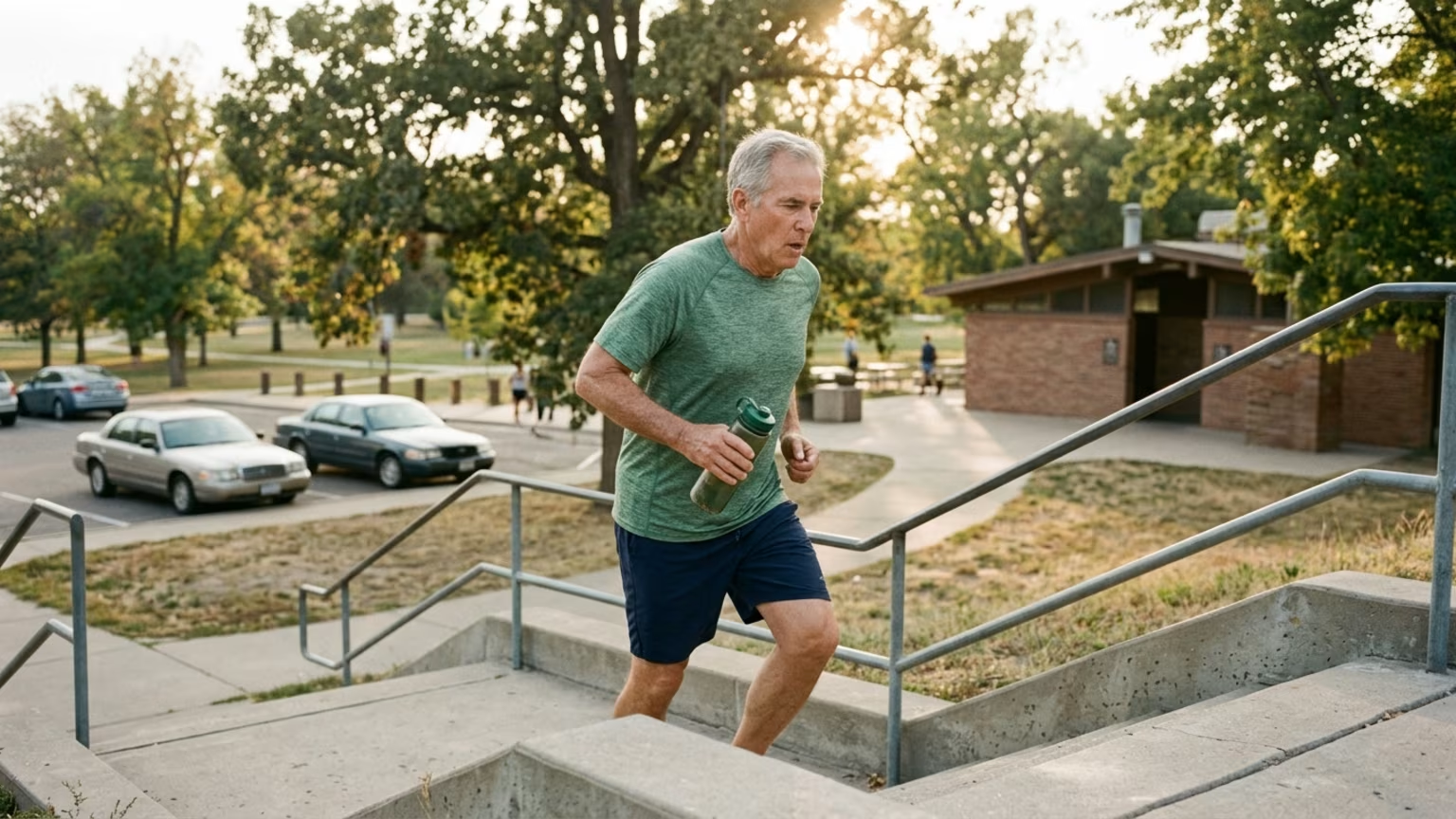

Learn how short bursts of brisk walking on the golf course can improve cardiovascular health and lower mortality risks for older players.




On September 14, 2026, an NPR report highlighted new evidence linking short bursts of vigorous movement to better long-term health. The research offers a fresh way to look at how we stay capable on the course. In our experience, the saddest thing I have seen in golf is watching lifelong playing partners slowly drop out of our weekend group. It usually starts with a nagging shoulder or knee issue they ignore until it requires surgery.
That pattern is exactly why our team focuses on longevity over quick fixes. We do not have to stop playing as we age, provided we adopt the right maintenance habits. Today, we understand that a slow loss of general cardiovascular stamina takes just as many players off the course. This new data provides a practical roadmap for fighting that decline.
The physical mechanics of walking pace directly affect our internal systems. The central study from the British Journal of Sports Medicine analyzed nearly 65,000 people who wore activity trackers for seven consecutive days. Researchers followed these participants for eight years to track their outcomes. They found that a faster pace forces the cardiovascular system to adapt to higher oxygen demands.
When we increase our stepping cadence, the muscles in our legs demand more oxygenated blood. The heart pumps faster to supply this blood, training the cardiovascular system to operate efficiently under load. This recurring stress improves the elasticity of our blood vessels over time. It is a biological upgrade that helps older golfers maintain their energy levels without needing to sprint.
Current European Society of Cardiology recommendations call for 150 to 300 minutes of moderate-intensity activity or 75 to 150 minutes of vigorous activity per week. Hitting these targets can feel daunting for older adults. The new tracking data reveals that brief, intense efforts help accumulate that needed volume without scheduling extra workouts. This effort is a core component of any effective daily movement practice.
The prognosis data from the tracker study shows clear associations between speed and survival. Among participants recording fewer than 5,000 steps per day, a peak 30-minute cadence of about 80 steps per minute was associated with an estimated 28 percent lower risk of premature death compared with the study benchmark group. Across all step-count groups, a peak 30-minute cadence around 90 to 100 steps per minute was associated with lower mortality risk.
The researchers measured the average cadence during each participant's fastest 30 minutes of stepping. This shows that the speed of your steps provides distinct protective benefits. Nicholas Koemel from Monash University stated that faster stepping was associated with a lower risk of premature death among people accumulating fewer than 5,000 steps per day. He noted this faster pace could be comparable in some cases with taking more steps at a slower pace.
Golfers over 40 face a unique vulnerability when managing their weekly activity. A typical round provides plenty of low-intensity movement across several miles. An international golf-and-health consensus statement describes golf’s injury risk per hour as low compared with other sports. This relative safety makes the sport a popular exercise choice for older adults.
Many older players assume this slow walking alone provides a sufficient shield against aging. The new research shows that slower walking is still associated with benefits, but slower walkers typically need to accumulate much more movement to see comparable associations. If we never push our heart rate, we miss out on vital physiological adaptations.
Matthew Ahmadi from Monash University notes an important distinction for mature players. He says people who cannot reach high step totals can still gain meaningful benefits by increasing their walking pace intermittently. He cautions that there is no single pace suitable for everyone. An effort that feels moderate to a fit person in their 40s might be near-maximal for a 70-year-old.
Loretta DiPietro of George Washington University summarized the public-health implication by stating that all movement counts. She added that taking some steps faster may provide additional benefit over walking slowly. Older players often fall into a routine where every hole is walked at the exact same relaxed speed. Breaking that rhythm with intentional brisk sections provides a much-needed physical challenge.
We can apply this preventative adjustment directly to our weekend rounds. Walking the golf course naturally offers moments for brief, harder efforts without needing a separate workout gym. You might try walking briskly up a gentle hill or speeding up your pace between the tee and your drive. These brief pushes fit perfectly after a proper pre-round warm-up.
Ahmadi recommends using your breathing as a rough intensity check during these brief pushes. You should breathe noticeably harder and feel warmer while still being able to speak in short sentences. If you cannot sing comfortably, you have found a practical brisk pace. Adding these small efforts can seamlessly improve your cardiovascular capacity.
A small crossover experiment involving 25 healthy older golfers supports the value of walking intensity. The study found that walking 18 holes, Nordic walking 6 kilometers, and conventional walking 6 kilometers each produced acute reductions in systolic blood pressure. Both Nordic walking and conventional walking showed comparable blood pressure benefits in the same study. Adding short periods of faster walking to your rounds builds on that existing foundation.
This research challenges common treatment misconceptions about exercise volume. You do not need an unbroken 30-minute block of sweating on a treadmill to see health improvements. The NPR report highlighted that people recording roughly 5,000 steps per day could experience comparable health benefits to those hitting higher targets. The key is simply including intermittent periods of brisk walking in that smaller total.
A separate 2026 analysis of nearly 94,000 UK adults examined the distribution of movement across the day. The researchers reported that more time in short bouts under five minutes was associated with lower death risk after accounting for total activity time. Another 2026 study reported that as little as 15 to 20 minutes per week of vigorous activity was associated with lower mortality. This activity was often accumulated in bouts of two minutes or less.
University College London researcher John Mitchell also cited earlier findings linking just three to five minutes of moderate-to-vigorous activity per day with reduced cancer risks. Building these micro-habits is just as critical as maintaining flexibility and longevity. The massive study size suggests a brisk walk to the green is highly valuable.
We must also discard the misconception that fast golf swings can replace aerobic conditioning. A faster practice swing might increase muscular coordination for a short period. The cited research primarily concerns stepping and walking pace for cardiovascular health. A few explosive golf swings will not produce the same heart benefits as brisk walking.
The long-term goal is keeping our bodies capable for decades to come. Ahmadi stressed that habitual activity over months and years matters more than occasional bursts of motivation. You must listen to your body and stop if you feel chest pain or unusual breathlessness. Any golfer with major cardiovascular risk factors should get professional advice before adding harder efforts.
What small pace changes will you add to your fairways this weekend to protect your long-term health?
Follow Golfergy for practical insights on performance, mobility, recovery and healthy ageing. Stay connected for new articles, research-led guidance and ideas to help you play better for longer.


New research highlights VO2 max as a key longevity marker. Read how golfers over 40 can build a consistent aerobic base to play comfortably and recover faster.


A 2026 study linked daily stair climbing to a 39 percent lower cardiovascular mortality risk. Learn how this simple habit can protect your late-round golf stamina.

Learn how older golfers can adapt the Fall Prevention Foundation's new exercise guidance to build balance, leg strength and stability for the course.
Explore practical resources on performance, recovery, mobility and golf longevity.
Read the Blog