
Learn how a consistent daily movement practice combining walking, resistance work, and balance exercises can keep older golfers playing without back pain.




We often open these articles by examining a verified event where a tour professional withdrew from a weekend tournament. Today we are taking a different path because the research does not provide a professional withdrawal to analyze. On September 8, 2026, Awaz The Voice published its profile of 75-year-old Sushila Bohra. This story from New Delhi highlighted a grandmother whose daily routine features yoga and resistance exercises.
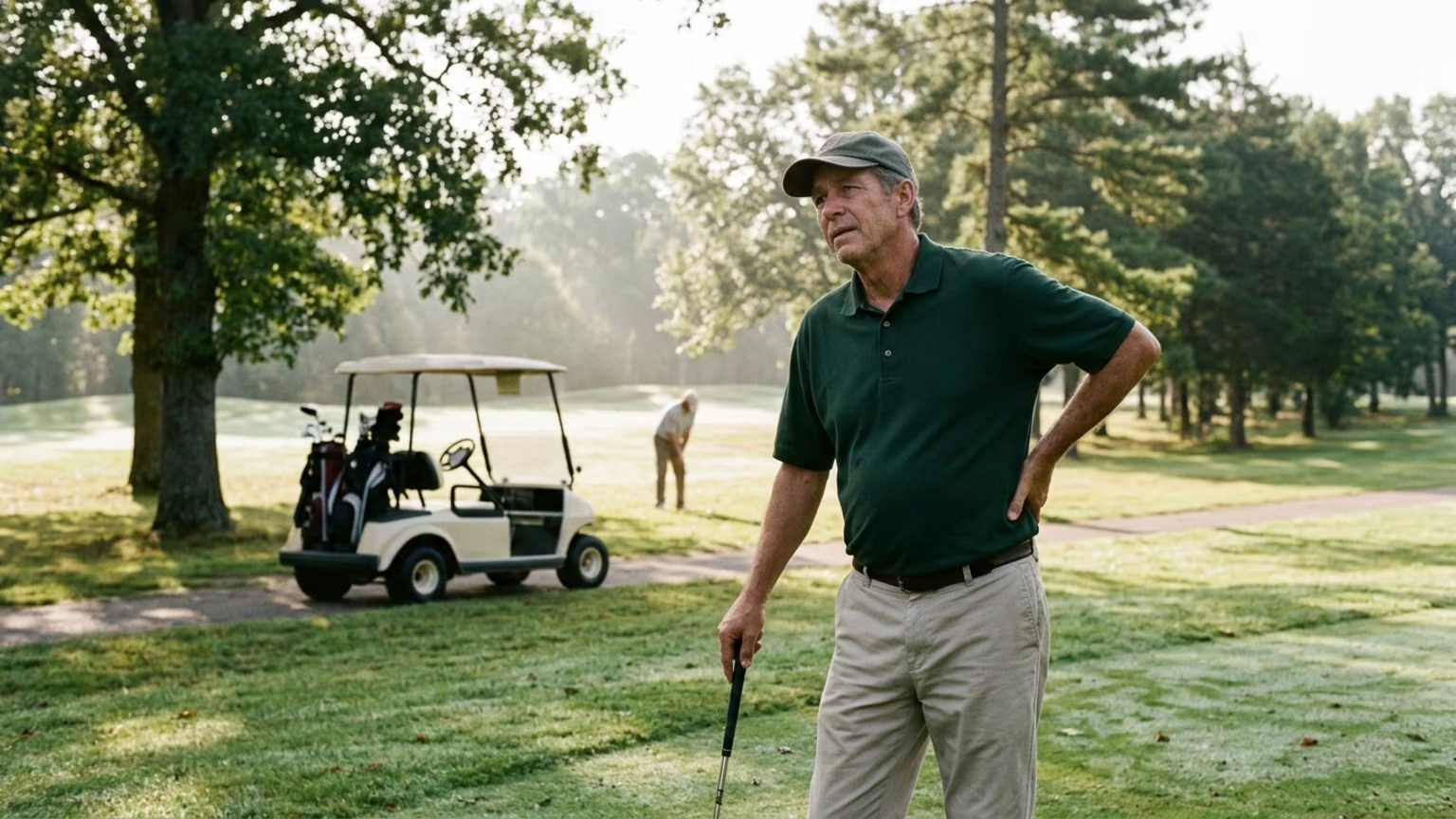
The saddest thing I have seen in golf is watching lifelong playing partners slowly drop out of our weekend group. It usually starts with a nagging shoulder or knee issue they ignore until it requires surgery. That pattern is exactly why I became obsessed with golf longevity. We do not have to stop playing as we age, provided we do the right maintenance work between rounds.
Dr Gazanfar Patel told Awaz The Voice that chronological age alone should not dictate physical activity. He suggested exercise should reflect your existing muscle strength and mobility. We must look at how the body behaves during a golf swing. A golf swing places high rotational forces on your spine and joints.
Your hips and trunk must rotate efficiently to generate clubhead speed without pain. When these areas lack muscle force, your lower back often compensates. The Awaz article links resistance training with functional strength for activities like rising from a chair. Stronger legs are necessary for these everyday tasks.
When you build stronger legs and better core stability, you support balance and controlled movement. This control directly translates to maintaining your posture through the ball. Without adequate muscle force, your joints take the brunt of the swing. The Awaz article notes that resistance work helps with carrying household items safely.
On the course, that same strength helps you control the club at the top of your swing. The downswing requires rapid force transfer from your lower body to your hands. If your balance is poor, you will likely sway or slide during this motion. Maintaining functional mobility protects your swing sequence from breaking down under pressure.
The World Health Organization guidance recommends that older adults accumulate 150 to 300 minutes of moderate-intensity aerobic activity per week. They also state that you can substitute 75 to 150 minutes of vigorous activity. Furthermore, they recommend muscle-strengthening work on at least two days weekly. For older adults, they advise varied multicomponent activity emphasizing functional balance on three or more days per week.
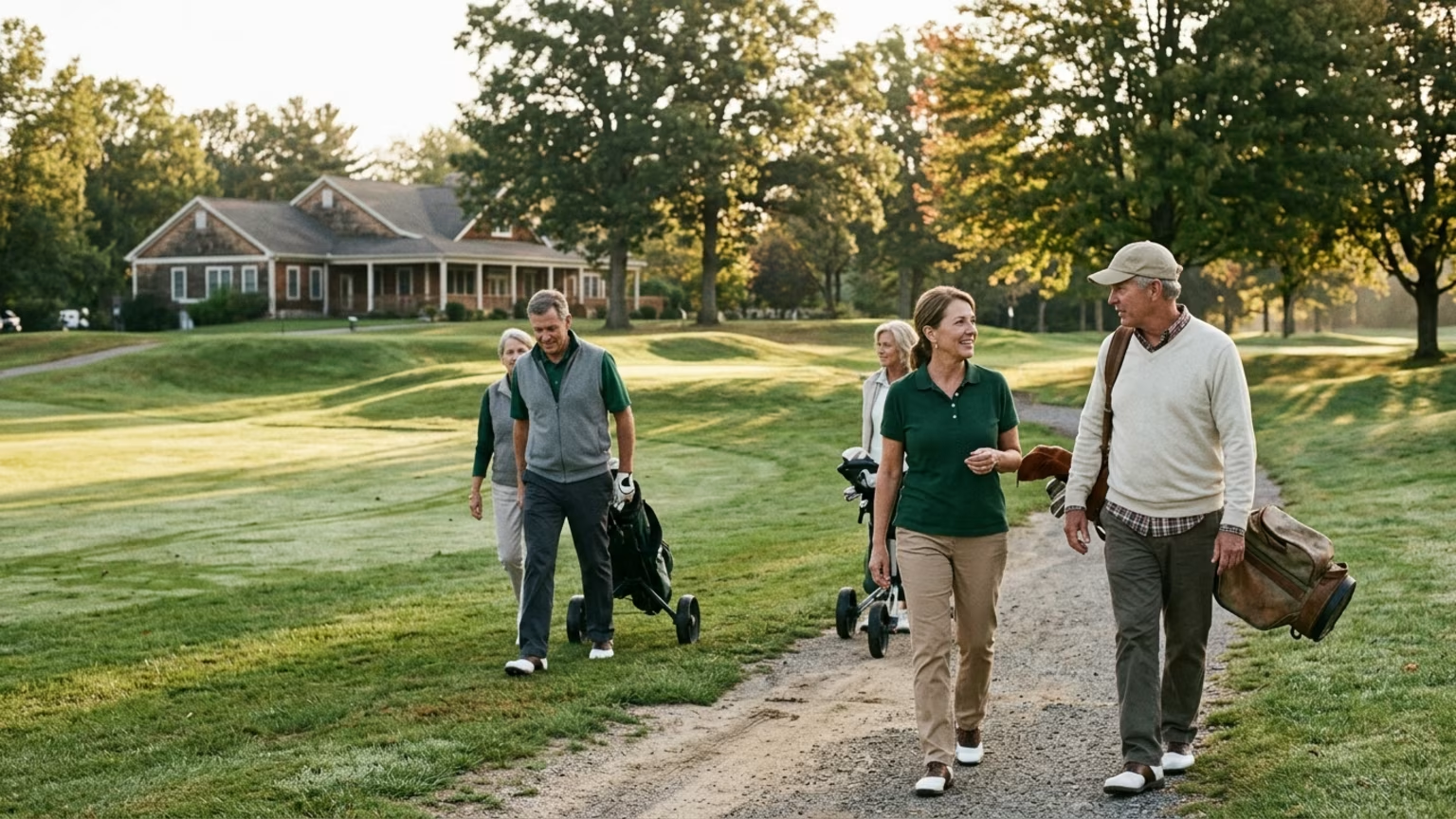
Golf can contribute to these weekly totals quite well. A 2023 randomized crossover study looked at 25 healthy older golfers. The researchers compared an 18-hole walking round with six kilometres of Nordic walking. They also compared it with six kilometres of ordinary walking.
Systolic blood pressure fell after all three activities. The golf condition produced favorable acute differences in blood glucose. It also created positive changes in parts of the lipid profile compared with the shorter walking conditions. These findings support walking golf as a meaningful form of physical activity.
They show why a blended approach to strength and mobility is needed alongside playing. Playing the game improves your cardiometabolic health over time. It does not automatically build the rotational power needed to protect your spine. You must actively train your body outside of your weekend rounds.
Older recreational golfers face significant injury risks when they neglect off-course conditioning. A 2023 cross-sectional study of 1,170 male golfers with a mean age of 55 reported an alarming statistic. The study found that 37.3 percent had experienced a lower-back complaint during the preceding seven days. This shows the reality of playing without proper physical preparation.
This data shows why maintaining mobility should not be treated merely as a performance issue. A 2026 systematic review and meta-analysis reported that physical-training interventions can improve key golf-shot-performance outcomes. The most reliable evidence comes from controlled between-group studies. These interventions go beyond just hitting the ball further.
Recreational players over 40 often lose joint range and muscle endurance over time. If you only play golf, your body adapts to repetitive stress without building protective strength. This leaves you vulnerable to the exact back complaints highlighted in the 2023 study. A balanced approach protects you from these common weekend injuries.
Sushila Bohra shows her routine through videos shared by her granddaughter, Dr Simran Munot. Awaz The Voice describes this routine as a daily practice featuring dumbbells alongside flexibility work. We recommend building a sustainable combination of movement qualities rather than copying a specific sequence. Consistency is the true takeaway from her story.
First, use walking as your primary aerobic component. You can walk all or part of a golf round to build cardiovascular stamina. Second, add resistance work on at least two days per week to build force production. Resistance training does not require heavy weights to be effective.
Keep instructions focused on one small movement at a time, such as picking up a moderate dumbbell. Focus entirely on turning your trail hip during a controlled step-up. The Awaz article notes that functional patterns translate to rising from a chair or climbing stairs. These basic movements map directly to your ability to move on the course.
Finally, include balance-focused work on three or more days per week. Progress from supported positions to more demanding challenges only when your control is reliable. This three-part framework keeps you capable and confident on the course. It builds the foundation for years of pain-free rounds.
A common error is assuming any flexibility routine is universally safe for ageing joints. The Awaz article specifically cautions that advanced yoga movements may not be suitable for everyone. Deep forward bends can cause issues for people with osteoporosis, spinal problems, or restricted joint movement. You must select exercises that match your specific physical capabilities.
People returning to exercise after a prolonged break should scale their movements carefully. You are advised not to begin immediately with complex poses or demanding sequences. Seek professional advice before starting a demanding routine if you have significant joint concerns or a history of falls. This guidance protects you from preventable setbacks.
The evidence supports a consistent mindset where you keep playing and keep conditioning. Exercise selection must always reflect your individual health status and baseline strength. Functional progress means walking the course with less fatigue and maintaining your posture late in a round. These markers are more important than tracking your maximum driving distance.
What adjustments will you make to your mobility routine this season to steer clear of this hazard?
Follow Golfergy for practical insights on performance, mobility, recovery and healthy ageing. Stay connected for new articles, research-led guidance and ideas to help you play better for longer.


A research-led strength framework for golfers over 40, connecting lower-body, upper-body and trunk capacity with the demands of a full round.


A movement-led golf warm-up for golfers over 40, with a flexible example, practical adaptations and clear limits on injury-prevention claims.

A flexible training framework for golfers over 40 that makes room for strength, balance, mobility and aerobic activity alongside play.
Explore practical resources on performance, recovery, mobility and golf longevity.
Read the Blog