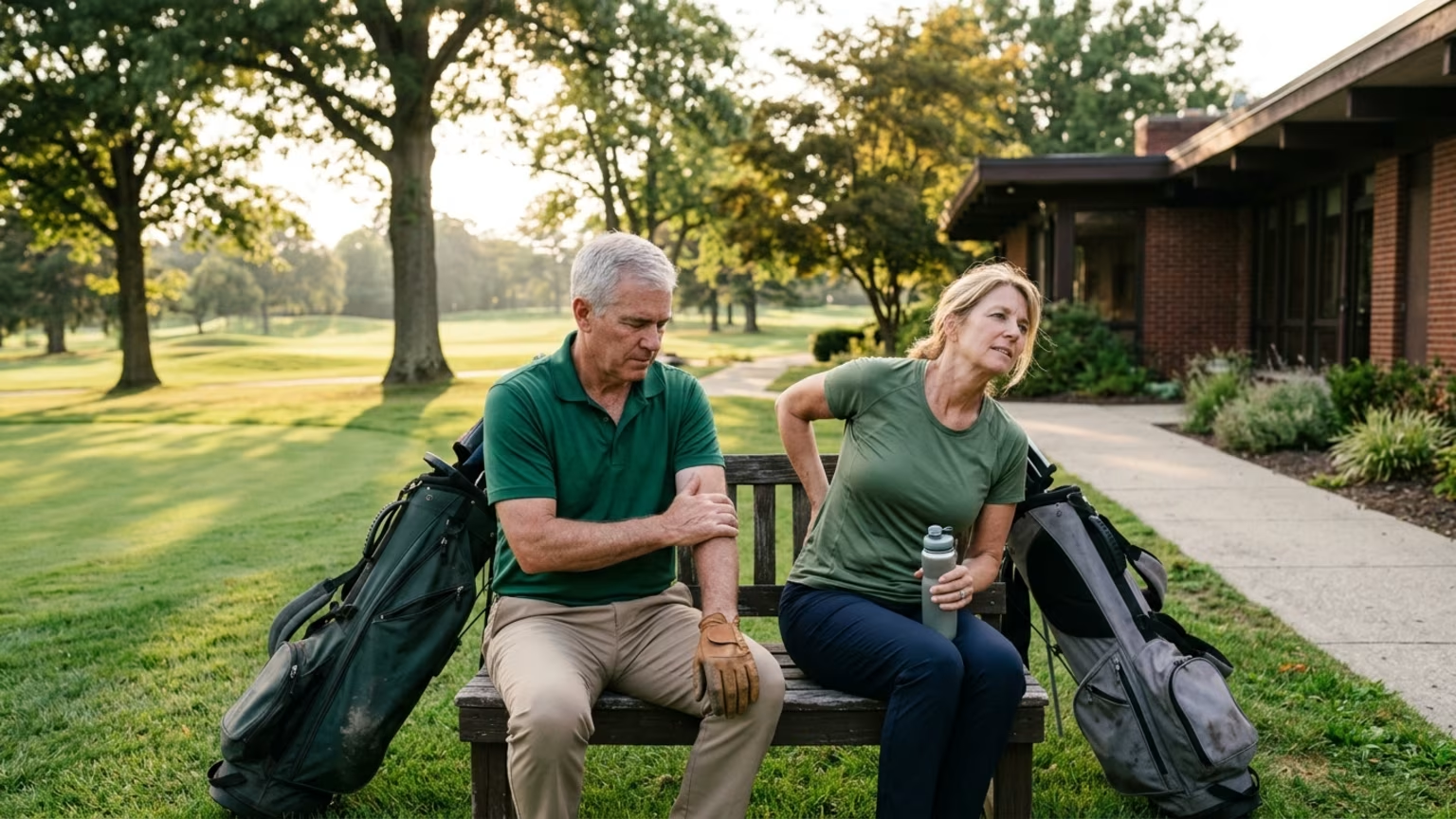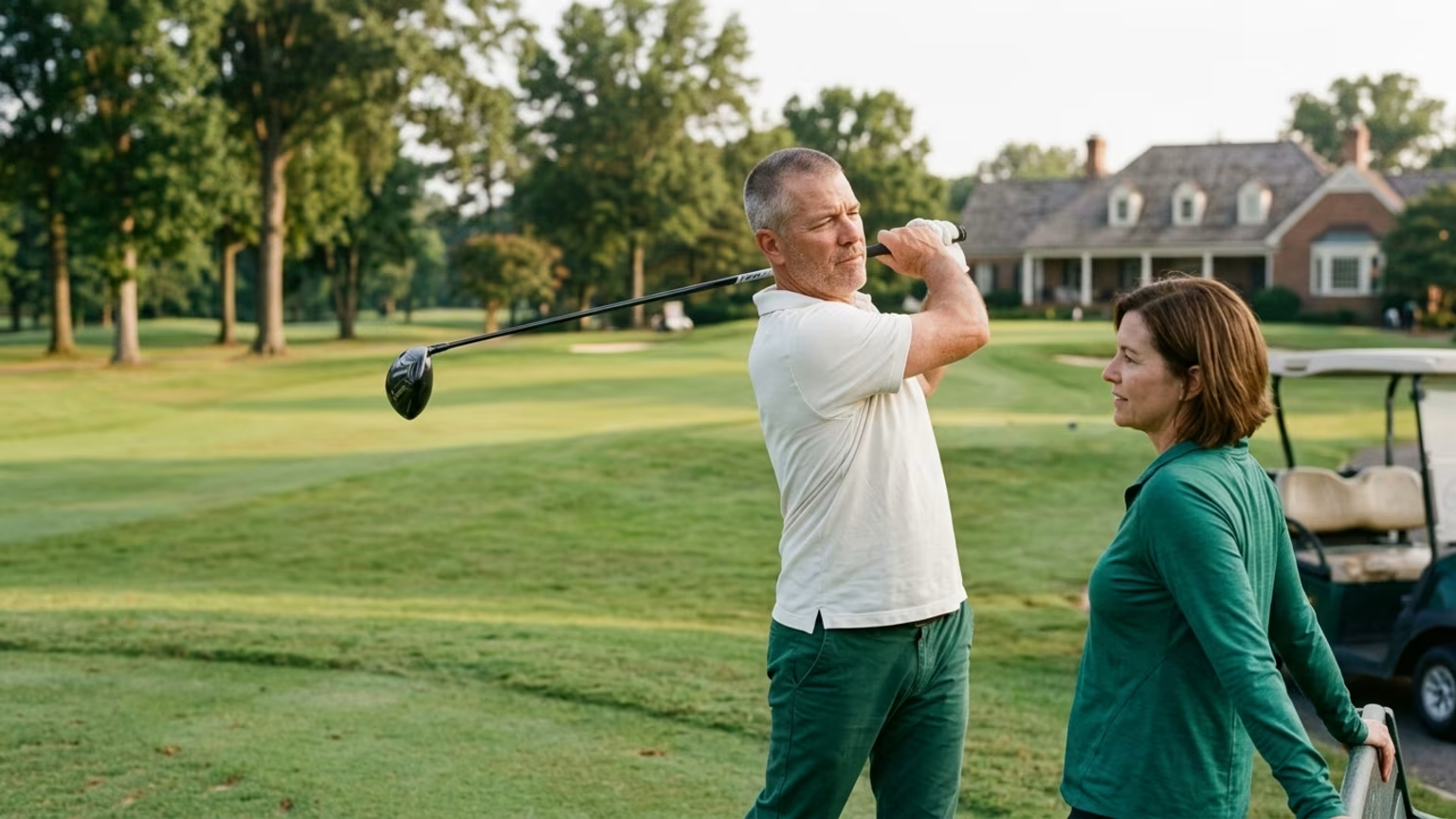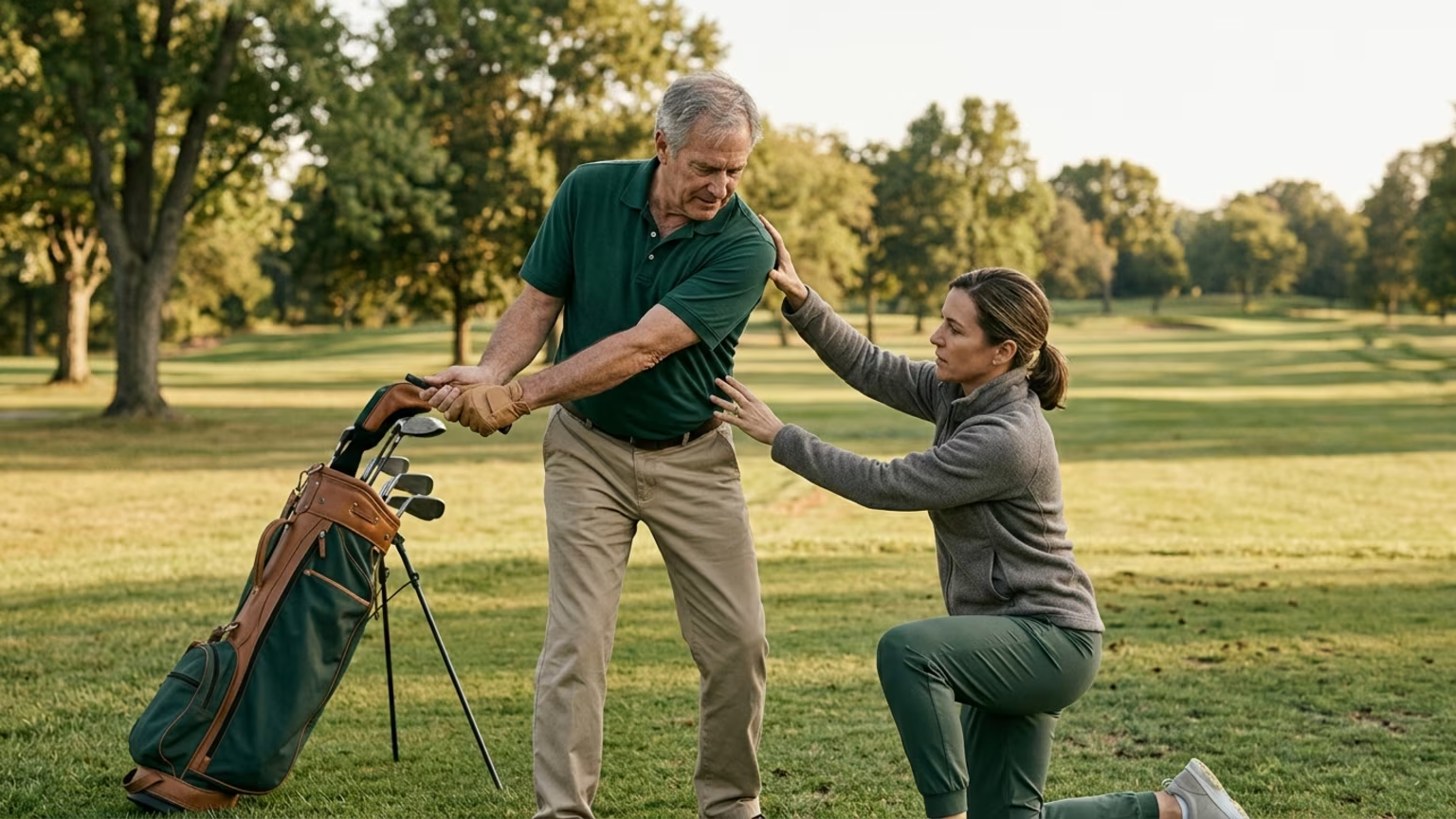

The APTA 'PT For Future Me' campaign emphasizes proactive physical therapy to maintain lifelong mobility. Learn how older golfers can use these principles.




On September 30, 2026, the American Physical Therapy Association detailed its "PT For Future Me" campaign to spotlight how physical therapy helps people maintain mobility. According to an APTA article published that day, the initiative emphasizes building resilience and preventing future injuries so individuals can stay active as they age.
APTA says the campaign first launched in 2025. It was designed to shift public perception of physical therapy from something sought only after injury or surgery toward a vital resource for lifelong prevention and movement. This represents a distinct shift in how physical health is managed.
This message aligns perfectly with the goals of experienced recreational golfers. Waiting until you are injured to think about physical health often leads to long layoffs from the course. Taking a proactive approach to your body helps you move better after 40.
Instead of waiting for a breakdown, viewing movement maintenance as preventive care is a massive advantage. Addressing minor stiffness early can mean the difference between a full season of golf and months of painful recovery. By prioritizing daily function, you can extend your playing years significantly.
The golf swing places massive rotational stress on the body. The swing requires smooth rotation through the hips and the middle back. When those primary rotary centers become stiff, the body automatically searches for extra rotation elsewhere to complete the swing.
This subconscious adjustment happens without you even realizing it on the practice tee. It often forces the lower back or the knees to handle twisting forces they were never designed to absorb. The lower spine is built primarily for stability rather than deep rotation.
The downswing occurs in a fraction of a second, leaving no time for conscious physical corrections. If your mid-back lacks the mobility to turn fully, your body will instinctively hike a shoulder or slide your hips to create power. These compensatory moves destroy your swing path and place immense stress on your joints.
Forcing the lower back to twist aggressively during a drive creates significant strain over time. The strain accumulates with every single swing you take. What begins as simple stiffness in the hips rapidly transforms into a painful lower back problem.
Recognizing this mechanical chain reaction is the first step in protecting your physical health. When one joint stops moving correctly, nearby joints pay the physical price. Understanding this biomechanical reality helps explain why preventive mobility work is so valuable for active golfers.
Slow recovery between rounds is often the first symptom of this chain reaction. When your body works overtime to compensate for poor mechanics, your muscles suffer immense fatigue. Proper movement mechanics reduce this unnecessary wear and tear.
Older amateur players are especially vulnerable to these compounding movement problems. While professionals train constantly to manage these forces, recreational golfers over 40 often face natural age-related stiffness. The combination of aging joints and daily sitting makes mobility restrictions incredibly common.
Desk jobs and long commutes quietly degrade rotational flexibility between weekend rounds. Many golfers over 40 assume that because they swing slower than a tour professional, they are safe from severe injury. This is a flawed assumption. Slower swing speeds do not protect you from the damage caused by poor mechanics and restricted joints.
In fact, playing with limited mobility often means you are forcing your body through unyielding resistance on every single shot. Over an eighteen-hole round, that repeated friction creates inflammation and soreness. Golf requires a high degree of physical capability, making any physical limitation a major threat to your performance. Everyday aches can quickly become barriers to enjoying a full eighteen holes.
Lower back pain after a round and fatigue on the back nine are frequent consequences of this vulnerability. When an aging golfer ignores a nagging ache, they risk letting a small movement problem compromise their time on the course. Fatigue on the back nine often stems directly from the body fighting its own stiffness.
Hoping that a physical restriction will simply vanish is a dangerous strategy. Small problems rarely resolve themselves when subjected to the violent forces of a golf swing. Taking early action is the only reliable way to maintain your durability and consistency.
To keep playing without pain, you must address movement restrictions before they escalate into serious injuries. The APTA campaign highlights how physical therapy can be used as a resource for prevention across the lifespan. You do not need to wait for a catastrophic injury to seek a professional assessment.
Many players experience confusion about which exercises actually help the golf swing. Booking a movement assessment allows you to measure your physical baseline and get personalized clarity. A physical therapist can identify specific weaknesses and stiffness before those issues force your swing to change.
Addressing these limitations early can help you maintain your physical capacities after 40. You can also start by checking your own physical readiness at home before heading to the course. Evaluating your basic joint function takes only a few minutes.
Focus entirely on turning your trail hip during slow practice swings to see if tightness restricts your movement. Catching this stiffness early allows you to build a targeted mobility routine rather than guessing which stretches work. Building a reliable pre-round routine is an excellent preventative adjustment.
Taking a few minutes to prime your body prepares your muscles for the unique demands of rotation. Instead of hitting heavy driver shots immediately upon arriving at the range, spend time moving your joints through their full range of motion. A brief pre-round mobility routine primes your body for the first tee.
Incorporating a short 15-minute mobility routine on your days off can keep your joints moving freely throughout the season. Small daily adjustments often prevent the need for major medical interventions later.
Taking care of your body requires the same consistency as practicing your short game. By addressing small movement problems today, you protect your ability to play the game tomorrow. Proactive care is a long-term investment in your time on the fairways.
It is much easier to maintain your current mobility than it is to rebuild it after a major injury. Taking small, consistent steps to assess and preserve your joint health will serve you well for years. What adjustments will you make to your mobility routine this season to steer clear of this hazard?
Follow Golfergy for practical insights on performance, mobility, recovery and healthy ageing. Stay connected for new articles, research-led guidance and ideas to help you play better for longer.



Learn how older golfers can apply the latest Administration for Community Living fall-prevention guidance to maintain balance and protect their golf swing.

Recent research highlighted by Exercise New Zealand shows why older golfers must prioritize lower-body muscle power over pure grip strength to maintain speed.

Learn how recent research on the DEAF1 gene explains why exercise helps older golfers maintain muscle strength, protect joints, and extend their playing years.
Explore practical resources on performance, recovery, mobility and golf longevity.
Read the Blog