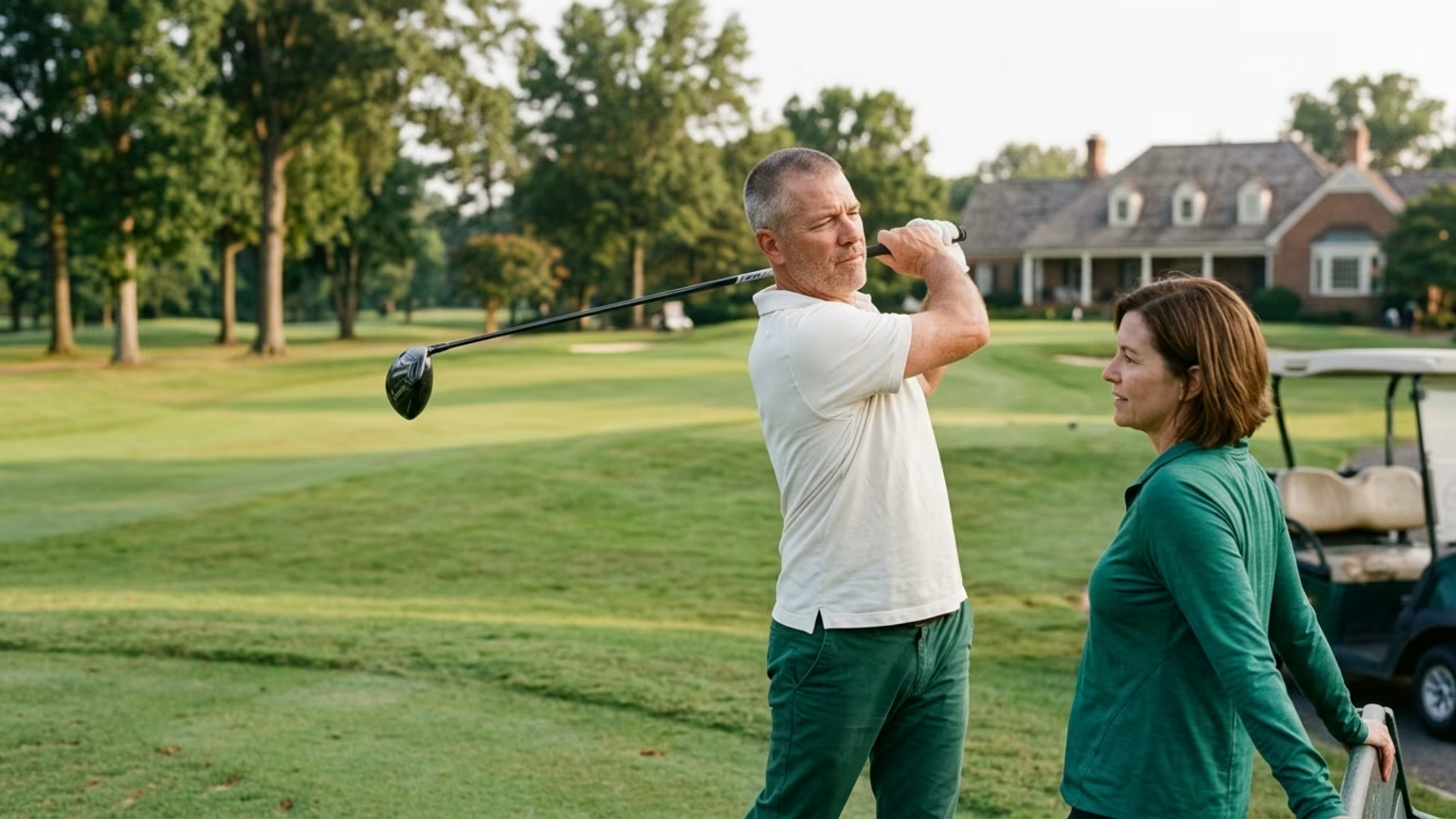

A practical guide to hip and upper back mobility for golfers over 40. Learn how combining strength with controlled movement helps you play better for longer.




Thoracic spine and hip mobility is simply your body's ability to turn freely, and it serves as the engine of your older golf swing. True mobility requires having enough range of motion in your joints alongside the physical strength to control that movement. Many players mistake this active control for simple flexibility. Being flexible means you can stretch a muscle, while being mobile means you can actively control that joint through its full range.
This active control becomes highly beneficial for your swing as you move past your 40th birthday. A lack of control forces the body to create speed in unreliable ways. Joint health relies on a balance of adequate movement and the muscular strength to support it. Understanding this difference is the first step toward building a sustainable golf game.
When your upper back and hips move well, a round of golf feels rhythmic and controlled. You can load your trail hip on the backswing and clear your lead hip on the downswing. The club travels on a predictable path, and your balance remains steady. A restricted turn changes this physical sequence entirely during a standard 18 holes.
If your hips or mid-back cannot rotate enough, your lower back will often twist to make up the difference. The lumbar spine is built for stability, not for extreme rotation. This forced compensation usually appears as tightness on the back nine. You might notice your contact becoming inconsistent around the 12th hole.
The lower back takes on stress it was never designed to handle. A lack of control here forces you to swing harder with your arms to create speed. Those arm-heavy swings lead to fat shots and general frustration for ageing golfers playing through stiffness. Maintaining active control of your joints helps you avoid these late-round compensations.
A reliable physical foundation keeps your swing smooth from the first tee to the final green. You will not have to rely on perfect timing to make solid contact. Good movement quality simply gives you a wider margin for error on the course. This translates directly to more enjoyable rounds and a more predictable scorecard.
Rotational freedom naturally changes as a golfer passes age 40 and 50. Connective tissues lose some of their elasticity over time. The demands of daily sitting compound this stiffness in the hips and the thoracic spine. Your joints simply adapt to the limited ranges of motion they experience most often.
This natural decline means your body will start looking for new ways to complete a familiar golf swing. When the mid-back stiffens, the shoulders have to work harder to complete the backswing. When the hips tighten, the body often stands up out of its posture early. You lose your spine angle and slide past the ball.
This sliding motion is often called early extension. Golfers over 40 frequently experience this when they try to force a full shoulder turn over tight hips. The natural aging process does not mean you have to stop playing entirely. Finding ways to maintain hip rotation without back strain requires a more intentional approach to joint function.
Older players benefit greatly from a blended approach to strength and mobility. A few targeted habits can help you protect your posture and your swing mechanics. The key is focusing on the quality of your movement rather than forcing painful stretches. Gentle persistence works much better than aggressive pulling.
Golf fitness advice often promises guaranteed injury prevention, but the research paints a more nuanced picture. A clinical paper reviewing return to golf after anterior cruciate ligament reconstruction notes an important limitation. The authors state that numeric hip and ankle mobility thresholds have not been validated for this return to play. They advise addressing meaningful asymmetry or compensatory movement instead of chasing a specific number.
This finding highlights that limited range alone does not automatically predict an injury. A golf rehabilitation clinic also outlines a sensible approach to physical preparation without making sweeping guarantees. The clinic describes a golf-specific plan that may include a dynamic warm-up and progressive strength training. They recommend doing mobility work for identified restrictions and making gradual changes in practice volume.
The same clinic notes that direct evidence for strength programs preventing golf injuries is still developing. They recommend that prevention advice should always be individualized rather than presented as a guarantee. A randomized trial protocol among Dutch golfers is underway to study this topic further. Conclusive results on injury prevention are pending, so expectations should remain realistic.
You can build a reliable physical foundation by combining mobility work with strength training. This approach is much more effective than relying on passive stretching alone. The goal is not to pass a rigid mobility test or force extreme flexibility. The goal is to notice comfortable movement and side-to-side differences.
Start by observing your own movement patterns at home. Stand tall and place your hands across your chest. Slowly rotate your shoulders to the right and then to the left. Pay attention to any noticeable asymmetry or stiffness on one side.
This gentle self-check helps you identify meaningful differences rather than serving as a diagnostic tool. Your findings can help you adjust your swing or select appropriate warm-up movements. If you feel persistent pain during this rotation, you should seek an individualized assessment from a professional. The clinic explicitly recommends early modification and assessment when pain persists.
The next step involves a gradual approach to physical conditioning. A comprehensive plan should include a dynamic warm-up before you hit the course. You should also incorporate progressive strength training for your trunk, hips, and shoulders. Building strength in these areas gives you the capacity to control your available range of motion.
You do not need to spend hours in a gym to see benefits. Focus entirely on slow and controlled movements during your weekly routine. Gentle resistance exercises help your muscles support your joints during the high-speed motion of a golf swing. A stronger trunk directly supports a more stable rotation.
This combination of strength and mobility creates a more resilient golfer. A well-supported spine can handle the repetitive twisting required during a round. When your joints have adequate muscular support, your swing feels much less strenuous. You can swing smoothly without worrying about pushing your body past its safe limits.
Gradual progression applies to your playing volume just as much as your workouts. If you want to increase your rounds, do so slowly over several weeks. A sudden jump in practice volume often exposes underlying mobility restrictions. The golf rehabilitation clinic recommends gradual changes in playing volume to help your body adapt.
Hitting hundreds of golf balls in a single session can quickly overwhelm tight muscles. Your body needs adequate recovery time between heavy practice sessions. Smart pacing allows your tissues to adapt to new stresses without breaking down. A patient approach keeps you on the course rather than recovering on the couch.
Mobility is just one piece of your overall golf preparation. It works best when paired with progressive strength work and sensible practice habits. Taking time to address meaningful asymmetry gives your joints the support they need. True mobility is about giving your body the strength to control its movement and the freedom to play better for longer.
Follow Golfergy for practical insights on performance, mobility, recovery and healthy ageing. Stay connected for new articles, research-led guidance and ideas to help you play better for longer.



Examine the physical limitations driving modern golf training tools. Learn why targeted mobility conditioning and recovery tracking protect older golfers from injury.

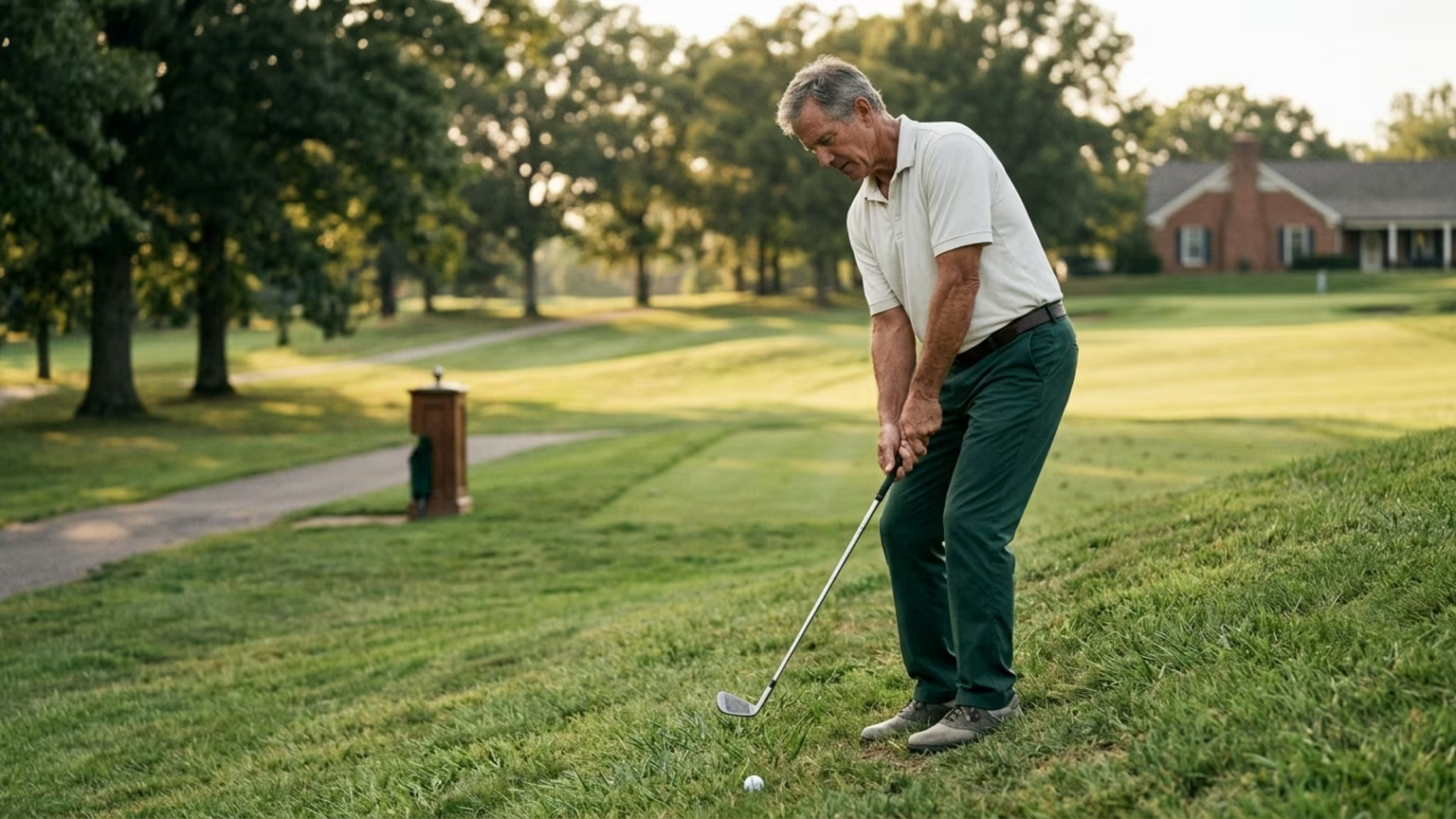
Learn why static balance routines fail older players on the course. Find practical ways to stay steady on uneven lies and protect your golf swing mechanics.

Learn how strength, power, and mobility form a linked system in the golf swing, and why older golfers should prioritize balance over isolated speed drills.
Explore practical resources on performance, recovery, mobility and golf longevity.
Read the Blog