
Learn why your legs and back tighten up late in a round. Understand how cumulative fatigue changes your golf swing and find simple strategies for recovery.




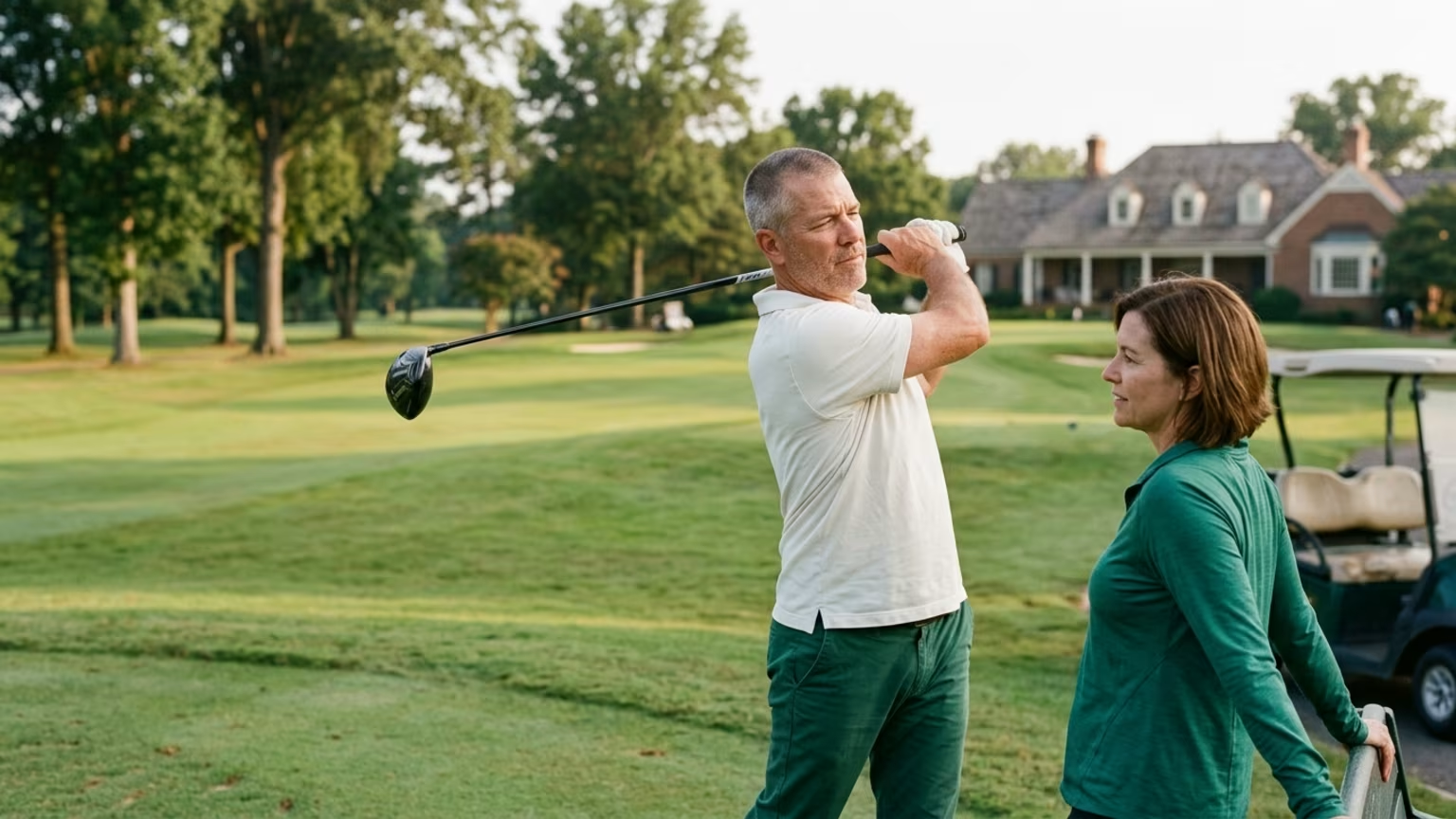
"Why do my legs feel like lead by the 14th hole?" It is the most common question we hear from golfers over 40. You tee off feeling fresh and loose on a Saturday morning. Then you hit the back nine and your body starts to slow down.
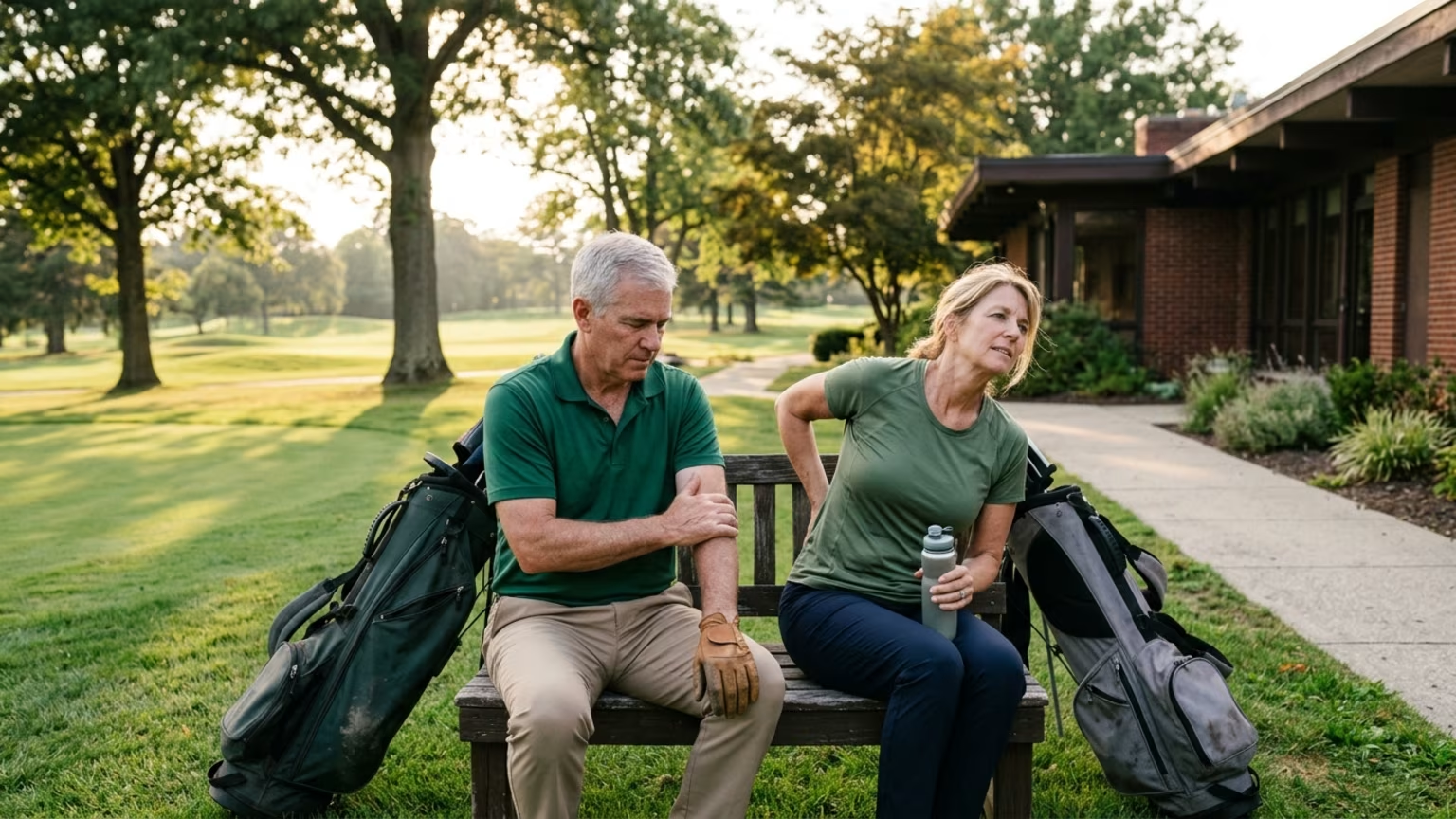
Your back stiffens, your swing feels uncoordinated, and you struggle to walk up the final fairways. Many older players face this exact scenario every weekend. They often blame a sudden swing flaw or poor mechanics. The real culprit is usually cumulative physical fatigue.
A round of golf requires hours of low-intensity effort that slowly drains your energy reserves. Managing this hidden workload helps you finish your round strong. It also helps you wake up the next morning ready to play again.
A round of golf involves much more than swinging a club. Walking the course, carrying your equipment, and navigating uneven ground all contribute to your overall workload. Environmental conditions and the total time spent on your feet play massive roles. Information from The Experience Golf points out that workload varies heavily based on your body weight and walking pace.
Course length and whether you ride or carry your bag change how much energy you expend. It helps to look at the numbers while keeping in mind that they vary. TakeRoon reports on a 2025 study of 16 competitive male golfers. The study measured an average of 17,007 steps and 880 burned calories for walkers over a five-hour round.
Even golfers riding in carts accumulated 6,274 steps and 456 calories. These figures are reported secondhand and serve as estimates rather than strict rules for recreational players. A competitive male golfer experiences a different physical demand than a weekend player. Still, the data highlights a clear difference in volume between walking and riding.
Every golfer faces a unique physical toll based on the specific conditions of their round. Choosing between active recovery versus a day off depends heavily on these accumulated variables.
Physical fatigue directly alters how your body moves through the ball. The same TakeRoon account of the 2025 study reported a drop in countermovement-jump performance late in the round. Interestingly, this decline in leg power was larger for walking golfers than for those riding in carts. The report did note no change in clubhead or ball speed.
Losing lower body power often leads to subtle swing compensations. When your legs lose their spring, your upper body tries to take over the movement. You might start swaying off the ball instead of rotating smoothly. Your swing path changes, leading to weak contact or directional misses.
The workload of walking hills and carrying equipment silently drains your physical foundation. Managing your golf load requires understanding this chain reaction. A tired lower body forces the smaller muscles in your back and arms to work harder. This increased strain on smaller muscle groups causes the tightness you feel late in the round.
The swing itself does not cause the fatigue. The hours of walking and standing create the fatigue that breaks down your swing.
The best thing you can do on the course is reset your posture. Stand tall behind the ball and take a slow breath. Let your shoulders drop away from your ears. Then, perform a simple hip hinge to relieve pressure on your lower back.
Place a golf club across your shoulders. Hinge forward from your hips slightly while keeping your knees soft. Stand back up to a neutral position. This quick movement helps your body reset without pulling you away from the game.
When you step up to hit your shot, simplify your mechanical thoughts. Focus entirely on turning your trail hip. Turning your trail hip forces your larger muscles to engage. This protects your tired lower back from bearing the brunt of the rotation.
Preventing late-round tightness requires observing your own patterns. Stop looking for a universal calorie or step count for a round of golf. The Experience Golf cautions that any calorie figures you see are strictly approximate. Instead, start tracking how you feel after different types of rounds.
Record whether you walked or rode. Note if you carried your bag or used a push cart. Jot down the course terrain and the weather conditions. Notice how these variables affect your recovery the next morning.
If you played in high heat, pay attention to muscle soreness the next day. Gauging your recovery between rounds is much easier when you have a written record of your workload. If a hilly course leaves you exhausted, plan for lighter activity the following morning. If carrying a bag causes back stiffness, test using a push cart for your next round.
You might need specific strategies for back-to-back rounds if you play weekend tournaments. Adding simple walking endurance exercises to your week builds capacity for long days on the course. Adjust your off-course fitness habits based on these personal observations to build better stamina over time. Building a walking habit strengthens your legs for the back nine.
Pay close attention to how your body responds during your next practice session. Hit twenty balls and then pause. Notice if your lower back feels rigid. Check if your legs feel heavy or slow.
Your practice workload offers clues about how you will handle a full round. Make small adjustments to your warmup based on what you feel right now. Managing your physical capacity helps you enjoy the game for years to come. Listen to your body and adjust your routine to match your current needs.
Follow Golfergy for practical insights on performance, mobility, recovery and healthy ageing. Stay connected for new articles, research-led guidance and ideas to help you play better for longer.


Read daily physical cues to gauge recovery between golf rounds. Learn practical ways to manage on-course fatigue and safely adjust your playing schedule.


Learn how experienced golfers can maintain performance and prevent tightness during hot rounds with practical hydration habits and steady fluid management.

Four Seasons Resort Peninsula Papagayo announced new golf longevity experiences. We examine how VO2 max testing and deep-pressure recovery affect older golfers.
Explore practical resources on performance, recovery, mobility and golf longevity.
Read the Blog