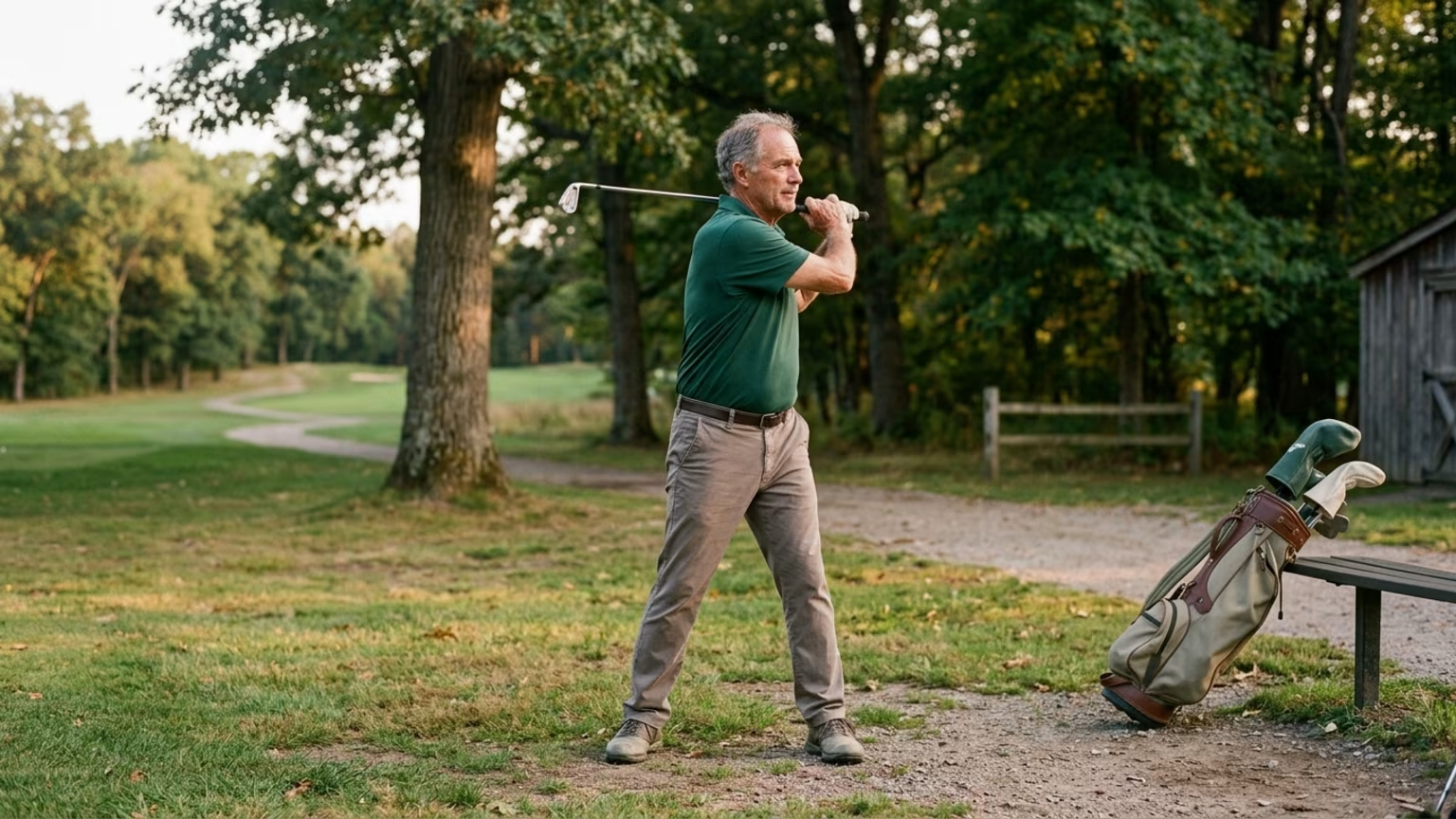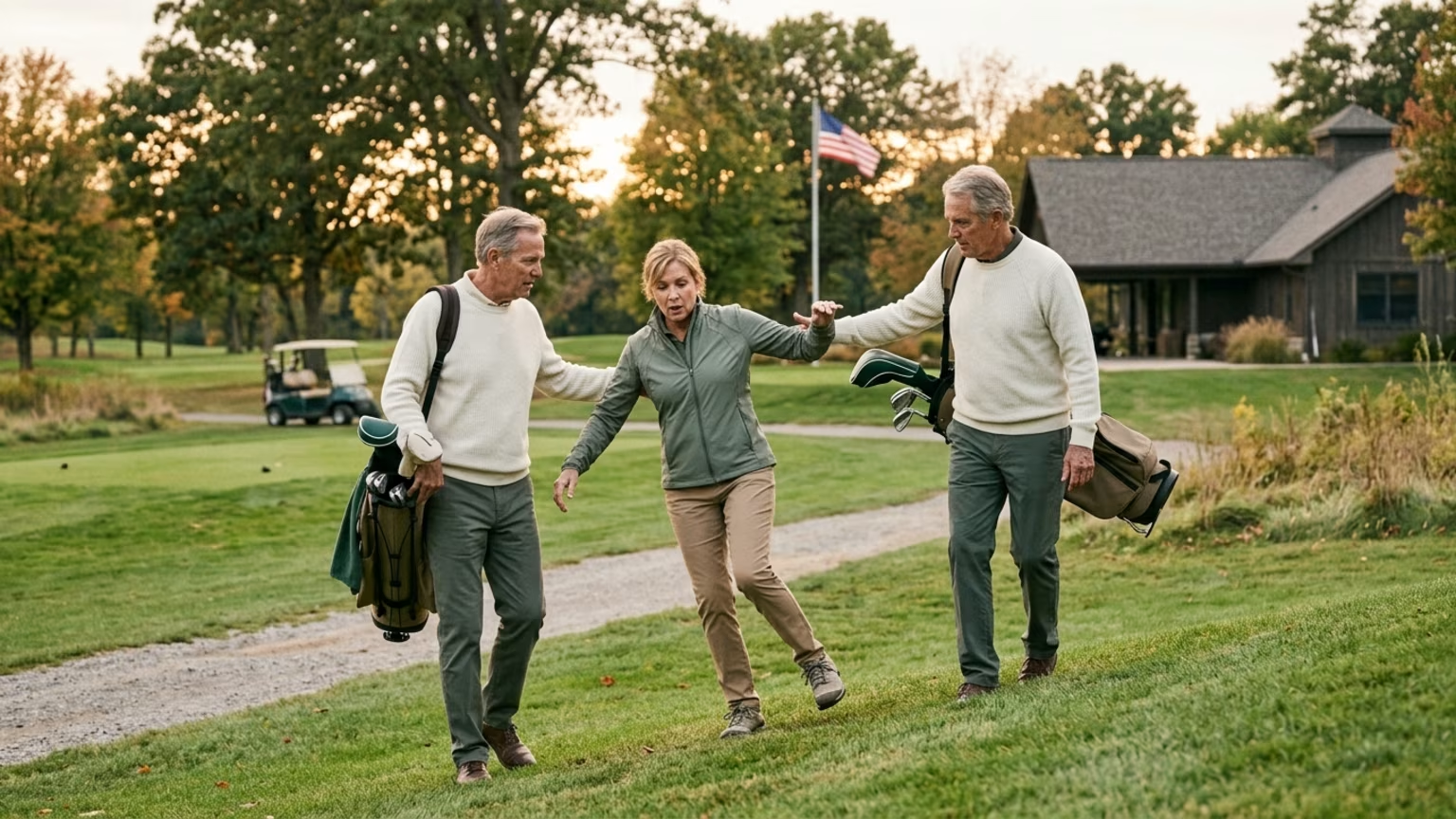

Learn how older golfers can apply the latest Administration for Community Living fall-prevention guidance to maintain balance and protect their golf swing.




On September 30 2026 the U.S. Administration for Community Living published a report outlining practical fall-prevention measures for older adults. Principal Deputy Administrator Mary Lazare detailed how health conditions and environmental hazards elevate fall risks. The article did not provide a golf-specific protocol or study golfers directly. It offered broad guidance to help adults stay active and safe.
For older players looking to maintain their footing on the course these broad recommendations offer a useful framework. A reliable golf swing requires the body to shift weight rapidly while holding a stable posture. As we age the physical mechanics behind this movement can become compromised by a gradual loss of lower body strength. Weakness makes it difficult to maintain your balance during a swing.
During the backswing you load your weight into your trail leg to build power. If the muscles in your hips and legs lack the strength to stabilize that load your body sways instead of turning. This sway pulls your center of gravity outside your base of support. When you practice focus entirely on turning your trail hip to monitor your physical stability.
When you transition into the downswing you must push off the ground to transfer energy to the lead side. Weakness or unsteadiness makes this energy transfer erratic and difficult to control. The joints in your ankles and knees have to work harder to keep you standing upright. Over time this lack of stability leads to poor contact with the golf ball and elevated joint stress.
By addressing the root causes of instability you can build a more resilient foundation for your swing. Maintaining better balance helps you handle uneven lies without feeling unsteady over the ball. This proactive approach keeps you confident on the course and protects your joints from unnecessary strain. Checking your physical foundation routinely is a vital part of healthy ageing.
The scale of fall risks among older adults is massive. The Administration for Community Living reports that more than 14 million older adults report falling each year. That figure equates to one in four older adults experiencing a fall annually. The financial and physical toll on the healthcare system is equally significant.
In 2023 more than 3.85 million older adults were treated in emergency rooms for fall-related injuries. Nonfatal falls cost the U.S. healthcare system about $80 billion in 2020. The agency notes that about two-thirds of those costs were paid by Medicare. The mortality statistics reveal an even starker reality for the aging population.
Falls among older adults led to more than 43,000 deaths in 2024. Data from the CDC confirm that the age-adjusted fall-death rate increased 21% between 2018 and 2024. The rate rose from 64.7 per 100,000 older adults in 2018 to 78.4 per 100,000 in 2024. These figures highlight a growing concern for older adults seeking to maintain an active lifestyle.
A separate CDC report breaks down the 2024 unintentional fall-death rates by demographic groups. The rates reached 74.8 per 100,000 for men aged 65 and older. The rate was 66.6 per 100,000 for women in that same age bracket. The CDC data show that rates increased with age and were highest among people aged 85 and older.
Golfers over 40 face a unique set of challenges that can magnify everyday balance issues. A standard round of golf involves walking several miles across rolling hills and uneven bunkers. These environmental factors test your steadiness constantly throughout a four-hour round. The Administration for Community Living identifies health conditions and dehydration as factors that can raise fall risks.
The agency notes that insufficient fluids can cause weakness or dizziness. A golfer walking 18 holes in the summer heat is highly susceptible to dehydration. This fluid loss directly threatens their stability when standing over the golf ball. Proper fueling is critical, and prioritizing strategic on-course nutrition habits can prevent this late-round unsteadiness.
Fatigue accumulates slowly over the course of a long round of golf. As your muscles tire from walking your body struggles to maintain the rigid posture required for a good swing. This gradual weakening makes a trip or stumble far more likely on the final few holes. Players who manage their energy levels effectively can avoid this dangerous drop in physical capability.
Medications and vision changes also play a significant role in course safety. The Administration for Community Living states that some medications can cause drowsiness. The agency also points out that vision changes can make obstacles harder to see. On a golf course a missed step in a steep bunker can easily lead to a serious stumble.
Older players often blame their swing mechanics when their balance feels off during a round. The true culprits are often these non-golf factors that compromise their footing before they even reach the first tee. Taking stock of your physical condition helps you identify these risks early. You can then adjust your routine to stay safe on the course.
Some players might also find that their gear choices impact their stability while walking. Heavy bags or poorly fitted shoes can make navigating uneven terrain much harder. Learning how to adjust golf equipment for joint health makes a noticeable difference in your overall comfort. A lighter load translates directly to better energy conservation on the back nine.
The Administration for Community Living recommends learning about your personal risk with a healthcare provider or pharmacist. The agency states that prevention involves health professionals and community organizations working alongside individuals. Mary Lazare writes that prevention should be tailored to the individual and start with manageable steps. While not a golf-specific protocol, this advice offers a highly effective blueprint for older players.
The agency suggests taking strength-and-balance classes to build a stronger physical foundation. The Administration for Community Living notes its data show participants in evidence-based fall-prevention programs report fewer falls. These participants also report improved strength and steadiness in their daily lives. Following new fall prevention guidance aligns perfectly with the goal of maintaining a consistent golf swing.
You should also ask your doctor or pharmacist about any medication side effects. Reviewing your prescriptions helps you avoid unexpected drowsiness while walking the course. Next, you should arrange a vision check to confirm you can clearly read the terrain. Good vision is critical for spotting hidden tree roots or steep drop-offs around the greens.
Prioritize drinking enough fluids to avoid the weakness that stems from dehydration. A steady intake of water keeps your muscles functioning optimally from the first tee to the final putt. Finally, make practical home changes such as using a nonslip bathmat or improving stair lighting. Addressing these everyday hazards builds confidence and strength that translates directly to your golf game.
The Administration for Community Living highlights that many fall hazards are found right in your own home. Simple modifications like clearing walkways and improving lighting can eliminate unnecessary risks. Staying safe at home means you can continue to enjoy your time on the golf course without interruption. These small lifestyle adjustments have a profound impact on your long-term mobility.
Checking your foundation regularly is just as critical as practicing your putting stroke. Taking time to record your baseline golf swing on good days gives you a reference point for your posture. This visual record helps you spot when your balance starts to fade over the season. A proactive approach keeps you playing comfortably for years to come.
What adjustments will you make to your mobility routine this season to steer clear of this hazard?
Follow Golfergy for practical insights on performance, mobility, recovery and healthy ageing. Stay connected for new articles, research-led guidance and ideas to help you play better for longer.


Recent research highlighted by Exercise New Zealand shows why older golfers must prioritize lower-body muscle power over pure grip strength to maintain speed.

Learn how recent research on the DEAF1 gene explains why exercise helps older golfers maintain muscle strength, protect joints, and extend their playing years.
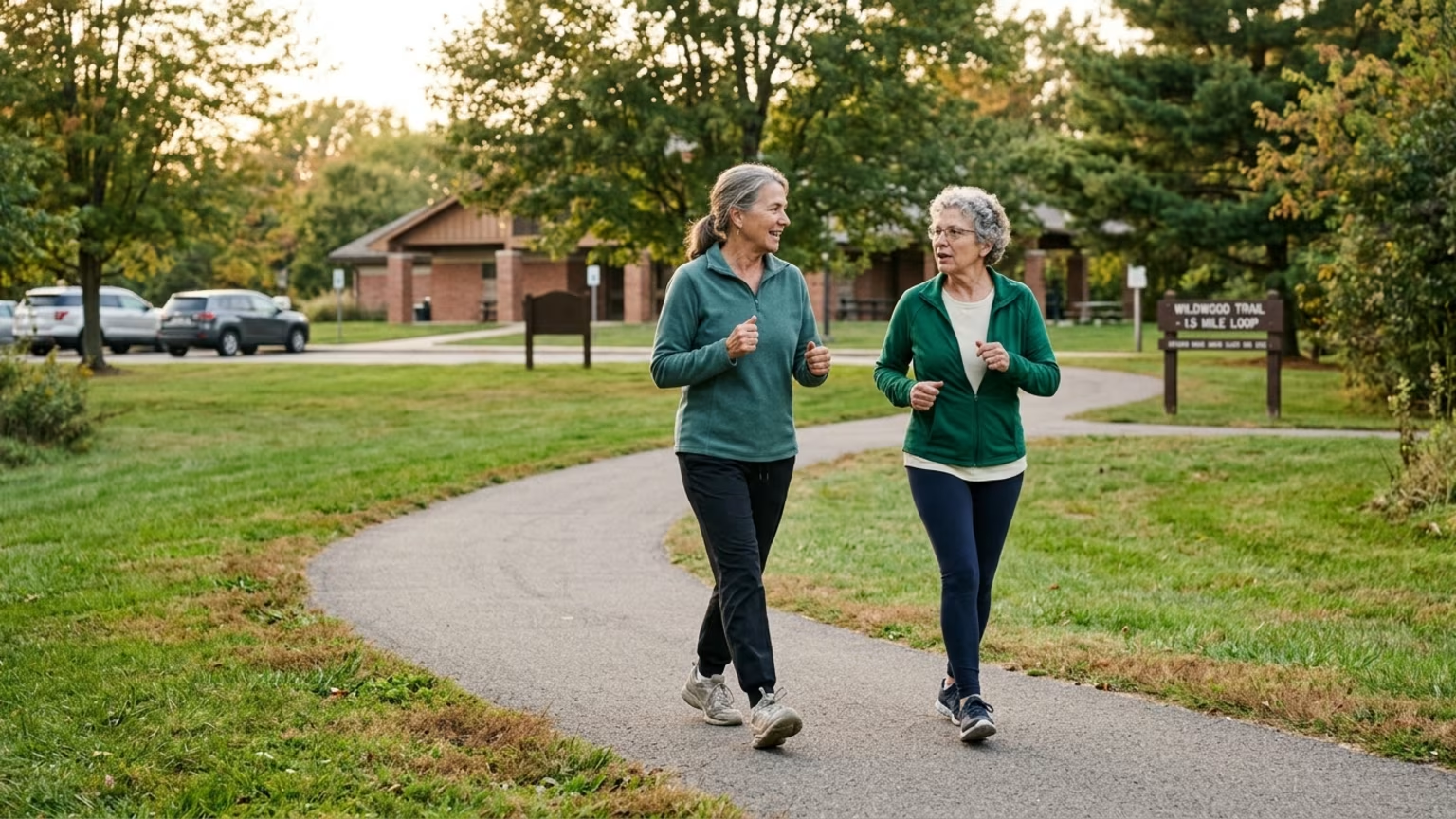
A PLOS ONE trial shows high-intensity walking improved frailty in older adults. Learn how golfers can safely adjust their pace to protect stamina.
Explore practical resources on performance, recovery, mobility and golf longevity.
Read the Blog