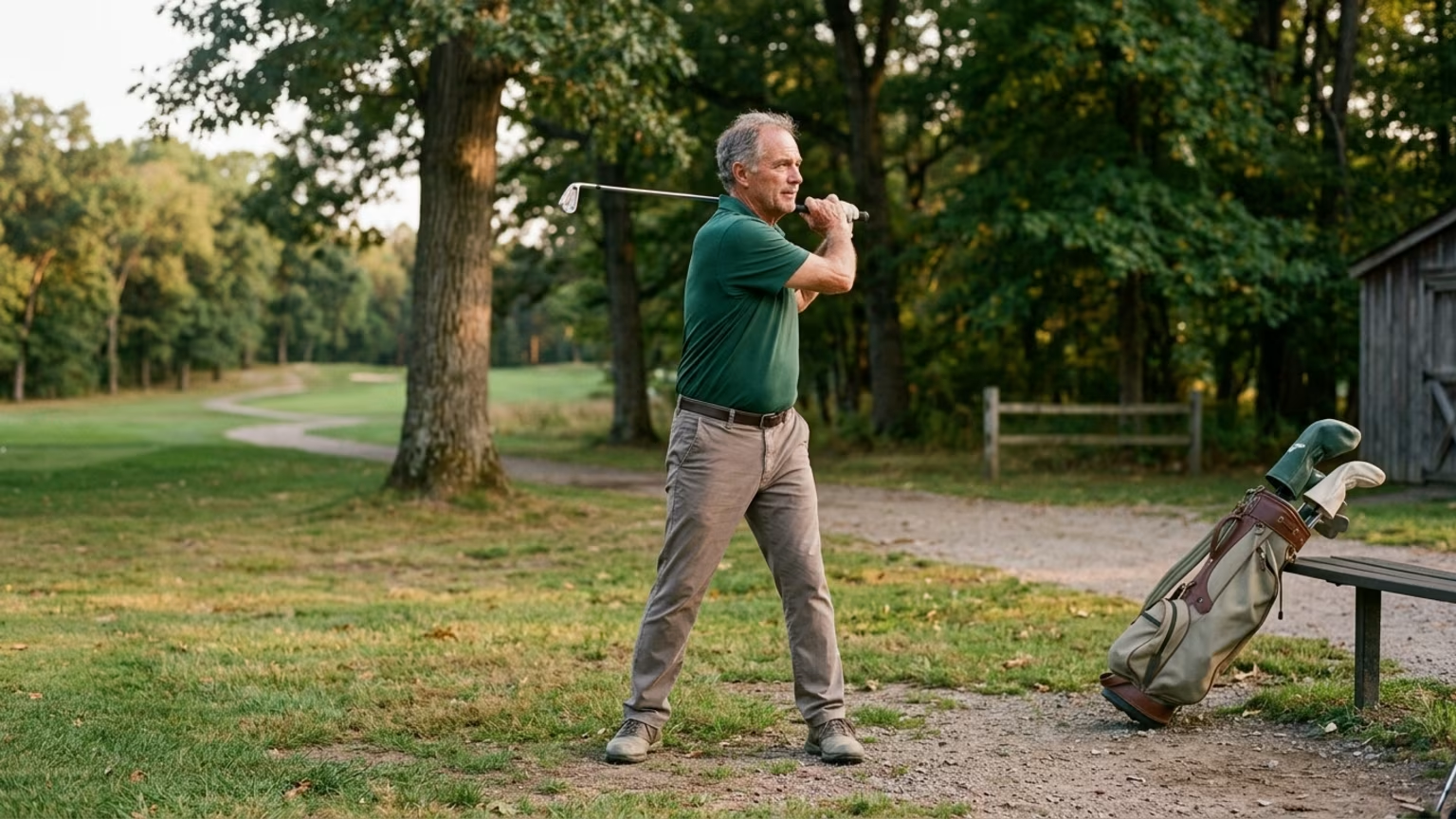

Learn how recent research on the DEAF1 gene explains why exercise helps older golfers maintain muscle strength, protect joints, and extend their playing years.




On September 30, 2026, a report published by The Baltimore Sun detailed new research regarding age-related changes in muscle-cell maintenance. The article was republished on Yahoo and focused on scientific findings from Duke-NUS Medical School in Singapore. The research team investigated the biological systems that govern how our muscles age over time. Their findings were officially published in the Proceedings of the National Academy of Sciences.
The scientists conducted their reported experiments on flies and mice to observe specific cellular changes. They monitored direct effects on muscle growth and overall tissue deterioration during these tests. This research helps explain the basic biological processes that keep our bodies functioning properly. For older recreational players, these findings provide a helpful biological rationale for valuing regular physical activity.
Golfergy focuses on translating complex sports science into plain English for experienced players. We track these scientific developments to help you understand what happens beneath the surface of your skin. Understanding the cellular changes in your body helps you make better fitness decisions.
Understanding the precise mechanics of muscle decline helps us recognize the value of our training routines. The Duke-NUS researchers identified a specific gene known as DEAF1 that plays a central role. According to the news report, increased activity of this DEAF1 gene changes how muscle cells operate. This increased gene activity is strongly associated with elevated mTORC1 signaling within the muscle tissue.
This elevated signaling leads directly to the increased production of new proteins in the cells. A biological problem arises because damaged proteins are not cleared away as effectively. The muscle cells become heavily unbalanced because they are building new material without removing the waste. This lack of proper clearance causes the muscle tissue to function far less efficiently over time.
The research team manipulated the DEAF1 gene during their animal experiments to monitor the direct results. They noted clear and observable changes in muscle growth and deterioration based on these adjustments. When the balance of protein production and waste removal is disrupted, the physical tissue suffers greatly. This biological tension is a primary factor in how our bodies lose strength as the years pass.
The physical decline of active muscle tissue is a reality that every aging player must face eventually. The report clearly states that muscle-fiber atrophy and loss naturally increase as we get older. Many people begin losing noticeable amounts of muscle mass during their 40s. This early phase of muscle loss often goes completely unnoticed until physical tasks become slightly harder.
The long-term trajectory of this physical decline can be quite severe if left unaddressed. The article reports that individuals may lose as much as half their muscle tissue by their 80s. The report presents these broad muscle-loss figures without extensive underlying study details in the available text. However, this trend highlights why maintaining muscle strength is a key asset for older adults.
Recreational players over the age of 40 face a unique battle when maintaining their swing mechanics. Golfergy focuses exclusively on the mature recreational golfer instead of elite athletes for this very reason. The modern golf swing places a massive amount of physical stress on the human body. A golfer needs strong muscles to protect their joints and stabilize their spine during rapid rotation.
As muscle fibers slowly atrophy, the body loses its natural built-in shock absorbers. This gradual loss of muscle mass leaves older golfers highly vulnerable to aches and painful strains. When the muscles can no longer support the skeletal system properly, the joints take excessive loads. We see players struggling with lower back pain after a round because their muscles lack resilience.
Many players notice a severe loss of rotational flexibility as their active muscle tissue begins to fade. This stiffness makes it incredibly difficult to complete a full backswing without straining the lower back. We discuss the benefits of protecting your lumbar spine with targeted movements to combat this issue. Maintaining muscle strength is a reliable way to prevent these mechanical breakdowns during a round.
Even golfers who swing with smooth tempos require a solid baseline of muscular strength. You need this physical strength to maintain your posture from the first tee to the final green. Ageing muscle tissue simply tires out faster without regular maintenance and direct structural support. This fatigue forces the body into poor mechanical compensations that can easily ruin a scorecard.
The most effective adjustment an older golfer can make is committing to consistent physical activity. According to the report, regular exercise actually suppresses the activity of the DEAF1 gene. This suppression helps restore the critical balance between new protein production and the removal of damaged proteins. Physical activity acts as a regulatory tool for your long-term cellular health.
The study’s lead author, Assistant Professor Tang Hong-Wen, provided further explanation on this biological process. Tang Hong-Wen stated that exercise can reverse this reported cellular imbalance by activating specific helpful proteins. These activated proteins lower DEAF1 levels and allow older muscles to clear damaged proteins effectively. This allows the muscle tissue to rebuild itself more efficiently after a long day of physical exertion.
Research assistant Priscillia Choy Sze Mun offered a very practical description of this biological mechanism. She characterized exercise as telling the muscles to clean up and reset themselves. Consistent physical activity is the required signal your body needs to maintain its cellular housekeeping. We highly recommend that older players follow a simple strength training routine to provide this vital signal.
Slow recovery between rounds is a massive pain point for players over the age of fifty. Understanding how your cells clear out damaged proteins helps explain why active recovery is so beneficial. Movement keeps your biological systems running efficiently so you can tee it up again the next morning. We reject quick fixes and prefer sustainable habits that support healthy aging on the course.
It is incredibly common to assume that new biological discoveries will result in effortless medical treatments. The news report does raise a possible future therapeutic direction involving the targeting of DEAF1. This future therapy could eventually help people maintain muscle strength when illness limits their exercise capacity. A DEAF1-targeting treatment is only a research possibility right now, not a currently available substitute for workouts.
Another major misconception is that the cellular response to exercise is identical for every older adult. The report notes an important caveat regarding how some bodies respond to physical activity over time. In some older muscles, an overactive DEAF1 gene may actually reduce the effectiveness of exercise. In these specific situations, exercise alone may not be enough to fully restore the biological balance.
Finally, it is crucial to remember the specific nature of these reported scientific experiments. The central mechanistic findings come directly from tests conducted on fruit flies and laboratory mice. The source does not establish that these exact DEAF1 effects have been demonstrated in human golfers yet. We must view this as an emerging biological rationale for exercise rather than a validated human golf prescription.
Golfergy provides practical insights on golf performance and recovery to help experienced golfers play better. This recent research from Singapore gives us a fascinating look at how physical activity protects our bodies.
While the exact genetic therapies remain in the distant future, the value of staying active is clear. A consistent fitness routine remains your absolute best defense against age-related decline on the golf course. What adjustments will you make to your mobility routine this season to steer clear of this hazard?
Follow Golfergy for practical insights on performance, mobility, recovery and healthy ageing. Stay connected for new articles, research-led guidance and ideas to help you play better for longer.



Learn how older golfers can apply the latest Administration for Community Living fall-prevention guidance to maintain balance and protect their golf swing.

Recent research highlighted by Exercise New Zealand shows why older golfers must prioritize lower-body muscle power over pure grip strength to maintain speed.
A PLOS ONE trial shows high-intensity walking improved frailty in older adults. Learn how golfers can safely adjust their pace to protect stamina.
Explore practical resources on performance, recovery, mobility and golf longevity.
Read the Blog