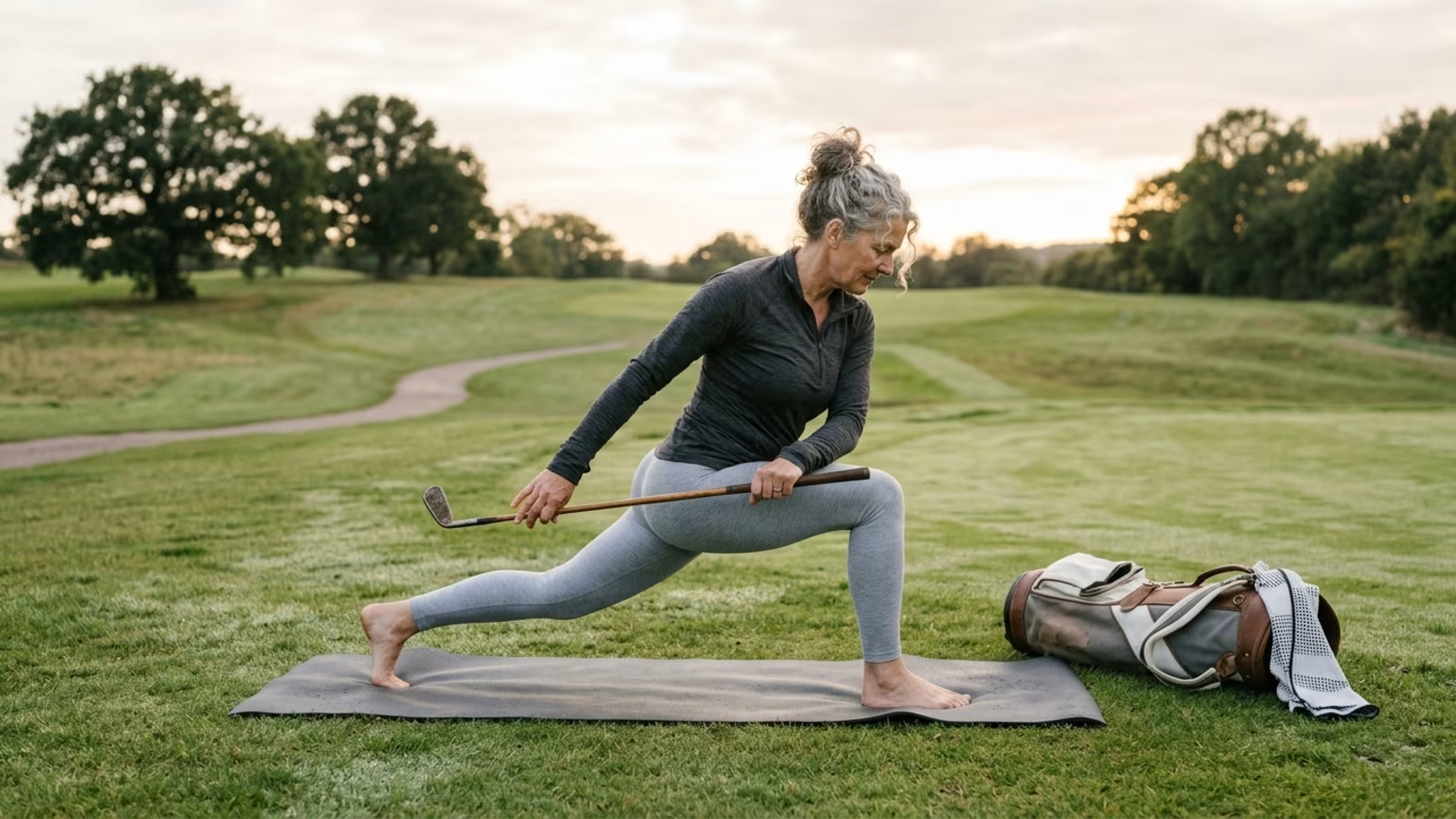

Discover a 15-minute at-home yoga routine that improves rotational mobility and protects older golfers from lower back injuries on the course.




On August 21, 2026, Men's Journal published an article by Kelsey Kryger featuring a 15-minute at-home yoga routine. Yoga-Go instructor Melissa Leach presented a physical protocol designed to preserve golf mobility. Many mature players face the daily tension of declining rotation and rising joint stiffness. This short routine offers a structured way to maintain a fluid golf swing.
At Golfergy, we focus heavily on joint preservation and healthy movement. "The saddest thing I have seen in golf is watching lifelong playing partners slowly drop out of our weekend group. It usually starts with a nagging shoulder or knee issue they ignore until it requires surgery."
"That pattern is exactly why I became obsessed with golf longevity. We do not have to stop playing as we age, provided we do the right maintenance work between rounds." Maintaining proper physical rotation is a critical part of that routine maintenance.
The golf swing requires complex coordination across multiple body joints. According to a recent biomechanics study, peak pelvic rotation was significantly associated with clubhead speed. The researchers reported a standardized coefficient of β = 0.164 and p < 0.001. This exact data highlights the specific mechanical link between a mobile pelvis and rotational output.
Instructor Melissa Leach points out that both golf and yoga demand whole-body engagement. She notes a particular focus on the core, hips, and lower back. When these distinct areas become rigid, the human body forces other joints to compensate. Over time, this mechanical compensation stresses the lower back and shoulders heavily.
If you want to maintain your swing mechanics, you must maintain your rotational capacity. A proper hip rotation test can reveal where your mobility falls short. Understanding these physical mechanics allows you to target the right tissues safely. Focusing on pelvic rotation helps prevent unwanted lateral swaying during the backswing.
Proper hip turn creates space for your arms to drop naturally on the downswing. When the pelvis locks up, players typically throw their hands at the ball. This casting motion robs the swing of power and consistency. Maintaining pelvic freedom keeps the club on a proper plane.
The Men's Journal piece references a 2019 Abertay University source on golf mobility. The article summary states that two 15-minute yoga sessions per week significantly improved golfers' range of motion. This measurable outcome was observed over a relatively short six-week period. That exact schedule equals just 30 minutes of total weekly physical commitment.
The public material does not detail the exact sample size or numerical effect sizes. The reported timeline simply offers a practical framework for recreational golf players. Dedicating a small window of time twice a week is highly sustainable. Consistent repetition yields far better results than infrequent, aggressive stretching sessions.
Many players abandon mobility work because they try to stretch for an hour. A short session keeps the body active without causing excessive physical fatigue. You can easily fit two brief sessions into a busy weekly schedule. This sensible approach supports long-term adherence and gradual physical adaptation.
Golfers over 40 face a unique set of daily physical challenges. As we age, our joint tissues naturally lose basic elasticity and resilience. Older amateurs swing with less speed than tour professionals, yet they remain highly vulnerable to injury. A restricted hip joint forces the fragile lumbar spine to twist beyond its intended limit.
This structural compensation creates a high risk for chronic lower back pain. Furthermore, age-related declines in balance affect how well we control our bodies during rotation. A recent systematic review found that sensorimotor-based interventions improve balance performance in older people. The published review noted that the strength of evidence varies by specific balance outcome.
Another recent meta-analysis indicates that balance-oriented exercise can improve balance measures in older populations. Rotational power on the golf course requires a completely stable physical foundation. If your balance is compromised, your body will naturally restrict your swing to prevent a fall. Building a mobility that protects the lower back requires addressing stability alongside basic flexibility.
The inability to separate upper body movement from lower body movement is a common age-related issue. This physical limitation directly reduces swing efficiency and adds unnecessary joint stress. Regular stability practice helps older players maintain proper posture throughout the entire golf swing. Strong posture leads to cleaner ball contact and fewer physical complaints.
Health and fitness writer Kelsey Kryger outlined a specific routine in the Men's Journal article. The sequence consists of Triangle Pose, Warrior III, and Half Moon Pose. You can seamlessly adopt this 15-minute mobility routine at home. Focus entirely on turning your trail hip smoothly during these movements.
Triangle Pose serves as the foundational movement in this particular sequence. Leach describes it as a way to stretch and strengthen the thighs, groin, hips, and back. The prescribed hold is five to ten breaths on each physical side. If balance is an issue, you should use a yoga block or rest your hand on your shin.
Warrior III shifts the routine focus to stability and posterior body strength. The article describes this pose as targeting the gluteus maximus, spinal extensors, and abdominal muscles. These specific muscle groups develop stability relevant to the swinging motion. You should hold this active position for three to five deep breaths per side.
Finally, the Half Moon Pose directly integrates leg strength and torso rotation. This complex movement builds on the previous poses by combining lower-body strength, hip opening, and torso rotation. The suggested hold is three to five breaths per physical side. Golfers should start with a smaller range of motion to maintain strict balance control.
You do not need to push these poses to their absolute physical limits. The primary goal is controlled movement rather than achieving visual perfection. Take your time entering and exiting each pose to protect your sensitive joints. Consistent practice will naturally improve your depth and stability over time.
The Men's Journal headline claims this routine builds serious swinging power. Improved range of motion does not automatically equal greater clubhead speed or longer drives. You must control your newly usable range with proper stability and swing technique. Yoga alone is not a complete substitute for progressive strength training or professional golf instruction.
Leach considers 15-minute at-home mobility work potentially useful for both golf performance and overall joint health. These statements represent thoughtful professional recommendations rather than guaranteed clinical outcomes. The original Abertay University study results focus strictly on increased range of motion. Mobility is simply one crucial piece of the larger golf performance puzzle.
You should always perform these physical poses when you are warm and unhurried. Stop immediately if any movement produces sharp pain, numbness, dizziness, or loss of bodily control. Consistent, gentle practice will always outperform forced, aggressive stretching habits. Your body responds best to regular, moderate stimulus.
Start by integrating two short mobility sessions into your current weekly schedule. Focus on smooth hip rotation and totally stable foot pressure. Track your physical comfort and swing fluidity over the next six weeks. What adjustments will you make to your mobility routine this season to steer clear of this hazard?
Follow Golfergy for practical insights on performance, mobility, recovery and healthy ageing. Stay connected for new articles, research-led guidance and ideas to help you play better for longer.


Understand how your hips and mid-back contribute to a golf turn, with practical habits that put comfort ahead of extra backswing length.


A progressive golf warm-up for players over 40, moving from easy activity to fuller practice swings without treating preparation as a flexibility test.
Observe comfortable movement and control to frame better questions about your golf swing, with guidance on when pain needs professional assessment.
Explore practical resources on performance, recovery, mobility and golf longevity.
Read the Blog