

Learn why older golfers should replace extreme stretching with functional movement. This practical routine improves balance, walking, and golf swing consistency.




One 2026 study of elite male golfers reported effective working angles of approximately 249 degrees at the shoulders and 115 degrees at the hips. Those massive numbers fuel the powerful drives we see on television broadcasts every single weekend. However, forcing an older frame to hit those specific benchmarks often causes severe joint strain rather than lower scores. You have heard a million times that deep static stretching is the only way to maintain your swing rotation, but the truth according to sports science is completely different.
The saddest thing I have seen in golf is watching lifelong playing partners slowly drop out of our weekend group. It usually starts with a nagging shoulder or knee issue they ignore until it requires surgery. That pattern is exactly why I became obsessed with golf longevity. We do not have to stop playing as we age, provided we do the right maintenance work between rounds.
Recreational players naturally assume they are just too tight when they lose distance off the tee. You wake up stiff after a Saturday round and immediately blame your tight hamstrings or a locked lower back. It feels perfectly logical to pull and stretch any muscle that aches. Many players spend hours trying to force their bodies to twist further back.
The frustration is incredibly valid for experienced players. You remember how easily you could turn your shoulders ten years ago. When you watch younger players on the range, their massive coil seems like the obvious secret to better contact. This leads many amateurs to chase raw flexibility without considering how their joints actually work together.
The golf swing is an incredibly fast and violent motion that demands coordination from your feet to your shoulders. Most players do not realize how much force passes through their spine and hips during a simple drive. When your joints feel locked up, you naturally assume the solution is to pull hard on the tight areas. This reactive approach rarely solves the underlying problem of poor joint control.
The main problem is that flexibility and functional movement are entirely different things. A 2026 study analyzed spinal kinematics from the upper thoracic region through the lumbar spine during walking in 642 participants. The research examined rotation and lateral deviation across spinal segments. It shows that moving well requires coordinated control through the trunk rather than isolated flexibility in one spot.
Trunk stability is a massive factor for anyone trying to maintain their handicap as they get older. A study summarized in MedicalXpress reported that trunk stability was more closely associated with whole-body dynamic balance than hip strength in physically active older adults. This means your ability to stand over a putt without swaying comes directly from a stable midsection. Stretching your back muscles without building this stability is ultimately a waste of time.
Another major piece of the puzzle is how your lower body manages weight. A study summarized by the University of Valencia reported a strong association between ankle flexion-extension range and dynamic balance, stability and concern about falling, plus a moderate association with single-leg static balance in older adults. Your ankles need functional movement during weight acceptance and push-off. They require active strength rather than just passive flexibility.
Chasing extreme flexibility without stability creates real problems for older athletes. When you stretch your ligaments aggressively, your body loses the tension needed to protect your joints during a fast swing. This lack of control forces your lower back to work harder to stop the club safely. Poor joint control can quickly make walking eighteen holes feel exhausting.
Your walking stride is deeply affected by weak and unstable joints. A PEDro evidence summary identified high-intensity progressive resistance training as the most effective exercise modality among the reviewed options for improving preferred gait speed. You cannot simply stretch your way to a faster and more stable walk. Building strength alongside functional movement is what keeps you steady on uneven lies.
We need to replace static stretching with functional routines that train your balance and joints together. One mobility expert interviewed by Fit&Well recommends 10 to 15 minutes of work three to five times per week. You can build a highly effective practice by performing routine mobility movement checks near a wall or a sturdy chair. Start your assessment by testing your single-leg balance for up to 30 seconds per side.
The self assessment requires nothing more than a wall and a few minutes of quiet attention. Start with the ankle knee-to-wall test to see how well your lower leg moves under load. Place one foot several inches from a wall, keep your heel grounded, and gently drive your knee toward the wall over your second toe. Move your foot backward until your knee can no longer reach the wall without your heel lifting.
Next, sit upright in a chair to test your seated thoracic rotation. Cross your arms over your chest and rotate gently to each side without lifting your hips. You are not chasing a symmetrical number here, so just note whether one side feels obviously restricted. To understand what your swing actually needs after 40, you must prioritize control over extreme contortion.
After completing your assessment, transition into a short movement routine. Do this after a few minutes of easy walking so your muscles are warm and responsive. Start by performing 8 to 10 slow ankle rocks per side while keeping your knee tracking nicely over your foot. Follow this directly with 8 to 10 controlled hip circles in each direction.
When working through these movements, it helps to keep instructions focused on one small movement at a time. For instance, focus entirely on turning your trail hip smoothly while practicing your hip circles. This intentional focus builds the exact kind of motor control you need for a repeating golf swing. Rushing through the exercises will negate the balance benefits you are trying to achieve.
Finish your session by performing 8 to 10 slow cat-camel movements to wake up your spine. Move through a comfortable spinal range rather than forcing your back into its absolute end range. Add 6 to 10 gentle thoracic rotations per side, keeping your pelvis relatively quiet. Remember that ankle mobility remains crucial for weight transfer during your swing, so take several slow steps to finish.
Next time your playing partner tells you to just stretch more, trust your body's true mechanics instead. You do not need to mimic the 249 degrees of shoulder rotation seen in elite players to enjoy your weekend rounds. You just need enough balance and control to walk the fairways comfortably and turn through the ball safely. Stick to a smart daily routine and you will play better golf for years to come.
Follow Golfergy for practical insights on performance, mobility, recovery and healthy ageing. Stay connected for new articles, research-led guidance and ideas to help you play better for longer.


A practical strength framework for golfers over 40, built around everyday goals, sensible progression and a careful look at limited golf research.


A research-led look at strength, balance, mobility and trunk control, with a flexible planning framework for golfers over 40.
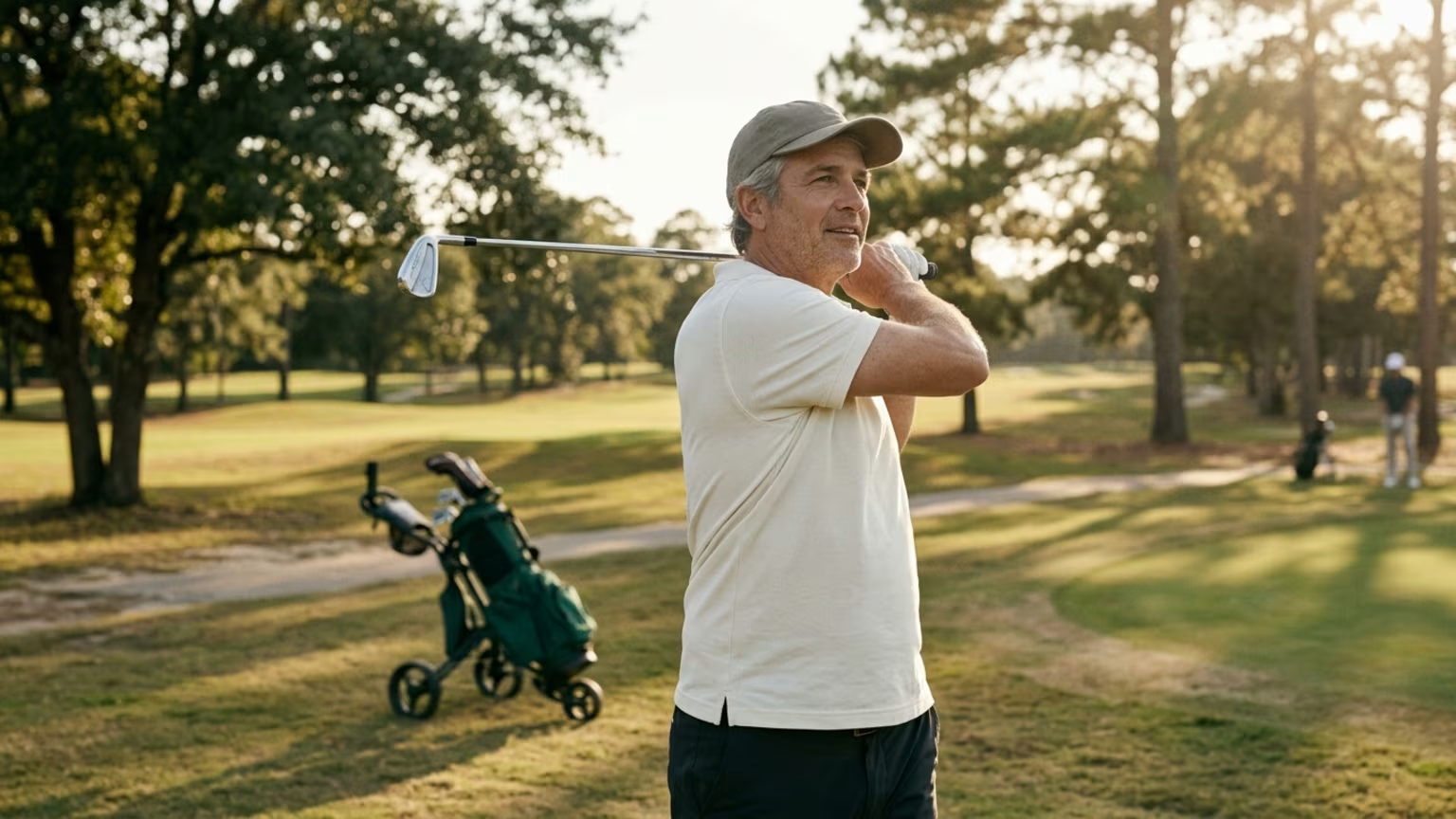
Understand golf mobility after 40 with a comfortable-turn self-check, hip and shoulder guidance, and a clear look at flexibility and swing speed.
Explore practical resources on performance, recovery, mobility and golf longevity.
Read the Blog