New research published in Aging Cell highlights walking speed and grip strength as mortality predictors. Learn how these everyday markers impact your golf longevity.




On October 1, 2026, research examining multimodal ageing biomarkers was published in the journal Aging Cell. According to an October 6 update by Lifespan.io, the study analyzed the Lothian Birth Cohort 1936 to find which physical measures best predict all-cause mortality. The publication highlights walking time and brain volume among the stronger predictors. For players over 40, these findings offer a grounded perspective on how physical capability changes over time.
The Lifespan.io article points out that grip strength and gait speed serve as reliable measures of physical function. For a golfer, hand strength connects the body to the club during the swing. The hands and forearms must manage the force of the clubhead through impact. When grip strength fades, the wrists struggle to control the face of the club through the hitting zone.
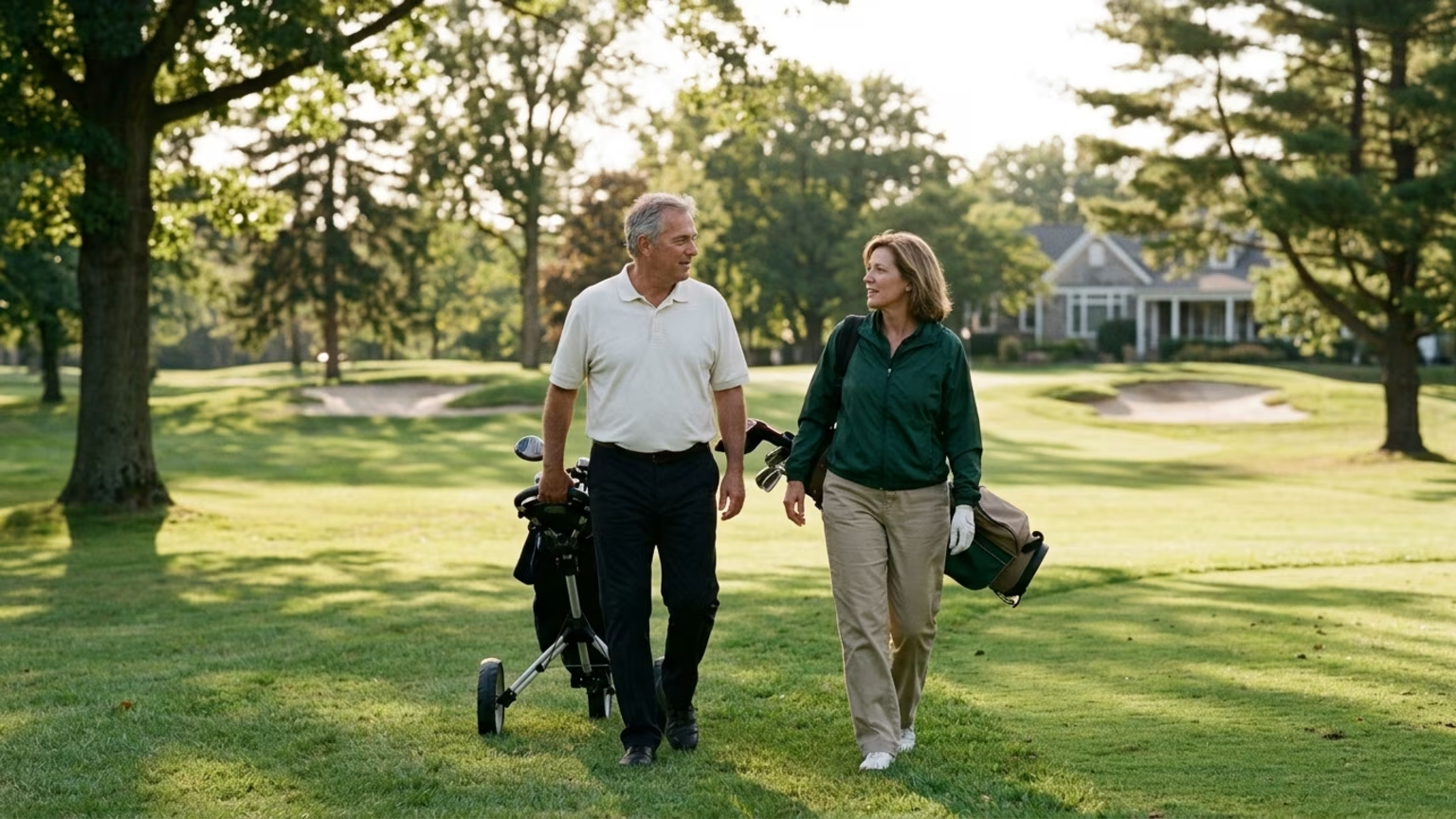
Walking time represents another practical marker mentioned in the recent research. A full round of golf requires miles of sustained walking across uneven grass. Walking 18 holes demands thousands of steps across sloped terrain. The ankles and knees bear the brunt of this continuous movement.
If these joints lack mobility, the stress moves upward into the hips and lower back. This chain reaction makes walking feel significantly harder as the round progresses. The lower body joints must absorb the repeated impact of walking while maintaining the stability needed for a balanced swing. When everyday walking feels harder, the legs often lack the endurance required for the back nine.
Weakness in these functional areas directly affects swing mechanics over a long round. Poor grip strength forces the player to squeeze the club tighter. This extra tension travels up the arms and restricts natural shoulder rotation. Reduced walking endurance tires the leg muscles, which compromises your setup posture on later holes.
The authors compared plasma-protein-based organ-age measures with other metrics. These included physical function, cognitive tests, neuroimaging and telomere length. Lifespan.io reports that walking time, white-matter volume, total brain volume and general cognitive function together accounted for 19 percent of mortality risk variance. Adding 17 other markers only increased the explained variance by four percentage points.
Other biomarkers showed notable associations with mortality risk in the cohort. The Lifespan.io authors interpret that brain imaging and lung measurements performed better in mortality prediction than the assessed proteomic organ clocks. The piece also describes the epigenetic clock GrimAge2 as the strongest overall predictor among the biomarkers used. These findings provide specific context about physical and cognitive aging.
These predictive measures help track physical changes over extended periods. Lifespan.io points out that neurological imaging is expensive and does not directly measure molecular changes. Physical tests like walking time offer a more practical, observable metric for everyday people.
Lifespan.io cautions that grip strength and gait speed might begin to decline relatively late in life. Older recreational golfers face a steady loss of natural muscle mass as the years pass. Amateurs rely heavily on their everyday mobility to navigate the course week after week. Without active maintenance, the joints stiffen and the hands lose their natural force.
This physical decline changes how an older player manages the physical demands of the game. A younger body can often mask poor stability with raw speed and elasticity. Players over 40 do not have that luxury when navigating a long round. If everyday walking ability fades, the base of the golf swing becomes unreliable.
When older players lose leg strength, they often try to swing harder with their arms. This mechanical flaw produces inconsistent ball contact and increases the risk of upper body strains. A tired lower body simply cannot support a powerful rotational movement. Players who ignore their walking endurance often see their scores inflate on the final few holes.
Recreational players often push through minor aches without addressing the root cause. This habit leaves them exposed to compounding physical fatigue over the course of a season. A loss of grip strength or walking endurance quietly erodes a player's physical capability. Many players only notice the issue when their swing mechanics break down on the back nine.
The defensible takeaway from this research is to treat ordinary walking ability and hand function as broad indicators of your physical capability. You can pay close attention to whether grip-dependent tasks feel different during your day. If holding the club securely requires more effort, focus entirely on small hand and forearm exercises to retain your grip. These small checks keep you aware of your functional strength.
Maintaining your lower body function requires a consistent approach to your physical preparation. You can adopt a steady routine before you reach the first tee. Adopting a structured pre-round warm-up offers simple movements to keep your joints moving well. A practical approach prepares your body for the heavy walking demands of the course.
You can also monitor how your legs feel while walking the fairways. If you notice a change in your walking time or comfort, take those signs seriously. Adding a consistent cardiovascular maintenance plan helps preserve your walking speed and endurance over time. Good stamina keeps your legs fresh for late-round swings.
Taking time to address joint stiffness and muscle fatigue pays off on the scorecard. A proactive approach to mobility that supports your swing mechanics builds a safer golf turn. Small daily adjustments form the foundation of lifelong physical capability.
A common mistake is treating a cohort-level prediction as an individual medical prognosis. The Lifespan.io article notes that this research does not establish that changing a biomarker will change an individual's lifespan. These findings represent broad associations within a specific older population. You should avoid turning these data points into a personal biological countdown.
Another misconception is assuming a specific biomarker test provides a golf-specific longevity score. The study did not test golf performance, swing mechanics, or injury risk. The research simply evaluates associations with mortality over time. Grip strength and gait speed provide useful context, but they do not guarantee lower golf scores.
If you have concerns about a change in your walking or hand function, seek an appropriate professional assessment. You should not attempt to diagnose a condition strictly from a biomarker result or a slow walking round. A trained medical professional can provide proper context for your symptoms.
Everyday mobility and grip function offer practical clues about your changing physical capability. The research highlights these functional measures as useful things to track over time. As you head out for your next tee time, what adjustments will you make to your mobility routine this season to steer clear of this hazard?
Follow Golfergy for practical insights on performance, mobility, recovery and healthy ageing. Stay connected for new articles, research-led guidance and ideas to help you play better for longer.


A practical strength framework for golfers over 40, built around everyday goals, sensible progression and a careful look at limited golf research.


A research-led look at strength, balance, mobility and trunk control, with a flexible planning framework for golfers over 40.
Understand golf mobility after 40 with a comfortable-turn self-check, hip and shoulder guidance, and a clear look at flexibility and swing speed.
Explore practical resources on performance, recovery, mobility and golf longevity.
Read the Blog