
Discover how mechanical ageing restricts older golfers and why structured, supervised physical training preserves strength, mobility and playing capacity.




When ODDS Longevity concluded "The Silent Decade" symposium on September 19 2026, the closed-door event did not feature a famous professional withdrawing from a major tournament. Instead, it highlighted the gradual physical decline that forces countless everyday players to withdraw from the game entirely. The saddest thing I have seen in golf is watching lifelong playing partners slowly drop out of our weekend group. It usually starts with a nagging shoulder or knee issue they ignore until it requires surgery.
That pattern is exactly why I became obsessed with golf longevity. We do not have to stop playing as we age, provided we do the right maintenance work between rounds. ODDS Longevity presented its symposium as an event focused on prevention, ageing and identifying health changes before obvious disease or decline occurs. This preventative approach hits close to home for anyone trying to maintain their playing years.
Professional golfers withdraw from tournaments with clear medical diagnoses and immediate rehabilitation plans. Meanwhile, recreational players tend to accept stiffness as a normal part of getting older. The medical contributors at the event focused on identifying structural weaknesses early. This gives older adults a chance to intervene before a minor ache turns into a permanent limitation.
The symposium featured discussions on "mechanical ageing." This concept maps the relationship between strength, mobility, musculoskeletal decline and overall physical capacity. Orthopaedic specialist Dr Ashok Rajgopal, a medical contributor at the event, argued that chronological age and physiological age can differ significantly. He described dynamic physical assessment as a useful complement to static laboratory testing.
Taking an active approach helps players manage the aging shift in physical capacity that older golfers face. When a golfer experiences mechanical ageing, their tissues lose elasticity and their joints lose the critical range of motion required for a fluid backswing. If your body cannot perform dynamic movements in a clinical assessment, it certainly cannot execute them under the pressure of a golf swing.
In plain terms, a golf swing demands massive rotational force through the hips, spine and shoulders. If the hip joints become stiff from mechanical ageing, the lower back is forced to rotate past its natural limits to complete the swing. This compensation places severe shearing stress on the lumbar spine during the transition into the downswing. Over time, this repetitive strain damages tissue, degrades clubhead control and drastically reduces your ability to recover between rounds.
Everyday players over 40 face a profound risk from mechanical ageing while swinging the club with far less speed than touring professionals. Elite players use comprehensive physical testing and conditioning to tolerate the repetitive stress of the swing. Recreational players often skip this physical preparation, relying entirely on the sport itself to keep them fit. As musculoskeletal decline sets in, the amateur body struggles to absorb the eccentric forces generated during the downswing.
An international golf-and-health consensus statement points out that golf can provide moderate-intensity aerobic activity. It also notes that strength and balance benefits are likely for older adults, particularly those who walk the course. Playing golf alone is rarely enough to counteract the natural loss of muscle mass that occurs in our 40s and 50s. This gap between the physical demands of the sport and the declining capacity of the player leaves older amateurs highly vulnerable to joint injuries.
Once walking tolerance drops, players often suffer extreme fatigue on the back nine, which ruins their score and enjoyment. Building golf endurance after 50 requires dedicated effort outside of normal tee times.
To preserve your playing capacity, you must pair your golf practice with general physical preparation. During the symposium, ODDS presented a six-month case study associating structured, supervised training with improvements in VO2 max, strength and overall physiological capacity. While the available event coverage did not provide the participant count or baseline measurements, the core principle remains valid. You should build a balanced minimum-effective strength plan around lower-body strength, trunk control, upper-body pulling and gradually progressed rotational work.
Upper-body pulling exercises help stabilize the shoulders during the swing, while trunk control keeps the upper and lower body connected during rotation. If you are returning from a layoff or managing an injury, use supervision to progress safely. You must also update your pre-round routine to prepare your tissues for mechanical load. I used to stand on the first tee doing long, static hamstring stretches because I thought it was the right way to warm up.
I would actually feel weaker on my first drive. Research later showed me that dynamic movements, like leg swings and torso twists, prime the nervous system much better for explosive motion. Changing my five-minute warmup completely transformed my opening tee shots by waking up my muscles before I ever swung a club.
When performing dynamic twists, focus entirely on turning your trail hip smoothly to establish a stable base. This simple adjustment protects the lower back and improves energy transfer during those early holes.
Many players hold dangerous misconceptions about managing physical decline. ODDS founder and CEO Asad Hussain framed longevity as an ongoing process of measuring the body, understanding its condition and acting before disease begins. Too many golfers treat longevity as a reactive treatment, waiting until persistent pain prevents them from walking the course before seeking help. Maintaining physical capacity during your 40s and 50s is far more effective than trying to reverse severe mobility loss later.
Another common misconception is that improving aerobic fitness automatically fixes golf-specific biomechanics. Improved VO2 max was a highlighted outcome in the ODDS case study, but cardiovascular fitness is not synonymous with rotational power, balance or technical skill. Furthermore, the available symposium reporting does not show whether its six-month participants were older adults, golfers, healthy volunteers or people with specific medical conditions. A player with cardiovascular disease, uncontrolled hypertension or significant joint pain should always obtain medical guidance before beginning vigorous training.
The evidence strongly supports treating strength training as a capacity-preservation tool rather than just a way to hit the ball further. Supervised training and dynamic measurement can help you track walking tolerance, balance and key movement patterns. By acting early, you can identify physical restrictions long before they force you out of your weekend group. What adjustments will you make to your mobility routine this season to steer clear of this hazard?
Follow Golfergy for practical insights on performance, mobility, recovery and healthy ageing. Stay connected for new articles, research-led guidance and ideas to help you play better for longer.


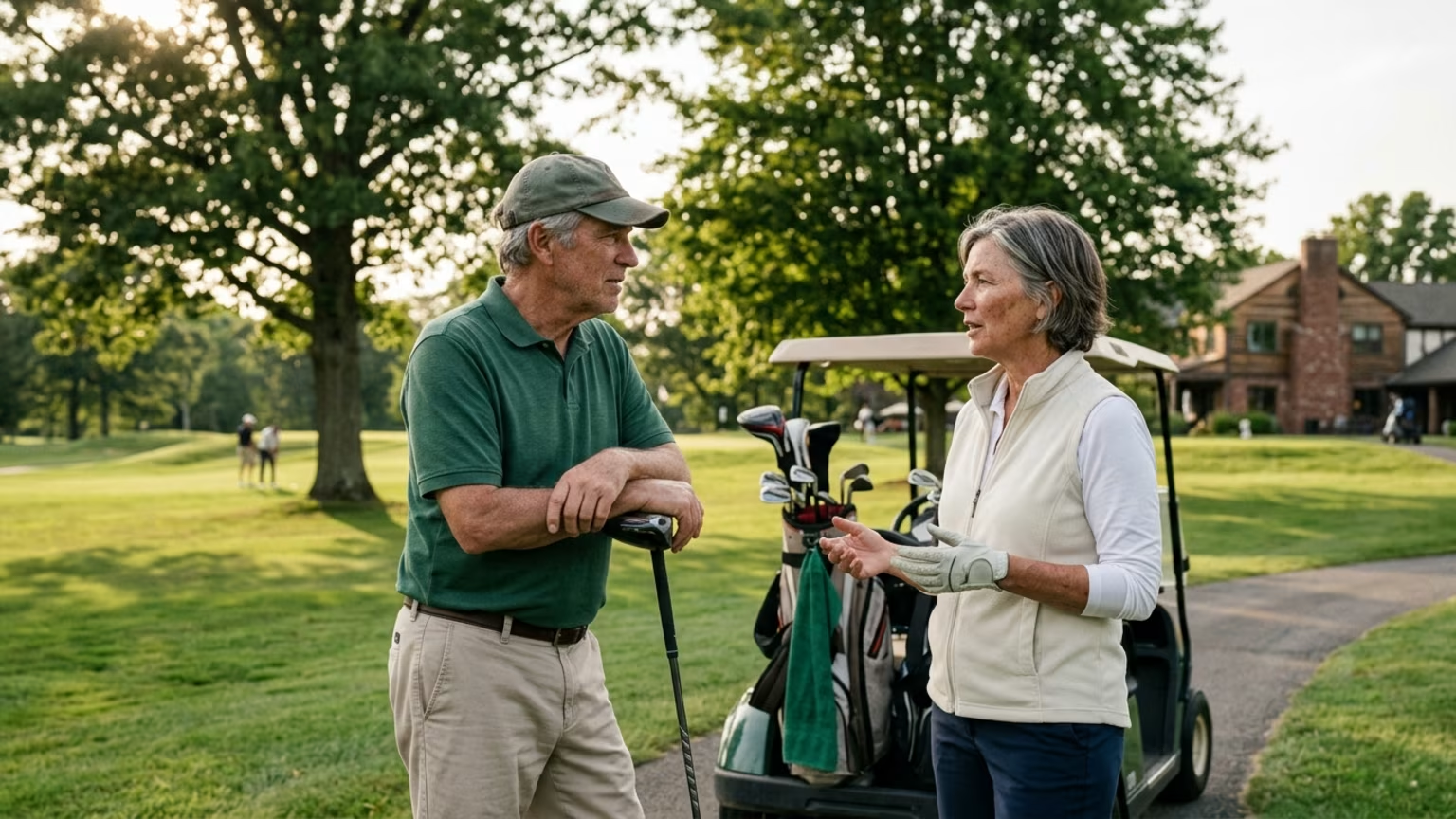
University of Missouri researchers found that age-related muscle weakness involves nerve-signaling failure. Learn why maintaining your strength routine matters.

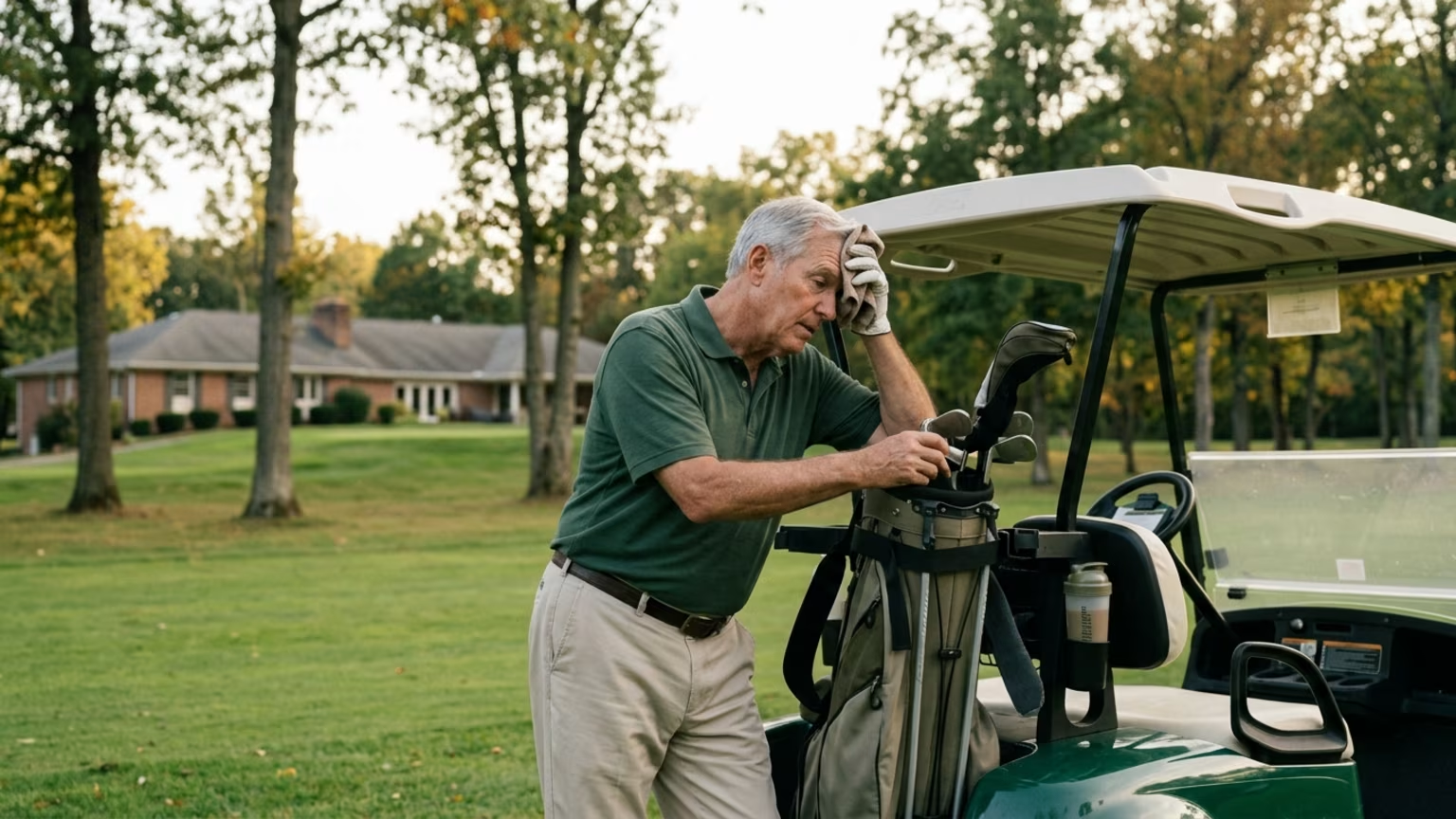
Recent research shows creatine offers modest strength benefits for older adults when paired with resistance training, but true swing speed requires gym work.
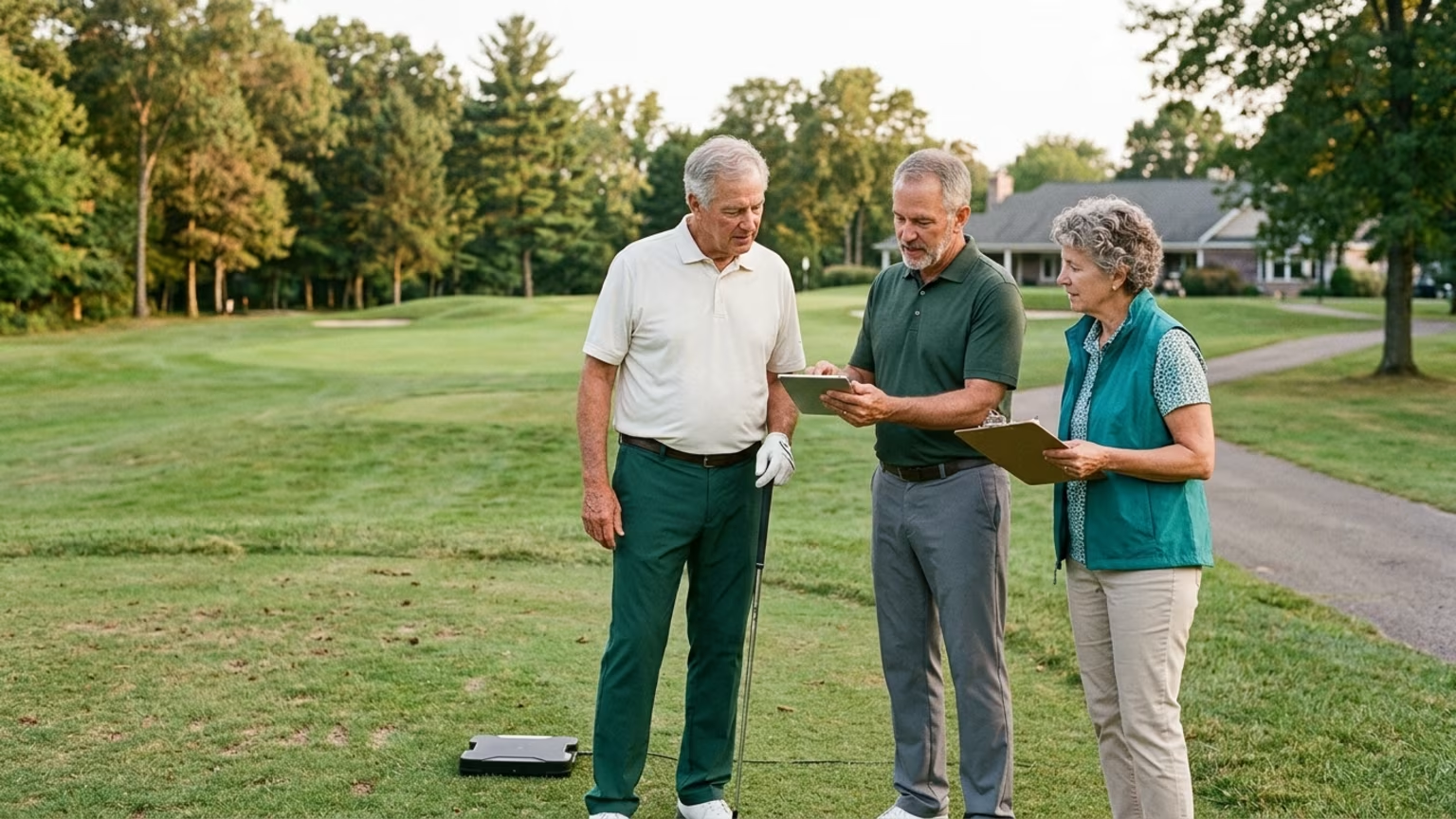
Learn how assessing physical deficits like hip strength and muscle power can help golfers over 40 build a joint-safe swing and prevent injury.
Explore practical resources on performance, recovery, mobility and golf longevity.
Read the Blog