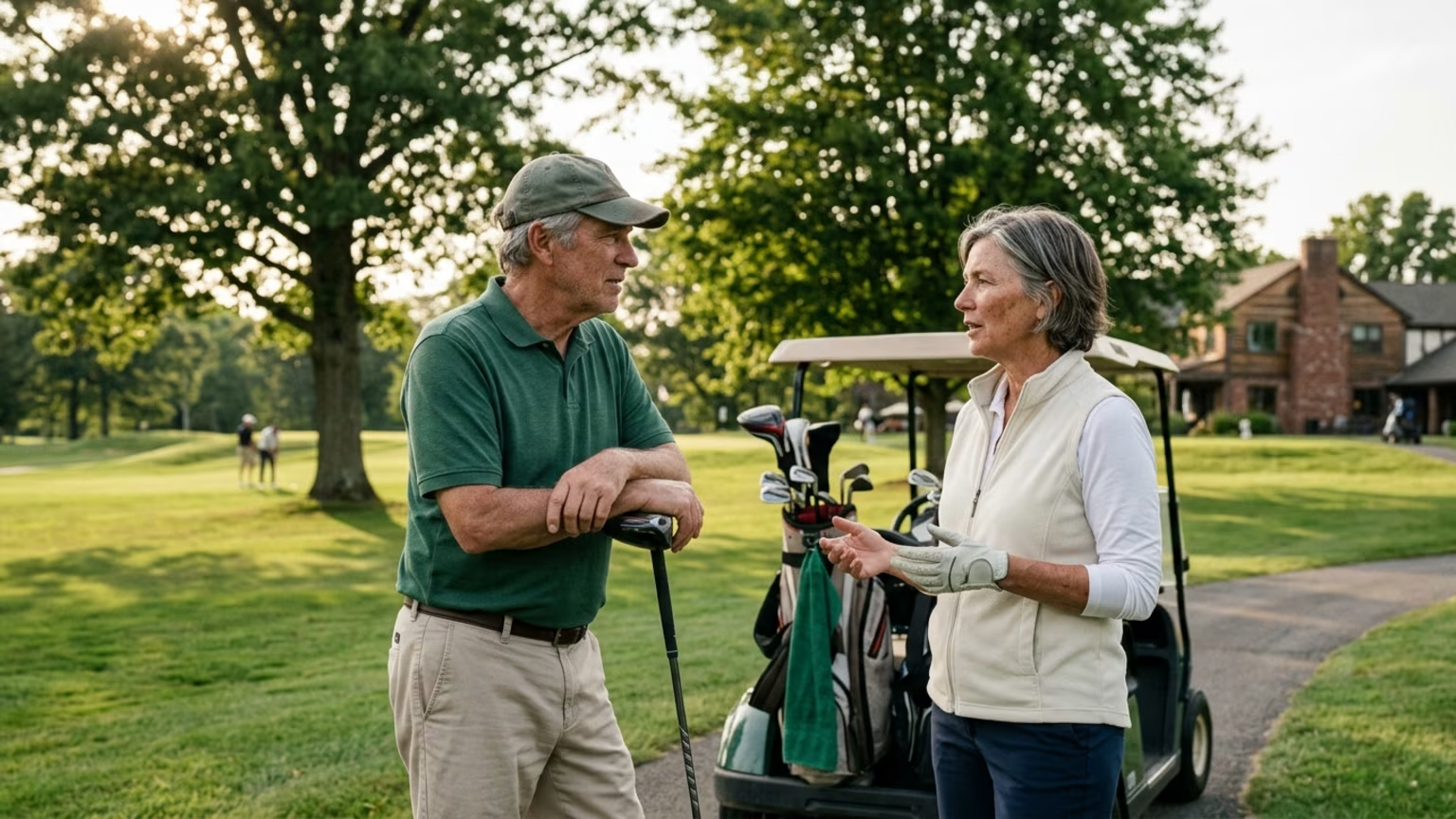

University of Missouri researchers found that age-related muscle weakness involves nerve-signaling failure. Learn why maintaining your strength routine matters.




On July 9, 2026, researchers published new findings on age-related muscle weakness in The Journal of Clinical Investigation. The University of Missouri team reported that losing strength as we age involves failure at the neuromuscular junction. This is the precise communication point where nerves activate muscle fibers. The study shows that sarcopenia is not merely about losing muscle mass or motor neurons. This is a critical update for older players who want to sustain their physical capabilities on the golf course.
Think about the physical demands of a full golf swing. Your brain sends rapid electrical signals down your nerves to tell specific muscle groups to fire. The neuromuscular junction is the gap where that electrical signal jumps from the nerve ending into the muscle tissue. When that connection functions efficiently, your body moves precisely and with power.
The University of Missouri researchers found that this specific junction can degrade as we get older. They identified reduced levels of a localized sodium channel called NaV1.4 at this connection point. This channel is heavily involved in skeletal-muscle excitability. Without enough of this channel, the signal from the nerve struggles to trigger the muscle tissue effectively.
If your muscles do not receive clear and immediate instructions, they simply cannot fire forcefully. This means your hips might not clear in time on the downswing, or your hands might lose club control at impact. The muscle tissue itself might be intact, but the communication lines are fundamentally frayed. W. David Arnold, the study’s senior researcher, noted this challenges the old assumption that nerve-to-muscle communication remains reliable as we age. He described the junction as an important point of failure.
The human portion of the study assessed 10 older adults with an average age of 85.9 years. They were compared against eight younger control subjects who averaged 29.5 years of age. The researchers found that weak older adults showed approximately 250% higher neuromuscular-junction jitter than the control group. This jitter is a direct clinical measure of inconsistent signal transmission. The difference was statistically significant.
The researchers saw neuromuscular-junction blocking in as many as 35% of tested synapses per older participant. Individual blocking results ranged from zero to 35 percent. The team linked higher jitter and blocking rates directly to lower muscle strength in these subjects. The communication failure caused the weakness, rather than simply a smaller muscle volume.
The research team also collaborated with NMD Pharma to test chemical interventions in aged rodents. In old rats, an experimental compound called NMD1226 increased stimulated force by approximately 14 percent. During a separate seven-day test, grip strength in aged rats increased by 11.2% in the treated group. The control group saw a 9.7% decline over the same testing window. This improvement was not permanent. After the treatment stopped, the rats saw their grip strength return to roughly the control-group level.
Golfers over 40 face a creeping risk of this exact communication breakdown. According to the University of Missouri release, sarcopenia affects nearly half of adults over age 80. You might not be 80 years old just yet, but the slow decline in nerve-to-muscle function begins decades earlier. Amateur players swing with less speed than tour professionals, yet we still rely heavily on coordinated muscle timing to strike the ball cleanly.
The saddest thing I have seen in golf is watching lifelong playing partners slowly drop out of our weekend group. It usually starts with a subtle loss of late-round stamina that they ignore until they can barely walk nine holes. That pattern is exactly why our team became obsessed with golf longevity. We do not have to stop playing as we age, provided we pay attention to our fading functional capacity between rounds.
If your nerve signals become inconsistent, you lose the ability to stabilize your joints properly. This makes mature players highly susceptible to swing compensations and joint stress. You might notice you cannot carry your clubs or maintain a solid posture on the back nine. These are real-world markers of fading neuromuscular function that can ruin a good scorecard.
The most practical step you can take right now is to build a consistent resistance training habit. The Mizzou discovery might eventually lead to new medical treatments in the future. For now, a 2026 systematic review and meta-analysis provides the best playbook for our daily routines. This review reported that resistance training improved handgrip strength, gait speed and skeletal-muscle index in older people with sarcopenia.
A golf-focused longevity program should include appropriately progressed resistance exercises. Focus entirely on basic, controlled movements that challenge your muscles to fire forcefully under a load. You do not need to lift massive weights to see benefits on the course. A simple approach to assessing your golf fitness can help you identify weak points in your rotational control. Lifting moderate weights with good form forces your nervous system to send strong, clear signals to your muscles.
Keep your training routine simple and highly consistent week over week. When doing a basic lower-body exercise, focus entirely on feeling your legs drive firmly into the floor. This active intent helps train the neuromuscular junction to remain highly efficient. We know that maintaining muscle strength is a major asset for your physical independence. Regular resistance training tells your body that it still needs to sustain those vital communication pathways.
You might read about this new research and wonder if a supplement or medication is available right now. The short answer is no, and you should avoid any product claiming otherwise. The tested compounds, like NMD1226 and NMD653, were strictly experimental interventions used in aged animals. The researchers noted that prior clinical studies have not established efficacy for treating sarcopenia in humans with these specific drugs.
The paper explicitly notes that age-related weakness is multifactorial in nature. This means the condition likely requires entirely different treatments for different types of patients. Golfers should not interpret this study as evidence that any commercially available pill can currently restore their neuromuscular function. The authors clearly called for future clinical trials rather than claiming they have an established treatment ready.
You should never assume a rapid loss of physical strength is merely a normal part of getting older. If you experience a new or accelerating decline in your walking ability or balance, talk to a qualified clinician. The study suggests that clinically meaningful weakness can involve impaired nerve transmission, which a medical professional should evaluate properly.
Preserving your strength and neuromuscular function is the best way to support your physical capacity for golf. We want to see you enjoying the game well into your later years without relying on temporary fixes. What adjustments will you make to your strength routine this season to steer clear of this hazard?
Follow Golfergy for practical insights on performance, mobility, recovery and healthy ageing. Stay connected for new articles, research-led guidance and ideas to help you play better for longer.


Recent research shows creatine offers modest strength benefits for older adults when paired with resistance training, but true swing speed requires gym work.

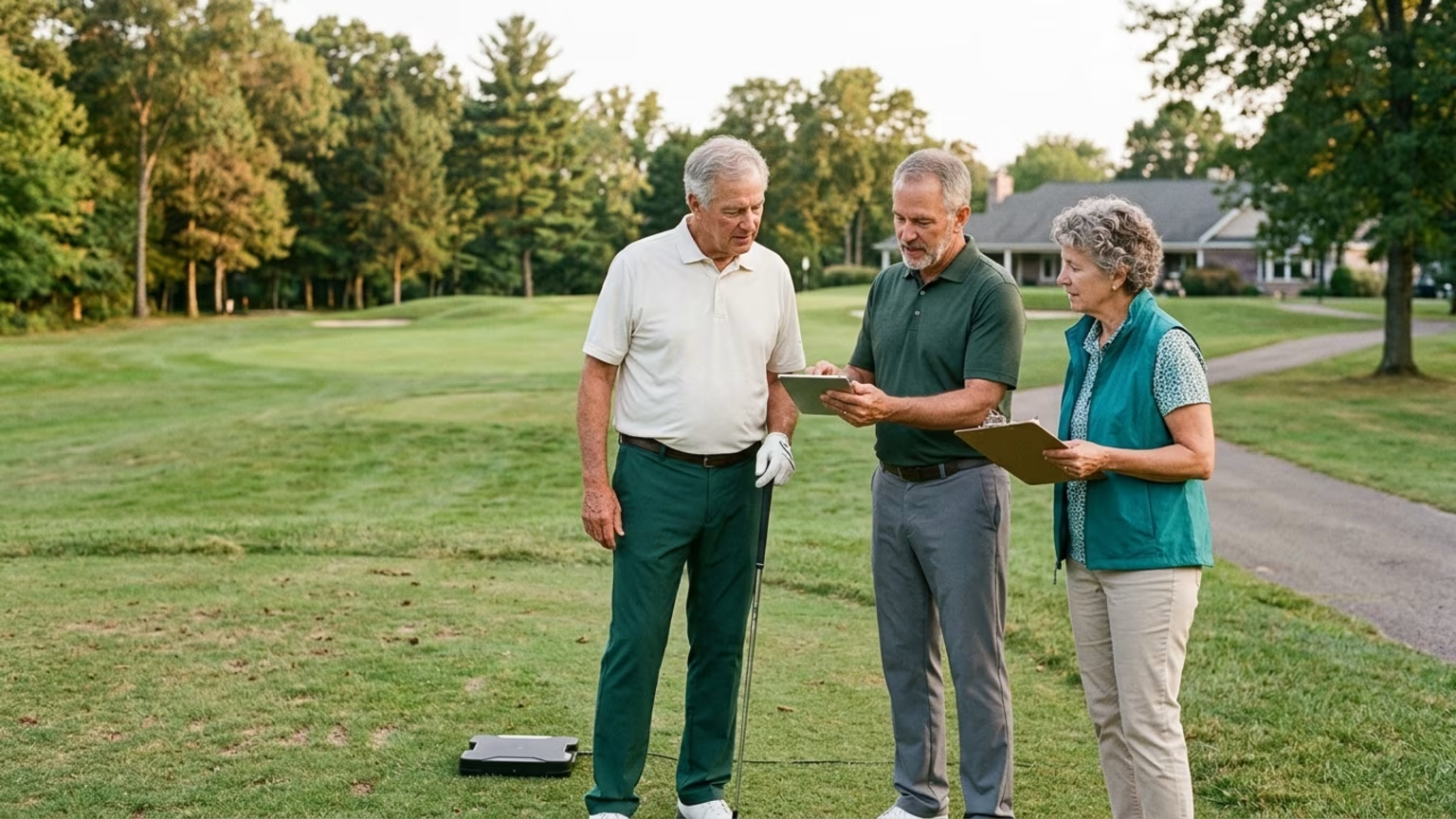
Learn how assessing physical deficits like hip strength and muscle power can help golfers over 40 build a joint-safe swing and prevent injury.

A 2026 report examined links between grip strength and longevity. Learn why hand endurance is a critical health marker for club control in older golfers.
Explore practical resources on performance, recovery, mobility and golf longevity.
Read the Blog