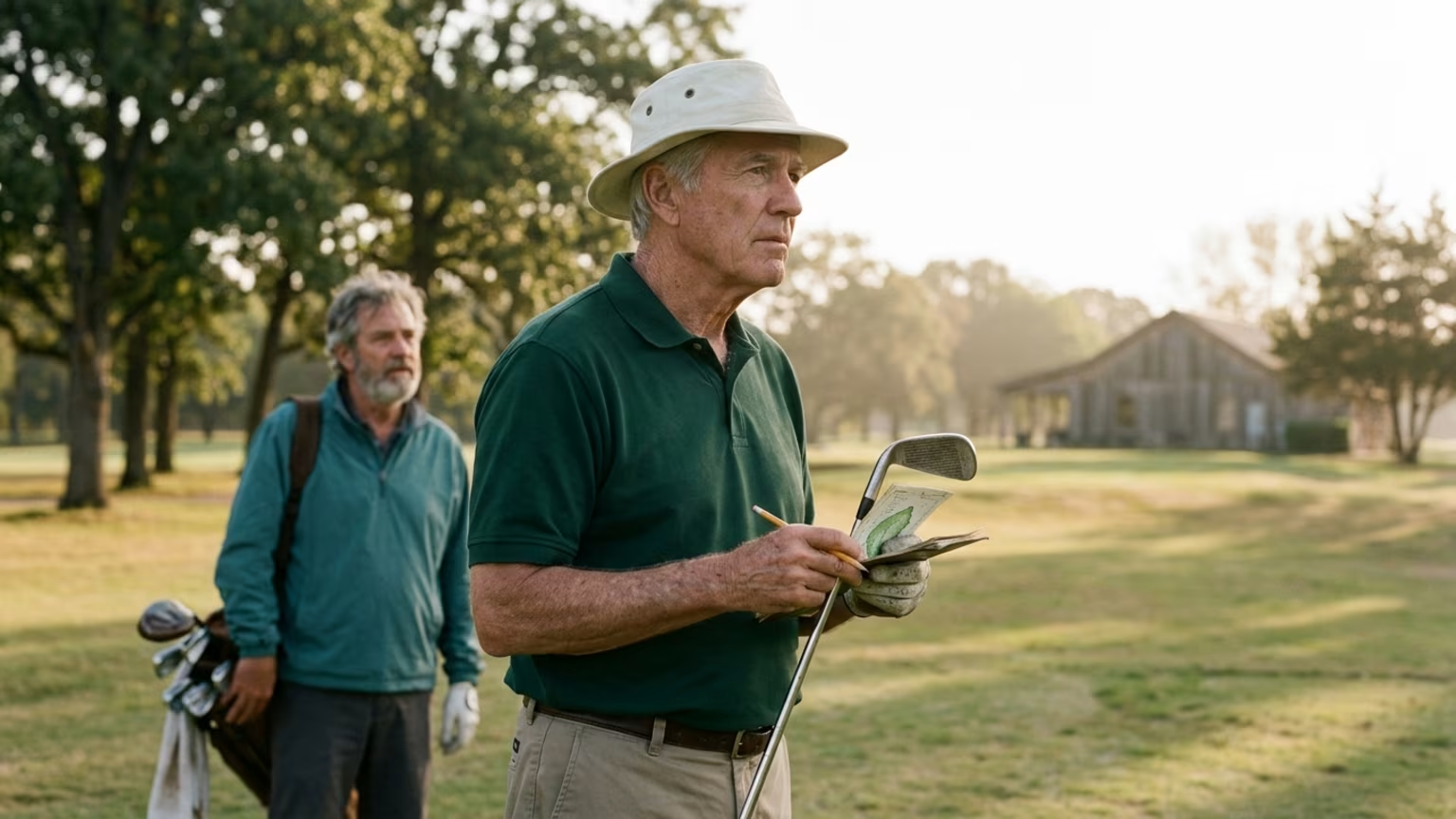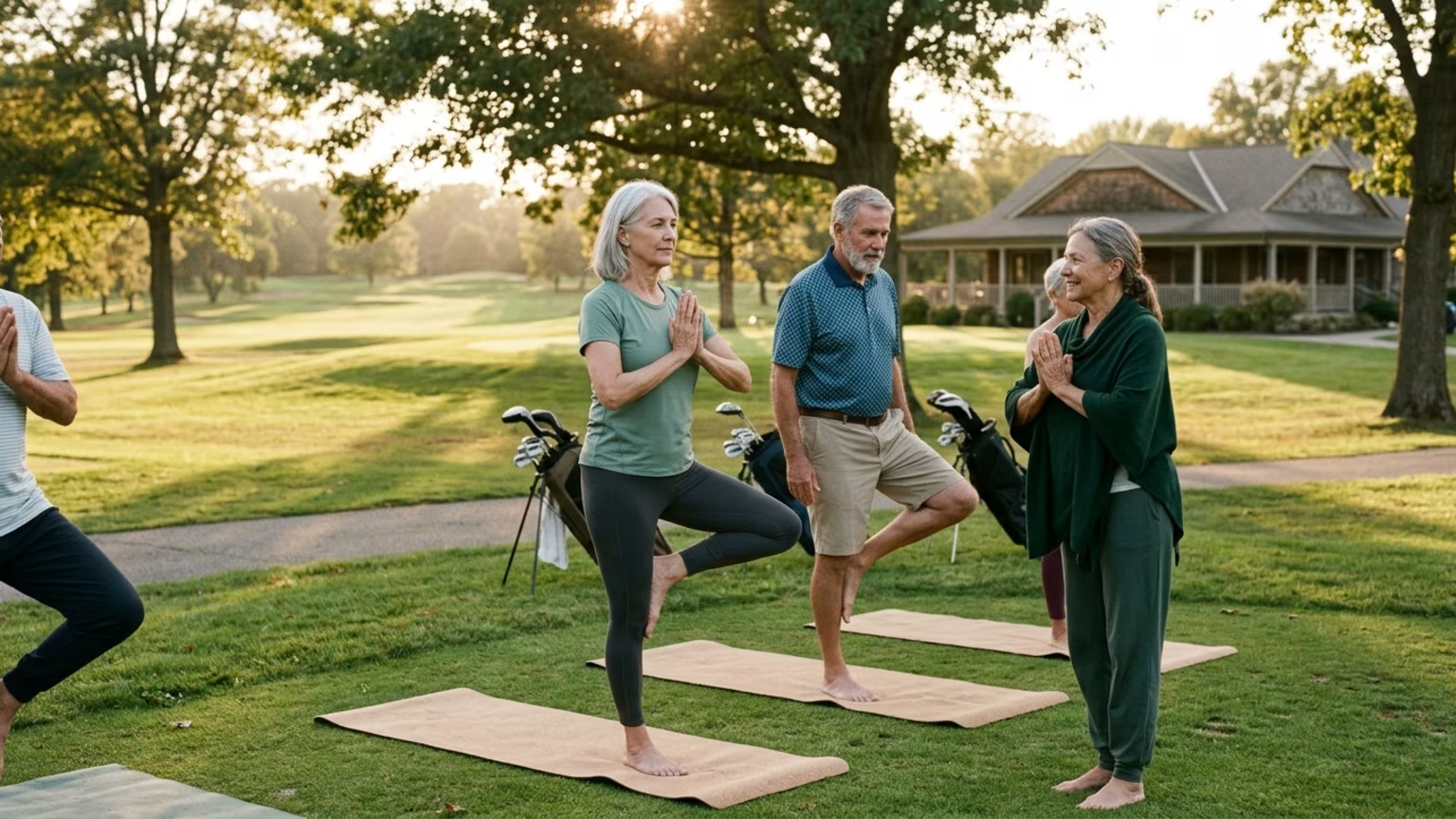

Learn how an Economic Times guided yoga routine offers ageing golfers safe poses for balance, strength and mobility without risking injury on the course.




We frequently hear news about professional players pulling out of tournaments because of sudden lower back spasms or hip pain. Professional golf places tremendous rotational stress on the human body over four days of competition.
The research provided for today does not detail a specific tour professional withdrawing from a recent weekend event. We will instead look at a recent healthy ageing guide from the Economic Times outlining five yoga poses. These gentle movements offer recreational players a sensible way to maintain their physical capabilities without requiring complex training gear.
A powerful golf swing requires a highly stable lower body and a flexible spine to function correctly. When older players lose their ankle stability, they struggle to transfer their weight properly on the downswing. A stiff thoracic spine forces the vulnerable lower back to handle excessive rotational forces during the swing. This mechanical breakdown places severe stress on the lumbar tissues and the hip joints over time.
Without proper mobility maintenance, this repetitive loading leads directly to joint pain and severely restricted movement. The joints simply cannot accommodate the violent twisting motion of a full driver swing when surrounding tissues become stiff. Muscle tissues tighten further to protect the unstable areas of the body from perceived harm. Players eventually find themselves unable to turn fully behind the golf ball during their backswing.
Recreational golfers over 40 face an incredibly high risk of losing their balance and flexibility entirely. You might swing the club much slower than the professional athletes you watch on television. Amateur players often spend their weekdays sitting at office desks or driving long distances for work. This highly inactive lifestyle shortens the hip flexors and weakens the stabilizing muscles around the ankles.
We expect our bodies to perform complex athletic movements on the first tee without any proper physical preparation. I used to stand on the first tee doing long, static hamstring stretches because I thought it was the right way to warm up. I would actually feel weaker on my first drive. Research later showed me that dynamic movements, like leg swings and torso twists, prime the nervous system much better. Changing my five minute warmup completely transformed my opening tee shots.
The Economic Times article outlines five poses that older adults can use to support their mobility safely. Mountain Pose serves as a gentle starting position that encourages an upright posture and spinal length. This static hold builds a foundation for standing-balance awareness before you attempt more complex physical positions. It allows you to focus entirely on your breathing and your firm connection to the ground.
Cat-Cow alternates between spinal flexion and extension while you rest comfortably on your hands and knees. The guide identifies spinal mobility and a gentle back stretch as the intended benefits of this simple movement. Players can treat Cat-Cow as a practical way to rehearse comfortable spinal movement before an early morning round. You should keep the motion within a comfortable range and avoid pushing into unexpected pain.
Tree Pose focuses specifically on single-leg balance and your overall postural control. The article recommends placing your lifted foot against the inner calf instead of your sensitive knee joint. You should use a sturdy wall or a real chair for support if your balance feels highly inconsistent. Practising mobility that transfers to your swing requires a safe foundation to prevent any unwanted falls.
Chair Pose uses a highly controlled knee bend to engage several lower-body muscle groups simultaneously. The posture perfectly resembles the physical feeling of sitting back into an imaginary chair. The guide suggests using a real chair for back support if your knee confidence is noticeably low. This movement provides excellent lower-body loading without requiring heavy weights or advanced gym equipment.
Seated Forward Bend requires hinging forward from your hips while remaining safely seated on the floor. The article offers practical modifications like keeping your knees bent for people with severely limited flexibility. These five movements combined create an excellent 15-minute mobility routine for older players preparing for a round. You should always prioritise a very easy range of motion over deep and aggressive stretching.
Many players mistakenly believe that basic yoga is a guaranteed cure for all their physical ailments. The Economic Times guide explicitly states that yoga should never replace professional medical treatment. A systematic review covered 27 records from 22 randomised controlled trials of yoga in older adults. This review focused deeply on healthy ageing with 17 trials assessing physical function and 20 assessing health-related quality of life.
Compared with inactive controls, the review reported improvements in balance with an effect size of 0.70. It also found a 0.50 effect size for lower-body flexibility and a 0.45 effect size for lower-limb strength against inactive groups. These numbers confirm that yoga provides a massive benefit for older people who currently do no exercise. Getting off the couch and performing these poses will yield highly tangible improvements in physical function.
The evidence changes significantly when we compare yoga to other forms of active exercise. The review found a 0.49 effect size for lower-limb strength and a 0.28 effect size for lower-body flexibility against active controls. The same review did not establish that yoga was superior to active exercise for improving balance. The reported balance effect against active controls was not statistically significant in the detailed summary.
You should treat these five poses as a highly supportive supplement for your overall physical function. Gentle movement primers can keep you comfortable on the course without ever overwhelming your joints. Always consult a qualified healthcare professional before starting new exercises if you have existing medical conditions or pain. What adjustments will you make to your mobility routine this season to steer clear of this hazard?
Follow Golfergy for practical insights on performance, mobility, recovery and healthy ageing. Stay connected for new articles, research-led guidance and ideas to help you play better for longer.


A recent GeroScience study links decades of aerobic activity to healthier ageing markers. Read how golfers over 40 can adjust their routines to avoid fatigue.

A BMJ study shows brisk walking helps older golfers maintain bone mineral density. Learn how two to three weekly hours of walking protects your playing longevity.
A 2026 analysis shows how a lifestyle intervention preserves mobility in older adults. Learn how experienced golfers can apply these lessons to their game.
Explore practical resources on performance, recovery, mobility and golf longevity.
Read the Blog