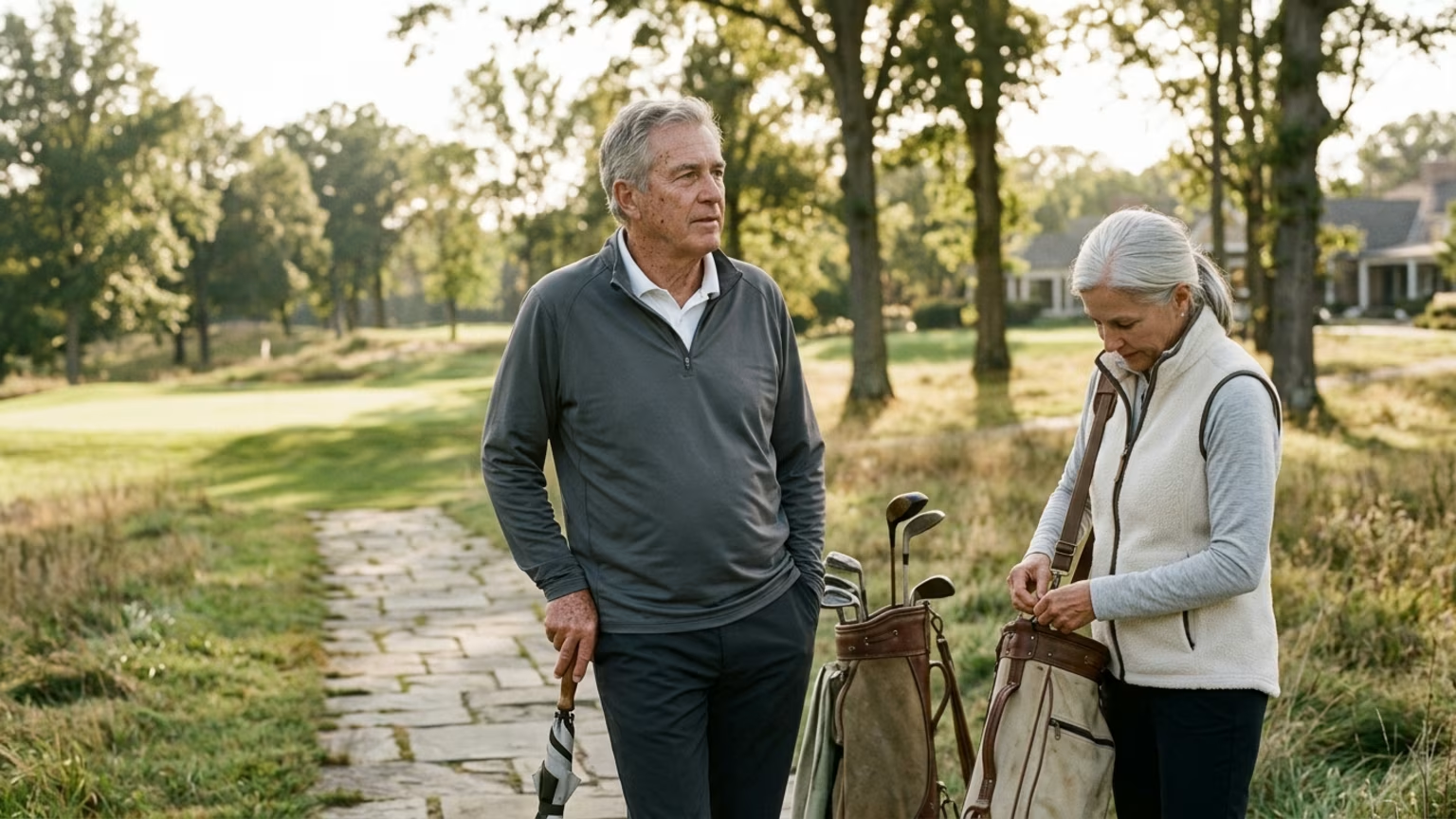

New biomechanical data reveals how specific mobility benchmarks protect older golfers from injury while directly lowering their handicap and extending healthspan.




Mobility is not merely the passive ability to bend over and touch your toes. It is the active capacity of your joints to control rotational force under the intense stress of a golf swing. For decades, amateur players have chased clubhead speed by hitting thousands of golf balls with sheer brute strength. However, new data proves that maintaining your joint health is the true secret to outlasting your peers on the course.
Many players misunderstand the difference between flexibility and mobility when trying to improve their game. Flexibility is simply how far you can passively stretch a muscle in a static position. Mobility requires strength, coordination, and the ability to stabilize that joint dynamically. Transitioning your focus toward this active control is the first step toward a sustainable swing.
A few years ago, I noticed my swing falling apart around the 14th hole. My lower back would tighten up, and I started compensating with my arms. I spent months thinking it was a swing flaw. It was not until I started a simple evening hip mobility routine that I realized my glutes were just turning off from fatigue.
Fixing that one physical limitation brought my back nine scores down drastically. When your lower body lacks the internal rotation needed to store energy, your mechanics break down. Your body eventually forces a fake turn to complete the motion. This often looks like a sway or a slide away from the target during your backswing.
You might get away with a sway on the first tee by relying on pure upper body effort. By the final few holes, that shear force on your lower spine catches up with you. Biomechanical experts point out that the hands and arms are merely the transmission system. The legs and hips act as the true engine of the golf swing.
When that engine loses its range of motion, the kinetic chain breaks down completely. Energy cannot transfer efficiently from the ground up, placing immense stress on your smaller joints. The resulting loss of power is entirely physical, not technical. Addressing these root causes prevents long-term joint damage.
As a golfer passes the age of 40, physical resilience naturally begins to change. Hours spent sitting at a desk directly restrict the hip flexors and stiffen the thoracic spine. Passive flexibility decreases, making it harder to reach the required positions for an efficient strike. Attempting a high-power swing without meeting minimum range requirements leads directly to injurious compensations.
When the hips cannot rotate fully, the body forces the torso to over-rotate. If neck mobility is restricted, players will often lift their posture to keep their eyes on the ball. Simply trying to turn more without adequate internal hip rotation leads right into the sway trap. This mechanical flaw decreases your power and significantly increases the stress on your lower back.
The golf fitness industry is moving away from purely aesthetic goals toward functional longevity. This shift prioritizes extending the period of life spent in good health through low-impact rotational sports. Modern coaching increasingly focuses on identifying physical deficits early through simple movement screening. This vital step helps players catch physical limitations before they lead to a steep swing.
Recent findings from The R&A provide a compelling argument for maintaining your physical condition. Research from The R&A suggests that regular golfers enjoy a five-year increase in life expectancy compared to the general population. According to the report, golfers also face a 40 percent lower risk of death than non-golfers. This impressive statistic holds true even after accounting for socioeconomic factors like age and income.
Data from a major study of 300,000 Swedish golfers reveals another fascinating trend. This research indicates that players with lower handicaps often have lower mortality rates than those with higher handicaps. Geriatric researchers view the rotational movement, balance, and coordination required by golf as potent anti-frailty activities. These physical demands actively help maintain independence in older adults by preventing debilitating falls.
To maintain an efficient swing, biomechanical blueprints outline very specific physical requirements. A golfer needs approximately 45 degrees of hip rotation to avoid power-sapping compensations. You also need 80 degrees of neck rotation on both sides to track the ball comfortably. Finally, players require 90 degrees of external rotation in the lead arm to complete a fluid backswing.
Performance coaches are quick to distinguish between passive flexibility and active mobility. True mobility is the ability to control and stabilize a joint through its entire range under load. You do not need to spend hours in the gym to maintain these vital benchmarks. A study published in the Journal of Strength and Conditioning Research found promising results for recreational players.
Golfers in the 40 to 60 age bracket showed measurable improvements in mechanics after just eight weeks of training. Structured programs focused on joint control yield better long-term ball velocity than maximum effort speed training. Start by taking time to audit your rotation with a very simple practice drill. Place one alignment stick through your belt loops and hold a second stick across your chest.
Focus entirely on turning your trail hip during a slow, simulated backswing motion. You want to verify that your hips and shoulders are rotating independently rather than sliding laterally. Next, work to maintain internal rotation in that trail hip to store elastic energy properly. Do not force a restricted hip to turn further than it comfortably can.
You can also incorporate seated twists to counteract the upper body stiffness caused by sitting. Small, targeted injury prevention routines add up to significant changes over time. Many players find success by adding lunges with hip flexor stretches to their morning routine. This directly addresses the tension that limits your rotational capacity on the course.
It allows you to build a reliable, repeatable motion that prioritizes recovery over temporary speed gains. A commitment to daily movement preparation is the surest path to lowering your scores.
Protecting your rotational capacity transforms physical maintenance into a quiet guarantee of playing better for longer.
Follow Golfergy for practical insights on performance, mobility, recovery and healthy ageing. Stay connected for new articles, research-led guidance and ideas to help you play better for longer.


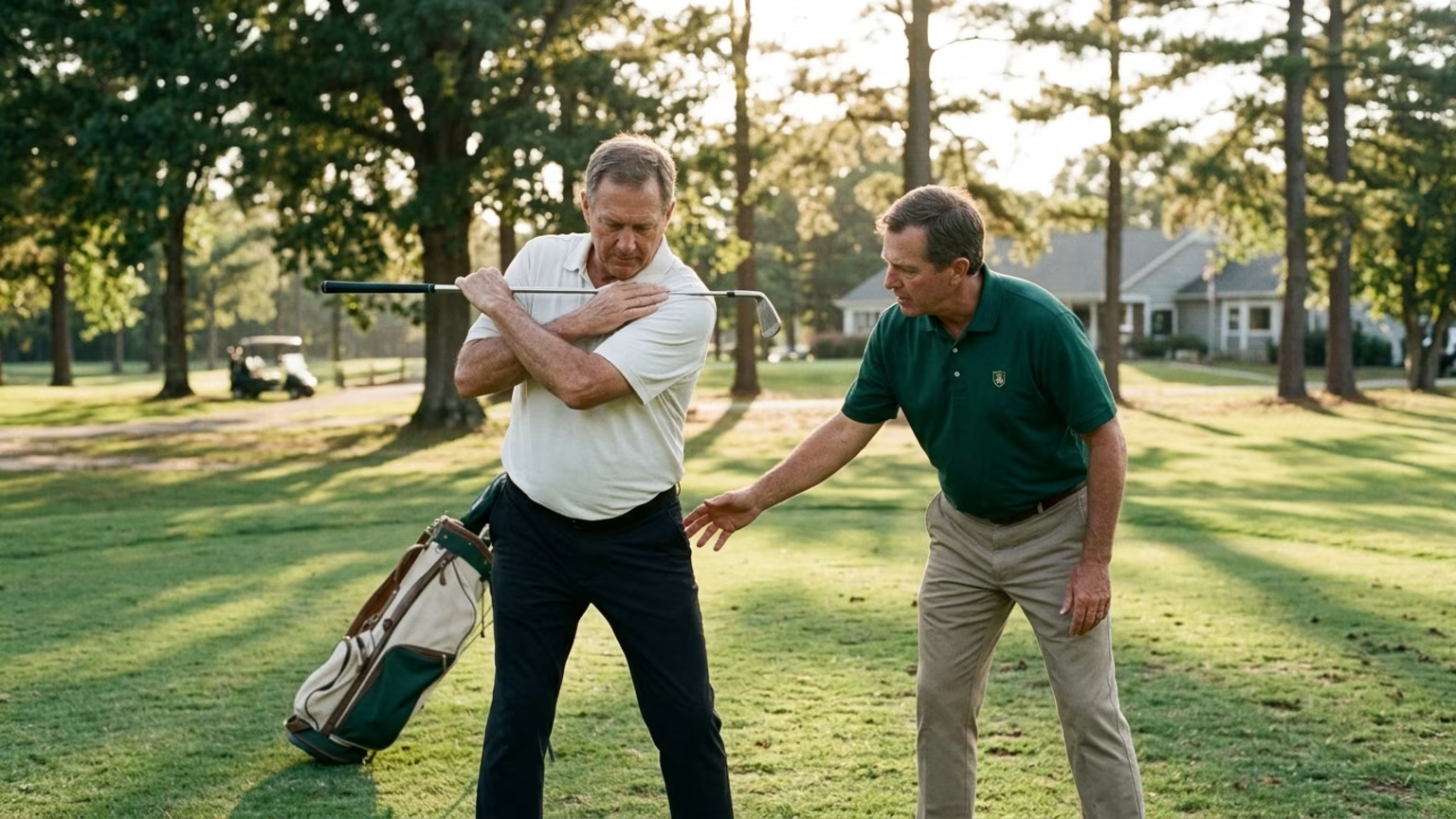
See why a useful golf turn is about available movement and control, with practical questions for golfers over 40 and 50.

Keep everyday movement separate from golf preparation, with practical habits for desk and travel days plus a clear look at warm-up evidence.

Understand how hips, trunk and shoulders share a golf turn, with gentle ways to notice restrictions and work within a comfortable range.
Explore practical resources on performance, recovery, mobility and golf longevity.
Read the Blog


