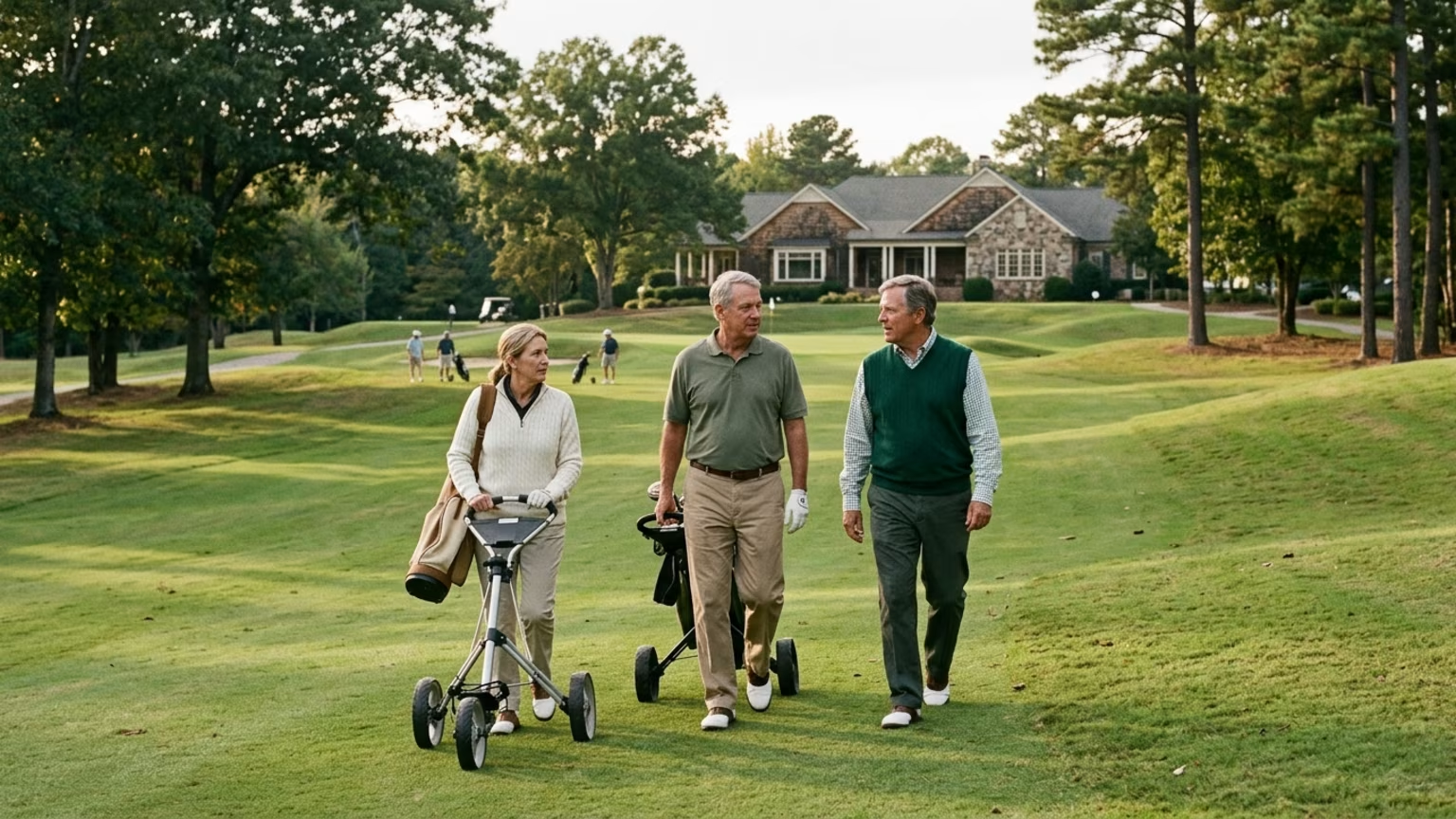

New research reveals how voluntary leisure activity impacts dementia risk in older adults. Learn how to balance movement to protect your golf game and brain.




You just finished a grueling, sweaty 18 holes in July, and now your lower back is barking as you order a drink at the clubhouse. You sit there rubbing your stiff hips. The soreness is a real and immediate problem. The long-term physical benefits of that round might extend far beyond your final scorecard.
For older players, the conversation around golf longevity often focuses entirely on physical metrics like swing speed or joint health. We rarely stop to consider how our weekly routines impact our cognitive longevity. A recent shift in scientific understanding shows that the context of our movement matters tremendously. The right type of physical activity can help you maintain your independence for years to come.
Older golfers often face a balancing act between two distinct types of physical exertion. On one side is voluntary recreational movement like walking the course or hitting the gym. On the other side is compulsory movement like physical labor at work or a stressful active commute. You might assume all these forms of exercise offer identical benefits for healthy ageing.
A systematic review and meta-analysis published in The Lancet Public Health tested that exact idea. Researchers examined the relationship between physical activity and dementia risk across different domains of daily life. They analyzed 74 cohort or case-control studies involving 4,227,297 adults. The participants had a median age of 67.3 years and were tracked for a median follow-up period of 10 years.
Most of the included studies came from high-income countries, accounting for 69 of the 74 studies, or 93%. The authors reported that higher physical-activity levels overall were associated with lower risks of all-cause dementia, Alzheimer’s disease, and vascular dementia. The specific outcomes depend heavily on why you are moving and how much control you have over the intensity. Managing this balance becomes crucial when approaching the aging shift in physical capacity for older golfers.
Leisure-time physical activity represents the first option in this movement comparison. This category includes voluntary activities like playing golf, swimming, or home-based strength training. The meta-analysis found that higher leisure-time physical activity was associated with a relative risk of 0.76 for all-cause dementia. That figure equates to an approximately 24% lower risk association.
Household physical activity also fell into a similar category of voluntary movement. The researchers noted that household activity was associated with a 15% lower relative risk, though that specific estimate came from only one study. For golfers wanting to play better for longer, this research strongly supports the value of recreational exercise. Voluntary movement allows you to control your pace and manage physical wear-and-tear effectively.
This type of activity supports joint longevity because you can simply stop when your body needs rest. A 2026 systematic review on exercise dose and cognitive ageing offers additional perspective on this topic. It reported that evidence was more robust for global cognition than for individual cognitive domains. The effects on specific domains were small, heterogeneous, and statistically uncertain.
Recreational golf provides a great way to accumulate leisure-time physical activity in a social environment. The drawback for older joints only appears when you play too frequently without adequate rest. A standard round of golf requires repetitive rotational power and long periods of walking. Your spine and knees need time to recover between rounds to avoid chronic stiffness, making a smart weekly recovery budget plan vital.
Golfers need to understand that the benefits of leisure activity depend on proper rest. When you walk an 18-hole round, you accumulate a massive amount of low-intensity cardiovascular work. Your muscles sustain micro-tears during those powerful rotational swings on the tee box. Voluntary activity gives you the freedom to sleep and recover fully before the next session.
This recovery window is where the actual physical adaptation takes place. Your body repairs those micro-tears to make your muscles stronger and more resilient for future rounds. A balanced approach to leisure activity prevents the chronic inflammation that often accelerates joint aging. Taking a full day off after a tough round is a smart strategy for long-term physical health.
The second option in this movement comparison involves occupational and commuting physical activity. This type of movement includes demanding physical jobs, prolonged standing, or repetitive heavy lifting. The pattern found in the meta-analysis reversed entirely for occupational activity. Higher levels were associated with a relative risk of 1.20 for all-cause dementia, representing an approximately 20% higher risk.
Commuting physical activity showed a parallel trend in the data. The analysis of two studies found a modest association between higher commuting activity and increased dementia risk, with a reported relative risk of 1.10. This physical strain differs fundamentally from a voluntary round of golf. Compulsory work limits your autonomy and often prevents proper physical recovery between shifts.
When you perform physical labor for a living, you cannot simply skip a day when your back feels stiff. This relentless physical demand creates structural wear-and-tear that directly impacts your golf swing mechanics. Tired muscles provide less support to aging joints, leading to a higher risk of injury on the course. The lack of recovery time makes it exceptionally difficult to maintain functional strength over a full season.
The researchers suggested that occupational settings often involve workplace stress and limited recovery options. This compulsory movement does not offer the same brain-protective associations as a relaxed afternoon on the fairways. Managing this workload is critical for golfers who still navigate demanding daily jobs, requiring you to balance compulsory fatigue with targeted mobility routines. Readers can use a longevity scorecard of functional capacities to track their resilience against this daily strain.
The physical demands of occupational movement rarely align with healthy movement patterns. A worker might spend eight hours standing on a hard concrete floor with poor posture. This constant compression on the spine accelerates disc wear without providing any muscular benefit. The body remains trapped in a state of high physical stress for prolonged periods.
This lack of physical autonomy creates a compounding effect on older adults. Your nervous system stays locked in a heightened state of alertness during stressful work shifts. High occupational strain leaves your muscles depleted by the time you reach the weekend tee box. This physical depletion is exactly why a strenuous job makes it harder to maintain a fluid, powerful golf swing.
You must evaluate which type of movement truly helps you maintain your mobility and long-term health. The leisure-time approach clearly provides a better pathway for sustaining golf performance. Voluntary activity allows you to build strength safely without overloading your connective tissues. You can focus entirely on turning your trail hip during a practice swing without the pressure of a workplace deadline.
It is vital to view the scientific evidence with a balanced perspective. Only 40 of the 74 included studies, or 54%, were rated moderate or high quality. The estimates varied substantially between studies in the analysis. The certainty of evidence ranged from very low to low across all activity domains.
The study supports recreational physical activity in general, but it did not provide a golf-specific dementia-risk estimate. You should not assume that playing a certain number of rounds will guarantee cognitive protection. Reverse causality is another possibility to keep in mind, as people in the early stages of cognitive decline might simply reduce their leisure activity before receiving a formal diagnosis.
Your goal should be to accumulate enjoyable movement that does not systematically break down your body. You can combine a few rounds of golf with structured home workouts to build physical resilience. Readers with cardiovascular disease, significant joint pain, or a history of falls should obtain individualized medical advice before increasing activity. Focusing on sustainable leisure activity keeps you fit for the back nine, and understanding your durability baseline and physical capacities provides a great starting point.
We cannot guarantee that any specific golf routine will completely prevent cognitive decline. The research points to a promising association between voluntary physical activity and a healthier aging process. Managing your total weekly workload is the true secret to longevity on the course. You have to monitor the physical strain from compulsory daily tasks and balance it with restorative movement.
Choose occupational load management for surviving acute daily fatigue, and prioritize consistent leisure-time activity for long-term physical and cognitive resilience.
At Golfergy, we know that playing better for longer requires making smart choices both on and off the course. Keep your movement enjoyable, protect your recovery time, and your body will be ready for the first tee tomorrow.
Follow Golfergy for practical insights on performance, mobility, recovery and healthy ageing. Stay connected for new articles, research-led guidance and ideas to help you play better for longer.


A practical strength framework for golfers over 40, built around everyday goals, sensible progression and a careful look at limited golf research.


A research-led look at strength, balance, mobility and trunk control, with a flexible planning framework for golfers over 40.
Understand golf mobility after 40 with a comfortable-turn self-check, hip and shoulder guidance, and a clear look at flexibility and swing speed.
Explore practical resources on performance, recovery, mobility and golf longevity.
Read the Blog


