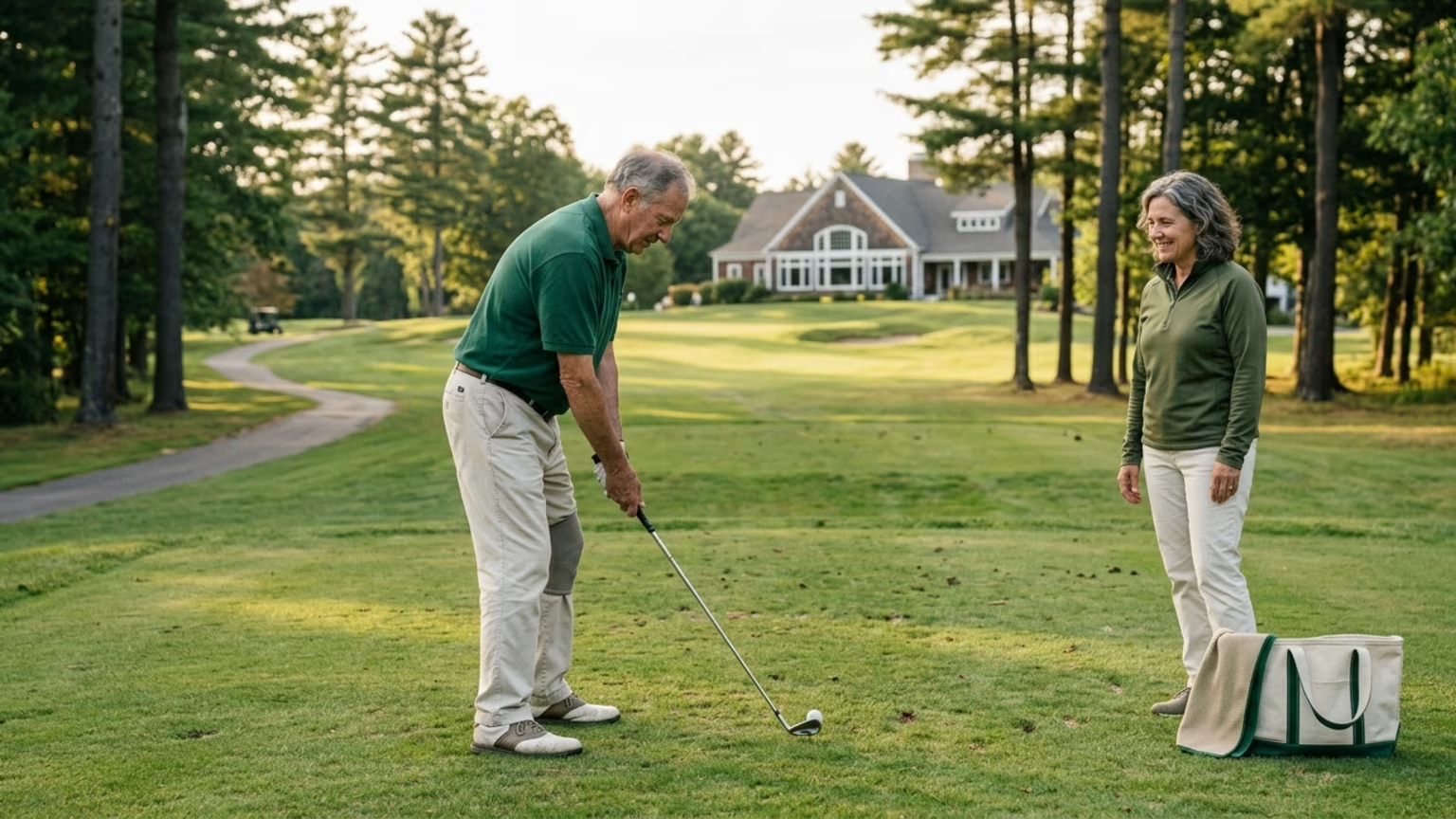

Learn how experienced golfers over 40 manage lumbar spinal stenosis safely through guided swing modifications, structured conditioning, and walking adjustments.




On September 20, 2026, Biology Insights published a clinical review examining whether golfers with lumbar spinal stenosis can safely continue playing. The publication reviewed current evidence and outlined how older players manage the condition on the course. Rather than forcing golfers to quit entirely, the findings suggest that many players can continue teeing it up. They must use individualized accommodations rather than simply tolerating worsening symptoms round after round. The publication recommends working with a clinician familiar with both stenosis and golf.
Spinal stenosis involves a narrowing of the spaces within your spine. This narrowing can compress the nerves that travel through your lower back into your legs. The condition often produces severe leg pain, numbness, or weakness in older adults. These symptoms are typically aggravated by upright standing or leaning backward for long periods.
You might find momentary relief when sitting down or leaning forward over a putter. The golf swing places massive stress on a vulnerable lower back. Biology Insights notes several golf-specific movements that can irritate lumbar stenosis. These specific triggers include high spinal compression, heavy shear forces, rapid lateral bending, and intense rotation.
Lumbar extension is particularly stressful for an aging spine. This extension happens when you lean back during the follow-through and create a reverse C posture. Walking up and down hills over 18 holes also adds cumulative standing time. This sustained upright posture can trigger lasting nerve symptoms long after you leave the course.
The strongest evidence for managing this condition comes from a massive systematic review of exercise interventions. The review analyzed 13 trials involving 1,440 total participants. The mean age of the participants was 65, and women made up 56 percent of the group. Researchers evaluated 23 different exercise interventions to see what actually helped older adults stay active.
The results provide a grounded look at how difficult it is to treat stenosis. Only eight of the 23 interventions produced a statistically significant improvement in at least one selected outcome. The remaining 15 interventions did not show significant physical benefits. Most of the successful programs lasted between three and 11 weeks of consistent work.
Supervised exercise appeared in 18 of the 23 total programs. Aerobic fitness work like walking or cycling also featured in 18 of them. Lumbar-flexion or lordosis-reducing exercise appeared in 17 of the 23 programs. Stretching and trunk-muscle strengthening appeared in seven of the eight successful interventions.
Nearly all the programs were performed at least twice a week. Fourteen of the groups used training sessions lasting 30 to 60 minutes. Cycling showed up in five of the eight successful groups compared to just two of the unsuccessful ones. Researchers cautioned that no single component could be confidently linked to better physical function on its own.
The review found substantial variation in exercise content, trial duration, and reporting quality. The findings should guide discussions with your clinician rather than prescribing a universal golf routine.
The saddest thing we see in golf is watching lifelong playing partners slowly drop out of our weekend group. It usually starts with a nagging lower back or knee issue they ignore. They try to play through the stiffness until it requires major surgery. We do not have to stop playing as we age, provided we do the right maintenance work between rounds.
Golfers over 40 face a massive risk for lower back injuries while swinging slower than touring professionals. Aging spines naturally undergo wear and tear over decades of daily activity. As we get older, we also tend to lose rotational mobility in our hips and our mid-back. When your hips stop turning easily, your lower back takes on the heavy job.
The lumbar spine is not designed to rotate extensively. When a stiff older golfer tries to make a huge shoulder turn, the lower spine absorbs brutal twisting forces. This forced rotation combines with the heavy compression of swinging a golf club at speed.
For a player who already has minor spinal narrowing, this creates a perfect recipe for nerve irritation. This makes how to master pelvic rotation for a safer swing after 40 a critical concept for experienced players.
You can make practical changes to your swing and routine to reduce spinal stress. Biology Insights recommends working with a professional to test a shorter backswing and a wider stance. They also advise using a hip-driven rotation rather than twisting your lower back.
You should aim for a more upright finish that avoids a hyperextended, arched posture. Many players find that how to preserve clubhead speed without swinging harder aligns perfectly with these safer swing modifications.
Managing your walking exposure is another critical adjustment for your back. A tournament-golf study cited by Biology Insights reported that walking players log roughly 17,000 steps. Cart riders only record about 6,300 steps during the same round. Using a buggy or playing a flatter nine-hole course can drastically reduce your cumulative standing time.
Walkers use nearly twice as much energy, so taking a cart might help save your spine. Your warm-up routine also needs a complete overhaul to prevent injury. Biology Insights suggests approximately 10 minutes of gradual activity before you touch a golf ball. Start with easy walking or cycling to warm up your muscles.
Then move into gentle trunk rotations and hip hinges before taking progressively fuller practice swings. Focus entirely on turning your trail hip instead of aggressively twisting your spine. You must also know when to stop playing entirely and seek professional help. Progressive leg weakness, persistent numbness, or a new clumsiness in your arms requires immediate medical evaluation.
If your pain is no longer relieved by resting, you need to call a doctor right away. Loss of bladder or bowel control is a medical emergency and means you must stop playing immediately.
A common misconception is that doing more core exercises will automatically fix your back pain. Trunk strengthening appeared frequently in the successful interventions from the systematic review. The review did not identify a universally effective exercise for every golfer. The evidence showed that structured exercise helps function broadly, but it is not a guaranteed cure.
Another mistake is assuming that any lower back stiffness means your spinal stenosis is getting worse. Biology Insights distinguishes between mild stiffness that resolves within a day and symptoms suggesting worsening nerve compression. You can use your next-day recovery as feedback on your recent workload. If symptoms remain worse for days, you should reduce your hole count and seek professional review.
The publication cites a case report involving a 78-year-old golfer with stenosis. His targeted conditioning and swing-kinematic work allowed him to exercise moderately, walk two miles, and continue playing golf. This single report highlights what is possible with a careful physical therapy plan. It cannot establish that similar conditioning will produce the exact same result in other older golfers.
We want you to keep playing the game you love for as long as possible. Understanding how your body reacts to the golf swing is the first step in avoiding major setbacks. You do not have to accept severe pain as a normal part of getting older. What adjustments will you make to your mobility routine this season to steer clear of this hazard?
Follow Golfergy for practical insights on performance, mobility, recovery and healthy ageing. Stay connected for new articles, research-led guidance and ideas to help you play better for longer.


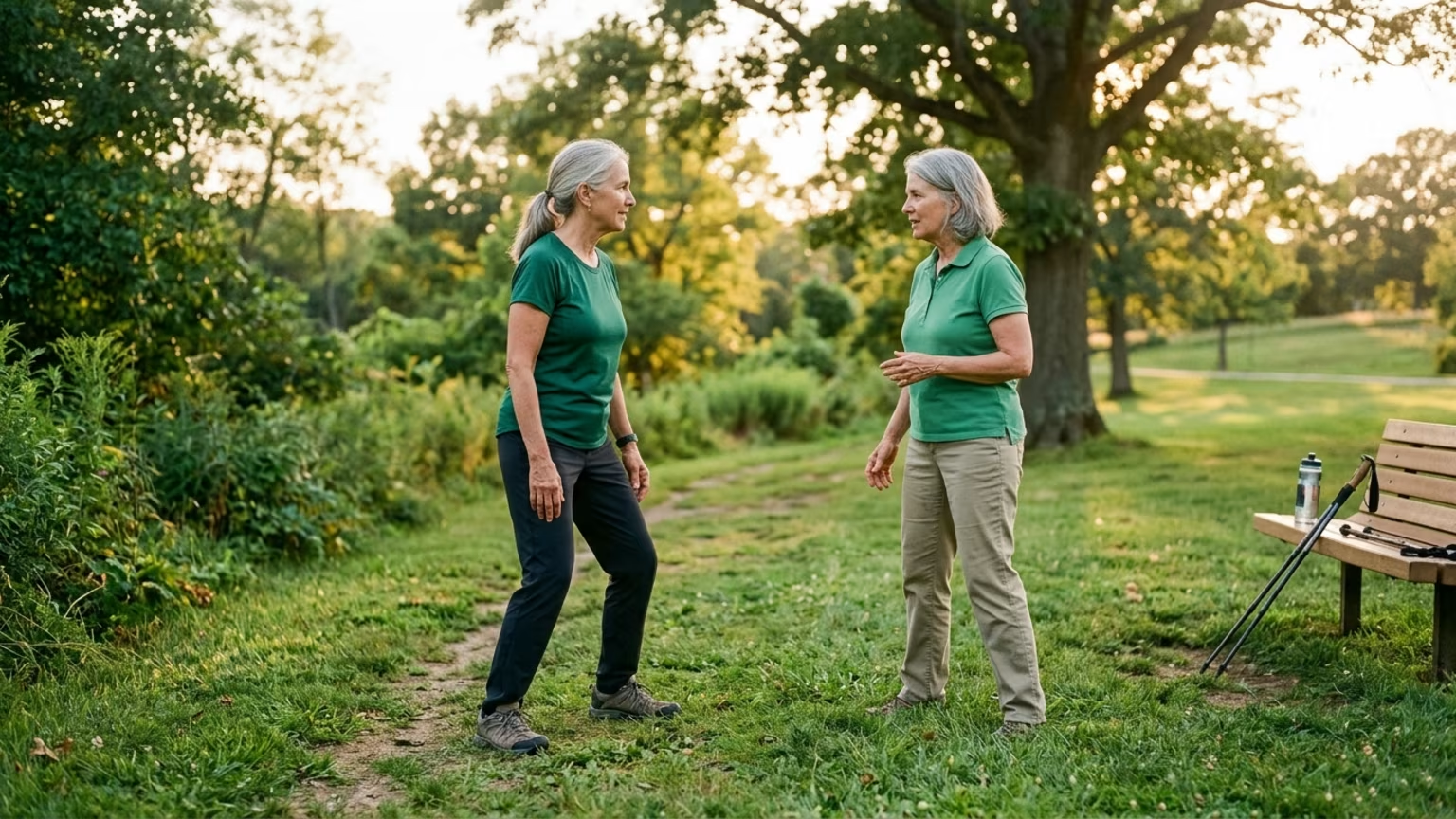
Engaging your quadriceps while putting creates a firm lower body. This simple stance adjustment helps older golfers reduce mechanical back strain on the greens.

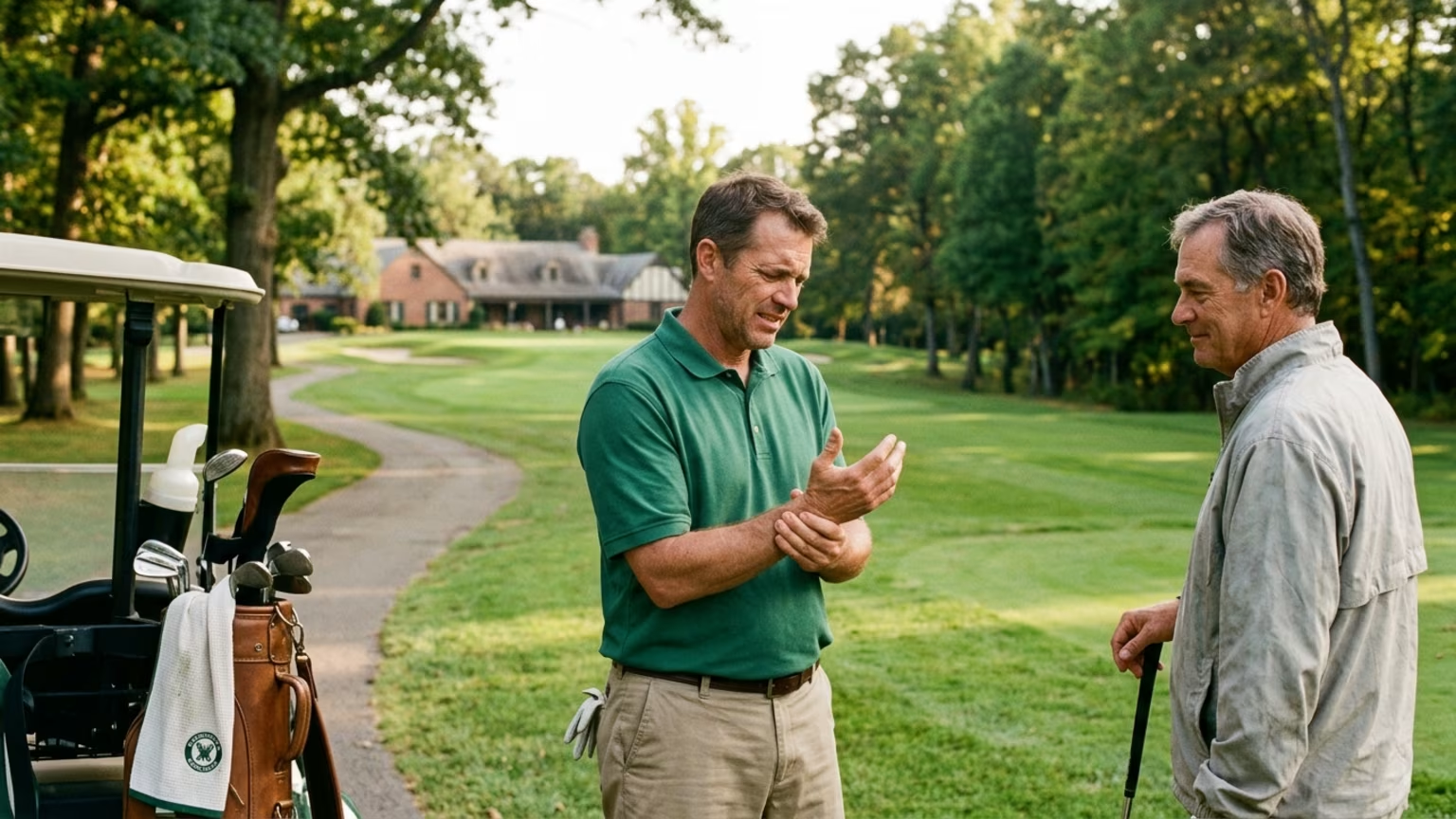
Patrick Reed withdrew from the BMW PGA Championship with a hand injury. Learn why golfers over 40 should never ignore sudden wrist pain on the course.

New clinical guidance urges older golfers to delay returning to the course after cervical nerve compression. Learn the physical markers that signal recovery.
Explore practical resources on performance, recovery, mobility and golf longevity.
Read the Blog