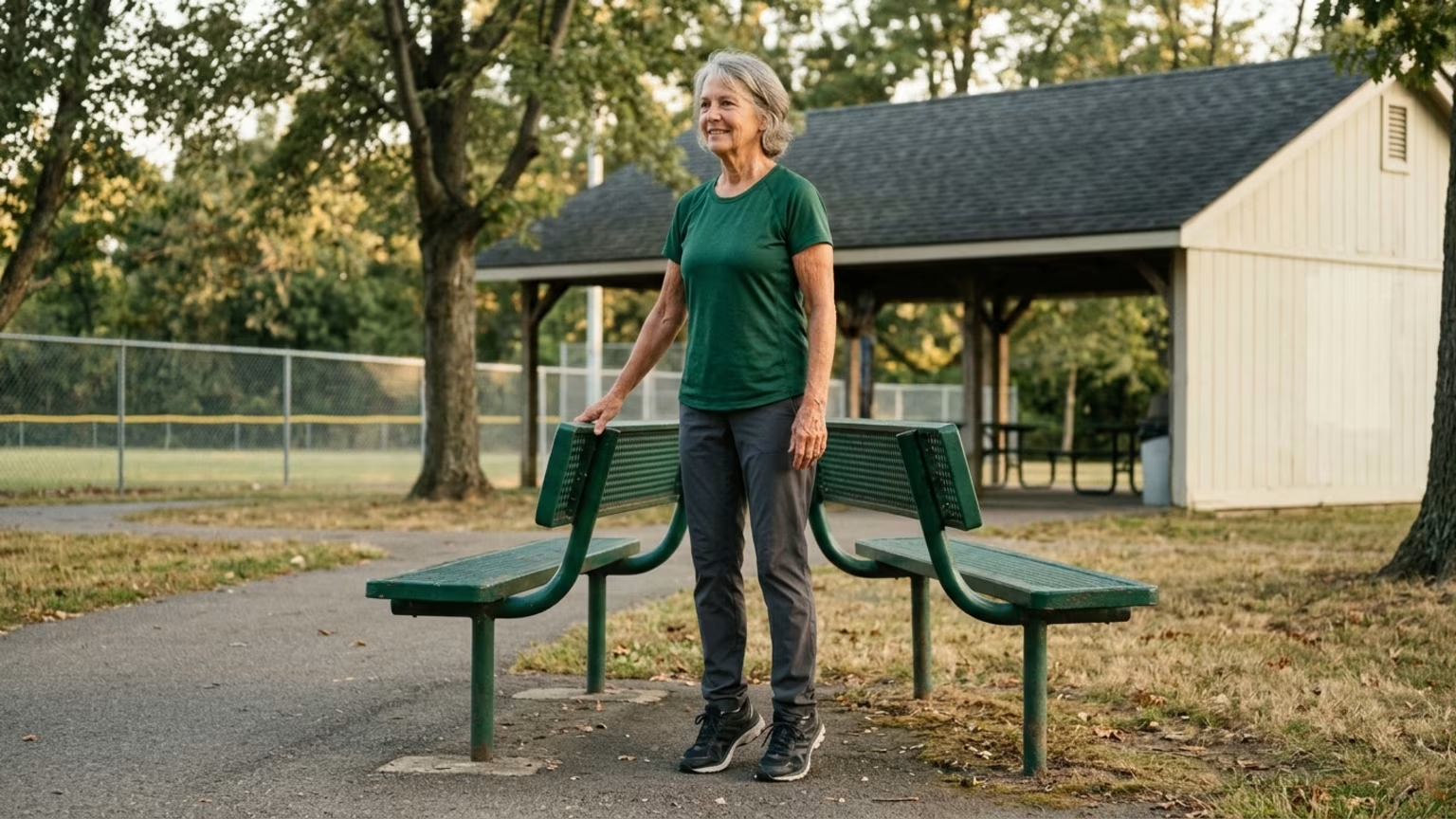

New clinical guidance urges older golfers to delay returning to the course after cervical nerve compression. Learn the physical markers that signal recovery.




On September 17, 2026, Hyunmyoung Neurosurgery Clinic published updated clinical guidance for patients recovering from cervical nerve root compression. The document explicitly places golf and tennis in a high-caution category for returning athletes. These activities involve substantial neck and shoulder rotation and must be delayed until nerve compression has sufficiently decreased. This medical update challenges the common idea that players can safely return to the first tee as soon as their pain fades.
The updated framework aims to protect recreational athletes from long-term neurological damage. It signals a shift away from generic advice that simply tells patients to rest until they feel better. Medical professionals are now urged to evaluate the specific biomechanical demands of the exact sport the patient intends to play. For older players who dedicate their weekends to the fairways, this targeted approach offers a safer pathway back to the game.
Instead, the clinic outlines functional physical markers that dictate when it is actually safe to swing a club again. The guidance was medically reviewed by neurosurgery specialist Kim Sang-hyun. It provides clear criteria for testing strength and range of motion before attempting a full round.
The physical mechanics of a golf swing place massive stress on the cervical spine and surrounding tissues. A player must maintain their head position while violently rotating their torso and shoulders. According to a secondary medical article on golf injury prevention, spinal compression during the golf swing can reach approximately seven to eight times body weight. When a cervical nerve root is compressed, this intense rotational force can severely irritate the vulnerable neck tissues.
A compressed nerve root severely limits the amount of force your neck can safely absorb. When you swing a golf club, your cervical spine acts as the anchor point for your shoulder turn. If the supporting muscles are weakened by nerve irritation, the spinal joints bear the brunt of that massive physical load. This compensation pattern often leads to secondary injuries in the upper back and shoulders.
The Hyunmyoung Neurosurgery Clinic guidance notes that neck extension and rotation toward the symptomatic side can reproduce radiating arm symptoms. This means the exact posture required to look at the golf ball while turning the shoulders can trigger acute discomfort. Swinging a club repeatedly under these conditions prevents the supporting neck muscles from healing properly. This physical reality makes early return to play a significant risk for long-term damage.
The newly published guidance confirms that returning to sport should never follow a fixed timetable or a set number of days. Clinicians are advised to look at nerve root compression, symptom duration, and the physical demands of the intended activity. The central test for readiness is entirely functional rather than purely symptom-based. Medical professionals must check whether arm strength has returned symmetrically between the left and right sides.
For physically demanding activities, the article recommends objective manual strength testing across several specific upper body movements. Clinicians should evaluate arm elevation, wrist flexion, and wrist extension to confirm full motor recovery. They must also test finger abduction and adduction while comparing the results between the left and right sides. If a patient shows weakness or imbalance during these manual tests, the return to the golf course must wait.
Night pain that repeatedly wakes a patient is presented as a major caution signal in the guidance. This specific type of pain indicates that a return to golf is not yet appropriate. The clinic also lists noticeable arm or hand weakness and persistent all-day numbness as reasons for a clinical reassessment. Golfers who frequently drop objects or experience gait instability should seek medical evaluation rather than attempt a self-directed return.
Experienced recreational golfers often assume they are immune to severe neck injuries because they swing slower than tour professionals. However, golfers over 40 actually spend extended time in flexed and rotated postures during practice sessions. They also face uneven lies and repetitive motions that strain the upper spine. These factors explain why older players need a clear plan to transition safely back to the course after an injury.
Weekend golfers routinely take multiple practice swings before executing a shot from thick rough or a steep bunker face. These repetitive motions accumulate significant mechanical stress over an eighteen hole round. Unlike elite athletes with pristine swing mechanics, amateur players frequently use their upper bodies to generate clubhead speed. This swing flaw forces the neck muscles to work overtime and increases the risk of cervical nerve compression.
Older golfers also tend to lose their natural thoracic mobility as they age. When the middle back cannot rotate fully, the neck must twist further to complete the backswing. This compensation places severe, repetitive strain directly on the cervical nerve roots. Restoring mobility to the middle back is a fundamental step in protecting the neck from long-term damage.
The saddest thing I have seen in golf is watching lifelong playing partners slowly drop out of our weekend group. It usually starts with a nagging shoulder or neck issue they ignore until it requires surgery. That pattern is exactly why our team at Golfergy became obsessed with golf longevity. We do not have to stop playing as we age, provided we do the right maintenance work between rounds.
Rehabilitation sources highlight restoring cervical motor control before attempting full sports participation. A guide from Smart PT Academy highlights deep-neck-muscle activation and scapular stabilization as key components of progressive rehabilitation. These targeted movements help build a resilient upper body that can withstand rotational forces. Players should focus entirely on slow and controlled activation during their recovery routines.
Developing a reliable warm-up routine is a critical preventative measure for older players returning from nerve injuries. You must activate your shoulder stabilizers and deep neck muscles before you ever pick up a driver. Gentle resistance band work can stimulate blood flow to the upper back without placing dangerous loads on the cervical spine. Consistent physical preparation helps your nervous system tolerate the rotational demands of the golf swing.
When you do get clearance to play, the Hyunmyoung Neurosurgery Clinic recommends restarting golf at a light intensity. The protocol requires a gradual progression and an immediate reduction in activity if arm symptoms return. You might begin with just a few short wedge shots before attempting full driver swings. Tracking your physical readiness with simple home checks can help you monitor your strength from side to side.
During the initial recovery phase, the guidance describes walking and indoor cycling as relatively suitable activities for earlier resumption. These lower-demand options allow you to maintain cardiovascular fitness because they involve minimal neck movement. By staying active in safer ways, you can protect your physical baseline while your cervical nerves decompress. Knowing how to tell normal muscle soreness from serious joint strain will guide your daily decisions.
Post-round recovery is just as important as your warm-up routine. Applying heat to tight shoulder muscles can help relieve the secondary tension that builds up during a round. Taking time to cool down properly prevents the supporting neck tissues from locking up overnight. A proactive recovery protocol keeps you ready for your next tee time without compounding minor strains.
A common mistake among eager players is assuming that a decrease in pain equals a green light to play. The Hyunmyoung guidance explicitly states that reduced pain alone is not sufficient evidence that a golfer is ready to return. A broader rehabilitation guide from Medicess also states that return to usual activity depends on symptoms and functional capacity rather than a fixed timetable. Relying solely on how you feel can mask underlying weakness in the neck stabilizers.
Another dangerous misconception is that passing a single clinical test grants unrestricted clearance for full sports participation. The guidance recommends reassessment at successive clinical visits rather than granting immediate freedom after one good day. A player might show improved strength during an office visit but lose that stability after ten minutes on the driving range. Gradual exposure to the physical demands of golf is the only proven way to confirm true functional recovery.
Returning too early without passing manual strength tests can trigger serious setbacks on the course. The Medicess guide warns that increasing weakness, neurological deterioration, or possible spinal-cord symptoms warrant prompt reassessment. You might tolerate an easy walk down the fairway but immediately aggravate the nerve during a full swing. This is why separating mid-back rotation from lower spine movement requires a fully functioning central nervous system.
Rebuilding your physical capacity after cervical nerve compression takes patience, discipline, and honest communication with a medical professional. Bypassing functional strength tests in favor of a speedy return usually leads to frustrating re-injury. By respecting your body and focusing on gradual rehabilitation, you can extend your playing years and enjoy the game pain-free. What adjustments will you make to your mobility routine this season to steer clear of this hazard?
Follow Golfergy for practical insights on performance, mobility, recovery and healthy ageing. Stay connected for new articles, research-led guidance and ideas to help you play better for longer.



Learn how osteoporosis changes tennis elbow management for older golfers. We share practical practice and recovery adjustments to protect your tendons and bones.

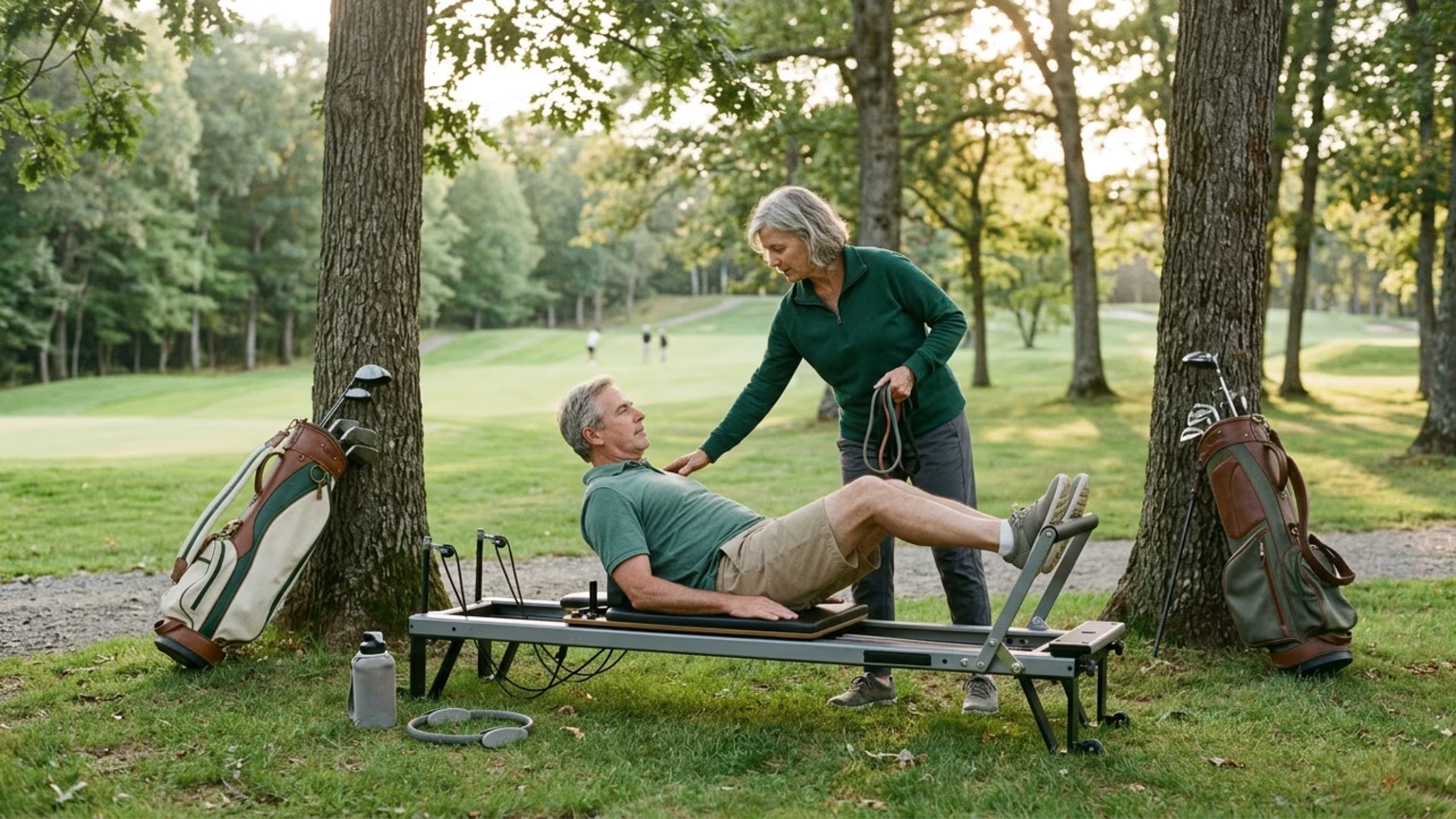
Learn how older golfers can use Pilates Reformer training to manage physical stress, build rotational strength, and protect their lower back from injury.

Motocaddy's electric caddies arrive at the 2027 Molly Collegiate Invitational. Learn why reducing carrying fatigue helps older golfers protect their backs.
Explore practical resources on performance, recovery, mobility and golf longevity.
Read the Blog