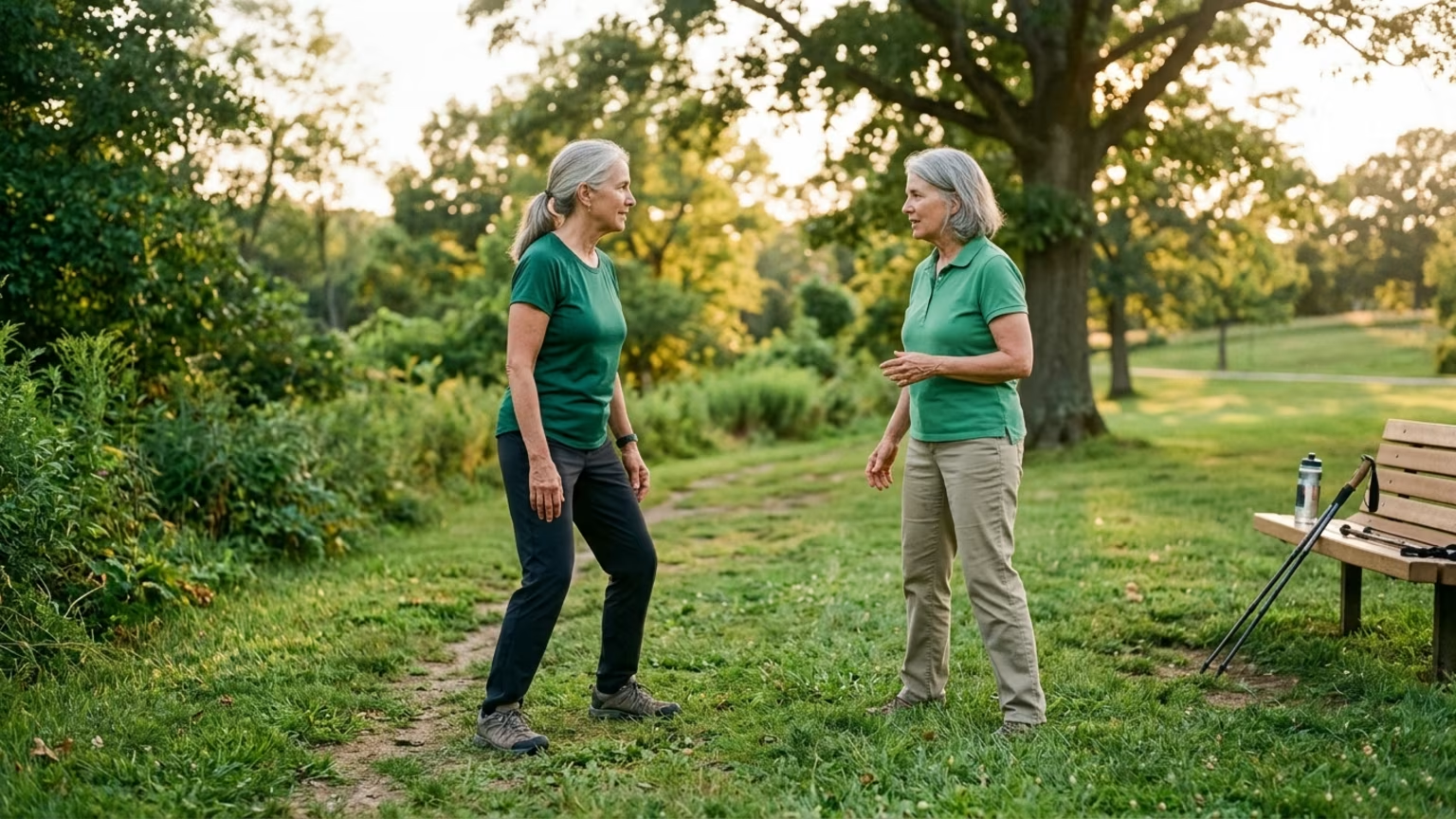

Engaging your quadriceps while putting creates a firm lower body. This simple stance adjustment helps older golfers reduce mechanical back strain on the greens.




On September 20, 2026, The Star published the third installment of a putting series that recommended engaging the quadriceps and maintaining head position. The instructional piece presents three fundamentals that it says can help golfers putt with greater confidence and consistency. This recent publication highlights a practical movement pattern that goes beyond simply sinking more putts. It touches on a postural challenge that affects countless recreational players during their long practice sessions.
The Star frames putting as a critical scoring skill for players of all levels. Lagging long putts close and converting short pressure putts can significantly reduce your total strokes. However, spending extended time hunched over a putter often leads to a stiff lower back. The article outlines how using the legs to support your posture creates a stable lower body that avoids unnecessary compensatory movement.
Putting requires a player to hinge from the hips and hold a static angle over the ball. This sustained forward bend forces the muscles of the lower spine to work continuously against gravity. Without a stable base in the legs, the upper body carries the entire mechanical load. Any small sway in the hips transfers extra rotational stress directly to the vulnerable lumbar joints.
Engaging the quadriceps provides a firm foundation that anchors the pelvis during the stroke. The front thigh muscles act like strong pillars that support the downward weight of the torso. When your legs are completely relaxed, your lower back must tighten dramatically to maintain your balance. Bracing the lower body shifts that physical demand away from your spine and onto your stronger leg muscles.
A quiet lower body also protects the hips from unnecessary lateral movement. When the hips remain steady, the shoulders can rock smoothly without twisting the fragile lumbar spine. This mechanical efficiency is especially helpful during a long session on the practice green. Physical fatigue builds up quickly when you hold a bent posture without active, engaged leg support.
Older golfers often find that standing over the ball for twenty minutes causes more stiffness than walking the course. The stationary nature of putting practice starves the spinal discs of natural movement and healthy blood flow. A relaxed stance might feel comfortable initially, but it slowly places maximum strain on your supporting ligaments. Engaging the lower body actively protects these tissues by keeping the muscular system fully involved.
A summary of a systematic review identifies low-back pain as the golf injury with the highest reported incidence across several golfer populations. The numbers show just how widespread this specific issue is among players of all skill levels. A review cited by LaunchPoint Golf estimated prevalence at about 55 percent among professional golfers and 15 to 35 percent among amateurs. These statistics reveal that spinal discomfort is a universal hazard in the game.
A separate review-oriented golf source provides another perspective on these varying injury rates. It reports that lower-back pain accounts for 18 to 54 percent of documented golf injuries. This wide percentage range depends entirely on how individual studies define and count injuries. Regardless of the exact measurement, the data proves that back strain requires serious attention from older players.
The saddest thing I have seen in golf is watching lifelong playing partners slowly drop out of our weekend group. It usually starts with a nagging shoulder or knee issue they ignore until it requires surgery. That pattern is exactly why I became obsessed with golf longevity. We do not have to stop playing as we age, provided we do the right maintenance work between rounds.
Recreational golfers over 40 face a tremendous risk of lower-back strain. Aging bodies naturally lose rotational flexibility in the hips and the middle back. This stiffness forces the lower back to absorb twisting forces it was never designed to handle. You might swing with much less speed than a tour professional, but your joints still endure high mechanical stress.
Even the low-speed motion of putting can aggravate a vulnerable, stiff spine. A lack of structural balance leaves older players susceptible to overuse discomfort during practice. When the legs do not provide adequate support, the lower back takes over to keep you upright. Players must learn how to build a useful rotation without forcing their back.
The Star recommends stabilizing the lower body by gently engaging the quadriceps during the putting setup. You can test this cue during a short putting session rather than changing your entire stroke at once. Establish a balanced stance, lightly brace your thighs, and observe whether your lower body remains quiet. Focus entirely on feeling a relaxed tension in your legs without creating upper body stiffness.
GolfPass promotes a stable-legs drill designed to quiet excess leg movement and improve balance. The goal is to use stability as a basic comfort check rather than a force-producing objective. Aggressively tightening the legs might create an unhelpful rigidity that ruins your delicate putting touch. You want a firm base that simply keeps your hips from swaying during the stroke.
Begin with short, low-pressure putts to see how your back responds to the new posture. If your stance remains comfortable, you can slowly progress to longer lag putts. This gradual approach aligns with recent golf-injury guidance that recommends beginning with lower-effort shots before progressing to higher-effort shots. You should always condition your body for the back nine through measured, incremental practice habits.
Many players assume that fixing their setup will instantly cure their nagging pain. However, an evidence summary of a 2023 systematic review says the available literature does not conclusively link low-back pain with poor swing technique. Lower-back pain is a complex issue influenced by accumulated load, limited mobility, and outside physical activities. A posture adjustment on the green is a helpful practice cue, but it is not a guaranteed medical cure.
The instructional advice to keep your head down should not be viewed as a rigid rule. Freezing your neck throughout the stroke can create a different type of tension in your upper back. The available reporting does not prove that a perfectly fixed head position reduces lumbar compression. You should aim for a comfortable head posture that simply allows your shoulders to move freely.
If your symptoms increase later that day or the following morning, you should reduce your practice volume. Golfers with persistent pain, radiating symptoms, or numbness must seek assessment from a qualified medical professional. Current golf-rehabilitation programs commonly include hip hinges, step-ups, carries, and core-stability exercises among their suggested components. A proper recovery plan often features a progressive return to play playbook tailored to your specific physical needs.
Recent golf-rehabilitation coverage heavily focuses on hip mobility, trunk control, and progressive loading as components of back-care programs. These recommendations concern broader golf movement and physical rehabilitation rather than just your putting address position. Addressing a sore back requires a comprehensive approach that looks beyond a single mechanical flaw. You should always look closely at your overall conditioning and adjust your golf equipment to reduce joint strain.
Pairing your putting practice with broader physical preparation is the best way to protect your body. Simple technique cues can help you build a safer, more repeatable routine on the practice greens. You must treat these physical adjustments as just one component of your overall longevity strategy. What adjustments will you make to your mobility routine this season to steer clear of this hazard?
Follow Golfergy for practical insights on performance, mobility, recovery and healthy ageing. Stay connected for new articles, research-led guidance and ideas to help you play better for longer.



Learn how experienced golfers over 40 manage lumbar spinal stenosis safely through guided swing modifications, structured conditioning, and walking adjustments.

Patrick Reed withdrew from the BMW PGA Championship with a hand injury. Learn why golfers over 40 should never ignore sudden wrist pain on the course.

New clinical guidance urges older golfers to delay returning to the course after cervical nerve compression. Learn the physical markers that signal recovery.
Explore practical resources on performance, recovery, mobility and golf longevity.
Read the Blog