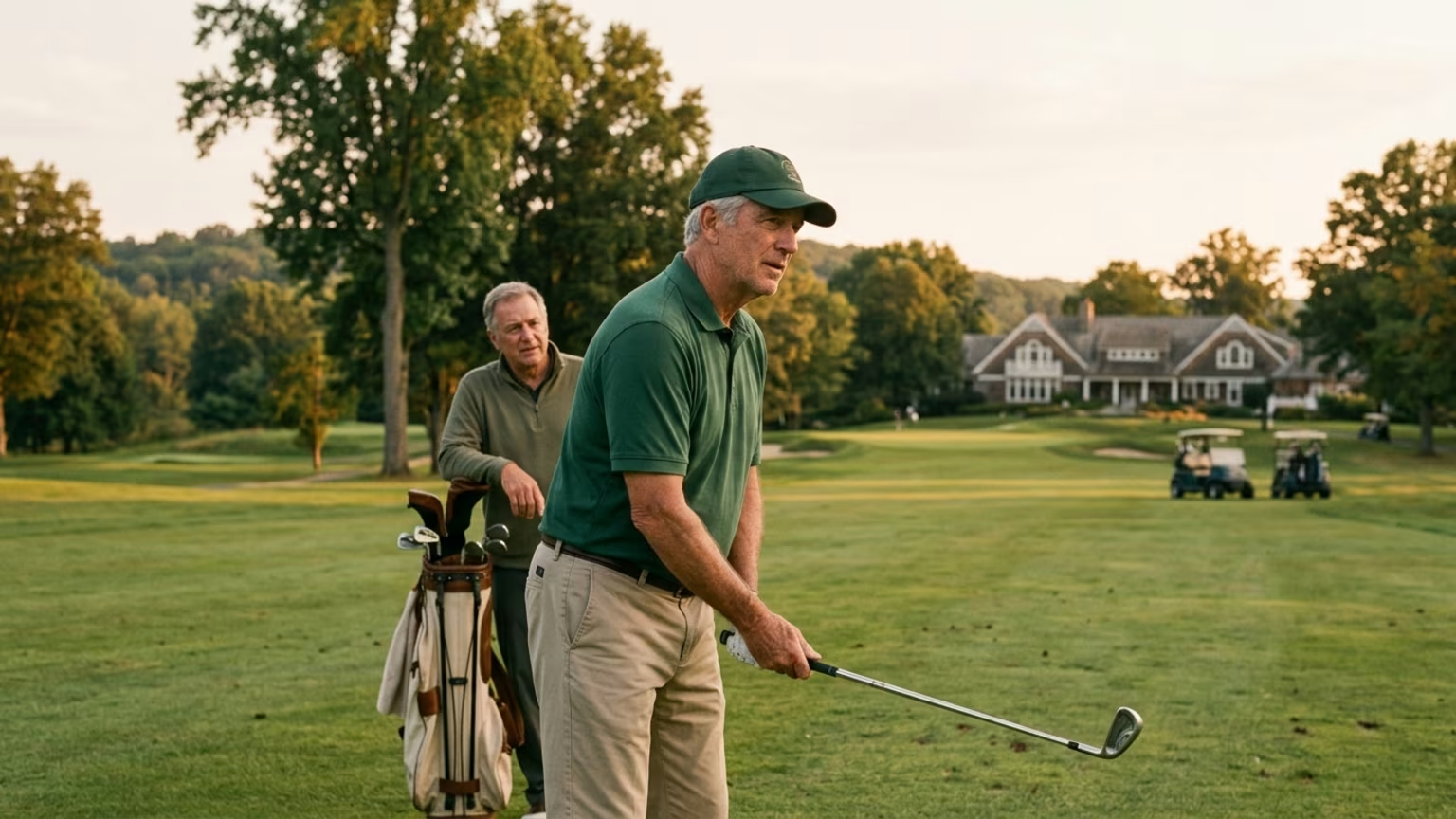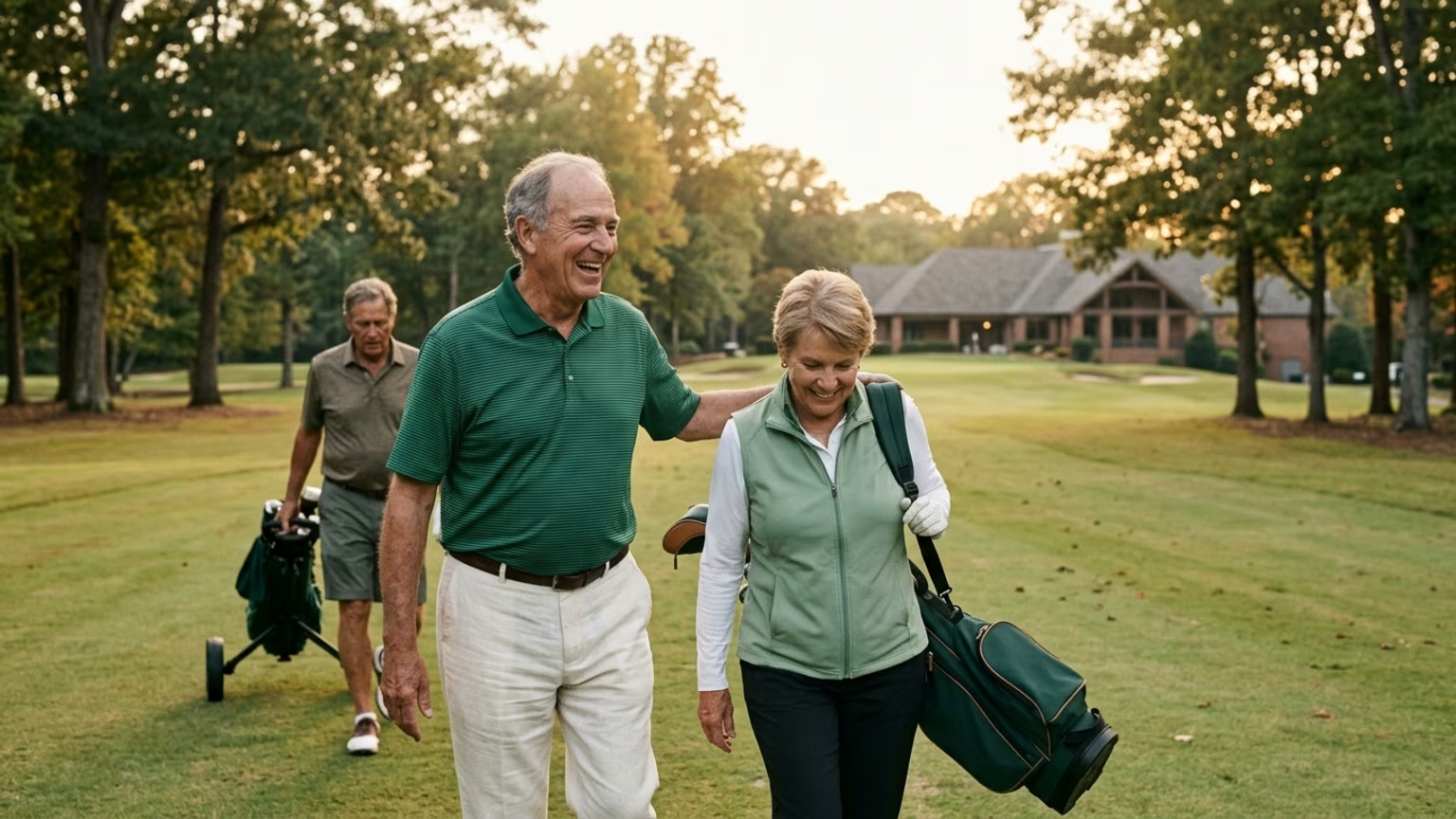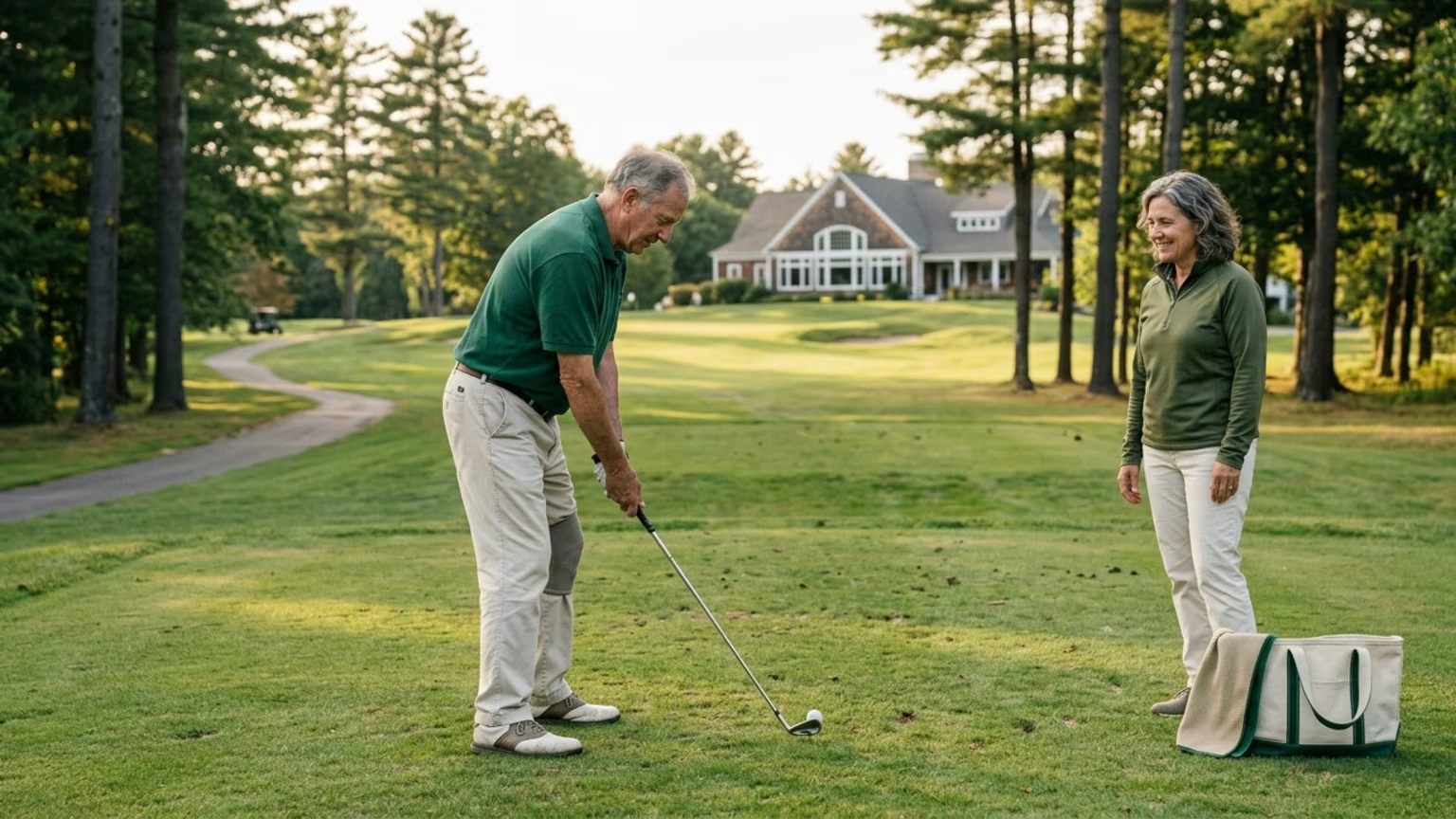

Learn how older golfers can adapt clinical return-to-play guidelines, protect knee joints, and use progressive workload management to play for decades.




In June 2025, 91-year-old competitive swimmer Shoko Yonezawa completed the short-course 200-meter breaststroke in a remarkable time. She finished the race in 4 minutes and 32.36 seconds at a meet in Niigata Prefecture. Reporting from The Japan Times notes that her performance was 13 percent faster than the previous masters world record. Yonezawa broke women’s 90-to-94 age-group world records 29 times that year.
She attributed her success partly to being relatively young within her specific age bracket. Her story gained prominence as government estimates reported significant demographic shifts in the country. Japan’s population aged 65 and over reached 36.24 million in September 2026. This demographic represented a record high 29.6 percent of the total population.
These figures are the highest among countries with populations exceeding 40 million. Later-life activity in Japan extends well beyond organized sport. The country recorded 9.43 million employed people aged 65 and over in 2026. The employment rate was 54.5 percent among those aged 65 to 69.
These statistics highlight a critical reality for aging athletes. The true goal is maintaining the physical capacity to participate for several more decades. Sustained participation matters far more than short bursts of extreme effort.
To understand how aging affects golf performance, we must look at the physical stress the golf swing creates. A 2026 clinical commentary outlines these mechanics clearly when discussing return-to-play protocols. Both knees contribute heavily to force production and balance during the swing. They also manage the rapid deceleration of the body after impact.
The lead knee takes on immense pressure during this motion. It commonly experiences high loading near impact and into the follow-through. When a golfer swings a long club, the joints must manage significant rotational forces. The knee joint must hold firm while the hips and torso turn.
This twisting motion places heavy strain on the structural ligaments inside the knee. The anterior cruciate ligament provides stability during these forceful rotations. If the surrounding muscles fail to support the joint, the ligament absorbs the excess force. Older golfers must manage this stress carefully to preserve their joints over time.
The 2026 clinical commentary provides specific guidelines for returning to golf after knee surgery. The proposed framework begins with 20 to 30 putts or roughly 10 to 15 minutes of putting. Golfers then progress through controlled blocks of chips and pitches. Longer clubs and the driver are introduced much later in the process.
These longer clubs require higher-effort swings that create greater force production and pressure-shift demands. When a practice session is tolerated well, the authors propose strict limits on progression. They recommend increasing the total swing count by approximately 10 swings or 10 to 20 percent. The authors explicitly describe these figures as proposed starting points rather than validated thresholds.
They also recommend at least one recovery day between golf exposures during the first two sessions of a new phase. Players should use next-day symptoms to guide their progression. Increased swelling, loss of motion, or pain lasting beyond 24 hours suggests the previous workload was excessive. This symptom response acts as a practical load management check.
Older recreational golfers often swing slower than tour professionals. However, they still face significant joint risks on the course. Fatigue alters mechanics and increases physical vulnerability during repeated swings. The clinical commentary notes that fatigue can change knee flexion and tibial rotation.
This means the knee bends and twists differently when the muscles are tired. An older golfer chasing an arbitrary ball-count target at the driving range will eventually experience deteriorating technique. This poor technique amplifies the stress on the lead knee and lower back. Older amateurs also struggle when they increase multiple workload variables at once.
Adding more practice days while swinging harder is a recipe for physical breakdown. Without proper load management, fatigue makes the joints far more susceptible to strain. You should end or modify a session when your rhythm or finish position deteriorates. Quality practice must act as your primary volume limiter.
The best way to protect your joints is to change your preparation and practice habits. I used to stand on the first tee doing long static hamstring stretches. I actually felt weaker on my first drive after doing this. Research later showed me that dynamic movements prime the nervous system much better.
Changing my five minute warmup completely transformed my opening tee shots. Golf-specific clinical guidance recommends a progressive warm-up routine for older players. Begin with light activity and move the trunk and hips through comfortable ranges. Progress from short practice swings to larger motions before hitting full shots.
Focus entirely on one small movement at a time, such as turning your trail hip. This focused approach protects the body from sudden physical shock. When building up practice volume, change only one primary workload variable at a time. If you increase your swing count, do not increase your swing effort or club length simultaneously.
You should also separate your hard practice days from your easy recovery days. Golfers can place demanding range sessions on different days from light mobility work. A practical schedule should include short mobility sessions on several non-golf days. These sessions should emphasize comfortable rotation and achieving a balanced address position.
Many older players believe a low handicap means their body is ready for heavy practice. The clinical commentary explicitly states that a handicap is not an adequate clearance criterion for resuming full play. Dosage should reflect baseline clubhead speed, usual practice volume, strength, and movement quality instead. Another mistake is assuming any older adult can copy an elite athlete's routine safely.
Yonezawa’s swimming records are inspiring, but they do not justify copying a 91-year-old swimmer’s specific workload. Some local golf-school pages claim that playing golf lowers mortality risk by roughly 40 percent. These claims often repeat a five-year longevity association without context. The available reporting does not verify those broad claims against an authoritative primary source.
A recent systematic review confirmed that physical training interventions can improve key golf outcomes. However, generic online programs do not replace individualized medical clearance. You should seek assessment from a qualified clinician if you have persistent pain or swelling. Only a professional can provide safe clearance after a significant injury.
Managing your body effectively allows you to enjoy the game well into your later years. Consistency and smart recovery always outperform short bursts of extreme effort. What adjustments will you make to your mobility routine this season to steer clear of this hazard?
Follow Golfergy for practical insights on performance, mobility, recovery and healthy ageing. Stay connected for new articles, research-led guidance and ideas to help you play better for longer.


A 2026 coaching analysis reframes sleep and nutrition as core training variables. Learn why golfers over 40 must prioritize recovery to maintain swing speed.

Flinders University's nutrition guidance provides older golfers a framework to sustain mid-round energy and improve recovery after walking 18 holes.

A review of collagen peptide research shows potential for managing joint pain in golfers. Learn how to combine supplementation with targeted physical loading.
Explore practical resources on performance, recovery, mobility and golf longevity.
Read the Blog