
Patrick Reed withdrew from the BMW PGA Championship with a hand injury. Learn why golfers over 40 should never ignore sudden wrist pain on the course.




Patrick Reed withdrew midway through the second round of the BMW PGA Championship in September 2026. ESPN reported that he was seen flexing his left hand before being driven away. He had hit his drive on the 10th tee before stopping entirely. The flagship European Tour event carried a $9 million Rolex Series purse.
Reed recorded a triple bogey on the par-4 first hole. He then added a double bogey on the par-5 fourth. His struggles continued with another double bogey on the eighth. At the time he stopped playing, Reed was 9 over for the round and 5 over for the tournament.
The circumstances of his exit changed rapidly from the previous day. Reed had been two shots off the lead after opening with a 4-under 68. He was leading the Race to Dubai standings ahead of Rory McIlroy. ESPN reported that Reed had won the Dubai Desert Classic and Qatar Masters earlier in 2026.
Instead of continuing his round, he left the course with a reported hand injury. The available reports confirmed an injury withdrawal but did not disclose a detailed diagnosis.
The Golf News Net reported that Reed appeared to hurt his wrist after a shot from deep rough near a tree root on the ninth hole. The lead wrist acts as a primary hinge during a golf swing. It must withstand tremendous force when the clubhead meets resistance. Hitting from heavy cover places massive stress on the joints.
When a club strikes thick grass or a solid object, the shaft stops moving instantly. The energy from the swing travels up the shaft and into the hands. The small bones and ligaments of the wrist absorb this sudden shock. These tissues have a limited capacity to handle abrupt deceleration.
The wrist joint relies on a complex network of tiny ligaments. When these ligaments stretch suddenly, they lose their ability to stabilize the hand. The clubface can twist violently when hitting from deep rough. That twisting motion creates unnatural torque on the fragile wrist bones.
Pain is the body attempting to prevent a complete structural failure. Recognizing pain as a mechanical warning sign is critical. When the lead wrist flexes forcefully against resistance, micro-tears can occur in the supportive tissues. Pushing through that type of pain often turns a minor strain into a severe problem.
A damaged ligament cannot provide the stability needed for a functional golf swing. Continuing to hit golf balls with a compromised wrist forces other muscles to compensate. This chain reaction often leads to secondary injuries in the elbow or shoulder. Ignoring the initial discomfort usually guarantees a longer recovery period.
The saddest thing I have seen in golf is watching lifelong playing partners slowly drop out of our weekend group. It usually starts with a nagging shoulder or knee issue they ignore until it requires surgery. That pattern is exactly why I became obsessed with golf longevity. We do not have to stop playing as we age, provided we do the right maintenance work between rounds.
Recreational golfers face a high risk of hand injuries on the course. We swing with less speed than touring professionals. Our aging joints still absorb the same violent shocks when we hit poor lies. A single heavy strike in the rough can overload a mature wrist easily.
Our connective tissues lose their natural elasticity over time. Older players often fall into a stubborn mindset on the course. We want to prove we can still grind through a tough situation. Avoiding the weekend warrior trap is critical for preventing long-term damage.
The pressure of a friendly bet should never override your physical limits. Many players convince themselves that pain is just normal soreness. A sudden loss of grip strength is a direct warning sign that something is wrong. Players who try to force their way through a round often cause further damage.
Finding a balanced approach to adapting your game to a changing body is a much better strategy. We need to accept that acute joint pain is a reason to stop playing. Mature golfers must become highly tuned to their physical feedback. Ignoring a sharp shock in the hands is a recipe for a ruined season.
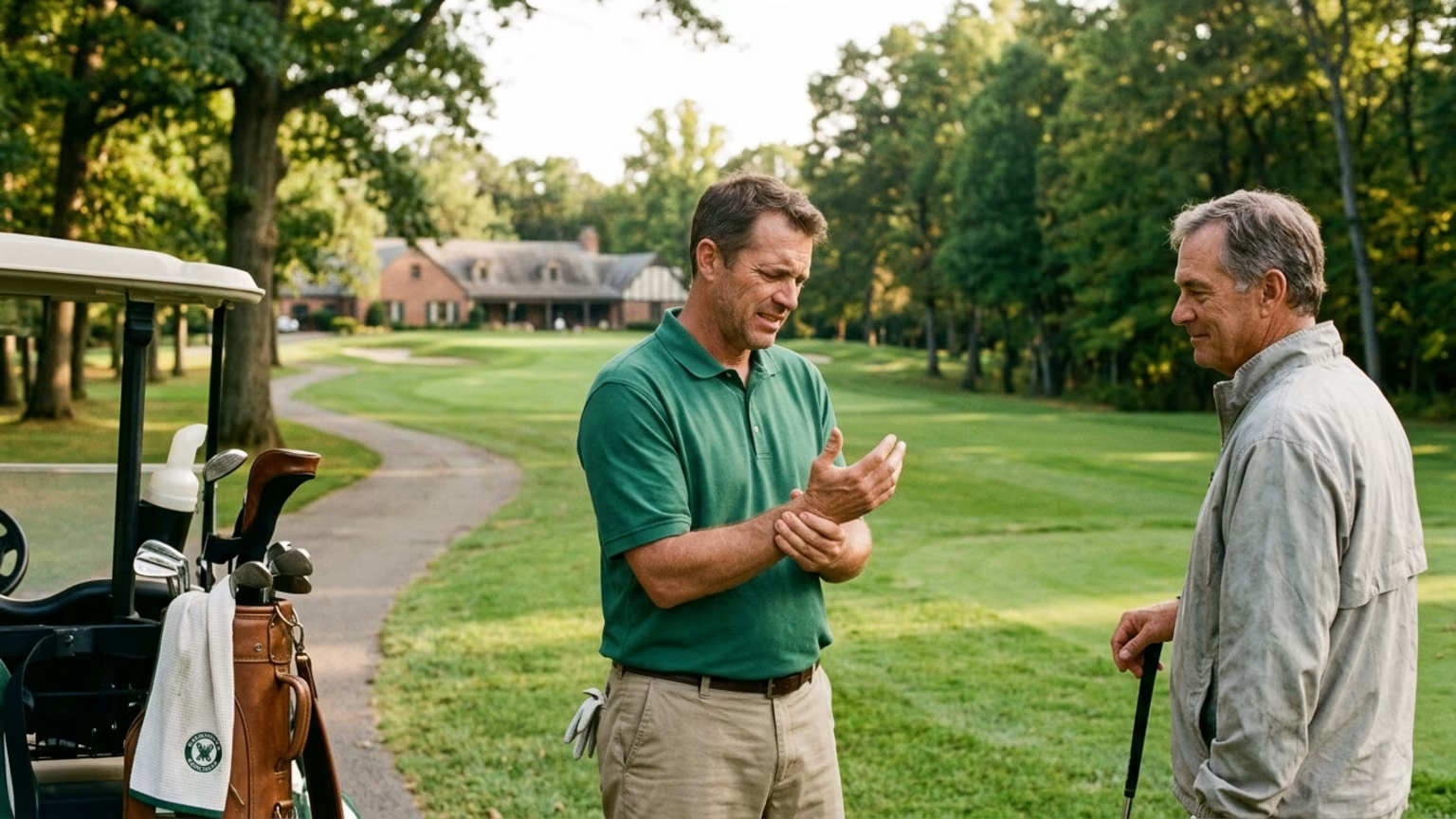
You can protect your joints by refusing to play through sharp pain. Treat sudden hand or wrist discomfort during a swing as a clear stop signal. If you cannot hold the club normally, step away from the ball. A small pause lets you assess the severity of the problem.
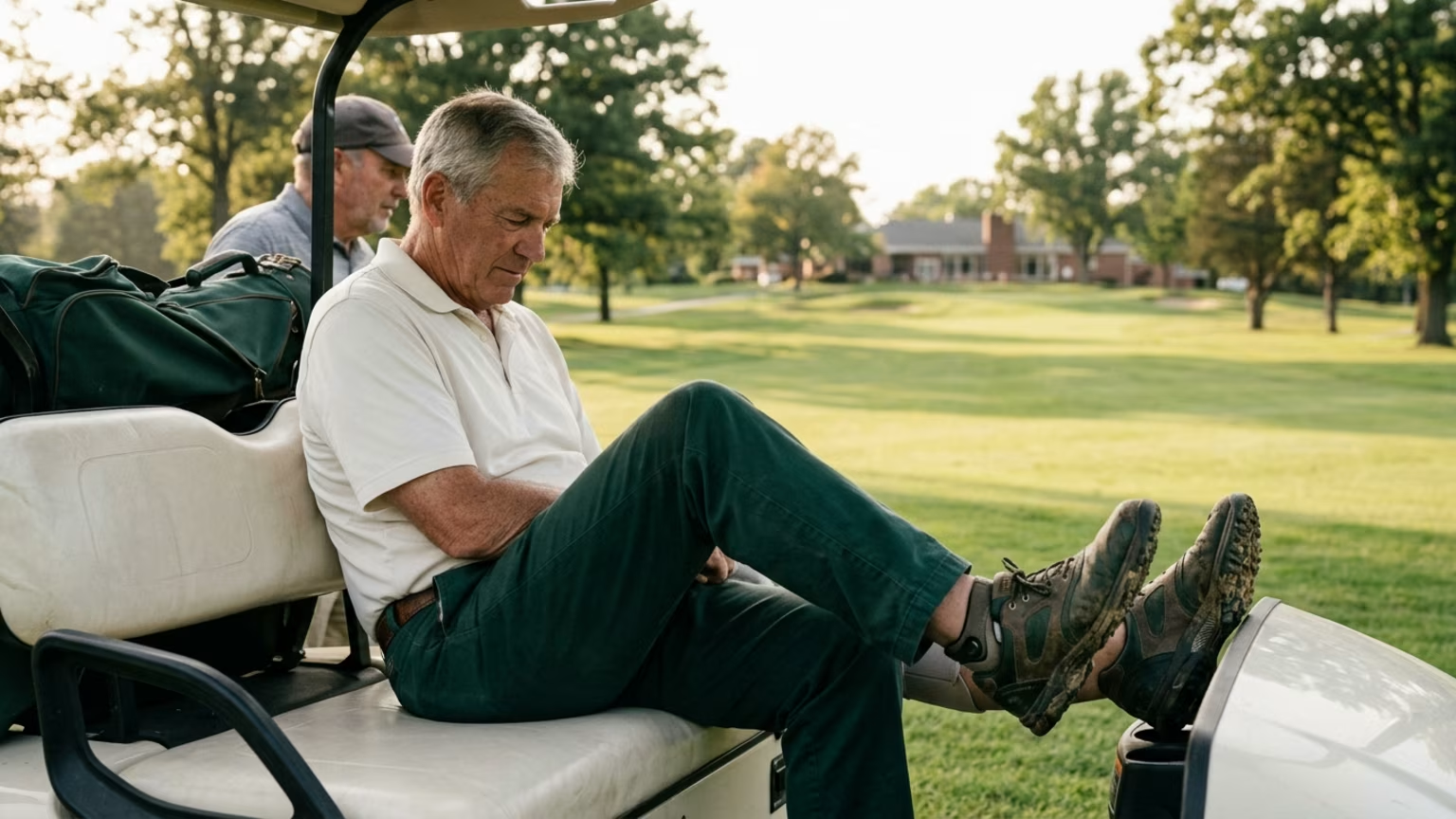
If you hit a hidden root, drop the club immediately. Flex your hand gently to see if the pain fades quickly. If the discomfort lingers for more than a minute, your day on the course is done. Walk back to your cart and apply ice if possible.
Golfergy provides practical advice to help you play the game you love for as long as possible. We want to keep you on the course without getting bogged down in medical jargon. Taking a moment to do a 10-minute pre-round warm-up can prepare your tissues for impact. If pain happens mid-round, you must prioritize your long-term health over your scorecard.
Never try to alter your grip or take pain medication just to finish the back nine. Masking the pain prevents you from feeling further tissue damage. Seek qualified medical assessment when pain is severe or follows a forceful impact. Focus entirely on resting the injured joint until your function returns.
Reed walked away from a highly competitive tournament because his body sent a clear warning. For amateur players, the lesson is incredibly straightforward. Protecting your joints is the only way to keep enjoying the game year after year. Treating pain as an absolute boundary will save your swing.
Learning how to accelerate post-round recovery can help manage stiffness after a tough day on the course. The goal is to play golf for decades, not just for one more afternoon. Sensible choices on the course translate to more seasons on the tee. What adjustments will you make to your mobility routine this season to steer clear of this hazard?
Follow Golfergy for practical insights on performance, mobility, recovery and healthy ageing. Stay connected for new articles, research-led guidance and ideas to help you play better for longer.


New clinical guidance urges older golfers to delay returning to the course after cervical nerve compression. Learn the physical markers that signal recovery.


Learn how osteoporosis changes tennis elbow management for older golfers. We share practical practice and recovery adjustments to protect your tendons and bones.
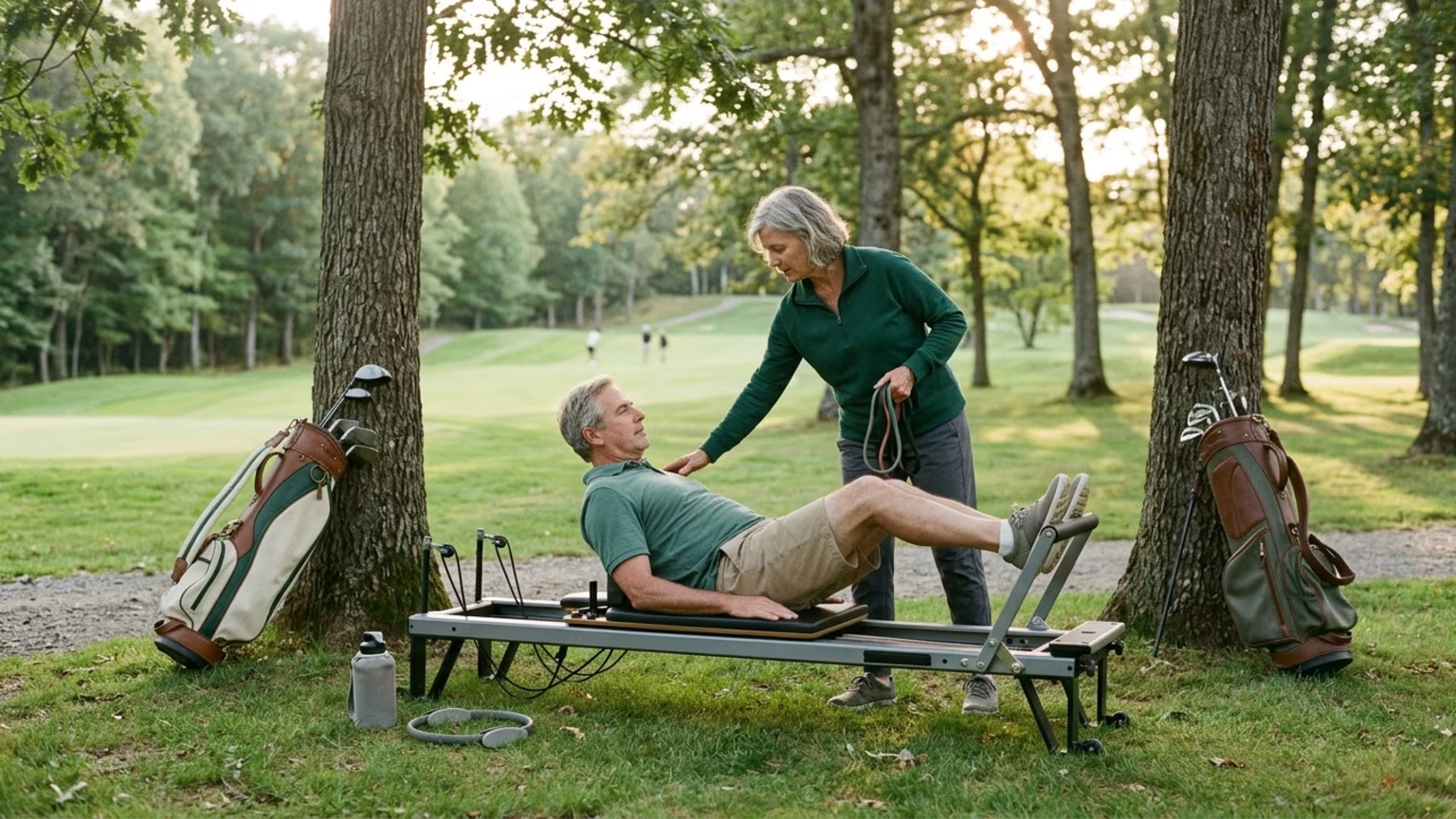
Learn how older golfers can use Pilates Reformer training to manage physical stress, build rotational strength, and protect their lower back from injury.
Explore practical resources on performance, recovery, mobility and golf longevity.
Read the Blog