
Brooks Koepka called his 2026 PGA Tour return pathetic after struggling with his putting. Learn how older players can track performance to maintain consistency.




In August 2026, when Brooks Koepka finished his final round at the Wyndham Championship, he provided a harsh assessment of his PGA Tour return season. Koepka returned to the PGA Tour in 2026 after previously playing on LIV Golf. Golf Digest reported that Koepka called his season "pathetic" after he recorded one top-10 finish and placed 94th in the FedEx Cup standings. Coverage of the season showed he made 11 cuts in 16 PGA Tour starts while missing the cut five times.
His lone top-10 result was a tie for ninth at the Cognizant Classic. He finished tied for 67th at the Wyndham Championship after shooting a final-round 70. Following that round, Koepka noted he had basically gone with zero top-10s in two years and needed to completely reevaluate his game. He failed to qualify for the FedExCup Playoffs and recorded one withdrawal over the course of the season.
Koepka did not point to bad luck or difficult fields to explain his slump. He said poor putting was holding him back and making it difficult to win. Golf Digest reported that he ranked 115th on the PGA Tour in strokes gained: putting during the 2026 season. The physical mechanics behind poor putting often stem from subtle losses of posture and core stability.
A repeatable putting stroke requires the lower body to remain completely quiet while the upper spine acts as an anchor. The shoulders rock back and forth around this stable center point. When a golfer loses mobility in their hips or strength in their core, their body compensates by introducing unwanted movement. The pelvis might shift slightly from side to side during the stroke.
These small physical faults change the face angle of the putter at the precise moment of contact. The spine angle might raise up just before impact if the lower back tightens. Over the course of a long round, these biomechanical breakdowns make consistent ball-striking and distance control nearly impossible. Koepka recognized these mechanical issues and accepted that he needed to make changes to his form.
A 2026 systematic review in Sports Medicine examined physical training interventions for golfers. The review analyzed 33 studies involving 798 golfers of different ages, sexes, and playing levels. These studies assessed physical training interventions lasting at least four weeks. The researchers measured specific golf-shot outcomes including clubhead speed, ball speed, carry distance, and total distance.
In the controlled between-group analyses, physical training was associated with clear, measurable improvements. The review found pooled improvements of 1.05 meters per second in clubhead speed and 2.20 meters per second in ball speed. Physical training was also linked to improvements of 9.33 meters in carry distance and 10.55 meters in total distance.
The authors rated the certainty of evidence as low for all controlled outcomes and very low for single-group outcomes. They called for more comprehensively reported and population-specific intervention studies to better understand these effects. The data still supports the idea that structured physical preparation influences measurable golf performance metrics.
Older recreational golfers face a significant risk of performance decline when they lose rotational mobility. The American College of Sports Medicine notes that adults with mobility limitations often struggle with twisting and range of motion. Golfers over 40 swing with less speed than tour professionals but still place immense strain on their bodies. They force joints past their comfortable limits while trying to maintain their typical drive distances.
When flexibility decreases, players try to force their rotation using their arms and lower back. This compensation leads to inconsistent ball striking and poor stability on the greens. Koepka recognized his own weakness and planned to test swing adjustments with coach Pete Cowen at the Irish Open on the DP World Tour. Amateurs must also track their own physical limits to build the strength foundation for a more consistent golf swing.
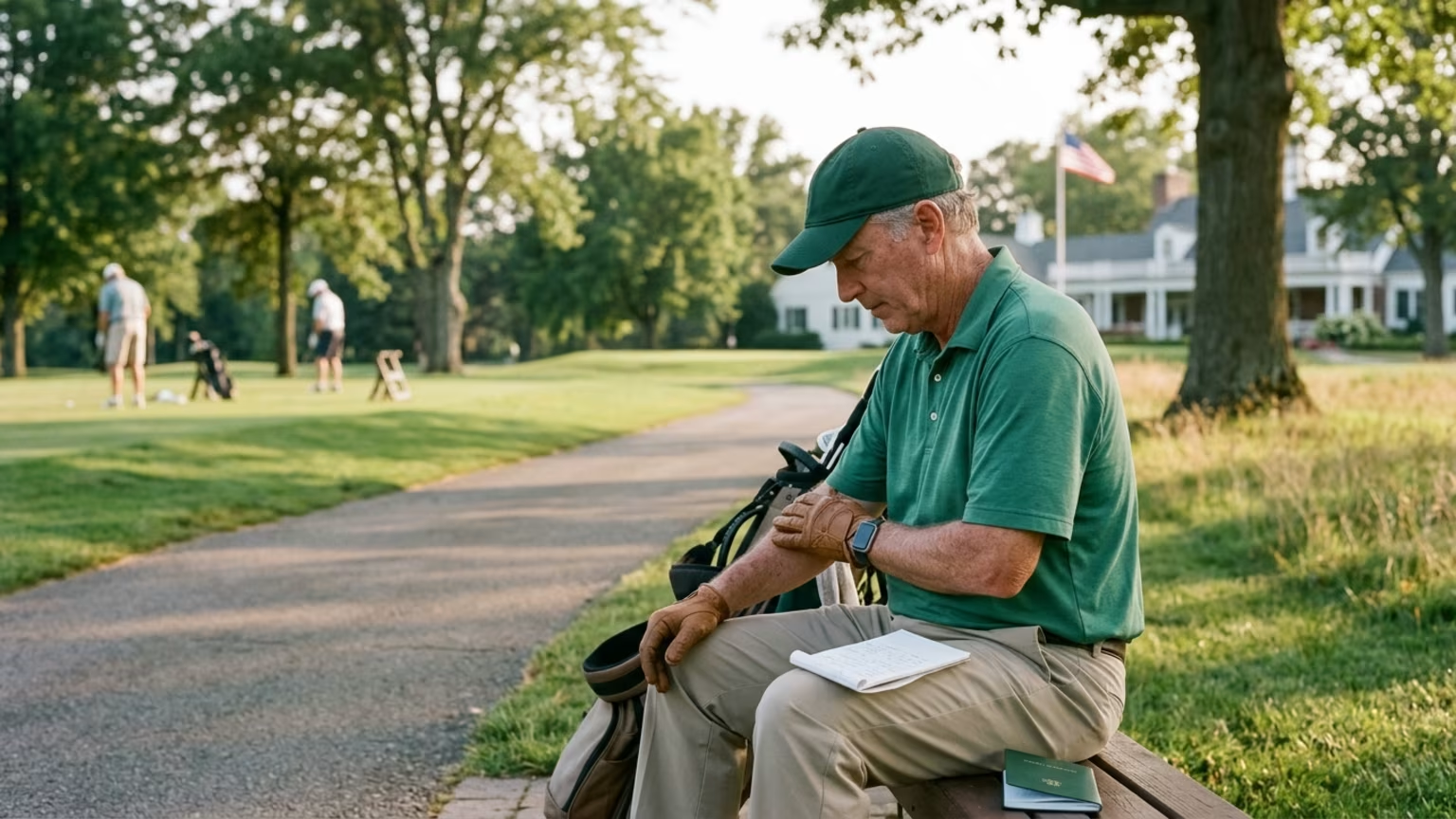
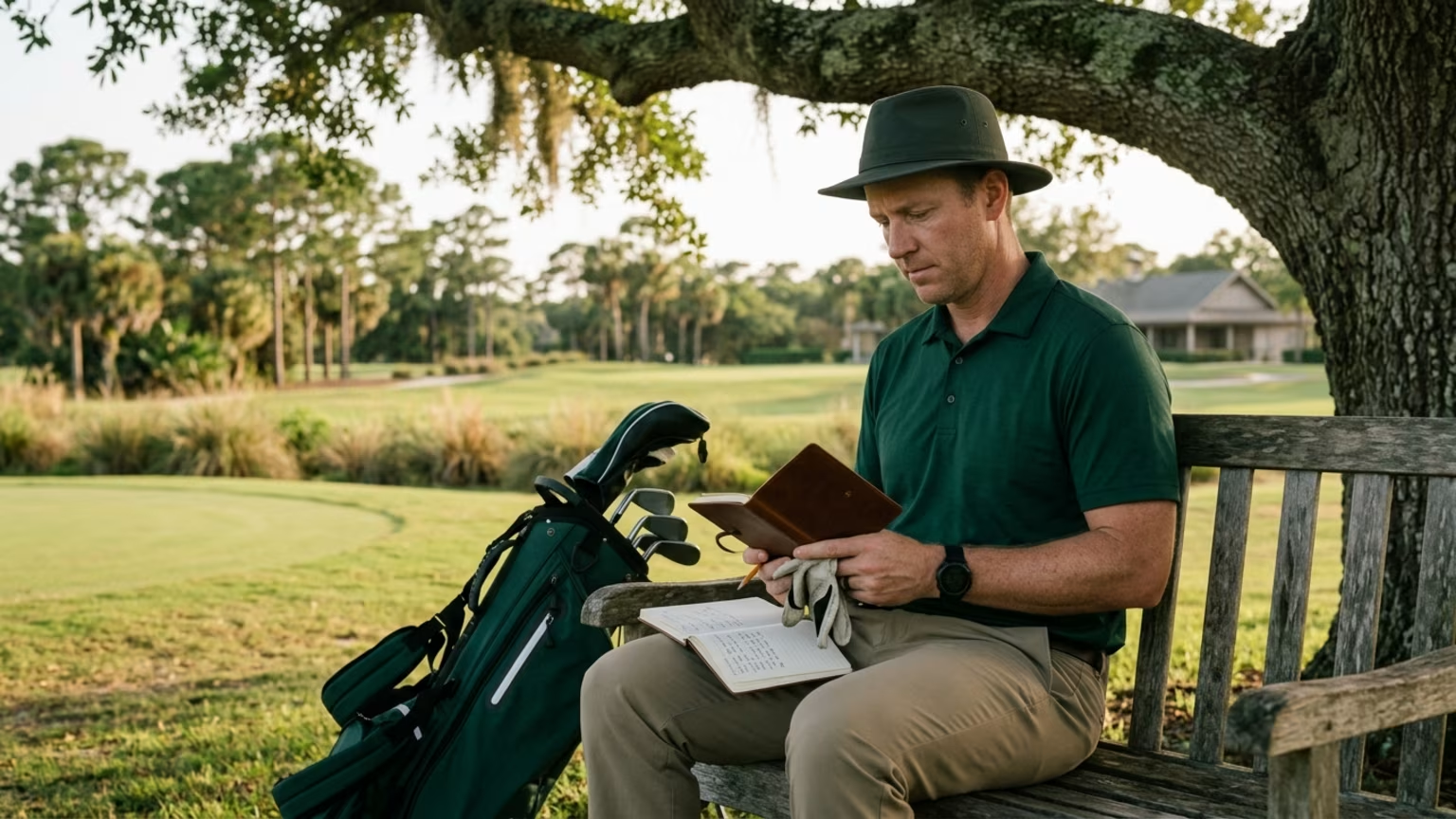
Instead of reacting to one bad round, you should track repeatable indicators over time. You can monitor your fairways hit, approach accuracy, greens in regulation, and putting performance. A monthly review of these statistics can reveal whether your physical restrictions are creating a persistent flaw or just a random error.
Honest golf performance tracking requires a structured approach to physical preparation, much like tracking your movement and physical readiness. The American College of Sports Medicine recommends starting with light-to-medium effort and increasing activity gradually. The guidance suggests building toward at least 150 minutes per week of moderate-intensity aerobic activity. You can also aim for 75 minutes of vigorous activity spread across at least three or four days weekly.
Building functional strength is just as critical for protecting your golf swing mechanics. The organization recommends strength training two to three days per week with rest days between sessions. You should begin with light effort and progress from 10 to 15 repetitions toward 8 to 12 challenging repetitions. Focus entirely on training your major muscle groups while warming up and cooling down at an easy pace.
You should also use consumer video tools to test your theories rather than merely confirming them. Record a consistent set of swings periodically and compare your setup, turn, balance, and finish. Combining this visual feedback with launch-monitor data gives you an objective view of your body's behavior and helps build consistent golf routines.
Many older players mistakenly treat physical pain as an acceptable part of playing the sport. They respond to a bad round by making multiple technical changes at once or increasing their training load too quickly. The American College of Sports Medicine advises that pain is a clear signal to modify your plan. If an activity worsens your pain, you might have done too much and should adjust your workload.
A single scorecard does not explain a golfer's true physical readiness or playing ability. Koepka tied for 12th at the Masters and tied for 13th at THE PLAYERS Championship. He also finished tied for 11th at the Myrtle Beach Classic and tied for 14th at the CJ Cup Byron Nelson. These solid finishes prove that a temporary slump does not automatically ruin an entire season.
Tracking can become counterproductive if golfers separate their outcome from the process. You can shoot a good score while silently compensating for declining mobility or inconsistent ball-striking. Identifying a limiting category like putting or fatigue is a practical way to monitor your physical trends.
Koepka paired his harsh self-assessment with the belief that he could still win on any given week. He accepted his putting problems, decided to move on, and committed to making necessary physical changes. The American College of Sports Medicine specifically lists golf among recreational activities that can be adapted to an individual's needs. The organization advises consulting a health-care provider before significantly changing your exercise routine. What adjustments will you make to your mobility routine this season to steer clear of this hazard?
Follow Golfergy for practical insights on performance, mobility, recovery and healthy ageing. Stay connected for new articles, research-led guidance and ideas to help you play better for longer.



Learn why dynamic stability and neuromotor fitness matter for older golfers. Find practical habits to adapt to uneven lies and protect your aging joints.


Explore how lower-body and trunk strength build a stable golf swing. Learn a sustainable two-day training framework to maintain clubhead speed and longevity.
Learn why forcing an extreme backswing causes lower back stiffness. Find safe ways to assess usable rotation and improve your golf swing mobility after 40.
Explore practical resources on performance, recovery, mobility and golf longevity.
Read the Blog