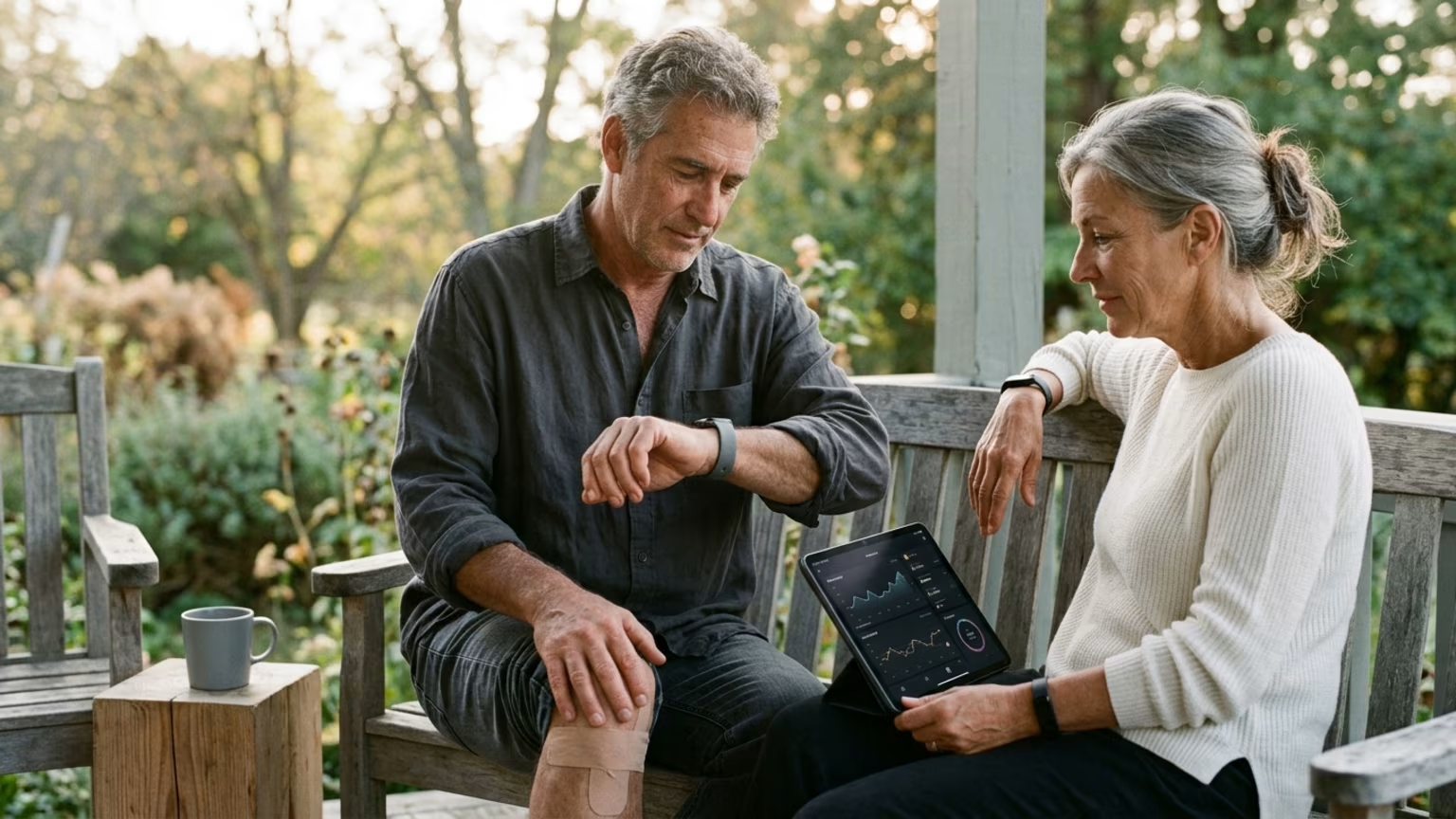

Learn how mature golfers can use AI tools and wearable data to monitor physical recovery, manage training loads, and extend their playing years safely.




A player wakes up on Sunday morning with a stiff lower back. He checks his smartwatch for a simple answer about whether to play. The screen flashes a low readiness number. The uncertainty about his physical condition sets in immediately.
This tension is incredibly common as athletes lean heavily on digital health coaching. The Wall Street Journal reported on datamaxxers who give AI systems detailed workout, sleep, and biometric data to generate personalized guidance. The science behind this movement is expanding rapidly across the health sector. A 2026 review identified 97 primary studies on wearable-derived mobility biomarkers.
The push for better measurement has reached everyday recreational athletes. People are realizing that random stretches and occasional ice packs are not enough. They want concrete information about their physiological state. We are seeing a massive shift toward objective measurement tools in daily life.
This trend points to more data-driven ways to monitor movement quality. It directly supports longer and more comfortable playing years for dedicated amateurs. Tracking tools provide a mirror for your daily habits. The data shows that measuring physical readiness is no longer just guesswork.
Understanding your body requires looking past clinical jargon to see the mechanics. Devices track physiological signals to evaluate your baseline physical state. WHOOP’s consumer platform describes Recovery as a daily 1-to-99% score based on measures including heart-rate variability, resting heart rate, sleep, and respiratory rate. These metrics form a baseline for how your body responds to physical stress over time.
The platform also provides a daily Strain Target on a 0-to-21 scale and uses Recovery information to recommend an exertion range. These specific data points help you visualize the invisible cost of a long afternoon on the course. You can see the exact toll that a stressful weekend tournament takes on your nervous system. This removes the guesswork from planning your weekly practice sessions.
Medical professionals are now testing this specific technology for serious physical rehabilitation. A reported WHOOP-Kinomatic RESTORE pilot is applying continuous biometric monitoring to joint-replacement recovery. The reported pilot involves more than 100 patients across three California clinics and is scheduled to run for three months. Patients wear WHOOP devices to provide data on heart-rate variability, sleep, strain, and recovery to care teams and AI systems.
These clinical applications prove that consistent biometric tracking has real value for monitoring physical stress. When doctors trust these tools for surgical recovery, amateurs can certainly use them to monitor a weekend tournament. The technology bridges the gap between hospital diagnostics and home health monitoring.
Younger athletes often use tracking tools simply to optimize their intense training schedules. The Wall Street Journal’s August 11, 2026 article highlighted Julian Flieller, a 25-year-old software engineer and recreational marathon runner. He uses Anthropic’s Claude alongside data from fitness trackers to adjust his workouts and connect his work schedule with athletic performance. A younger body can absorb aggressive training loads and bounce back quickly.
They use artificial intelligence to squeeze out an extra percent of performance. For players past their fourth decade, tracking is about preserving joint health and identifying fatigue before it causes harm. Wearable data helps you recognize when your nervous system is too exhausted to support an aggressive golf swing. Missing these subtle signals often leads to stubborn physical setbacks that ruin a season.
When I developed medial epicondylitis, commonly known as golfer's elbow, I thought I needed complete rest. Six weeks off the course did nothing to help. I finally learned that active recovery with a flexbar was the actual solution. It taught me that treating golf injuries requires loading the tissue properly, not just sitting on the couch and hoping for the best.
At golfergy, we know that mature players cannot afford to guess about their physical condition. Wearables provide the early warning system that older athletes desperately need. They allow you to step back from the ledge before an overuse injury occurs. You get a clear picture of your physical limits on any given day.
You can reverse a downward physical trend by linking your daily habits to your performance scores. Modern platforms are beginning to connect the dots for you automatically. WHOOP’s 2026 product updates include Behavior Trends and Behavior Insights. These features connect logged habits with changes in the platform’s Recovery measure after a user has recorded at least five “yes” and five “no” instances within 90 days.
This means you can track exactly how walking eighteen holes affects your heart rate the following morning. It removes the mystery from your weekly physical routine. You start to see undeniable patterns in how your body handles physical stress. This knowledge empowers you to build a highly effective weekly schedule.
Actionable movement tracking requires testing your mobility in controlled and predictable environments. You should monitor how well you execute specific motions during a rested state versus a fatigued state. When checking your rotational mobility, focus entirely on turning your trail hip. Record a quick smartphone video of this motion before your round and compare it to a video taken afterward.
Identifying a loss of rotation helps you apply the correct active recovery protocols before your next tee time. Taking control of your movement quality keeps you off the injured list. You stop treating symptoms blindly and start addressing the root causes of your stiffness.
Chasing a perfect score every day is a recipe for frustration and burnout. A healthy target is simply maintaining consistency in your sleep duration and resting heart rate over a full month. WHOOP says its Coach feature uses a user’s biometric data, performance science, and generative AI to answer questions about training, fatigue, and workout planning. However, you should not let a chatbot override your own physical symptoms or common sense.
A machine learning model cannot feel your joint pain. If your device reports a high recovery score but your lower back feels completely locked up, you must trust your physical sensation first. The goal is to build a sensible load management strategy that keeps you on the course. Tracking is meant to guide your decisions, not dictate them.
Use the gathered data to organize your questions before visiting a physical therapist or performance coach. Showing a professional your sleep and strain trends provides them with incredibly useful context for building your program. The technology should serve as a communication tool rather than a diagnostic medical device. It gives your coaching team a clearer picture of your daily habits.
A specialist can help you interpret the numbers without overreacting to a single bad night of sleep. They provide the human context that an algorithm simply lacks. Your data becomes a valuable asset when paired with professional medical advice.
The integration of smart tools into daily life offers a clear advantage for players willing to pay attention. Consumer technology is moving rapidly toward the personal interpretation of continuously collected data. You no longer have to guess whether a difficult practice session compromised your baseline physical state. By monitoring your personal trends, you can adjust your rest days before a minor strain becomes a chronic problem.
This is about building a sustainable physical foundation for your game. For players seeking a deeper understanding of these tools, our guide to recovery technology covers the best ways to filter out the noise. The most successful amateurs treat their wearable devices like a trusted caddie. They listen to the advice, evaluate the current conditions, and make the final decision themselves.
Artificial intelligence will continue to refine how we measure physical readiness for golf. The tools will become more integrated into our daily routines. The technology will eventually catch subtle movement changes before they result in pain. Until that day arrives, you must rely on consistent habit tracking and honest self-assessment.
You hold the power to extend your playing years through intelligent load management. Technology is simply a vehicle to help you reach that destination faster. A proactive approach to your physical health yields incredible dividends on the golf course. Numbers do not lie: monitoring your long-term physical trends is the ultimate equipment upgrade. Start tracking your sleep duration alongside your weekly walking volume today.
Follow Golfergy for practical insights on performance, mobility, recovery and healthy ageing. Stay connected for new articles, research-led guidance and ideas to help you play better for longer.


Rest or move the day after 18 holes? Use fatigue, soreness, symptoms and your playing schedule to guide a flexible recovery day.


Compare foam rolling, massage, compression, heat and cold for golfers, with comfort benefits kept separate from performance and injury claims.
A measured guide to stiffness during and after golf, with gentle movement options, sustainable habits and NHS-backed back-pain warning signs.
Explore practical resources on performance, recovery, mobility and golf longevity.
Read the Blog


