
Discover a practical stability routine for older golfers. Build lower-body strength and trunk control with safe, supported exercises for a steadier golf swing.




The golf course is rarely flat, and a reliable swing requires a steady base. We frequently hit shots from severe sidehill slopes, thick rough, and awkward fairway bunkers. Staying upright and in control during these demanding scenarios requires incredible lower body strength. Here is a three-step stability blueprint to build control for your next round:
Balance is a physical capacity we can train over time. Many players chase maximum swing speed or buy expensive new drivers to shoot better scores. True consistency starts from the ground up. A steady body absorbs the rotational forces of a golf swing far better than a weak one.
Developing stable hips and dynamic balance provides a great foundation for recreational players without requiring extreme measures. I used to stand on the first tee doing long, static hamstring stretches because I thought it was the right way to warm up. I would actually feel weaker on my first drive. Research later showed me that dynamic movements, like leg swings and torso twists, prime the nervous system much better. Changing my five minute warmup completely transformed my opening tee shots.
Stability work operates on that same physical principle. It prepares the joints and muscles for dynamic action. Strong legs and a steady trunk give you more movement options on uneven lies. They reduce your dependence on finding a perfectly flat stance.
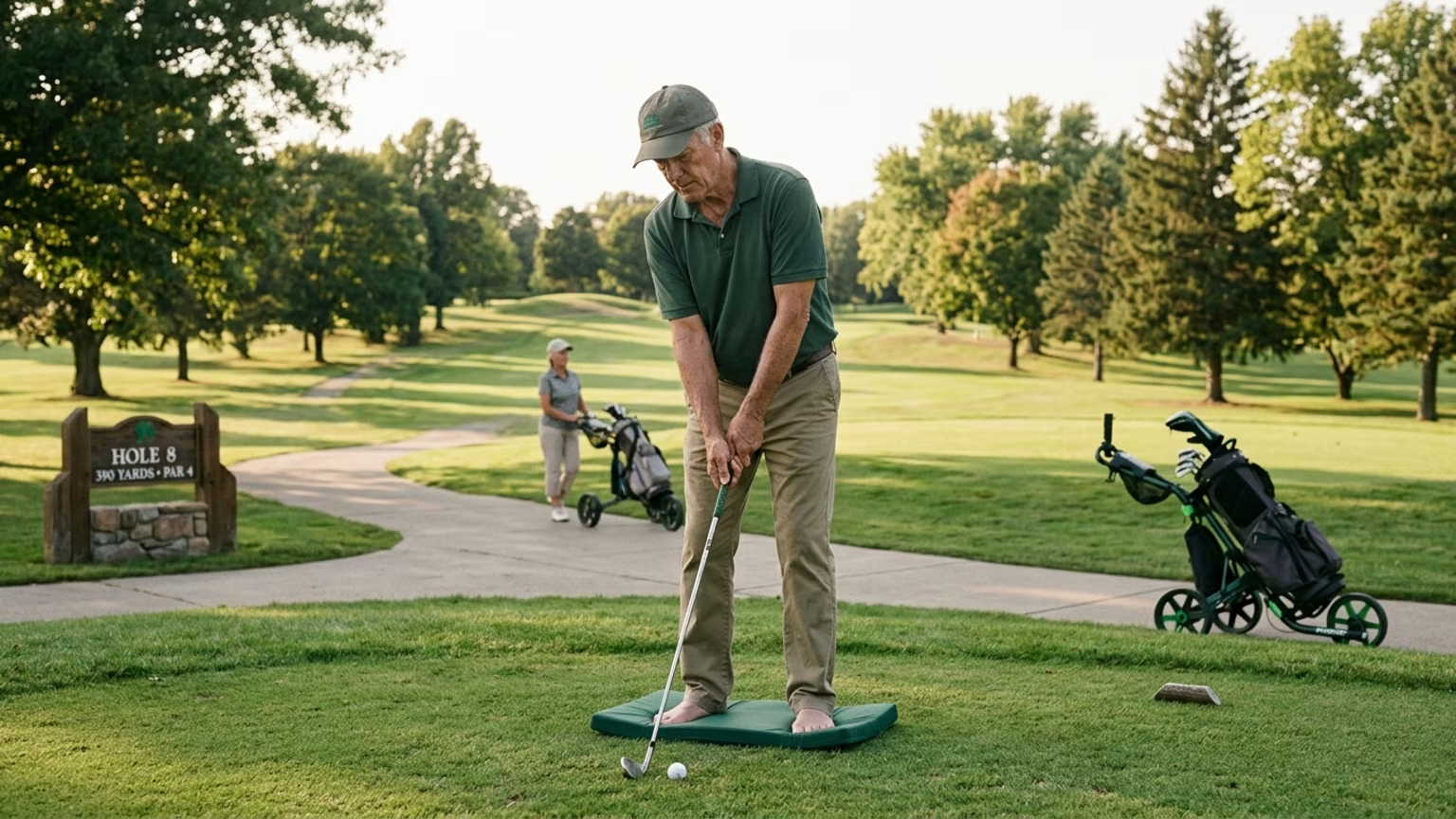
Before starting any physical routine, we need to know where we stand. A simple way to assess your current control is a supported single-leg hold. Stand next to a sturdy dining chair or a bare wall. Place one hand lightly on the support surface.
Lift your right foot a few inches off the ground. Notice how much your standing leg sways. Pay attention to your ankles and hips. Are your foot muscles working furiously to keep you upright?
Switch legs and compare the feeling on your left side. You might find that your lead leg is much steadier than your trail leg. Most golfers favor one side of their body because of years of swinging a club. This quick check helps you identify which side needs more focus during your training.
Taking a baseline measurement provides a clear starting point. It removes the guesswork from your fitness program. You can revisit this simple test every few weeks to gauge your progress. Seeing tangible improvements in your single-leg hold provides excellent motivation to stick with the routine.
You might also film yourself performing this test with a smartphone. Watching the video reveals small wobbles you might not feel in the moment. It gives you honest feedback about your physical control. Small improvements in stability translate directly to more solid contact on the course.
You do not need complicated balancing tools or unstable boards. A sturdy dining chair or a wall works perfectly for support. You will also want a comfortable space on the floor for trunk control movements. A simple yoga mat provides enough cushioning for your knees and back.
A single golf club is helpful for light support during standing drills. Keeping the equipment list small removes barriers to regular practice. You can perform this entire series in a standard living room. This convenient setup encourages daily repetition. You do not need to drive to a gym to build a better swing.
Building balance means focusing on lower-body strength and trunk stability. A golf-focused senior exercise guide recommends that adults aged 65 and older aim for at least 150 minutes of moderate-intensity aerobic activity weekly, muscle-strengthening activity on at least two days per week, and activities that improve balance. We can build a safe routine around these principles. A smart balance routine for older players prioritizes safety over extreme challenges.
The same guide lists several highly scalable exercises. These include sit-to-stands, step-ups, and calf raises. It also recommends floor movements like glute bridges, bird dogs, and modified planks. For balance work, the guide suggests supported single-leg stands and marching.
It also recommends weight shifts and slow practice swings. Step one of our routine focuses on the lower body. Sit on the edge of a sturdy chair. Push through your heels to stand up straight.
Slowly lower yourself back down with careful control. Do eight repetitions. This mimics the leg drive needed to generate power from the ground. You can also perform simple calf raises while holding the back of the chair.
Strong legs anchor your golf swing during the most explosive parts of the movement. Step two moves to the floor for trunk control. Lie on your back with your knees bent for a glute bridge. Push your hips toward the ceiling.
Hold this position for a deep breath and lower down. Step three involves direct balance challenges. Stand near your wall or chair for safety. Practice supported single-leg stands and marching in place.
Lift one knee until your thigh is parallel to the floor. Hold the position for ten seconds. Focus entirely on keeping your hips level. Repeat this on both legs.
Finally, finish with weight shifts and slow practice swings. Hold a golf club across your chest. Shift your weight smoothly to your trail leg. Then shift your pressure back to your lead side.
Mimic a slow golf swing while maintaining perfect posture. This connects the physical exercise directly to your time on the course. If you have balance problems or a history of falls, consult a doctor before trying these movements.
Golfers often try to force their bodies into overly difficult positions right away. Recreational players sometimes see elite routines and buy extreme balance boards. We do not need maximum instability to see real benefits. True control comes from mastering flat ground first.
Another common error is rushing through the movements. Balance requires slow and deliberate intent. Speeding through a single-leg stand defeats the purpose of the exercise. You must give your nervous system time to adapt and stabilize.
Poor breathing mechanics also ruin balance drills. Players tend to hold their breath when trying to stand on one leg. This creates unnecessary tension in the neck and shoulders. Breathe deeply into your stomach to stay relaxed and grounded.
Refusing to use external support is a frequent mistake. Some players feel embarrassed holding onto a chair. Support actually makes the training much safer. It allows you to focus on posture and pressure shifts without the fear of falling over.
You can easily trigger the benefits of this stability work during a round. When you face an awkward sidehill lie, take a slow practice swing. Notice where your weight naturally settles. Focus on keeping your feet quiet during the actual strike.
You can also perform a quick weight shift drill while waiting at the tee box. Use your driver as a walking cane for light support. Lift one leg slightly and hold your balance for five seconds. This small action wakes up your nervous system.
It helps you stay grounded before a big swing. A 10-minute warm-up before your round should always include a few controlled weight shifts. Taking time to find your footing builds immense confidence. Golf requires physical resilience for four long hours.
A stable lower body requires less energy to maintain posture over the ball. This translates to more consistent ball striking late in the round. Every deliberate practice swing reinforces your physical foundation. When your feet feel glued to the turf, your upper body can rotate freely without throwing you off balance.
You will also notice a difference when playing from fairway bunkers. These tricky shots demand quiet legs and perfect contact. If your balance is poor, you will likely shift too much weight and catch the sand early. A trained lower body stays anchored.
It allows you to pick the ball cleanly off the surface. Confidence grows when you know your body can handle difficult lies. This peace of mind frees you to focus entirely on your target.
The 5-minute investment today that saves you 18 holes of aches tomorrow is a simple routine built on steady support and controlled movement.
Follow Golfergy for practical insights on performance, mobility, recovery and healthy ageing. Stay connected for new articles, research-led guidance and ideas to help you play better for longer.



Learn how mature golfers can manage morning stiffness and prepare for the first tee with a practical warm-up sequence focused on controlled mobility.


Learn how restricted hip and thoracic mobility impacts your golf swing after 40. Review practical daily routines and expert insights to protect your lower back.

A 2026 systematic review reveals that strength and power training improve golf clubhead speed more effectively than flexibility alone for players over 40.
Explore practical resources on performance, recovery, mobility and golf longevity.
Read the Blog