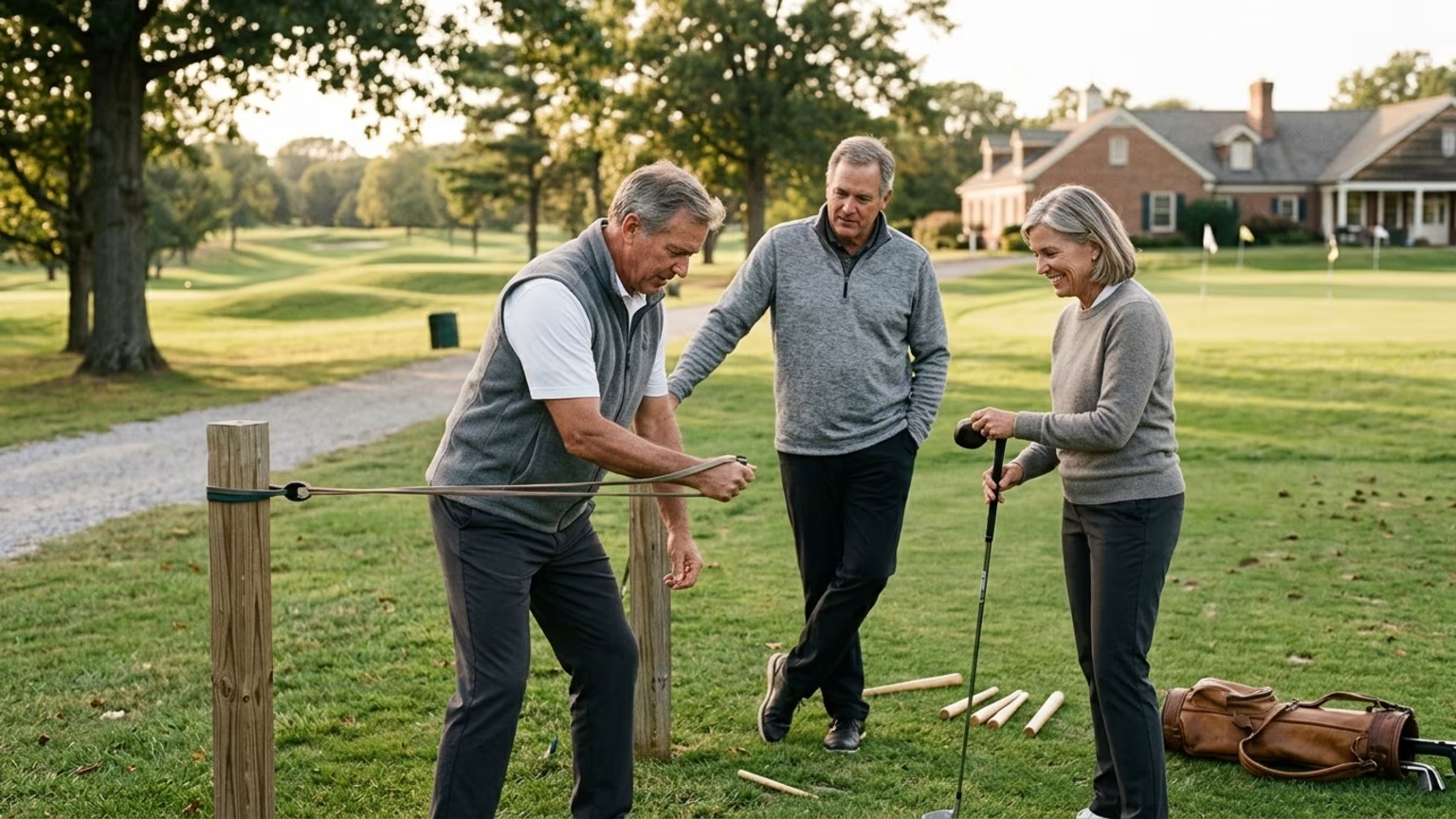

Discover why modern driving distance relies on strength and core training over flexibility alone, and learn how older golfers can safely add consistent yardage.




You wipe the sweat from your brow after a gruelling 18 holes in July, and your lower back aches as you order a drink at the clubhouse. The desire to hit the ball farther is a nearly universal feeling after a tough round. Professional golfers make distance look incredibly simple on television, with GolfWeek reporting a 306.2-yard Tour average in its 2026 season review. The sight of players effortlessly carrying bunkers makes the amateur struggle feel very real.
This modern distance boom leaves many older recreational players wondering how to keep up. Other coverage shows that 128 of 161 active PGA Tour players had joined the 300-yard club in 2026. A recent Asia Economy article reviewed how modern distance gains actually originate from a blend of improved equipment and physical training. For recreational players over 40, chasing those extra yards safely requires making smart choices about physical preparation.
Golfers who want to protect their bodies while maintaining driving distance eventually face a fork in the road. Option A is a flexibility-first approach to golf fitness. This path relies on frequent static stretching to increase joint range of motion and relieve tight muscles. Option B is a strength-first approach that prioritizes resistance training to handle faster rotational forces safely.
Many older players find themselves forced to choose between these two paths because free time is limited. The Asia Economy article links modern distance gains to lower-spin equipment combined with improved physical capabilities. Elite players use a carefully managed mix of training methods to create and control high-speed swings. When forced to choose a daily priority, understanding the real difference between mobility and flexibility can help clarify this decision.
The flexibility-first approach is an incredibly popular choice among senior golfers. Option A offers obvious benefits for basic physical comfort and everyday joint mobility. This method requires zero special equipment, and it feels very gentle on tired aging muscles. Many players logically assume that stretching further will naturally lead to a longer swing arc and increased clubhead speed.
However, the scientific research paints a slightly different picture regarding actual golf performance. A secondary summary of a systematic review reports stronger links between strength and clubhead speed than between flexibility and clubhead speed. Pushing older joints into extreme ranges of motion without the muscle strength to control them can lead to poor contact. The hidden physical cost of chasing extreme flexibility is a loss of swing control.
Option B focuses squarely on building a stronger and more stable physical foundation. A biomechanics review describes a powerful swing as a sequenced movement that transfers force from the ground through the body and into the club. Core training gives your body the rigid structure required to pass that initial ground energy safely into the golf ball. It provides the physical brakes needed to decelerate your arms without hurting your back or shoulders.
The performance benefits of resistance work are very hard to ignore. The same systematic review summary reported moderate-to-large correlations between strength or power measures and clubhead speed. In our experience, fatigue is the real enemy of distance. A few years ago, I noticed my swing falling apart around the 14th hole. My lower back would tighten up, and I started compensating with my arms. I spent months thinking it was a swing flaw.
It was not until I started a simple evening hip mobility routine that I realized my glutes were just turning off from fatigue. Fixing that one physical limitation brought my back nine scores down drastically. There are potential drawbacks to lifting heavy weights if you lack qualified supervision. Poorly programmed strength routines can cause unnecessary wear on aging joints.
You should always build movement capacity before you begin chasing peak swing speed. A proper golf fitness plan relies on progressive resistance, isometric strength training, and controlled rotational movements to protect the body.
When we evaluate long-term golf longevity, we have to determine which option keeps you playing safely. Professional distance figures should never serve as your personal performance benchmarks. GolfWeek noted that 121 players averaged at least 300 yards in 2026, which is incredibly impressive for optimized elite athletes. For the rest of us, comparing our weekend drives to those massive numbers is a fast track to injury.
The reality for recreational players requires a much more grounded perspective. One industry report estimates average on-course driving distance at 224.1 yards for male amateurs and 175.7 yards for female amateurs. These figures come from more than five million rounds analyzed in a 2026 Arccos report. Chasing unrealistic distance targets often leads to aggressive arm swings, so your goal should be to develop your own natural potential safely.
Strength training ultimately wins the longevity tie-breaker because it builds vital physical resilience. A strong core protects your spine during the violent twisting motion of the modern golf swing. Stretching is a very helpful supplement, but it cannot replace the structural support provided by strong muscles. When you practice your mechanics, focus entirely on turning your trail hip instead of swinging your arms harder.
We have seen that professional distance relies on a highly coordinated blend of physical preparation and equipment. Asia Economy reminds us that improved golf balls and clubs also play a massive role in generating speed. Older golfers should completely stop trying to swing out of their shoes to find extra yardage. You need a solid physical foundation before you attempt high-intent swing training to maintain your yardage.
Choose flexibility routines for basic daily comfort, and choose strength training for long-term swing health. A physical therapy source recommends dynamic movement and progressive swings before play, so your immediate takeaway is to change how you prepare at the course. Save your long static stretching sessions for after the round is fully over. Start your next pre-round warm-up with gentle arm circles and slow practice swings to wake up your nervous system safely.
Follow Golfergy for practical insights on performance, mobility, recovery and healthy ageing. Stay connected for new articles, research-led guidance and ideas to help you play better for longer.


Build a practical golf warm-up from walking to comfortable mobility and fuller swings, while keeping preparation separate from long-term conditioning.


Shot Scope’s LM1 data offers age and handicap benchmarks for driver speed and carry. Here’s how golfers over 40 can read the figures.

A grounded look at balance after 40, with supported single-leg practice and a clear place for strength training and golf practice.
Explore practical resources on performance, recovery, mobility and golf longevity.
Read the Blog


