
Recreational golfers over 40 can build power and prevent injuries with a proven strength framework. Learn the specific movements that add distance safely.




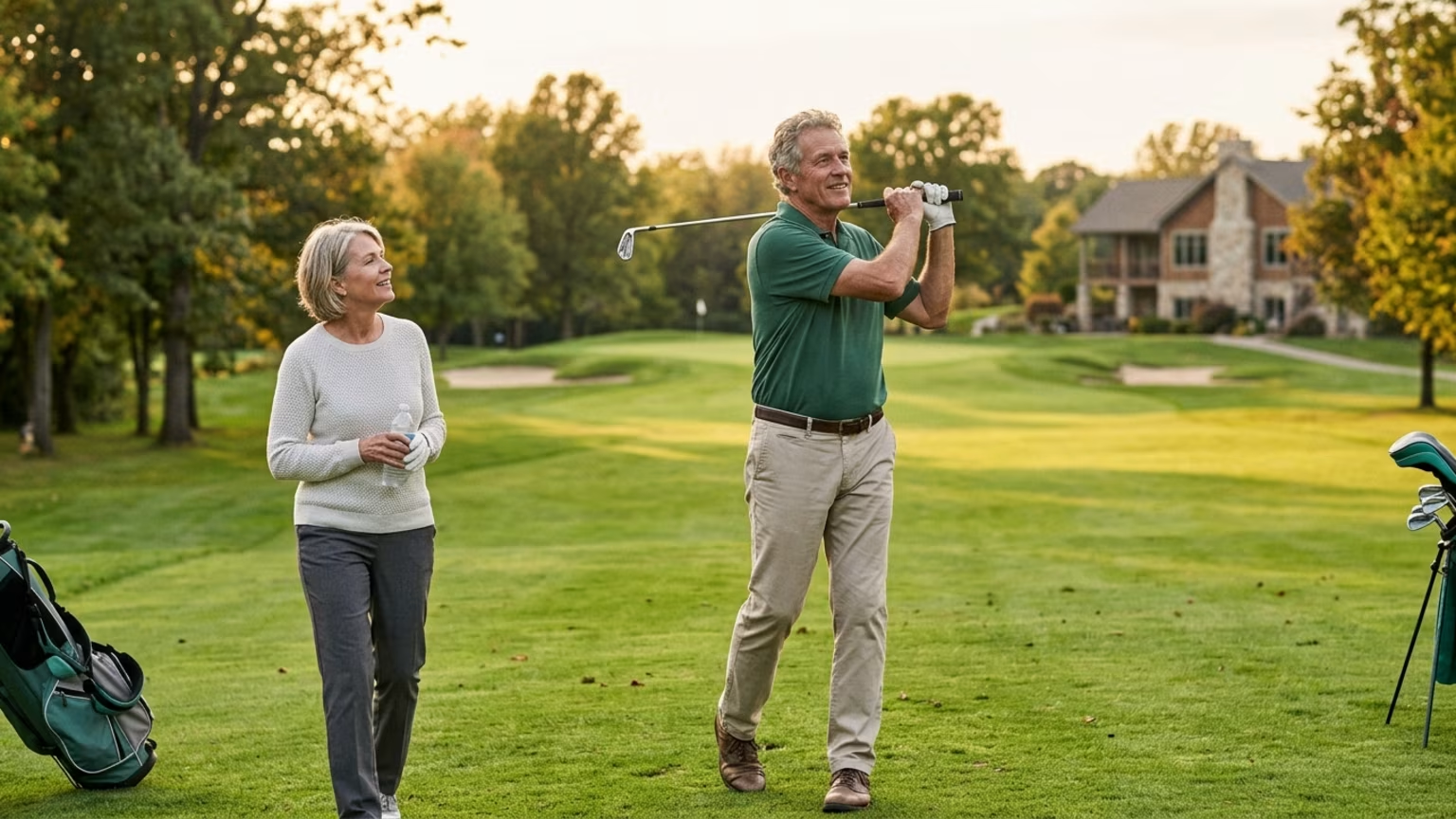
A 2026 systematic review and meta-analysis of physical-training interventions in golf reported a striking reality: controlled training programs generate a pooled improvement of 1.05 meters per second in clubhead speed. That small mechanical shift translates to serious yardage on the course. The same analysis found an average gain of 9.33 meters in carry distance. It also reported an average gain of 10.55 meters in total distance. While results always vary from player to player, the numbers prove that older players do not have to accept a permanent decline in power. Building physical capability is entirely possible. Many golfers spend thousands on new drivers seeking extra yards. The data shows that investing time in physical preparation yields proven, measurable improvements in total distance.
When sports scientists measure clubhead speed and ball speed, they are not just looking at raw effort. These metrics track how efficiently your body transfers force from the ground, through your torso, and into the club over repeated attempts. The confidence intervals in the 2026 research show meaningful variation. They report ranges of 0.39 to 1.71 meters per second for clubhead speed. The researchers also saw a variation of 5.12 to 13.55 meters for carry distance.
This range tells us that physical preparation works, but the exact benefit depends heavily on the individual. It is not about swinging harder or chasing an impossible ideal. It is about building a physical foundation that allows your current swing to operate smoothly. A stronger base reduces the friction in your golf swing.
Power leakage happens slowly over time. A separate 2026 study focused specifically on proprioceptive and propulsive training. This type of training helps your body understand where it is in space. After the intervention, participants saw a mean club speed increase of 0.79 meters per second. They also recorded a 0.95 meters per second increase in ball speed.
When older golfers lose this base level of strength and balance, they naturally lose the capacity to push off the ground. That drop in physical awareness directly correlates to a slower club, weaker contact, and significantly shorter drives. Maintaining physical awareness through targeted training stops this slow leak in power.
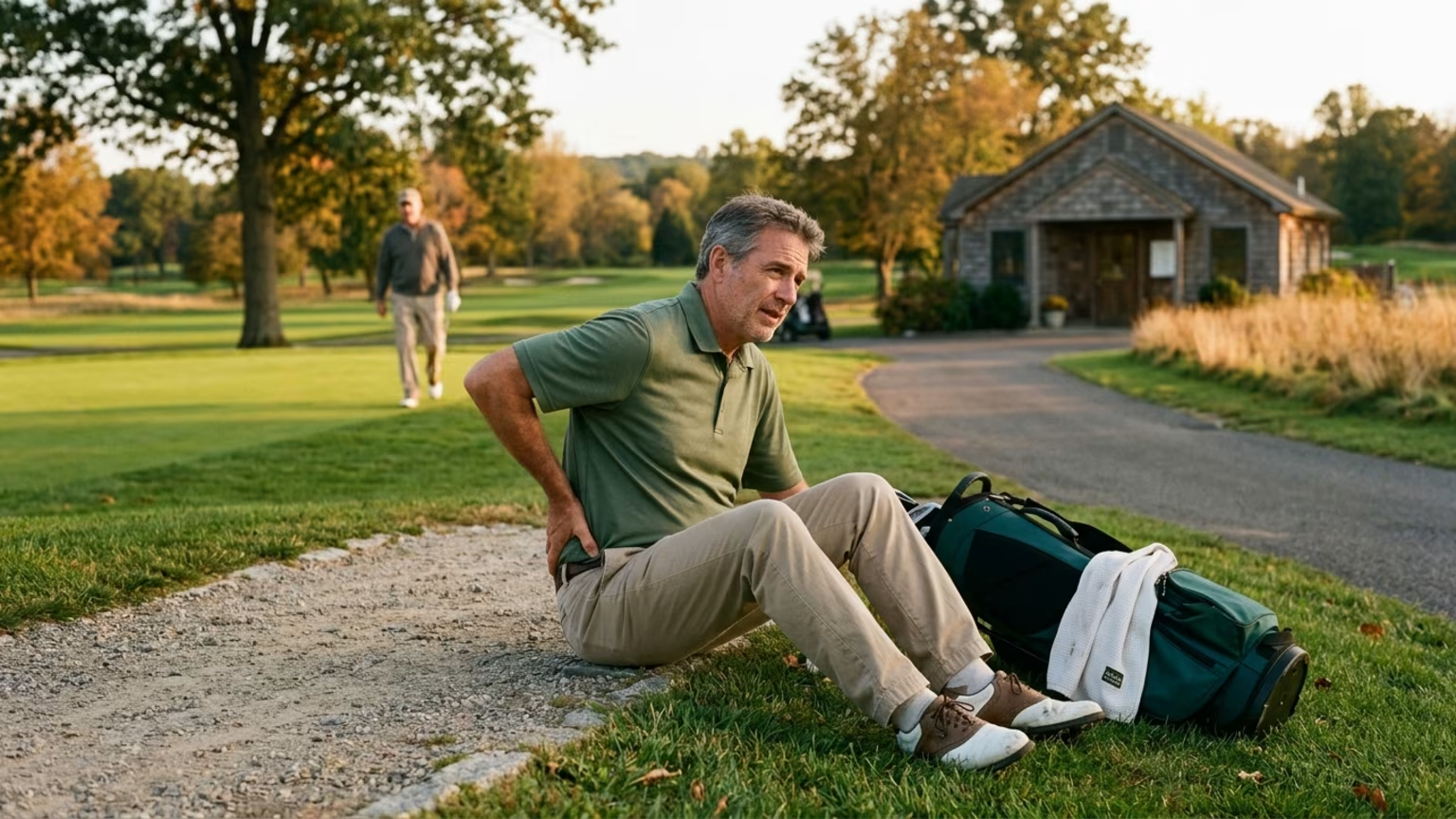
The saddest thing I have seen in golf is watching lifelong playing partners slowly drop out of our weekend group. It usually starts with a nagging shoulder or knee issue they ignore until it requires surgery. That pattern is exactly why our team became obsessed with golf longevity. Younger players on tour can get away with aggressive twisting and heavy, complex gym sessions.
For experienced golfers over 40, the reality is entirely different. The retrieved golf-health material identifies the lower back, shoulder, and knee as important areas of injury burden. If an older player tries to replicate a younger athlete's workout, they often aggravate these exact joints. A longevity plan must address movement tolerance and joint protection before trying to maximize rotational speed. If you cannot walk the course without pain, your swing speed simply does not matter.
We do not have to stop playing as we age, provided we do the right maintenance work between rounds. You can reverse the trend of physical decline by focusing on basic movement patterns. A senior-golfer exercise guide recommends a specific set of accessible movements. These include sit-to-stands, wall push-ups, and low step-ups.
The guide also lists resistance-band rows, glute bridges, and calf raises. Finally, it recommends bird dogs, modified planks, and light carries. When starting out, the guidance emphasizes prioritizing technique before adding weight. If you are performing sit-to-stands or low step-ups, focus entirely on driving your weight through your heels. Keep your chest up and avoid letting your knees collapse inward.
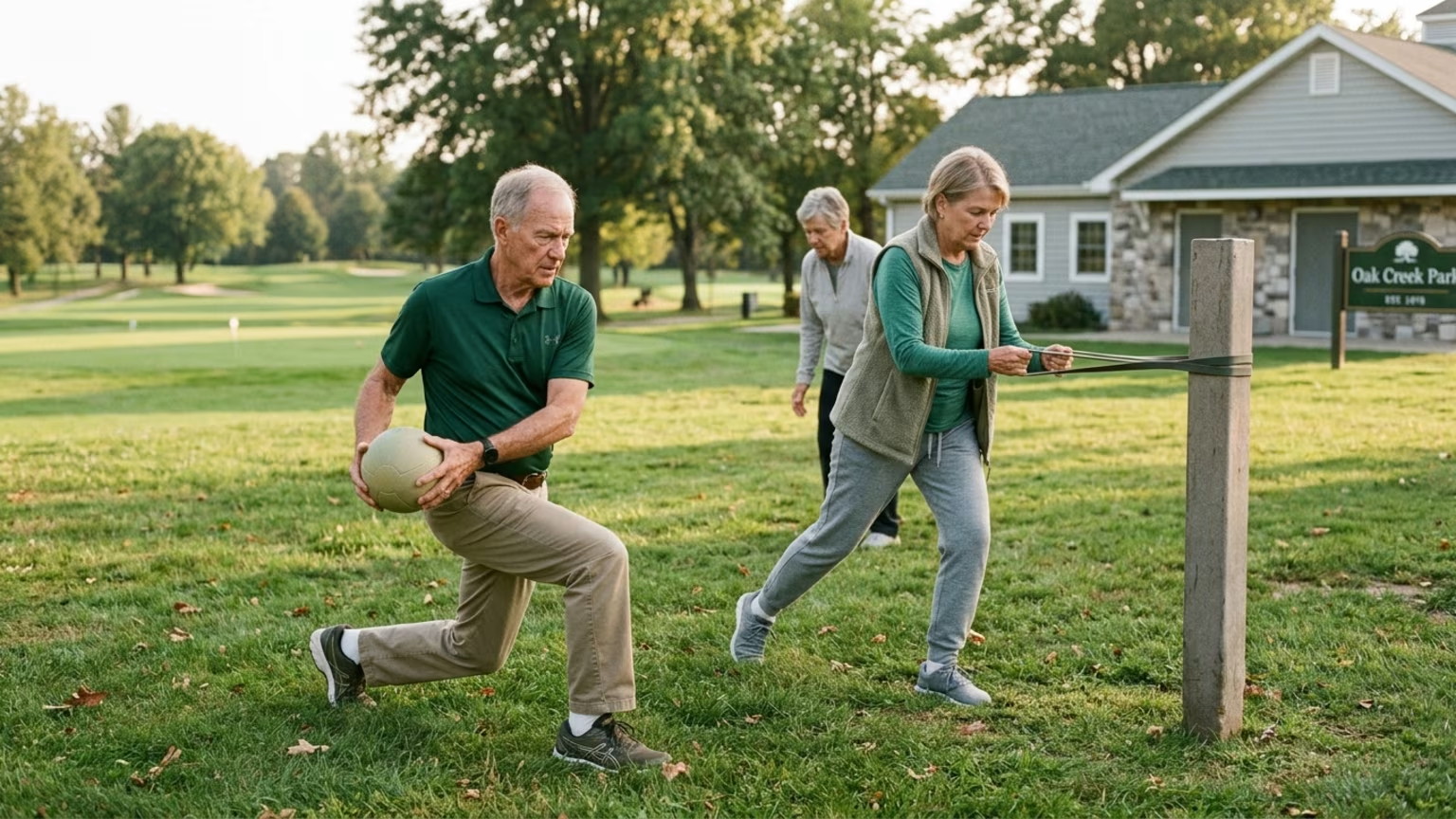
Keep the lower body movements slow and controlled to protect your knees. For upper body strength, wall push-ups protect your shoulders while building necessary pushing stability. Stand slightly away from the wall with your hands flat. Focus entirely on keeping your elbows tucked close to your ribs as you press.
To support your posture, incorporate resistance-band rows into your routine. Secure the band at chest height and pull the handles toward you. Focus entirely on squeezing your shoulder blades together without shrugging your neck. This movement counteracts the hunched posture many of us develop over the ball.
When working on your hips, simple glute bridges activate your lower half without straining your lower back. Lie flat on your back with your knees bent. Focus entirely on squeezing your glutes at the top of the movement. Hold the top position for a brief second before lowering down.
For core stability, bird dogs and modified planks are excellent choices. Start the bird dog on your hands and knees. Focus entirely on keeping your lower back perfectly still during the bird dog. For the modified plank, rest on your knees instead of your toes. Focus entirely on breathing smoothly while bracing your stomach.
To connect this strength to the course, you need to prepare your body correctly before teeing off. I used to stand on the first tee doing long, static hamstring stretches because I thought it was the right way to warm up. I would actually feel weaker on my first drive. Research later showed me that dynamic movements prime the nervous system much better.
Changing my five minute warmup completely transformed my opening tee shots. Doing a dynamic warm-up for the ageing golfer sets the stage for a better round. Finish your regular training routine with light dumbbell carries. A short carry builds grip and trunk stiffness without forcing your spine into awkward positions.
Grab a light dumbbell in each hand and walk continuously. Focus entirely on maintaining a tall, upright posture as you walk. This blended approach to strength and mobility protects your body from repetitive stress.
Chasing a collegiate athlete's gym numbers is a fast track to injury. For an older recreational player, progress is not measured by a massive lift on the squat rack. A summary of an eight-week study of older male golfers tracked a program. This program combined flexibility, core stability, balance, and resistance work.
The small sample size means we should view the results as encouraging rather than conclusive. However, the study highlighted improvements in basic functional fitness alongside clubhead speed. Your realistic benchmark should be the ability to walk 18 holes comfortably. You should also be able to maintain your posture late into the back nine.
Look out for early warning signs of soreness to know when you are pushing too hard. If you can recover easily by the following morning, you are hitting the right metrics for your age. True progress means finishing a round feeling capable enough to play again the next day. Keep your expectations grounded in durability rather than raw power.
The numbers clearly show that physical preparation works. It adds measurable distance and speed for those willing to put in the effort. The 2026 meta-analysis reported a pooled improvement of 10.55 meters in total distance. This is a powerful reminder that we control our physical destiny on the course.
You do not need to lift massive weights or contort your body to see these benefits. Numbers do not lie: preserving mobility is the ultimate equipment upgrade. Building a sustainable foundation of strength will keep you playing pain-free for years to come.
Follow Golfergy for practical insights on performance, mobility, recovery and healthy ageing. Stay connected for new articles, research-led guidance and ideas to help you play better for longer.


Learn how lower-body strength and upper-body power impact golf clubhead speed. Find safe training methods and practical benchmarks for golfers over 40.


Learn why older golfers should focus on trunk control and anti-rotation rather than forcing extreme backswings to protect joints and increase swing power.
Discover how mechanical ageing restricts older golfers and why structured, supervised physical training preserves strength, mobility and playing capacity.
Explore practical resources on performance, recovery, mobility and golf longevity.
Read the Blog