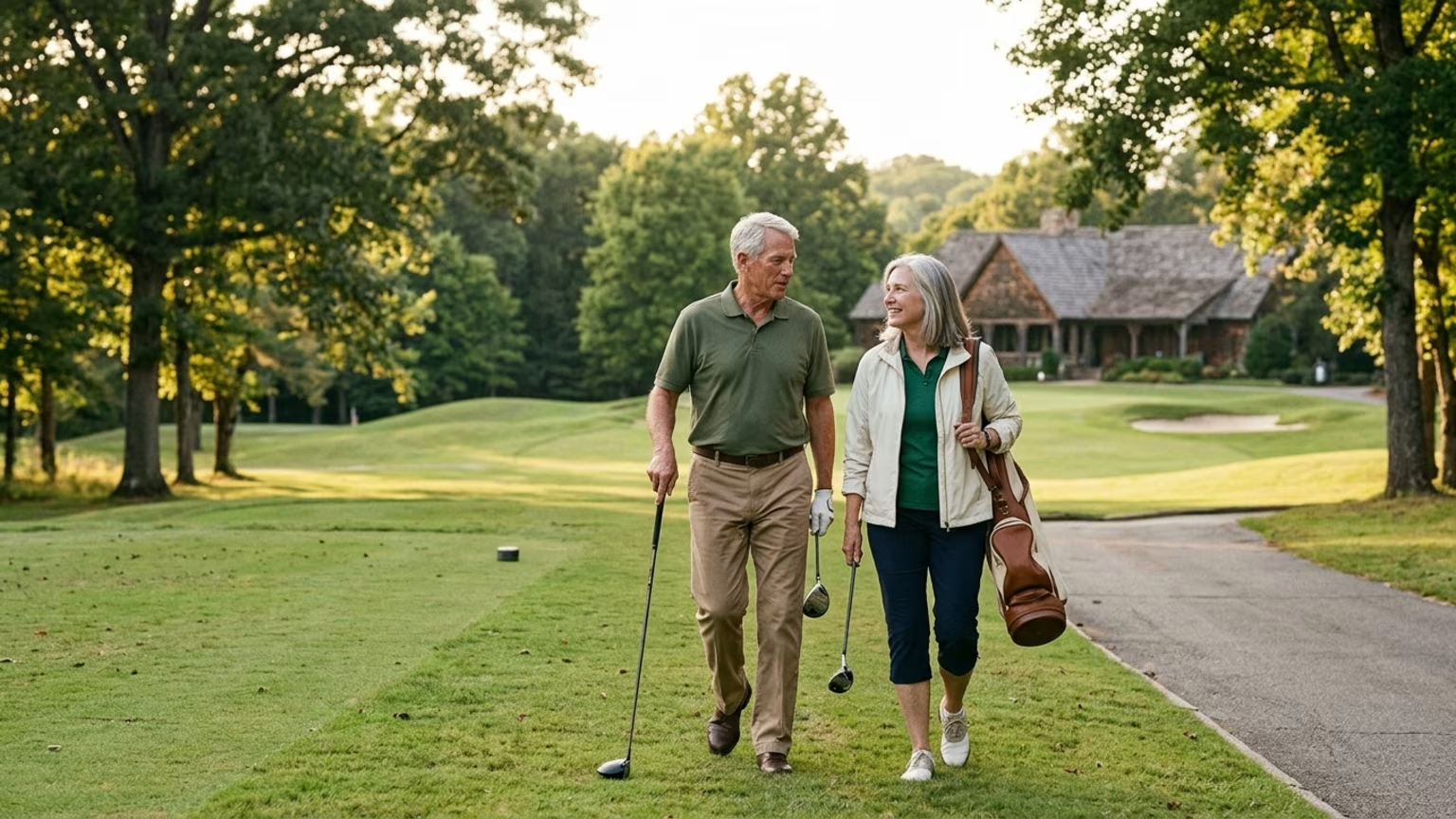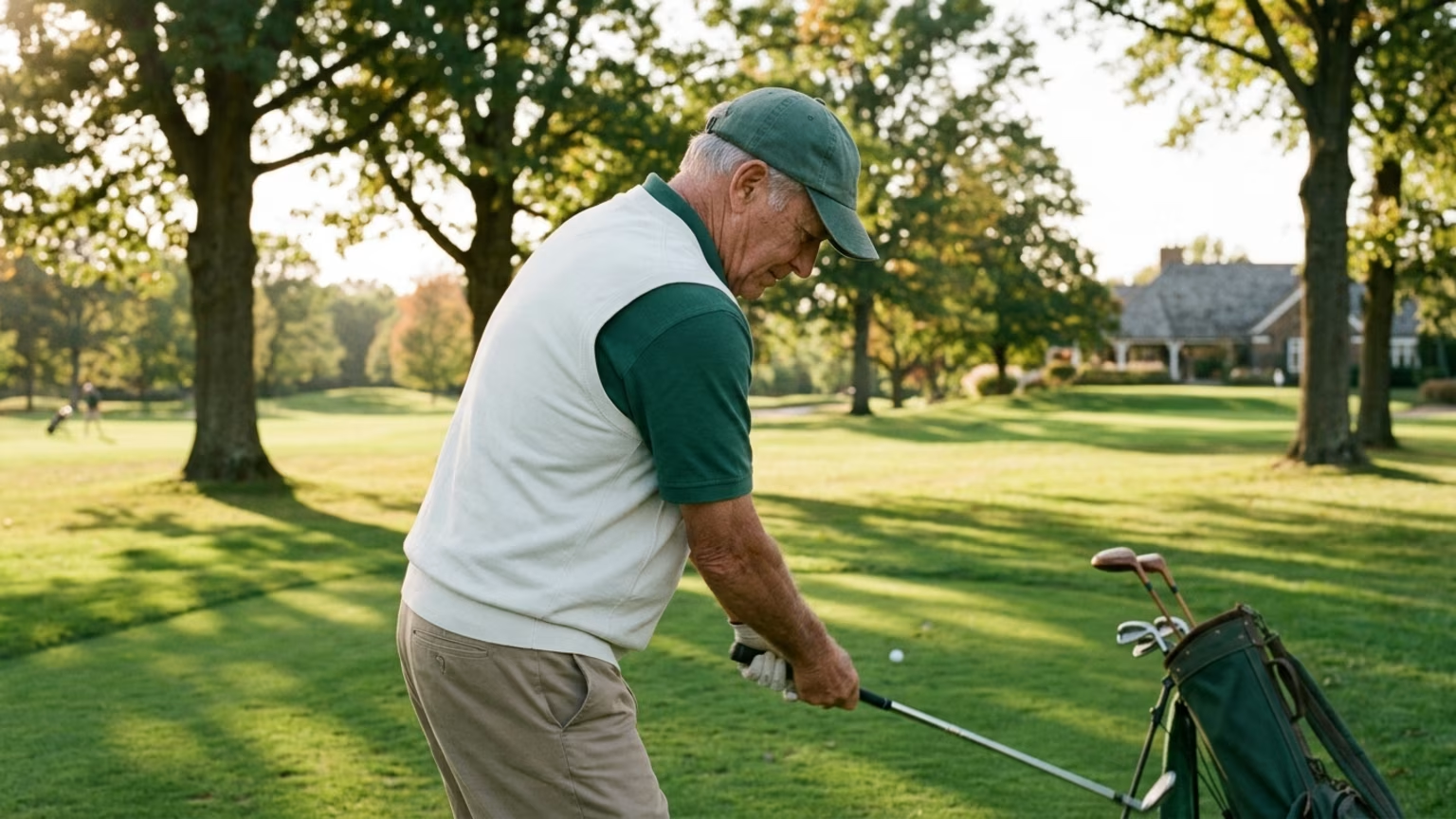

Learn why the Samsung Galaxy Walkathon's 6,100 daily step target is a practical habit for older golfers to build baseline stamina and protect joint health.




On September 13, 2026, Samsung Electronics Singapore held its inaugural Galaxy Walkathon around the Kallang precinct. The free community event took place near Singapore’s National Stadium and attracted more than 610 participants. These local walkers were asked to complete a target of at least 6,100 steps. The community walk covered approximately 5 kilometres in total distance.
This community walk was a free event designed to get people outside and moving together. The route offered a safe environment for participants to test their stamina. Organizers focused entirely on creating an accessible fitness benchmark. It proved that meaningful exercise does not require extreme intensity.
The 6,100 step figure was chosen as a reference to Singapore’s 61st birthday. The number was not presented as a universal medical threshold by health professionals. The event ultimately supported the Singapore Heart Foundation with a monetary contribution. This gathering showed how ordinary movement can accumulate into a healthier daily routine.
More than 100 Samsung employees also walked or ran to Labrador Park before the main event. This gave the company’s message of movement as part of everyday life a clear internal example. Samsung President Jeffrey Hahn stated the event was intended to encourage people to take a first step to everyday wellness goals. He added that the company hoped to make 6,100 steps a daily habit for more people.
We often forget the sheer physical workload an 18 hole walk places on the human body. The mechanics of walking a golf course require sustained cardiovascular effort over uneven terrain. Your lower body joints must absorb repeated impact forces for several hours at a time. If you sit at a desk all week, your tissues simply are not prepared for that sudden strain.
This sharp contrast between a sedentary week and a long weekend walk creates a heavy stress load. The muscles surrounding your knees and hips fatigue rapidly without consistent baseline activity. When those supporting muscles tire, the joints take on excess friction and dangerous instability. This loss of physical stability ruins your swing posture and makes joint pain highly likely.
Your spine relies heavily on the muscles in your core and legs for proper support. When these supporting structures weaken from inactivity, the spinal discs absorb all the rotational shock. This abnormal shock distribution is the primary cause of severe lower back pain in mature amateurs. Protecting your spine requires a strong and active lower body.
The golf swing itself forces rapid rotation through the hips and the lower back. When you combine this aggressive rotation with walking several kilometres, the structural strain is immense. Tired legs force your upper body to compensate during the downswing. This mechanical breakdown leads directly to the nagging aches that ruin your Sunday afternoons.
A reported randomized crossover study looked closely at 25 healthy older golfers. Researchers compared an 18 hole walking round to a 6 kilometre conventional walk and a 6 kilometre Nordic walk. The golf round covered approximately 8.8 kilometres and lasted about 210 minutes. The two shorter walking conditions took roughly an hour each to finish.
The study summary reported that systolic blood pressure fell after all three activities. All three activities also improved a simpler trail making measure immediately afterward. Interestingly, the walking conditions improved a more executive function oriented measure while the golf condition did not. However, the longer golf condition did produce favourable acute differences in glucose and parts of the lipid profile.
The data clearly illustrates that shorter walks deliver precise cognitive and cardiovascular rewards. A single hour of walking provided executive function benefits without the massive physical toll of a full round. Older golfers can use this data to rethink their weekly schedules. Treating smaller bursts of activity as valuable medicine protects your body.
These findings show that walking 18 holes provides significant activity. It is clearly a massive workload compared to simple daily walking. A three hour round asks far more of your body than a standard one hour stroll. Treating a golf round as your only physical activity is simply not a sustainable plan.
Golfers over 40 are particularly vulnerable to breaking down if they treat their weekend round as their only exercise. A full swing generates immense rotational force regardless of your age. Walking 8.8 kilometres compounds that physical demand on an aging body. When fatigue sets in on the back nine, your injury risk multiplies rapidly.
Many recreational players sit at a computer from Monday through Friday. They then head straight to the first tee on Saturday morning without any prior physical preparation. Their bodies enter a state of shock from the sudden explosion of rotational force. This extreme shift from completely sedentary to highly active destroys soft tissue over time.
The saddest thing our team has seen in golf is watching lifelong playing partners slowly drop out of our weekend group. It usually starts with a nagging shoulder or knee issue they ignore until it requires surgery. That painful pattern is exactly why Golfergy became obsessed with golf longevity. Mature amateurs face a steep drop in mobility if they lack a baseline of regular physical movement.
If you lack cardiovascular conditioning, fatigue will destroy your swing mechanics by the final few holes. Your body instinctively stops rotating properly when your legs get tired. This forces your arms and hands to manipulate the club through the impact zone. Poor sequencing combined with total exhaustion is a recipe for serious physical damage.
The best preventative adjustment is to use a moderate daily step count to build lasting baseline stamina. Setting a manageable target like 6,100 steps keeps your joints well lubricated. A consistent walking routine primes your lower body for the heavy physical demands of the golf course. You do not have to walk five miles every single day to see real benefits.
A brisk walk requires no specialized equipment or expensive gym memberships. You can easily achieve your daily steps by walking your neighborhood in the early evening. This gentle activity flushes out inflammation from your lower back and hips. Small daily efforts compound into massive long term gains on the scorecard.
Incorporating a target into your daily schedule is a cornerstone of healthy ageing. A practical goal stops you from feeling overwhelmed by massive fitness demands. Your body adapts much better to frequent mild activity than to rare bursts of extreme effort. Consistency always beats intensity when it comes to preserving your joints.
Building a sensible weekly routine around simple habits makes a huge difference over time. Treating a 5 kilometre walk as a repeating habit makes your weekend round feel significantly less taxing. Focus entirely on maintaining a steady pace during these shorter maintenance walks. This approach builds the exact kind of endurance older players need for a full round.
Using a practical target helps you avoid the dreaded boom and bust cycle of weekend warrior sports. A short morning walk gets your blood flowing before you start your day. This mild activity clears out stiffness and keeps your muscles primed for your next tee time. Maintaining your baseline fitness is the true secret to playing great golf well into retirement.
A major misconception is that playing golf completely replaces the need for normal cardiovascular exercise. The 2018 international consensus statement on golf and health places golf within broader physical activity guidance. This official guidance calls for at least 150 minutes of moderate intensity aerobic activity per week. Pushing yourself through a painful round is never a smart substitute for proper weekly conditioning.
The consensus statement noted that health benefits are likely to be greater when players walk rather than ride. However, it explicitly stated this is only true for those who are able. Another misconception involves relying purely on smartwatches to dictate your medical readiness. Samsung Health and Galaxy smartwatches offer step tracking, activity challenges, goal based guidance, and milestone feedback.
Samsung described its Galaxy Watch Ultra2 as offering up to 60 hours of battery life. The manufacturer also highlighted a Trail Run feature that records elevation and terrain related information. It includes a Nutrition Alert feature intended to support hydration decisions. These features provide helpful tracking data but do not offer professional medical assessment.
We do not have to stop playing as we age, provided we do the right maintenance work between rounds. The key is simply doing the right conditioning to keep our bodies resilient. Maintaining an active lifestyle on non golf days protects our joints and preserves our swing speed. What adjustments will you make to your mobility routine this season to steer clear of this hazard?
Follow Golfergy for practical insights on performance, mobility, recovery and healthy ageing. Stay connected for new articles, research-led guidance and ideas to help you play better for longer.


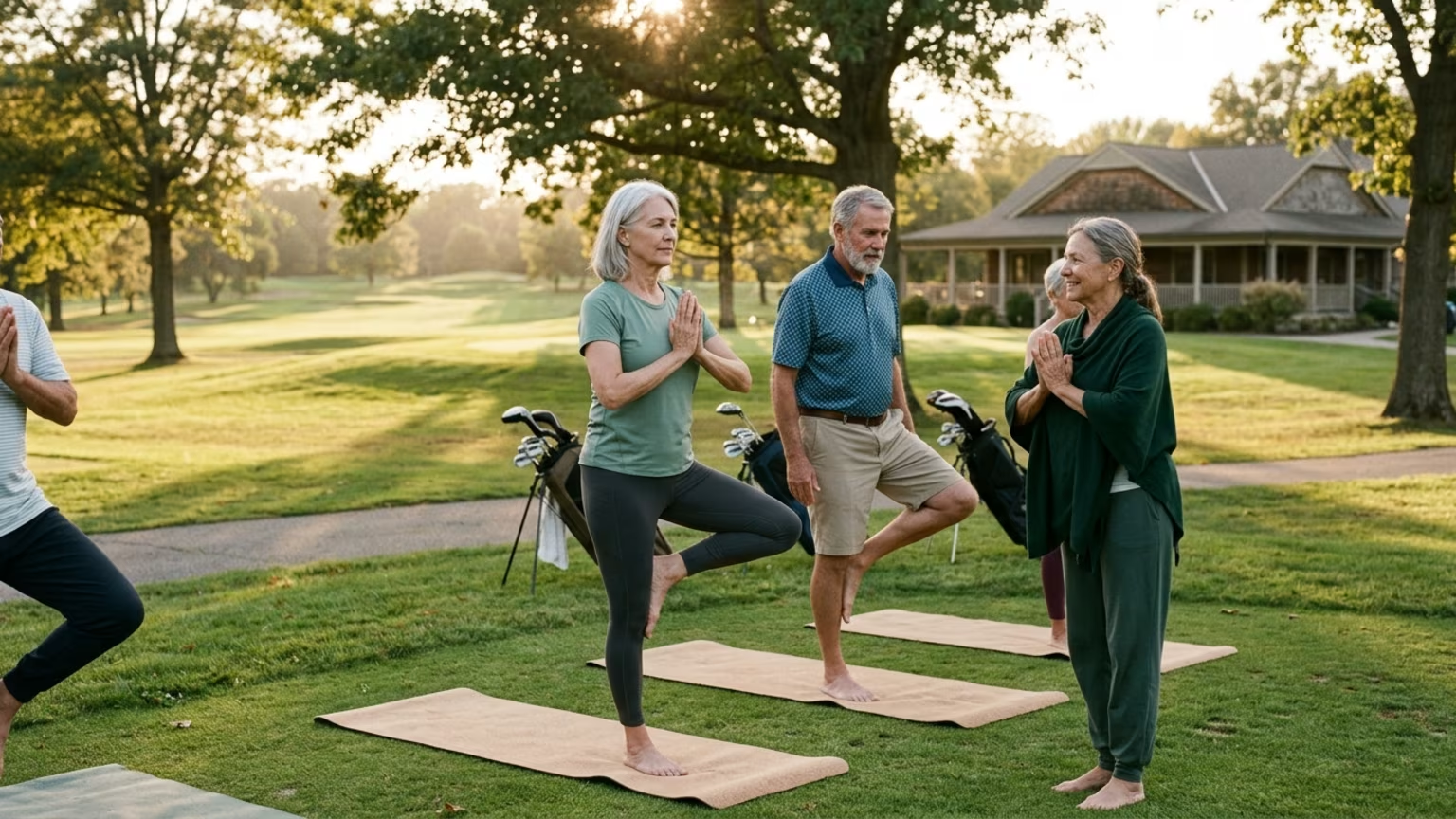
Learn how an Economic Times guided yoga routine offers ageing golfers safe poses for balance, strength and mobility without risking injury on the course.


A recent GeroScience study links decades of aerobic activity to healthier ageing markers. Read how golfers over 40 can adjust their routines to avoid fatigue.

A BMJ study shows brisk walking helps older golfers maintain bone mineral density. Learn how two to three weekly hours of walking protects your playing longevity.
Explore practical resources on performance, recovery, mobility and golf longevity.
Read the Blog