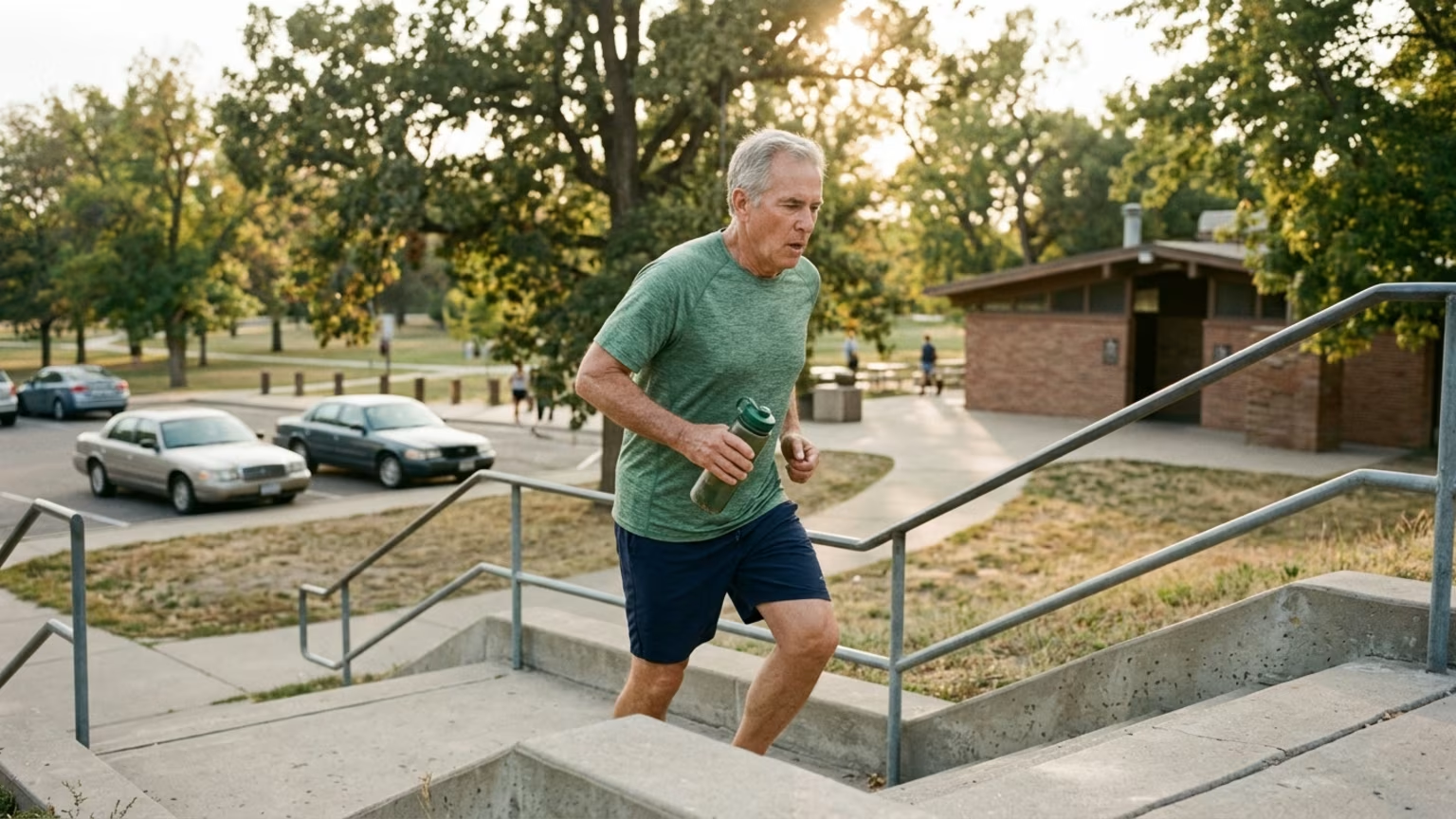
Discover how the 19th hole impacts your next-day golf recovery. Learn practical strategies to manage alcohol intake while protecting sleep and hydration.




"Can one clubhouse drink really ruin my performance the next morning?" It is the most common question we hear from experienced players here at golfergy. A controlled study found that consuming about 12 standard drinks after strenuous exercise reduced post-exercise myofibrillar muscle-protein synthesis by 37 percent when combined with carbohydrate. While you are not drinking that much after a round, this research proves that alcohol actively competes with your ability to repair muscle tissue. Understanding this trade-off is vital for any older athlete who wants to stay on the course.
When you finish a hot round, your body needs immediate hydration and nutrients. A 2025 review focused on recovery for professional and elite amateur golfers describes sleep and nutrition as cornerstones of preparation. It also states that empirical research specifically examining recovery methods in golfers remains scarce. However, introducing alcohol before water forces your system to process a toxin rather than repair itself.
This biological conflict often shows up as persistent soreness the next day. The same controlled study noted that compared with protein alone, alcohol reduced post-exercise myofibrillar muscle-protein synthesis by 24 percent when participants also consumed protein. Those 24 percent and 37 percent reductions in muscle-protein synthesis came from a study using approximately 1.5 grams of alcohol per kilogram. That equals about 12 standard drinks.
Your body treats alcohol as a priority for removal rather than a nutrient for recovery. When you consume a beer, your liver stops processing lactic acid to handle the alcohol instead. This delay in clearing exercise byproducts contributes heavily to next-day fatigue. If you want to feel fresh, you must give your system a chance to clear these byproducts first.
You might think one pint will not hurt your physical readiness. A single beer will not cause a total systemic failure. Yet, chronic low-level dehydration compounds over a long weekend of golf. When you prioritize a cold beer over proper nutrition, your muscles do not get the materials they need to rebuild.
To combat this stiffness, you need to rethink your post-round sequence. Drinking water should always be your first priority when you step off the eighteenth green. You can read more about this in our comprehensive guide to post-round recovery. Only after you rehydrate should you consider a social drink.
Poor recovery choices eventually show up in your swing path. Dehydration and poor sleep directly reduce your rotational flexibility on the tee box. The golf-specific review advises avoiding alcohol close to bedtime because it can interfere with sleep. When you sleep poorly, your coordination and timing suffer greatly.
Without adequate rest, your upper back and shoulders will feel incredibly stiff. This physical limitation makes it difficult to turn properly behind the ball. Instead of rotating your shoulders, you will likely sway your hips off the ball. Swaying leads to poor contact, fat shots, and a significant loss of distance.
Golfers over 40 already fight a natural decline in rotational speed. Adding alcohol-induced poor sleep to the mix accelerates this power loss dramatically. When your muscles are not fully recovered, your body instinctively limits your range of motion to prevent injury. This protective mechanism is exactly why your swing feels incredibly short and tight the next day.
Your nervous system also requires deep sleep to execute complex motor patterns. Golf demands precise hand-eye coordination and balance. If your sleep is compromised, your brain cannot send the right signals to your muscles. This is a topic we cover extensively in our sleep performance connection guide.
Protecting your mechanics means protecting your rest. You do not have to skip the 19th hole entirely to play well. You just need to finish your social time earlier in the evening. Giving your body time to process the alcohol before bed preserves your ability to rotate smoothly tomorrow.
If you feel your lower back tightening up at the clubhouse table, you must take immediate action. Do not just sit there and hope the stiffness goes away. The safest adjustment you can make right now involves seated mobility work. Plant your feet firmly on the ground and sit tall in your chair.
Next, focus entirely on turning your trail hip. Gently rotate your torso away from the table while keeping your spine straight. Hold this position for a few seconds to release the tension in your lower back. Repeat this movement on the other side to keep your hips from locking up completely.
You can also perform a simple wrist stretch while waiting for your food. Extend your lead arm straight out in front of you. Use your opposite hand to gently pull your fingers back toward your body. This relieves the tension built up from gripping the club too tightly for four hours.
You should also address your internal recovery immediately. Golf-specific recovery guidance recommends replacing approximately 1.5 litres of fluid for every kilogram of body mass lost during a round. You should also include electrolytes to replace salt lost through sweat. Order a large glass of water with your clubhouse meal.
Taking these small actions keeps you from stiffening up on the car ride home. Proper nutrition also plays a huge role in fighting this tightness. You can learn more about building an anti-inflammatory strategy to help your body bounce back. Small adjustments make a massive difference in how you feel the next day.
Maintaining your golf fitness requires a proactive approach to your daily habits. You cannot wait until you are thirsty on the back nine to start drinking water. Your hydration strategy must begin the day before you play. Drink plenty of water throughout the week to maintain a healthy baseline.
When I developed medial epicondylitis, commonly known as golfer's elbow, I thought I needed complete rest. Six weeks off the course did nothing to help. I finally learned that active recovery with a flexbar was the actual solution. It taught me that treating golf injuries requires loading the tissue properly, not just sitting on the couch and hoping for the best.
The exact same logic applies to managing your recovery after a round. You have to actively replace what you lost on the course. Always consume a substantial meal containing protein and carbohydrates before having a drink. Eating food slows down the absorption of alcohol and gives your muscles the fuel they need.
Tracking your weight before and after a round provides a concrete baseline for your recovery. If you are one kilogram lighter after playing, you know exactly how much fluid you need to replace. This takes the guesswork out of your post-round routine. Treating your body like an athlete's machine makes the game much more enjoyable.
You should also make it a habit to alternate any alcoholic beverages with a glass of water. This simple rule prevents you from falling into a deep hydration deficit. Setting a strict limit before you walk into the clubhouse helps you stick to your goals. Proactive maintenance is the only way to extend your playing years.
The next time you visit the practice tee, assess how your body responds to your first few swings. Notice if your shoulders feel heavier than usual after a social weekend at the club. Pay close attention to your energy levels as you work through your bag. If your swing feels sluggish, your recovery routine might need an honest adjustment.
Your goal is not to eliminate all enjoyment from the game. The objective is to make smarter choices that support your physical longevity. Every glass of water you drink after the 18th hole pays dividends on your next tee shot. Take control of your recovery, manage your clubhouse time wisely, and watch your consistency improve.
Does a single clubhouse drink really dictate your next performance? Only if you let it replace the hydration and rest your body desperately needs.
Follow Golfergy for practical insights on performance, mobility, recovery and healthy ageing. Stay connected for new articles, research-led guidance and ideas to help you play better for longer.



Learn practical whole-food protein targets to support your post-round golf recovery. See how balanced meals can help older players maintain muscle mass.

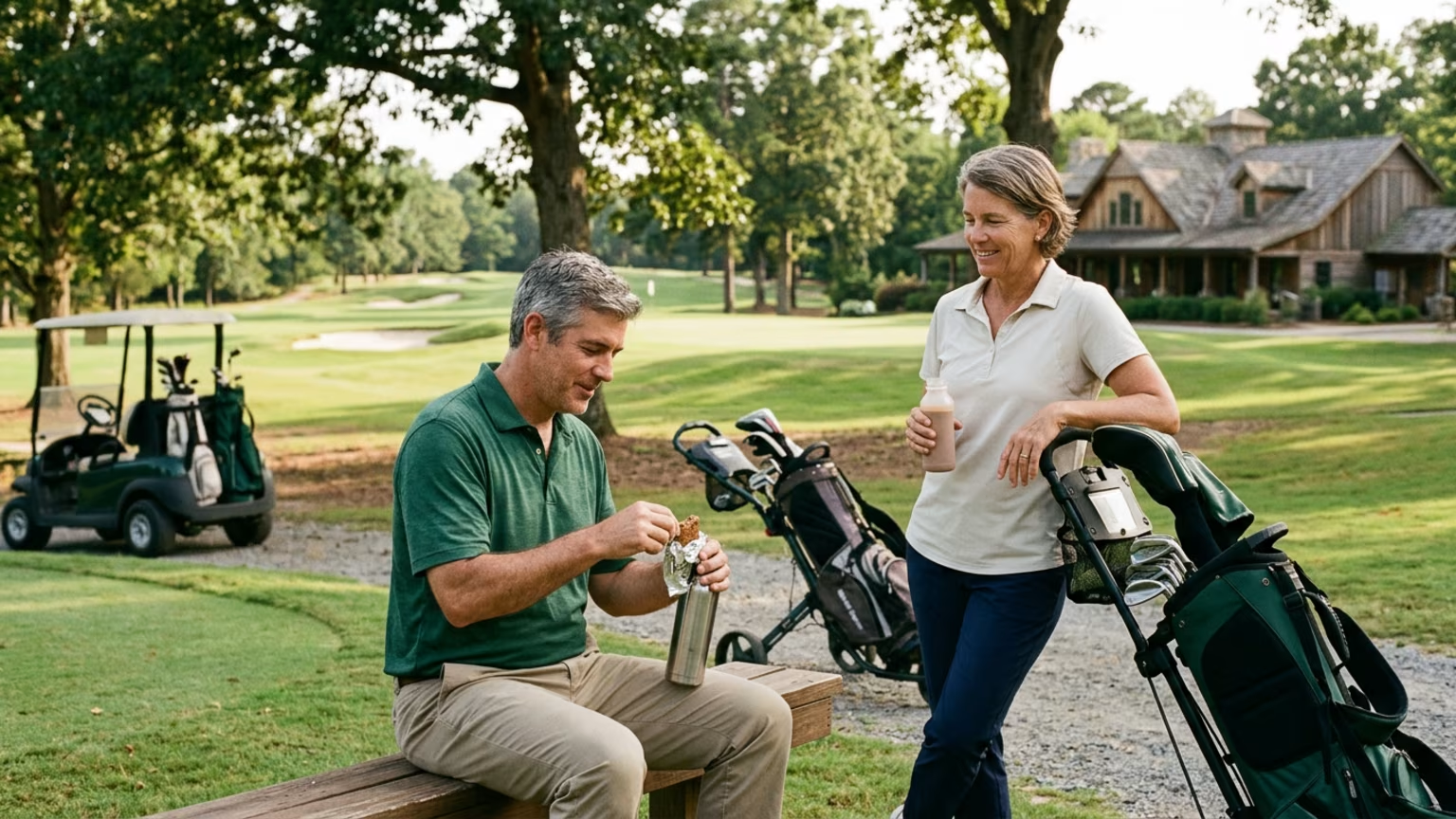
A September 2026 analysis reveals that golfers over 40 should prioritize total daily protein and complete amino acid profiles over traditional BCAA ratios.

MIT research shows short bursts of pink noise can strengthen brain waves and fluid flow during sleep. Learn why natural rest is vital for older golfers.
Explore practical resources on performance, recovery, mobility and golf longevity.
Read the Blog