
Modern recovery tools help golfers reduce post-round muscle fatigue, restore natural joint mobility, and maintain optimal swing speed for future games.




Most golfers believe physical recovery is a passive state. They finish a long eighteen holes and sit immediately in a comfortable clubhouse chair. They order a cold beverage and expect their muscles to repair themselves. This passive approach actually delays the body's natural healing process.
For golfers over forty, physical recovery requires deliberate action. As the body matures, blood circulation naturally slows down. Muscle fibers take longer to repair after a five-hour round. This comprehensive guide compares modern recovery tools to help you maintain your swing speed and protect your joints.
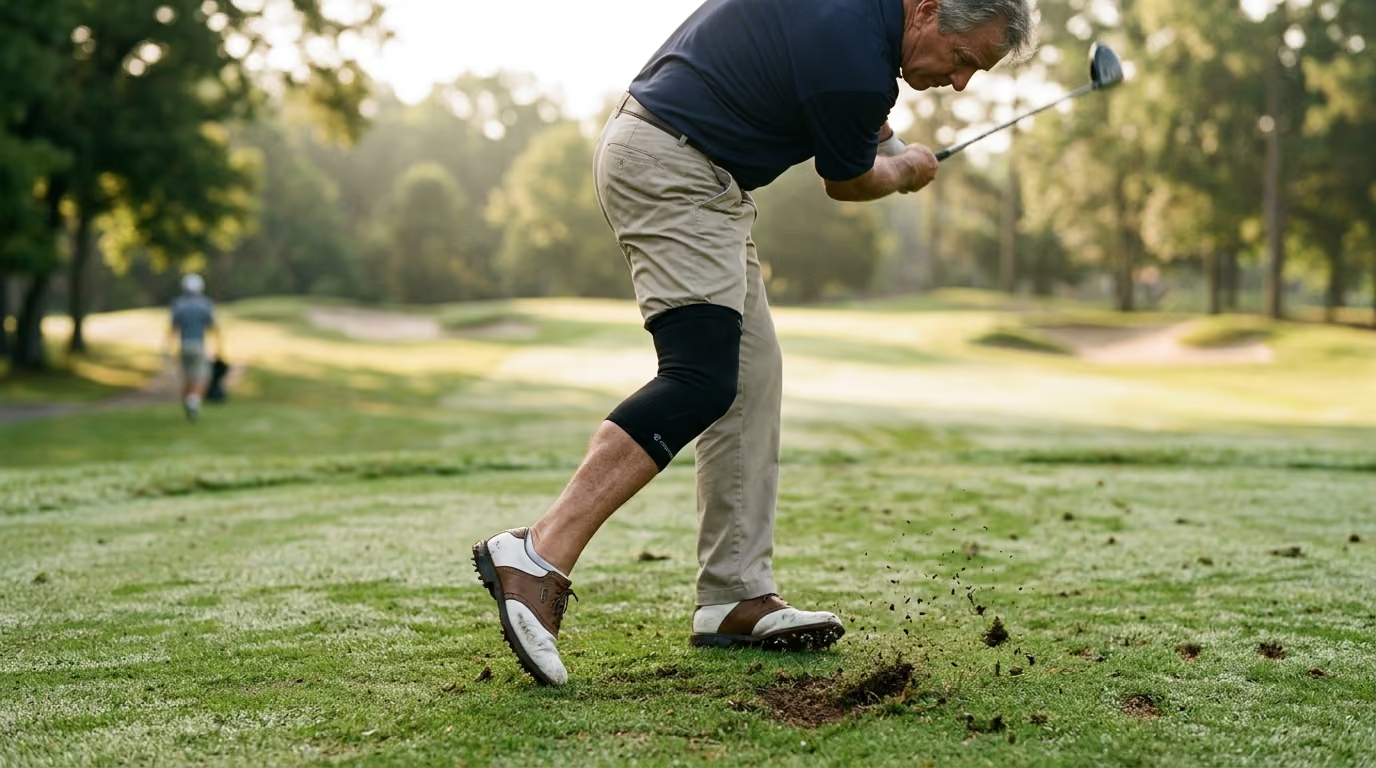
Imagine standing on the fifteenth tee box during a close weekend match. Your lower back feels tight and compressed from hours of rotational swings. Your lead hip feels sticky as you try to turn through the ball. You swing your driver but the clubhead speed feels sluggish. Your legs feel like lead weights as you walk up the fairway.
This late-round fatigue is not just a sign of poor cardiovascular conditioning. It is a direct result of accumulated muscular strain and reduced joint mobility. When your muscles tighten, your brain limits your swing speed to protect your joints from injury. This tension can lead to poor swing mechanics and missed shots.
Many mature golfers accept this fatigue as a normal part of getting older. They assume that soreness and stiffness are simply the price of playing eighteen holes. However, this stiffness is actually a physiological signal that your body needs active assistance. Understanding how to resolve this tension can keep you playing pain-free golf for decades.
Active recovery helps restore your natural range of motion before you go to sleep. It clears out cellular waste products and brings fresh, nutrient-rich blood to your tired muscles. By taking charge of your recovery, you can step onto the first tee tomorrow feeling as loose as you did today.
To recover properly, we must first look at the science of muscle strain. Walking several miles and swinging a golf club hundreds of times creates microscopic damage in your muscle fibers. This microscopic damage leads to Delayed Onset Muscle Soreness, which is commonly called DOMS. DOMS usually peaks between twenty-four and seventy-two hours after your round.
Seniors often experience a double challenge with muscle soreness. The natural aging process reduces capillary density and blood flow to working tissues. This makes it harder for the body to transport nutrients to damaged muscle fibers. Proper post-round muscle recovery strategies aim to speed up this transport process without interrupting the body's natural defense systems.
We also need to understand the inflammation paradox. Swelling and mild inflammation are not entirely bad things. They are critical biological signals that tell your immune system to repair the damaged tissues. If you completely block this inflammatory response, you might delay your overall healing. The goal is to manage this response rather than eliminate it.
Two main physiological pathways explain how modern recovery tools work. First, the Gate Control Theory of pain explains how mechanical stimulation can block discomfort. When you apply vibration or compression to a sore muscle, you stimulate large sensory nerves. These nerves travel faster than pain nerves and close the neurological gate to pain signals. This reduces your perception of soreness without the use of medication.
Second, we must focus on venous return and lymphatic drainage. Blood flows easily down to your feet through your arteries. However, moving deoxygenated blood and cellular waste back up to your heart is more difficult. It relies on muscle contractions to pump the fluid upward. For senior golfers, improving this return process is key to preventing swollen ankles and heavy legs after playing.
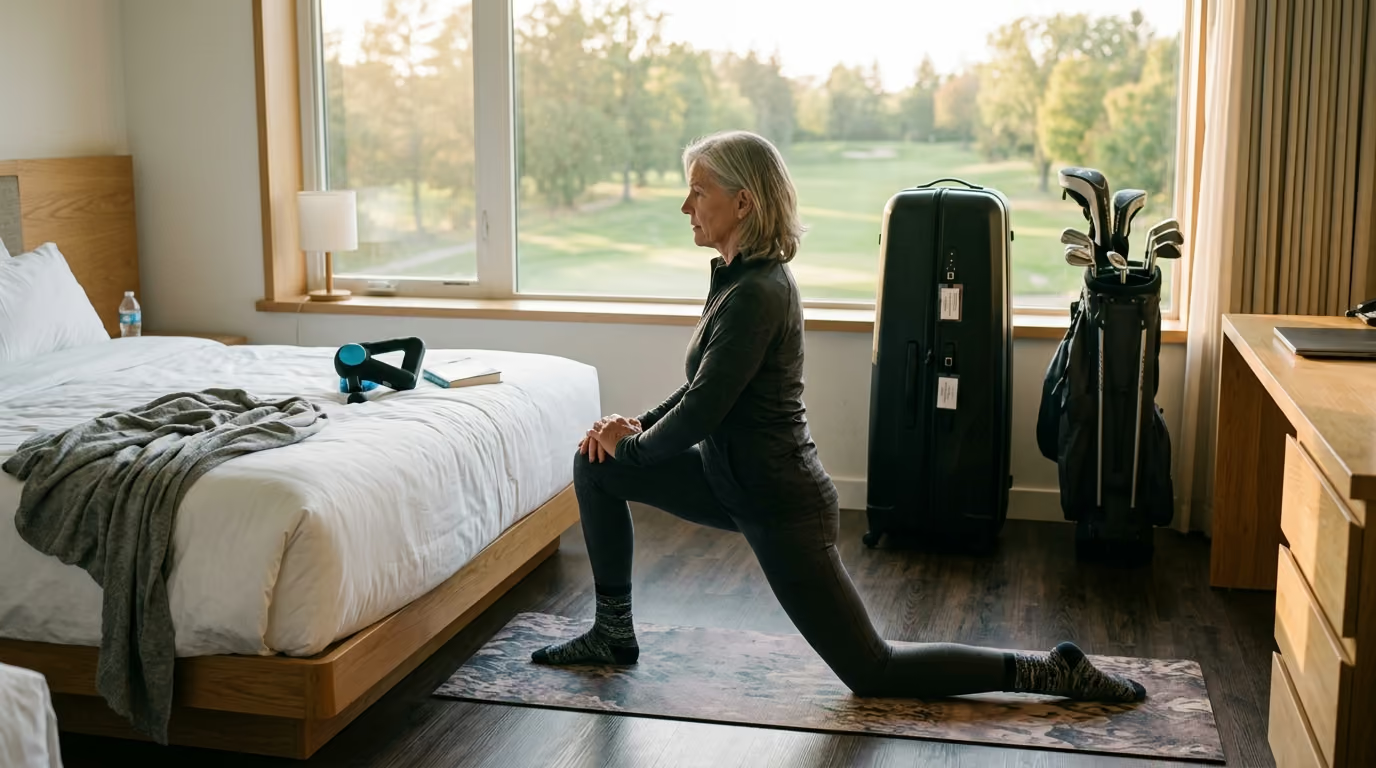
You do not have to wait until you get home to start your recovery. You can perform a quick hip release right on the tee box while waiting for your playing partners. This simple movement helps restore pelvic rotation and takes the pressure off your lower back.
First, stand next to your golf cart or a sturdy bench for balance. Step your trail foot backward into a shallow lunge while keeping your heel lifted. Focus entirely on turning your trail hip forward until you feel a gentle stretch in the front of your thigh. Hold this position for thirty seconds while taking deep belly breaths. Repeat this twice on each side to release tension in your hip flexors and restore your pelvic alignment.
This quick movement targets the psoas and rectus femoris muscles. These muscles often shorten during long periods of walking and standing. By releasing them on the course, you prevent them from pulling your pelvis out of alignment. This simple action helps maintain your posture and protects your lower back during your remaining tee shots.
Pneumatic compression boots and percussion massage guns are highly popular recovery tools. Both aim to reduce soreness, but they use completely different physical mechanisms. Understanding these differences helps you choose the right tool for your specific physical needs.
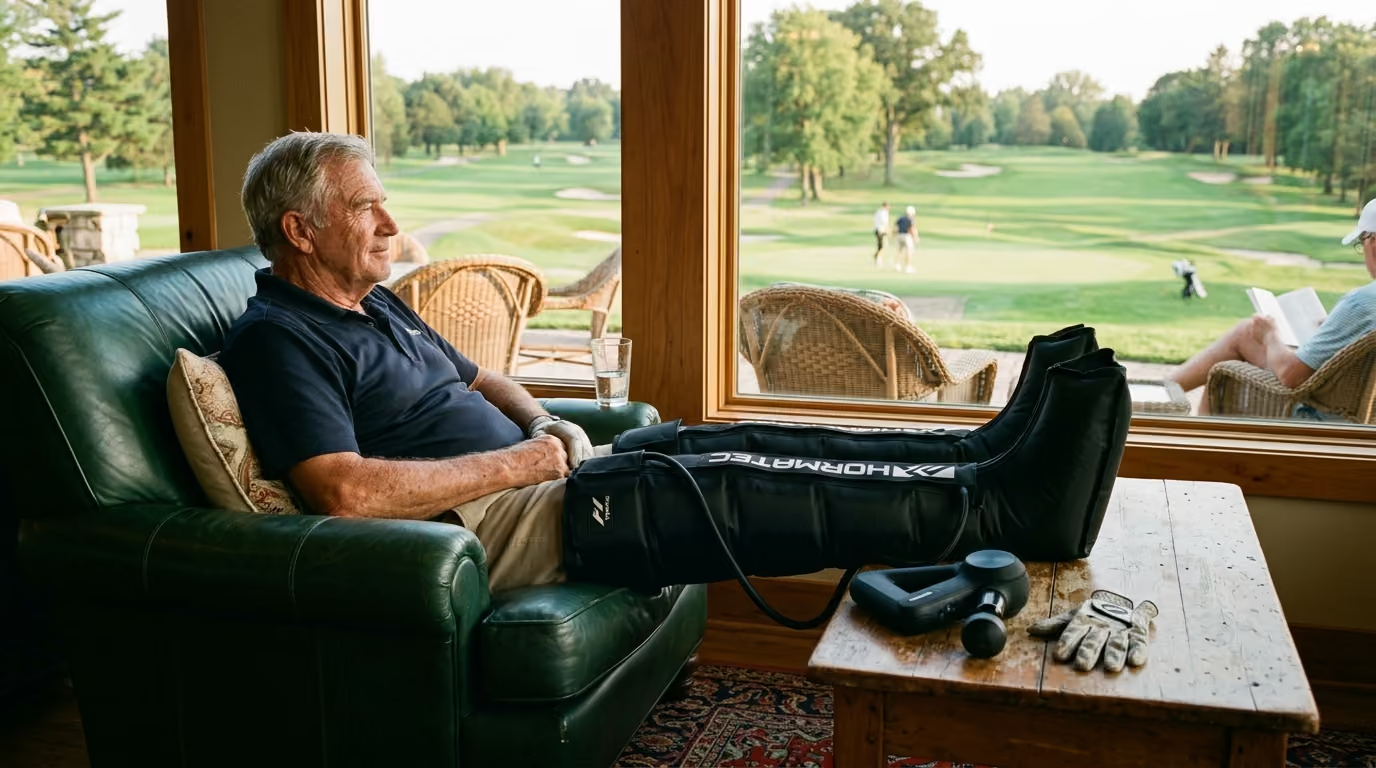
Compression boots use inflatable chambers to apply sequential pressure to your legs. This pressure starts at your feet and moves up toward your hips. This movement mimics the natural pumping action of your calf muscles. According to a meta-analysis of twenty-three studies, intermittent compression is highly effective for recovery more than twenty-four hours after exercise.
For older golfers, this technology provides unique benefits. It is particularly useful for reducing lower-extremity edema and pooling fluid. Research shows that pneumatic compression helps improve joint mobility and walking distance in older adults. By pushing interstitial fluid back into the circulatory system, it relieves the heavy sensation in your legs.
Massage guns use high-frequency, rapid pulses to target specific muscle groups. Instead of squeezing the entire limb, they apply localized pressure and vibration to a single spot. This mechanical vibration temporarily increases local blood flow to the targeted area. It also helps to relax tight fascia and muscle fibers around the joints.
Studies show that percussion therapy improves local flexibility and reduces subjective soreness. It works by raising your pressure-to-pain threshold. This means your muscles can tolerate more pressure before they feel sore or tender. It is an excellent tool for targeting specific trigger points in your shoulders, upper back, and glutes.
When comparing these tools, we must look at both subjective feelings and objective physical performance. Both compression boots and massage guns excel at reducing your perceived muscle soreness. They help you feel lighter, looser, and more comfortable the day after a round.
However, their impact on immediate next-day physical performance is less certain. Research indicates these tools may not automatically restore lost clubhead speed or vertical jump power within twenty-four hours. They help your muscles feel better, but your nervous system still needs actual rest to recover its full power output. You should view these tools as ways to improve comfort and mobility rather than instant performance boosters.
Water-based recovery has been a staple in professional sports for decades. Golfers can use either cold water immersion or alternating hot and cold baths. Both methods have distinct physiological effects on the vascular system.
Cold water immersion involves sitting in water that is kept around ten degrees Celsius. This temperature causes rapid vasoconstriction, which means your blood vessels contract. This contraction reduces localized blood flow and helps quiet down acute tissue inflammation. It acts as a natural numbing agent for sore joints and muscles.
Research shows that cold water immersion reduces perceived muscle soreness by about sixteen percent. It is highly effective at reducing swelling in the knees and ankles after walking eighteen holes. However, you must use it strategically. Because cold water restricts blood flow, it can also slow down the muscle repair process if used too frequently.
Contrast water therapy involves alternating between hot and cold water. You typically spend one minute in cold water and then switch to three minutes in hot water. You repeat this cycle several times. This constant temperature shift creates a physical pumping effect in your blood vessels.
Your blood vessels dilate in the hot water and constrict in the cold water. This pumping action helps flush out metabolic waste products from your tissues. A review of thirteen studies showed that contrast water therapy significantly reduces muscle strength loss and soreness up to ninety-six hours after exercise. It is often a gentler option for seniors who find constant ice baths too shocking to their system.
Modern recovery devices are generally safe for the general public. However, mature golfers must take extra precautions before using high-powered tools. Age-related changes in your cardiovascular system, bones, and skin require specific adjustments to keep your golf injury prevention efforts safe.
Many golfers over fifty take daily blood thinners or anticoagulant medications for heart health. If you take these medications, you must avoid high-intensity percussion therapy. The rapid, deep pulses of a massage gun can easily rupture delicate capillaries deep in your muscles. This can lead to severe deep-tissue bruising, hematomas, or internal bleeding.
Osteoporosis and osteopenia are common conditions that weaken bones as we age. If you have low bone density, you must keep percussion guns away from bony areas. Never apply a massage gun directly to your spine, ribs, or the bony outer edges of your hips. The intense vibration can cause micro-fractures in weak bones. Focus the tool only on thick muscle tissue like the thighs or calves.
As we grow older, our skin naturally becomes thinner and less elastic. This fragility means that high-pressure settings on compression boots can cause skin tears or bruising. Always start your compression boots at the lowest pressure setting. You can slowly increase the pressure if you do not see any red marks or bruising on your skin afterward.
Seniors with severe varicose veins or a history of Deep Vein Thrombosis must be careful with compression boots. The high pressure can disturb blood clots or damage fragile vein valves. If you have a history of circulatory issues, always speak to your doctor before using any compression sleeve.
Contrast water therapy causes rapid changes in your heart rate and blood pressure. The hot water lowers your blood pressure, while the cold water raises it quickly. This rapid shift can be dangerous for seniors with high blood pressure or heart disease. If you have a cardiovascular condition, stick to mild warm baths instead of extreme temperature changes.
Many golfers make simple mistakes when trying to speed up their recovery. These mistakes can delay your healing or even cause minor injuries. Let us examine three common pitfalls that senior players should avoid.
The biggest mistake is relying entirely on passive rest. Sitting in front of the television for hours after a round does not help your muscles heal. Your body needs a small amount of movement to circulate fresh blood and clear out metabolic waste.
Instead of staying completely still, practice active physical recovery. A short walk or light stretching session is much more effective than sitting. Active recovery keeps your joints lubricated and prevents next-day stiffness.
Many golfers use massage guns or foam rollers with extreme pressure because they want to break up scar tissue. This is a physiological myth. You cannot break up fibrous scar tissue with manual tools.
These tools actually work by calming down your nervous system and relaxing your muscle fascia. Using excessive pressure does not break tissue; it simply causes bruising and inflammation. Use a moderate pressure that feels comfortable and relaxing rather than painful.
While ice baths are great for reducing pain, overusing them can hinder your progress. Cold water dampens the natural signals that help your muscles grow stronger. If you want to build strength and endurance, avoid using cold water immersion after every practice session. Save the cold baths for hot days or when you feel extreme joint soreness.
To keep your swing fluid and protect your joints as you age, you need a structured recovery routine. Professional players follow systematic recovery plans to stay competitive week after week. This sixty-minute protocol is specifically designed to support healthy aging on the course.
Start your recovery as soon as you step off the eighteenth green. Spend ten minutes walking at a slow, comfortable pace. If you have access to a stationary bicycle, ride with very light resistance. This gentle movement keeps your blood pumping and helps your heart rate return to normal slowly.
Next, use a percussion massage gun to target specific muscles that hold tension from your golf swing. Spend exactly two minutes on each of the following areas. Keep the device on a low speed setting and use light pressure.
First, focus entirely on your lead-side glute muscle. Move the massage gun slowly across your hip area to release tension from your downswing pivot. Next, work on your forearms to relieve the tension from gripping the club. Finally, run the device down your calves to ease the strain from walking several miles on uneven fairways.
Now, sit down and put on your pneumatic compression boots. Set the device to a low or moderate pressure setting, ideally between thirty and fifty millimeters of mercury. This pressure is high enough to move fluid but gentle enough for older blood vessels.
Sit back and relax for thirty minutes while the boots massage your legs. This process helps move interstitial fluid out of your lower legs and back into circulation. It is the perfect time to hydrate and eat a small meal containing protein and carbohydrates.
After removing the boots, finish your routine with two targeted stretches. These movements address the chronic tightness caused by the repetitive golf swing.
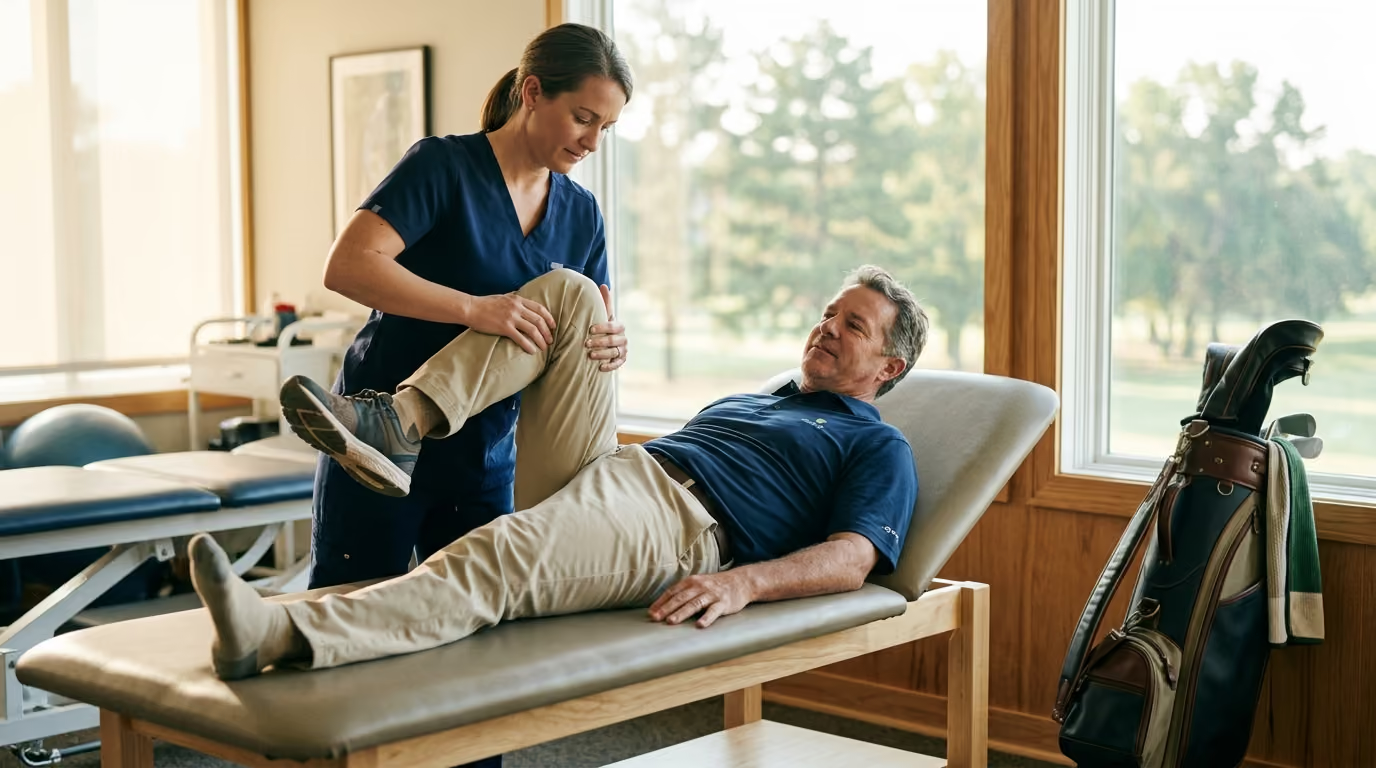
First, perform the doorway hamstring stretch. Lie on your back in a doorway and place one leg up against the wall while keeping your other leg flat on the floor. Hold this position for fifteen seconds to gently release your hamstring. Repeat this stretch three times on each leg.
Next, perform a kneeling hip flexor stretch. Kneel on one knee with your other foot flat on the floor in front of you. Focus entirely on turning your pelvis backward and shifting your weight forward slightly until you feel a stretch in the front of your hip. Hold this position for fifteen seconds, then switch legs and repeat.
Your recovery tools must fit your physical condition and your style of play. Using the wrong equipment settings can cause discomfort or minimize your results. Let us look at how to select and adjust your recovery gear.
Many golfers make the mistake of setting their compression boots to the highest possible pressure. This is unnecessary and can be dangerous for older blood vessels. Always start your compression boots at a low setting. A pressure of thirty to fifty millimeters of mercury is highly effective for improving circulation. If you experience any pinching or pain, lower the setting immediately.
Massage guns usually come with several different plastic and foam attachments. Avoid using the hard, bullet-shaped plastic attachments on your lower back or near your joints. Instead, use the soft, round foam ball attachment. This softer material cushions the impact and is much safer for older muscles and delicate skin.
Your recovery actually begins with the equipment you use on the course. If you have arthritis in your hands, you may grip your clubs too tightly. This extra grip tension causes forearm fatigue and elbow pain.
Consider switching to midsize or jumbo grips on your golf clubs. Larger grips allow you to hold the club with less hand pressure, which reduces strain on your forearms. Wearing a soft, high-quality glove on both hands can also help you maintain control without squeezing the grip too hard.
Walking eighteen holes places significant stress on the joints in your feet, knees, and hips. If your golf shoes lack support, your legs will feel much more fatigued after your round. Look for golf shoes with thick, cushioned midsoles and solid arch support. Spikeless shoes often provide more cushioning than traditional spiked shoes, making them a great choice for protecting older joints.
Every golfer has different physical needs based on their age, fitness level, and health history. To get the best results, you must choose the recovery tools that match your specific symptoms. Use this simple guide to identify your primary physical needs and the best tool for the job.
If your main symptom is swollen ankles or a heavy, tired feeling in your legs after playing, focus on circulation.
If you experience tight shoulders, a stiff lower back, or specific sore spots in your glutes, focus on muscle relaxation.
If you have arthritis in your knees or feel overheated and sore all over after a hot summer round, focus on cooling.
By matching the correct recovery tool to your physical symptoms, you can recover faster and play more often. Consistent recovery habits are just as important as regular practice for maintaining your performance. Incorporating these steps into your routine will keep your body feeling young, agile, and ready for your next round.
To keep your swing fluid and protect your joints as you age, you must treat your post-round recovery with the same focus and discipline as your practice routine.
Follow Golfergy for practical insights on performance, mobility, recovery and healthy ageing. Stay connected for new articles, research-led guidance and ideas to help you play better for longer.


Explore practical resources on performance, recovery, mobility and golf longevity.
Read the Blog