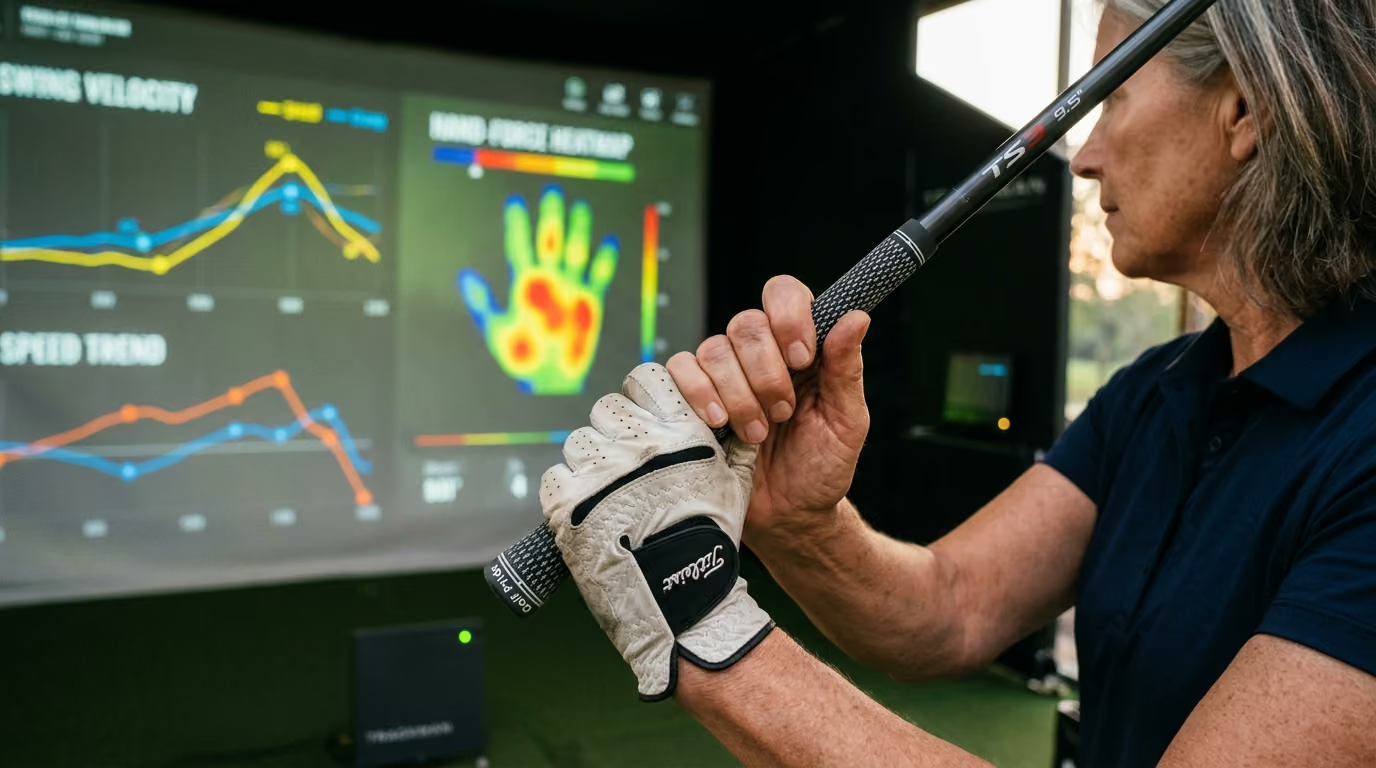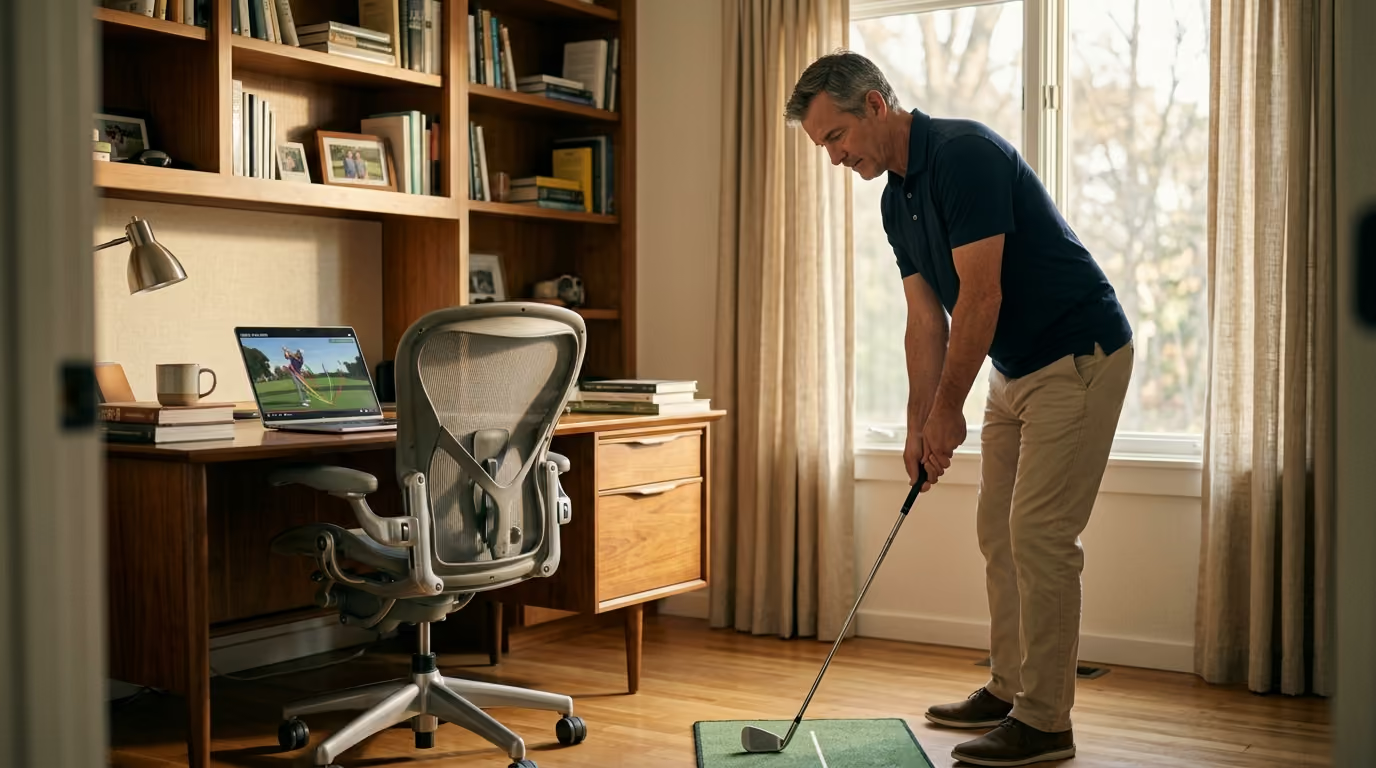

Golf swing flaws often seem like technical mistakes, but daily desk sitting actually restricts your hips and spine from rotating properly.




Many golfers believe that the best way to prepare for a weekend round is to spend hours on the driving range hitting balls. They think that swinging the club is the natural cure for a week spent sitting in an office chair. This approach actually makes your movement patterns worse. Hitting balls with a body shaped by a desk forces you to practice bad habits.
According to research from the Titleist Performance Institute (TPI), the average golfer spends at least 40 hours per week sitting at a desk. This long duration does not include your daily drive to work or your evening rest on the couch. Sitting for this long trains your body to remain short and tight. It creates a physical mold that directly fights against the rotational demands of the golf swing.
If you want to play pain-free golf, you must stop treating your body like it can switch from a desk to the first tee without preparation. This guide is a deep look at how sitting alters your muscles. It provides a simple plan to help you regain your mobility. It will show you how to protect your joints so you can play this game for many years. To learn more about maintaining your physical health over forty, check out our golf longevity, performance & recovery guide.
Let us look at a common scene on the first tee of your weekend round. You arrive after a stressful week of meetings and long drives. You walk up to the ball, take a couple of fast practice swings, and try to turn. Your lower back feels tight, and your hips refuse to rotate. You swing anyway.
The ball slices into the trees because your body could not complete a proper turn. This is not a lack of talent. It is the direct physical result of your office chair. Your weekly habits have shaped your physical capacity.
Sitting creates specific movement patterns that show up during your swing. The first pattern is the corporate sway. When you sit all day, your hip joints lose their ability to rotate inward. When you try to swing back, your hips cannot turn.
To compensate, your entire lower body slides sideways away from the target. This lateral movement destroys your swing plane. It makes solid contact almost impossible. To correct this, focus entirely on turning your trail hip during the backswing.
The second pattern is early extension. This happens when your pelvis thrusts toward the golf ball during the downswing. When your hips are tight from sitting, they cannot clear out of the way. Your body must stand up to find room to swing the club.
This standing motion causes thin shots and shanks. It also leaves you feeling frustrated on the tee. You might try to fix this by keeping your head down, but your tight hips will not allow it.
The third pattern is the reverse spine angle. This occurs when you cannot rotate your upper back. To get the club back, you tilt your upper spine toward the target. This creates a dangerous curve in your lower back at the top of your swing.
This tilt places high levels of stress on your lumbar discs. Over time, this leads to severe lower back pain after your round. These patterns show how sitting shapes your golf swing before you even hit a ball. Your body has adopted a seated mold.
To fix these swing flaws, we must understand what happens to your muscles. Dr. Vladimir Janda was a famous researcher who studied how posture affects movement. He created two frameworks called Upper Crossed Syndrome and Lower Crossed Syndrome. These frameworks explain why office work ruins your body.
These concepts show how sitting creates a physical mold that works against athletic movement. Janda found that certain muscles become tight while other muscles become weak. This imbalance causes predictable swing errors.
Lower Crossed Syndrome affects your hips and lower back. When you sit, your hips remain bent at a ninety-degree angle for hours. This constant bending shortens your hip flexors. It also puts your glute muscles in a stretched, inactive position.
Over time, your brain loses its connection to your buttock muscles. This condition is called gluteal amnesia, or inhibited glute function. Research by Page et al. (2010) confirms that long periods of sitting shut down these major power muscles. Your primary generators of swing speed are turned off.
When your glutes do not fire, your lower back must work harder. This puts excessive pressure on your spine. Neumann (2010) studied how hip movement affects the lower back. He found that weak glutes force the lumbar spine to bear dangerous loads during rotation.
Your lower back is designed for stability, not rotation. Forcing it to turn leads to wear and tear on your joints. This is why many desk workers suffer from chronic lower back pain after golf.
Upper Crossed Syndrome affects your chest, neck, and upper back. Sitting at a computer forces your shoulders to round forward. Your chest muscles, specifically your pectorals, become tight and short. Your upper back muscles, like your lower trapezius, become weak and overstretched.
This posture creates a rounded upper back, which is also known as a C-Posture. A rounded upper back cannot rotate. This stiffness limits your backswing and cuts your clubhead speed. To see how these physical patterns affect your play, visit our golf performance blog.
Many golfers fail to realize how neck posture affects their swing. When you stare at a computer screen, your head drifts forward. This creates tight muscles in the back of your neck. It also weakens the muscles in the front of your neck.
This forward head posture limits your ability to turn your head. If your neck cannot turn, your shoulders cannot complete a full turn. Your chin gets caught on your shoulder during the backswing. This forces you to lift your head and lose your posture.
You might think your arms are the issue. You try to force a wider swing with your hands. This adjustment only creates more tension. The real restriction is in your neck.
Your body will limit your shoulder turn to protect your cervical spine. This is a survival mechanism that your brain uses. If your neck cannot turn, your brain will stop your shoulders from rotating.
Another hidden flaw is the loss of pelvic control. Sitting changes the resting position of your pelvis. Tight hip flexors pull your pelvis forward into an anterior tilt. This creates an S-Posture at address.
An S-Posture looks athletic because your lower back is arched. This arch actually locks your joints. It prevents your hips from rotating freely during the swing. It also puts high pressure on your lower spine.
According to Titleist Performance Institute (TPI) research, over 70% of amateur golfers lose their posture during the swing. This loss is directly tied to the stiff hips and locked pelvis caused by sitting. If you cannot rotate your hips, you cannot keep your posture.
Your body will find other ways to move, which leads to inconsistent shots. Understanding these flaws is the first step toward correcting them. You can study these concepts further by exploring our page on injury prevention.
You do not need to wait until you get home to start fixing your posture. There are simple movements you can do while waiting on the tee box. These exercises will help wake up your muscles before you swing. They are quick, simple, and require no extra equipment.
They help prepare your body for rotation after a long car ride. The first correction is the hip flexor pulse with a glute squeeze. Stand next to your golf cart or a bench for support. Step your left foot back into a small lunge.
Squeeze your left glute muscle as hard as you can. This squeeze uses a biological process called reciprocal inhibition. When the glute contracts, the brain tells the tight hip flexor to relax. Hold this squeeze for five seconds, then repeat on the other side.
The second correction is the standing thoracic rotation. Place a golf club across the front of your shoulders. Hold it in place with your arms crossed. Stand in your golf posture.
Slowly turn your upper body to the right. As you turn, focus entirely on turning your trail hip. Hold the turn for two seconds, then rotate to the left. Do this five times in each direction.
The third correction is the pelvic tilt test. Stand in your golf posture. Try to tilt your pelvis forward, then tilt it backward. This small movement helps your brain find a neutral pelvis position.
A neutral pelvis allows your hips to rotate without locking your lower back. Practice this simple pelvic movement before you address the ball. These small steps will help prepare your body for a smoother swing.
The fourth correction is the shoulder blade pinch and neck glide. Stand tall with your feet shoulder-width apart. Pull your shoulder blades down and back, pretending to squeeze an orange between them. At the same time, tuck your chin straight back as if making a double chin.
This glide reverses the forward head posture from your desk. Hold this position for three seconds. Repeat this movement ten times. This will immediately loosen your neck and chest. It helps free your shoulders for a wider turn.
To make a lasting change, you need a daily routine. Stretching alone is not enough to fix a desk body. You must activate the weak muscles while relaxing the tight ones. This routine takes ten minutes a day and can be done in your living room.
It will help rebuild your body for golf. It focuses on reversing the muscle imbalances caused by sitting. Consistency is key to changing your movement habits.
First, perform the half-kneeling hip flexor stretch. Kneel on your right knee with your left foot flat in front of you. Keep your spine tall. Squeeze your right glute muscle.
Gently push your hips forward until you feel a stretch in the front of your right hip. Hold this position for thirty seconds. Repeat this stretch on your left side. Do this twice on each side.
Second, perform the book opener exercise. Lie on your side with your knees bent at ninety degrees. Extend your arms straight out in front of your chest. Slowly lift your top arm up and rotate it behind you.
Keep your knees glued together on the floor. As you open your arm, focus on rotating your upper back. Hold the stretch for two seconds, then return to the start. Do ten repetitions on each side to loosen your thoracic spine.
Third, perform the glute bridge. Lie on your back with your knees bent and feet flat on the floor. Squeeze your glutes and lift your hips until your body forms a straight line from knees to shoulders. Hold this position for three seconds at the top.
Lower your hips slowly. Complete three sets of ten repetitions. This exercise helps wake up inactive glute muscles. It teaches your brain to use your glutes for power.
Fourth, perform standing wall slides. Stand with your heels, buttocks, and upper back against a flat wall. Raise your elbows to shoulder height with your forearms against the wall. Slowly slide your hands up the wall as high as you can.
Do not let your lower back arch away from the wall. Slide your hands back down to the starting position. This strengthens the lower trapezius and stretches the chest. Repeat this ten times.
Fifth, perform quadruped thoracic rotations. Start on your hands and knees. Place your right hand behind your head. Slowly rotate your right elbow down toward your left elbow.
Next, rotate your right elbow up toward the sky as far as possible. Focus on keeping your lower body still. Your hips should not slide or shift. Do ten repetitions, then switch to the left side.
By doing this routine every day, you will break the mold of your desk. Your hips will become more mobile. Your upper back will turn with less effort. This improved movement will show up as extra clubhead speed on the course.
For more training tips, look at our articles on mobility. You can also build a stronger physical foundation with our resources on strength.
Many golfers try to improve their fitness but make critical errors. These errors can delay your progress or lead to injury. Understanding these mistakes will help you save time and effort.
The first mistake is the stretch vs. activate fallacy. Golfers often spend thirty minutes stretching their tight hip flexors and chest. They do not spend any time activating their weak glutes and mid-back. Without activation, your body will return to its seated shape within minutes.
You must train your nervous system to use the weak muscles. Stretching relaxes the tight muscles, but activation keeps them relaxed. This combination is what creates lasting posture changes.
The second mistake is assuming you have a back problem. If your lower back hurts after golf, you might think you need to stretch your back. This is often incorrect. Your lower back is hurting because it is doing too much work.
The real problem is usually tight hips and a stiff upper back. Your lower back is forced to rotate because your hips are stuck. Address the hips and upper back, and your back pain will often resolve. Stop treating the symptom and start treating the cause.
The third mistake is misinterpreting hamstring tightness. Many desk workers feel that their hamstrings are incredibly tight. They spend hours stretching them. In reality, sitting keeps your hamstrings in a long and weak position.
This occurs because the pelvis is tilted forward, which pulls on the hamstrings like a rubber band. Stretching them further makes your pelvis even more unstable. Instead of stretching them, you need to strengthen your hamstrings and glutes. This will help pull your pelvis back into a neutral position.
The fourth mistake is ignoring your neck mobility. Golfers often try to get a bigger shoulder turn by pulling their arms across their chest. This does not fix the root cause. If your neck is stiff from staring at a screen, your brain will stop your shoulders from turning.
Focus on keeping your neck relaxed and mobile. This will allow your shoulders to turn naturally without forcing your arms. A free neck allows for a wider, smoother swing.
Your equipment can also help you deal with the physical limits of sitting. While you work on your mobility, your gear can make playing more comfortable. Simple changes to your clubs and shoes can reduce strain on your body. This allows you to play better while you improve your physical health.
First, check your grip thickness. If your neck and shoulders are tight, you likely grip the club too hard. This extra tension travels up your arms into your shoulders. Using midsize or oversize grips can help you relax your hands.
A lighter grip pressure allows your shoulders to turn more freely. This can ease the tension in your upper back during the swing. It also helps prevent hand and wrist fatigue during your round.
Second, look at your shoes. If you have stiff hips, your feet need to be able to rotate slightly during the swing. Wearing shoes with extremely aggressive spikes can lock your feet to the ground. This forces your knees and lower back to absorb all the rotational force.
Spikeless shoes or shoes with moderate traction allow for natural foot movement. This small change can protect your joints from injury. It is a simple way to make walking eighteen holes easier on your body.
Third, consider your shaft flex and club weight. Stiff shafts require a fast, aggressive swing to work correctly. If your body is stiff from a week of sitting, you may not have the speed to load a stiff shaft. Switching to a slightly lighter or more flexible shaft can help.
It allows you to generate distance without over-exerting your muscles. This can make your game much easier on your body. Using graphite shafts in your irons can also help absorb joint-rattling vibration.
Fourth, examine the bounce on your wedges. If you suffer from early extension, your hands will flip at the ball. This often causes you to hit the turf before the ball. Using wedges with more bounce can prevent the club from digging into the ground.
It provides a safety net for those days when your hips feel locked. This equipment check can help you save strokes while your body recovers. You can explore more equipment advice by visiting our golf performance category.
Improving your golf game requires changes to your daily habits. You cannot expect to sit for forty hours and fix everything with a ten-minute warmup. You need to find ways to move more during your work week. This will prevent your muscles from molding into a seated shape.
It will also help you play golf pain-free as you get older. Longevity in golf is built on daily movement habits. Small changes to your routine will add up over time.
One simple strategy is to take micro-breaks. Set a timer on your computer for thirty minutes. Every time it goes off, stand up for two minutes. Reach your arms overhead and stretch.
Squeeze your glute muscles while standing. These micro-breaks interrupt the negative effects of sitting. They keep your joints loose and your muscles active. They also help keep your energy levels high during the workday.
Another option is to use a standing desk. Standing keeps your hips in an extended position, which prevents tight hip flexors. Be careful not to arch your lower back too much while standing. This can lead to an S-Posture.
Keep your weight evenly distributed on both feet. Focus on keeping your core gently engaged to support your lower back. Shift your weight from side to side occasionally to stay loose.
You should also focus on your overall recovery. Drinking plenty of water keeps your muscles and joints hydrated. This makes them less prone to stiffness and injury. Getting quality sleep allows your muscles to repair themselves after a hard day of work or a round of golf.
If you want to explore more ways to extend your playing years, look at our golf performance and longevity resources. You can also find recovery tips in our dedicated section on recovery. Reversing sitting disease is a continuous process that pays huge dividends on the scorecard.
To play your best golf, you must fight the physical effects of your office chair. By understanding how sitting shapes your body, you can take action to protect your swing. Use these practical tools to stay mobile, strong, and healthy. Your body will thank you, and your scores will improve.
Make a conscious effort to focus entirely on turning your trail hip during your next practice session.
Follow Golfergy for practical insights on performance, mobility, recovery and healthy ageing. Stay connected for new articles, research-led guidance and ideas to help you play better for longer.


Explore practical resources on performance, recovery, mobility and golf longevity.
Read the Blog